
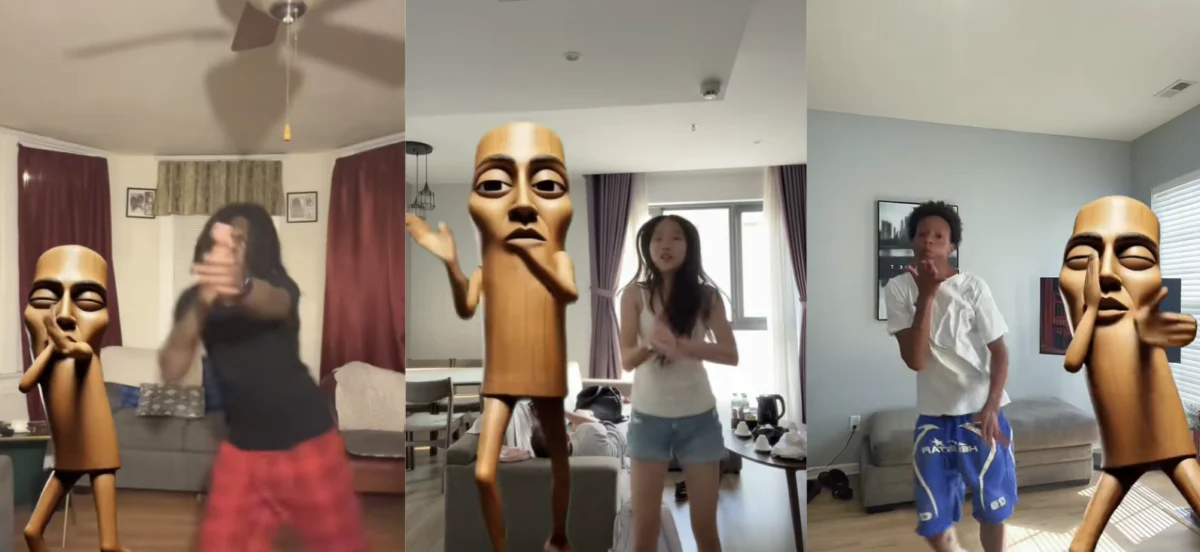
The digital landscape of 2026 has been significantly reshaped by the emergence of the Triple T Dance, a viral phenomenon that represents a sophisticated intersection of independent hip-hop, Indonesian cultural traditions, and advanced generative artificial intelligence. Also recognized by the titles Tung Tung Tung Sahur Dance and the Triple T Get In There Bow Dance, this trend has dominated the TikTok ecosystem, compelling millions of users to synchronize their physical movements with an AI-animated character. The core of the trend involves the track "Dumb wit it (get in dea)" by the rapper and digital creator Geaux Teezy, paired with a surreal, jittery animation of a character known as "Triple T." This movement is not merely a fleeting dance craze but serves as a case study in how "brainrot" content—a term used to describe hyper-stimulating, often nonsensical digital media—utilizes algorithmic feedback loops to achieve global saturation.
The Dual Lineage of the Triple T Phenomenon
To understand the current scale of the Triple T Dance, one must examine its distinct origin points, which merged in early 2026 to create a viral catalyst. The first component is the musical foundation provided by Geaux Teezy. His track "Dumb wit it (get in dea)" initially gained traction in late 2025 as part of the "Get In There Bow Dance." This earlier iteration was a traditional choreography-based trend where users performed a rhythmic, repetitive bowing motion to the beat. For instance, on December 25, 2025, TikTok user @nathanbbxn uploaded a performance of this dance that garnered over 113,100 views, signaling the song’s potential as a rhythmic anchor for social media challenges.
The second component is the "Tung Tung Tung Sahur" character, which has roots in a specific Indonesian cultural practice. Traditionally, "Sahur" refers to the pre-dawn meal consumed by Muslims before beginning their fast during the month of Ramadan. In many Indonesian communities, groups of youth circulate through neighborhoods playing drums and chanting to wake residents; the rhythmic "tung tung tung" sound mimics these drums. This localized tradition underwent a digital transformation when AI creators, most notably @sloptokk, used generative video tools to create a chaotic, dancing avatar that embodied the high-energy spirit of the Sahur wake-up calls. This character eventually became known in the West as "Triple T."
The March 2026 Catalyst: The CapCut Integration
The convergence of these two elements occurred on March 30, 2026, when the TikTok user @.memescreens released a CapCut video template. CapCut, a video editing suite owned by ByteDance, allows users to apply complex visual effects and overlays with minimal effort. The template featured the AI-animated Triple T character performing a high-speed version of the "Get In There Bow" dance, set to Geaux Teezy’s track.
The impact of this template was immediate and profound. By providing a "green screen" version of the character, @.memescreens lowered the barrier to entry for participation. Users no longer needed to animate their own content; they could simply film themselves dancing alongside the digital avatar. This specific video received 1.8 million views and nearly 187,000 likes within the first two weeks of its release. The template functioned as a "force multiplier," allowing the trend to transition from a niche AI animation into a mainstream participatory challenge.
Chronology of Viral Expansion
Following the release of the template, the trend entered a phase of exponential growth during the first half of April 2026. The timeline of this expansion highlights the speed at which modern digital trends achieve critical mass:
- March 30, 2026: The definitive CapCut template is released, pairing the Sahur AI character with Geaux Teezy’s music.
- April 2, 2026: Influencer @an7man3 posts a video performing the dance alongside the AI character. The video achieves 3.4 million views in less than ten days, demonstrating the high engagement rates of "dueting" with AI assets.
- April 3, 2026: User @sill.ygoosi uploads a variation of the trend, further solidifying the "Triple T" nomenclature and attracting 1.9 million views.
- April 5–12, 2026: A secondary wave of content creators, including @_kayylla_n and @twoballsinaballsack, adopt the trend, often incorporating family members or group performances to increase the "wholesome" yet chaotic appeal of the meme.
Data from this period suggests that the trend was particularly effective at retaining viewer attention. The average "watch time" for Triple T videos was significantly higher than the platform average, likely due to the visually stimulating and unpredictable nature of the AI-generated movements.
Technical Analysis of "Brainrot" Aesthetics
The Triple T Dance is frequently categorized as "brainrot," a genre of internet culture characterized by a sensory-overload aesthetic. From a technical standpoint, the AI animation used for Triple T—likely generated through tools like Luma Dream Machine or Kling—exhibits "temporal instability," a common trait in AI video where the character’s limbs and surroundings slightly shift or shimmer. In the context of the Triple T trend, this instability is not viewed as a flaw but as a stylistic choice that enhances the "chaotic energy" of the meme.
The rhythmic synchronization between the "tung tung tung" auditory cues and the "Get In There Bow" physical movements creates a Pavlovian response in viewers. Digital marketing analysts suggest that the success of the Triple T Dance lies in its "pattern interrupt" capability. As users scroll through their feeds, the sudden appearance of a vibrating, AI-distorted character dancing to a high-tempo rap beat breaks the monotony of standard content, forcing a "stop-and-watch" reaction.
Socio-Economic Impact and Artist Reactions
The surge in popularity of the Triple T Dance has had a measurable impact on the music career of Geaux Teezy. While "Dumb wit it (get in dea)" was already a successful track within specific circles, its association with the Triple T character propelled it to the top of TikTok’s commercial music library. This shift highlights a growing trend in the music industry where a song’s longevity is increasingly tied to its "meme-ability" rather than traditional radio play or streaming playlists.
While official statements from Geaux Teezy have focused on the excitement of the song’s revival, industry observers note that this trend represents a double-edged sword for artists. On one hand, the exposure is unparalleled; on the other hand, the artist’s work becomes inextricably linked to a "brainrot" character, potentially overshadowing the original intent of the music. However, in the 2026 creator economy, most independent artists have embraced these developments, recognizing that viral associations are the primary drivers of revenue in the streaming era.
Global Cultural Synthesis
One of the more fascinating aspects of the Triple T Dance is its status as a global cultural mashup. It takes an Indonesian religious and community tradition (Sahur), processes it through a Western-developed AI animation tool, and sets it to an American hip-hop track. This synthesis suggests a future where cultural boundaries are increasingly porous and where the "meaning" of a tradition can be completely repurposed by the global internet community.
In Indonesia, the reaction to the "Tung Tung Tung Sahur" meme has been a mixture of amusement and cultural pride, as a local tradition has reached an audience of billions. Conversely, Western audiences often engage with the meme without any knowledge of its Sahur origins, viewing it purely as a high-energy digital artifact. This "decontextualization" is a hallmark of modern meme culture, where the visual and auditory appeal of a clip takes precedence over its historical or cultural significance.
Broader Implications for the Future of Social Media
The Triple T Dance trend signals several shifts in the trajectory of social media:
- The Dominance of AI-Human Interaction: The trend proves that users are increasingly comfortable interacting with digital entities. The "dance-along" format suggests that AI characters could eventually become influencers in their own right, competing with human creators for attention.
- The Efficiency of Templates: The role of CapCut in this trend emphasizes that the next generation of viral content will be "templated." The easier it is for a user to replicate a complex visual effect, the faster a trend will spread.
- Algorithmic Optimization of Chaos: The TikTok algorithm appears to favor content that is high-energy and visually complex. As AI tools become more adept at producing this kind of "brainrot" content, we can expect a further increase in the density of sensory input in short-form video.
In conclusion, the Triple T Dance is more than a simple internet fad. It is a sophisticated manifestation of how technology can blend disparate cultural elements into a singular, high-impact digital experience. As the trend continues to evolve throughout 2026, it will likely serve as the blueprint for future AI-driven viral movements, further blurring the lines between human creativity and machine-generated entertainment. The success of creators like @.memescreens and @sloptokk in this space indicates that the future of the "attention economy" belongs to those who can best harness the chaotic potential of artificial intelligence.

