
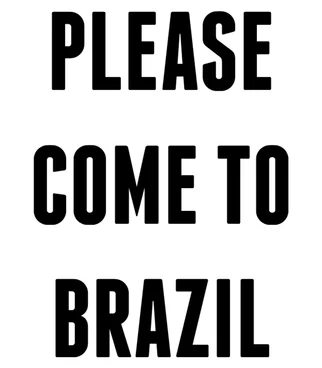
The phrase "Come to Brazil" has transcended its origins as a simple invitation to become a defining hallmark of global digital culture and fan engagement. What began as a sincere plea from South American fans to their favorite international celebrities has evolved into a complex sociological phenomenon, characterized by its ubiquity, its eventual descent into satire, and its role as a testament to Brazil’s outsized influence on the global social media landscape. For over a decade, this three-word imperative has appeared in the comment sections of pop stars, athletes, politicians, and even deceased historical figures, signaling a unique intersection of national pride and digital-age fandom.
The Digital Landscape and the Brazilian Online Identity
To understand the rise of "Come to Brazil," one must examine the specific history of internet adoption in the Federative Republic of Brazil. During the early 2000s, while much of the English-speaking world transitioned from Myspace to Facebook, Brazil maintained a distinct digital ecosystem dominated by Orkut, a social networking site owned by Google. Orkut’s massive success in Brazil fostered a culture of highly organized, "community-based" fan interactions. When Brazilian users eventually migrated to global platforms like Twitter and Instagram, they brought with them a tradition of collective action and enthusiastic participation.
Brazil has consistently ranked among the top countries worldwide for time spent on social media. Data from various digital market reports indicate that Brazilian users often exhibit higher engagement rates than their North American or European counterparts. This high level of connectivity, combined with a historical sense of geographical isolation from major international touring circuits, created a fertile environment for the "Come to Brazil" movement. For many fans, these messages were not merely spam but a grassroots marketing effort intended to prove to talent managers and event promoters that a viable, hungry market existed in the Southern Hemisphere.
Chronological Development and the First Recorded Instances
The specific linguistic origin of the phrase on microblogging platforms can be traced back to the early days of Twitter. On April 11, 2008, a user identified as @cecilab directed the invitation to French entrepreneur Loic Le Meur. This interaction marked the first documented instance of the phrase being used in its modern, imperative form on the platform. While this initial use was a professional invitation, the phrase soon found its true home within the burgeoning world of pop music fandom.
The year 2009 served as a critical turning point for the meme’s proliferation. The arrival of Canadian pop star Justin Bieber on Twitter coincided with a massive influx of young Brazilian users. As Bieber’s global stardom accelerated, his mentions became a constant stream of "Come to Brazil" requests. This pattern repeated with other high-profile artists, including Lady Gaga, Katy Perry, and Rihanna. By 2010, the phrase had become so common that it began to be recognized by the celebrities themselves, who would often tweet the phrase back to their followers as a gesture of appreciation, further incentivizing the behavior.
The Shift to Satire and Absurdist Humor
As the phrase reached a saturation point in the early 2010s, its meaning began to shift. What started as a sincere request was adopted by the broader internet community as a tool for irony and satire. In 2012, platforms like Tumblr began hosting mock-ups of comment sections where "Come to Brazil" was posted under increasingly ridiculous circumstances.
One of the most notable examples of this shift occurred on March 31, 2014, when a Twitter user directed the phrase at the official account of Michael Jackson, who had passed away five years prior. This screenshot went viral, garnering tens of thousands of interactions and solidifying the phrase’s status as an "absurdist" meme. By this stage, the phrase was being used to "invite" inanimate objects, fictional characters, and historical figures like Wolfgang Amadeus Mozart to visit the country. This transition mirrored other regional internet memes, such as the Russian "Cyka Blyat," where a phrase loses its literal meaning to become a shorthand for a specific cultural stereotype or online behavior.
Media Recognition and Institutional Adoption
By the mid-2010s, the "Come to Brazil" phenomenon had moved from the fringes of fan forums into the mainstream media. In October 2015, BuzzFeed published an extensive listicle highlighting the most humorous and persistent examples of the phrase, noting that it had become an inescapable part of the celebrity experience. In January 2016, New York Magazine’s "Select All" section provided a deep dive into the mechanics of the meme, analyzing how a simple request became a global "punchline."

The cultural impact of the phrase eventually reached the highest levels of Brazilian governance. In July 2016, during the lead-up to the Summer Olympics in Rio de Janeiro, then-Mayor Eduardo Paes utilized the meme for a public relations campaign. Paes issued a "half-jesting" invitation on social media, asking the developers of the mobile game Pokémon GO to "come to Brazil" in time for the games. This marked a significant moment where a grassroots internet meme was co-opted by state officials to drive tourism and engagement, demonstrating the phrase’s evolution from a fan-led plea to a legitimate tool of national branding.
Sociological and Economic Implications
The persistence of "Come to Brazil" offers valuable insights into the economic realities of the global entertainment industry. For decades, South America was often overlooked by major international tours due to logistical challenges and economic volatility. The "Come to Brazil" movement can be viewed as a digital-age response to this exclusion. By flooding the digital spaces of artists, Brazilian fans effectively conducted a decade-long "proof of concept" for promoters.
The results of this persistent digital activism are measurable. Industry analysts have noted that Brazil has since become a mandatory stop for major global tours, with festivals like Rock in Rio and Lollapalooza Brazil seeing record-breaking attendance figures. The digital "noise" created by fans provided tangible data to booking agents, showing that the engagement levels in São Paulo and Rio de Janeiro often surpassed those in New York or London.
Furthermore, the meme reflects a unique aspect of Brazilian national identity—"o jeitinho brasileiro" or the "Brazilian way." This concept refers to a creative and social approach to problem-solving. In the digital realm, this manifests as a collective, persistent, and often humorous effort to gain international recognition. The phrase serves as a bridge between the local and the global, asserting Brazil’s presence in a digital world that often centers on the Global North.
Global Comparison and Cultural Legacy
In the broader context of internet linguistics, "Come to Brazil" stands alongside other "location-based" memes, yet it remains unique in its longevity and versatility. While other phrases might flare up and disappear within a few months, "Come to Brazil" has remained a constant for over fifteen years. It has influenced how other fanbases interact with celebrities, with similar—though less successful—phrases like "Come to Turkey" or "Come to Philippines" appearing in recent years.
The phrase has also left a lasting mark on the celebrities it targets. Many artists now include a "Brazil" segment in their social media strategy, specifically addressing their Brazilian followers to maintain high engagement metrics. The "Come to Brazil" phenomenon has essentially trained the global entertainment industry to acknowledge and cater to the Brazilian market with a level of specificity that few other nations command.
Conclusion: A Permanent Fixture of the Digital Age
The "Come to Brazil" phenomenon represents more than just a repetitive comment; it is a complex artifact of the first two decades of social media. It encapsulates the transition from sincere fan engagement to ironic meme culture, the power of collective digital action, and the rise of the Global South as a dominant force in online spaces.
As digital platforms continue to evolve, the specific platforms where "Come to Brazil" originated may fade, but the legacy of the phrase as a symbol of Brazilian digital enthusiasm remains secure. It stands as a reminder that in the interconnected world of the 21st century, the voice of a passionate community, repeated enough times, can bridge geographical divides, influence multi-million dollar industries, and create a lasting cultural shorthand that resonates across the globe. Whether used as a genuine plea or a sarcastic remark, "Come to Brazil" continues to be a testament to the enduring power of the internet to turn a local sentiment into a global language.

