
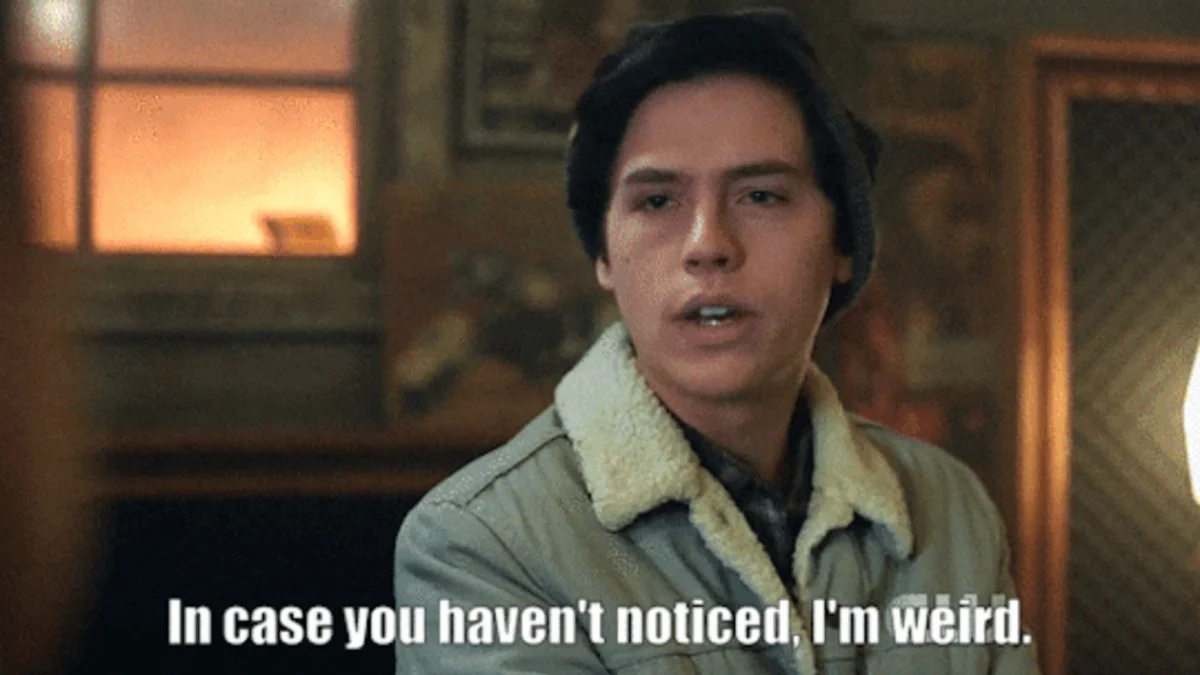
The television landscape of 2017 was marked by a significant shift in the adaptation of classic intellectual properties, most notably with The CW’s reimagining of the Archie Comics universe in the series Riverdale. Among the various narrative choices made by the production team, a specific monologue delivered by the character Jughead Jones, portrayed by actor Cole Sprouse, emerged as one of the most enduring and analyzed moments of the decade’s teen drama genre. Known colloquially as the "I’m Weird" speech, the dialogue occurred during the tenth episode of the show’s first season, titled "Chapter Ten: The Lost Weekend," which premiered on April 12, 2017. While intended to establish the character’s outsider status and emotional vulnerability, the scene instead triggered a massive wave of internet satire, fundamentally altering how the character and the series were perceived by global audiences.
The Narrative Origin and Context of the Monologue
In the narrative framework of Riverdale’s first season, Jughead Jones is established as a brooding, cynical loner who serves as the show’s narrator. Unlike the lighthearted, burger-obsessed glutton of the original Archie Comics, this iteration of Jughead is a social outcast dealing with familial instability and a deep-seated distrust of his peers’ affluent lifestyles. During "The Lost Weekend," Jughead’s birthday becomes a point of contention when his girlfriend, Betty Cooper, insists on throwing him a surprise party despite his explicit desire for privacy and low-key observation.
The speech occurs during a tense confrontation between Jughead and Betty. Attempting to explain his discomfort with the conventional social expectations of a high school party, Jughead delivers the following lines: "In case you haven’t noticed, I’m weird. I’m a weirdo. I don’t fit in. And I don’t want to fit in. Have you ever seen me without this stupid hat on? That’s weird." The "hat" in question is a modernized crown-shaped beanie, a sartorial nod to the "whoopee cap" worn by the character in the comics since the 1940s.
The Immediate Digital Reaction and Viral Proliferation
Within hours of the episode’s broadcast, clips and screenshots of the scene began circulating on social media platforms, particularly Twitter and Tumblr. The initial reaction from the fanbase was polarized; while some younger viewers found the sentiment relatable, a larger segment of the internet community began to mock the dialogue for what was perceived as "forced edginess." Critics and social media users pointed out the perceived irony of a character played by a conventionally attractive, famous actor claiming to be an outcast because he wears a beanie—a common fashion accessory.
By mid-April 2017, the speech had transitioned from a television moment to a "snowclone"—a type of meme template where a recognizable phrase is adapted and customized. The "I’m Weird" monologue provided a perfect structure for this, allowing users to replace the reference to the "stupid hat" with other absurd or mundane traits from different fictional characters or real-life celebrities.
Data from the analytics site PopBuzz and social monitoring tools indicated that the meme reached its peak engagement in the two weeks following the episode’s release. On Tumblr, the "Riverdale" tag was dominated by parodies that transposed Jughead’s dialogue onto characters from other franchises, such as Yu-Gi-Oh!, Code Name: Kids Next Door, and The Suite Life of Zack & Cody—the latter being a meta-reference to Cole Sprouse’s previous role as a child star.
Chronology of the Meme’s Evolution
The lifecycle of the "I’m Weird" speech can be categorized into four distinct phases:
- The Broadcast Phase (April 12, 2017): The original airing of Season 1, Episode 10. The scene was intended to be a poignant moment of character development, highlighting Jughead’s trauma and his resistance to the "perfect" facade of the town of Riverdale.
- The Satirical Boom (April 13 – May 2017): The speech was widely adopted by "cringe" culture communities. It became a shorthand for overly earnest teen drama writing. High-profile digital publications began documenting the phenomenon, with outlets like Buzzfeed and Mashable highlighting the funniest variations of the meme.
- The Cross-Platform Snowclone Era (Late 2017 – 2019): The meme moved beyond the Riverdale fandom. It was used in YouTube "try not to laugh" compilations and became a staple of TikTok’s early lip-syncing trends, where users would dramatically recite the lines to emphasize the absurdity of the "not like other girls/boys" trope.
- The Legacy Phase (2020 – Present): The speech is now cited in media studies and cultural critiques as a prime example of the "Riverdale-ification" of media—a term used to describe the dramatic, often surreal, and highly stylized reimagining of classic wholesome properties.
Critical Analysis and Theatrical Implications
The mockery of the "I’m Weird" speech reflects a broader shift in audience expectations regarding teen-centric media. Historically, the "misunderstood loner" archetype was a staple of 1990s and early 2000s dramas, such as Dawson’s Creek or The O.C. However, by 2017, the rise of self-aware internet culture made it difficult for writers to utilize these tropes without facing scrutiny.

Sociologists and media critics have argued that the backlash to Jughead’s speech was rooted in a disconnect between the show’s writing and the audience’s reality. In an era where "weirdness" and "indie" aesthetics had been mainstreamed through social media, a character explicitly announcing their "weirdness" felt redundant and performative. The dialogue was seen as "telling" rather than "showing," a common pitfall in screenwriting that often leads to unintended comedic effects.
Furthermore, the speech highlighted the tonal inconsistency that would eventually define Riverdale. While the first season was largely a murder mystery, the writing often veered into heightened, almost campy territory. The "I’m Weird" speech was one of the first indicators that the show’s dialogue would prioritize "meme-able" or highly stylized lines over realistic adolescent speech patterns.
Statements and Reactions from Involved Parties
While the showrunners at The CW and executive producer Roberto Aguirre-Sacasa initially leaned into the brooding nature of the character, the cast eventually acknowledged the scene’s viral status. Cole Sprouse, who has a significant social media presence and a reputation for self-deprecating humor, has occasionally referenced his time on the show with a degree of levity.
In various interviews, Sprouse has discussed the challenges of playing a character based on a 75-year-old comic book archetype in a modern setting. While he defended the emotional intent behind Jughead’s characterization, the production team seemed to take note of the "cringe" reception. In later seasons, Riverdale’s writing became increasingly self-aware and surreal, often leaning into the very absurdity that the "I’m Weird" speech was mocked for, effectively turning the show into a self-parody that embraced its own eccentricities.
Broader Impact on the Archie Comics Brand
The legacy of the "I’m Weird" speech extends beyond the digital footprint of a single meme. It served as a pivotal moment in the rebranding of Archie Comics. For decades, Archie was synonymous with Americana, soda shops, and innocent teenage love triangles. The viral success of Jughead’s monologue—even if driven by mockery—cemented the "Dark Archie" era in the public consciousness.
According to Nielsen data and social engagement metrics, Riverdale saw a significant spike in viewership among the Gen Z demographic during its first and second seasons. The meme-ability of the show, spearheaded by moments like the "weirdo" speech, acted as a form of free marketing. Even individuals who did not watch the series were familiar with its most infamous lines, creating a cultural ubiquity that few other teen dramas achieved in the streaming age.
Statistical and Search Interest Data
Search engine trends from 2017 show a massive spike in queries for "Jughead weirdo speech" and "Jughead hat" immediately following the episode’s air date. According to Google Trends, interest in the phrase "I’m a weirdo" saw a 400% increase in the week of April 16, 2017. The meme also sustained a long-tail presence, with secondary spikes occurring whenever Riverdale premiered a new season or when the show was added to international Netflix catalogs, introducing the scene to new territories.
On YouTube, fan-made edits and "cringe" compilations featuring the speech have amassed millions of views. The most popular version of the clip on the platform remains a point of discussion in the comments sections, where users continue to debate the merits of the show’s writing style years after the series concluded its seven-season run.
Conclusion
The "I’m Weird" speech remains a landmark moment in the history of internet memes and television writing. It serves as a case study in how intended dramatic gravitas can be transformed into comedic satire through the lens of social media. While the monologue was designed to define Jughead Jones as a misunderstood protagonist, it ultimately defined him as a symbol of the "edgy" teen drama trope. In the years since its debut, the speech has transitioned from a point of ridicule to a nostalgic relic of 2017 internet culture, illustrating the unpredictable and often permanent nature of digital virality. Through its "weirdness," the scene achieved a level of immortality that few scripted moments ever reach, ensuring that Jughead’s "stupid hat" remains a permanent fixture in the archive of 21st-century pop culture.

