
The quest for swift and economical e-commerce delivery has spurred the rise of local carriers and gig-economy platforms, promising unprecedented speed and affordability. However, this rapid evolution of the last mile is also introducing a new set of challenges for both merchants and consumers, primarily centered around consistency, security, and the overall brand experience. As retailers increasingly rely on independent contractors to bridge the gap between fulfillment centers and customer doorsteps, the inherent flexibility of these models is being weighed against the potential for service disruptions and the critical need to maintain customer trust.
Target’s Strategic Expansion: A New Paradigm in Same-Day Delivery
A significant development in this ongoing transformation was Target’s announcement earlier this year of its intention to significantly expand its Shipt-powered same-day delivery service. By 2026, the retail giant plans to integrate this model into more than 100 of its U.S. stores. This move underscores a broader industry trend: leveraging existing brick-and-mortar infrastructure as micro-fulfillment hubs to accelerate delivery times and reduce costs.
Shipt, along with other prominent gig-economy delivery services like Amazon Flex and Uber, taps into a flexible workforce of independent contractors. These drivers, often utilizing their personal vehicles, are tasked with picking up packages directly from retail locations or designated fulfillment points and delivering them to customers. This operational model represents a departure from traditional logistics, where packages might transit through multiple sorting facilities and national carrier networks.
The implications of this shift are profound. In an era where the delivery experience has become intrinsically linked to a brand’s identity, the efficiency and reliability of the last mile can significantly influence customer perception and loyalty. Target’s strategic investment in Shipt, which it acquired in 2017, highlights a calculated effort to gain a competitive edge by bringing fulfillment closer to the consumer. Initially focused on grocery delivery, Shipt has evolved into a comprehensive last-mile network, seamlessly integrated with Target’s extensive store inventory.
The "Local" Advantage: Rethinking Fulfillment from the Store Up
Target’s Shipt-centric strategy is fundamentally a "local" play. By transforming each of its physical stores into a potential fulfillment center, the company effectively shortens delivery routes, replacing the lengthy transit times associated with national carriers with more localized, direct-to-consumer dispatches. This approach eliminates the need for the costly construction of new, dedicated distribution centers, as the existing retail footprint serves as the network.
This localized fulfillment model offers tangible financial benefits. Industry analysts estimate that Target can potentially save approximately $2.50 per package by utilizing Shipt compared to traditional national carriers. These savings are primarily driven by a reduction in the number of handoffs and the elimination of long-haul transportation legs. Packages bypass the complex, multi-stage sorting processes characteristic of larger logistics networks, leading to a more streamlined and cost-effective journey.
Beyond cost savings, the speed advantage is a critical component. With orders originating from local stores, delivery windows can be significantly tightened without the need for premium air freight or expedited shipping services. This enhanced speed directly addresses escalating consumer expectations for rapid delivery, aligning fulfillment costs with the growing demand for immediate gratification in online shopping. Target’s initiative is far from an isolated effort; competitors such as Walmart and Amazon, along with a multitude of other omnichannel retailers, are actively pursuing similar strategies to optimize their last-mile operations.
A Divergent Operational Philosophy: Gig Platforms vs. Traditional Carriers
The rise of Shipt and similar services signals a fundamental divergence in operational philosophy. These are not your grandfather’s small-package delivery companies. Instead, they represent a growing ecosystem of regional carriers, specialized gig platforms, and white-label delivery providers that are augmenting, and in some cases, competing with, established national players.
For merchants, this burgeoning landscape translates into a wider array of delivery options. However, it also introduces a degree of fragmentation and a potential lack of standardization across the industry. Traditional carriers, such as UPS, FedEx, and the USPS, operate highly structured and controlled networks. Their processes for service levels, routing, and package handling are meticulously defined and consistently applied. This standardization, while sometimes perceived as less flexible, offers a predictable level of service.
In contrast, gig delivery networks are characterized by their inherent flexibility. This adaptability, however, can also lead to greater inconsistency. The independent contractor model, while enabling rapid scaling and on-demand service, relies on a diverse workforce with varying levels of experience and adherence to protocol. This can create a less predictable customer experience, where service quality can fluctuate significantly from one delivery to the next.
The Pitfalls of the Last Mile: When Delivery Fails
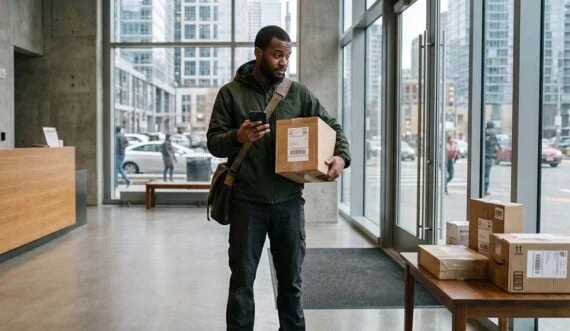
The ubiquity of e-commerce means that nearly every consumer has encountered a delivery mishap. Consider the scenario of a resident in a high-rise apartment building in a dense urban environment. In such buildings, specific protocols are often in place for deliveries, typically involving secure entry systems and designated drop-off locations, often monitored by security cameras. Many of these buildings utilize one-time passcodes for building and internal room access.
While these procedures are designed to be straightforward, they can pose challenges for gig drivers who may be unfamiliar with the building’s specific access requirements or unfamiliar with the nuances of navigating complex urban residential structures. The potential exists for packages to be left in less secure areas, such as lobbies or common hallways, increasing the risk of damage or, more critically, theft. This vulnerability to "porch piracy" remains a persistent concern for online shoppers. Similar issues can arise for suburban residents, where unattended packages left at the doorstep can be susceptible to theft or environmental damage.
The Challenge of Inconsistency: Impact on Brand Trust
It is important to acknowledge that errors are not exclusive to gig economy delivery services. Employees of established carriers like Amazon, UPS, FedEx, and the USPS are also human and occasionally make mistakes. However, the inherent structure of gig work—often involving part-time engagement and potentially less rigorous initial training—can amplify the risk of delivery failures.
The consequences of this inconsistency can manifest in several ways. Delivery times can become unpredictable, varying significantly from one order to the next. The placement of packages at the customer’s residence can differ based on the driver’s individual practices, deviating from established preferences or security protocols. Communication from drivers may be limited, sporadic, or entirely absent, leaving customers in the dark about their delivery status.
While large, established retailers often possess the resources and brand equity to absorb the costs associated with these delivery failures, such as customer service interventions, refunds, or managing negative reviews, small to midsize merchants operate with a far narrower margin for error. A single botched delivery, a misplaced package, or a lack of clear communication can result in substantial support costs and significant damage to their online reputation. The delivery experience, even when outsourced, becomes an integral part of the product itself, directly impacting the customer’s overall perception of the brand.
Navigating the Future: Balancing the Triad of Cost, Speed, and Quality
The evolving e-commerce delivery landscape presents a complex balancing act for merchants. The promise of speed and low cost, inherent in many local and gig-economy delivery models, must be carefully weighed against the potential for inconsistency and the critical need to maintain a high level of service quality.
To navigate this environment effectively, businesses must prioritize clear communication and robust monitoring. Setting realistic expectations with customers regarding delivery times and procedures is paramount. Furthermore, merchants need to implement systems for tracking delivery performance, actively monitoring customer complaints, and identifying recurring issues with specific delivery partners. This data can then inform strategic decisions, allowing for the optimization of delivery routes, driver selection, and overall service protocols.
Ultimately, in the modern e-commerce ecosystem, delivery transcends mere fulfillment. It has become a crucial touchpoint in the customer journey, a tangible representation of the brand’s commitment to its customers. The challenge lies in harnessing the efficiency of new delivery models while ensuring that the customer experience remains consistently positive, secure, and aligned with brand values. The ongoing innovation in last-mile logistics underscores a fundamental truth: in the competitive world of online retail, the delivery is not just the final step; it is an integral part of the brand experience. As consumer expectations continue to rise, the ability of businesses to master this final, critical mile will be a defining factor in their long-term success.

