
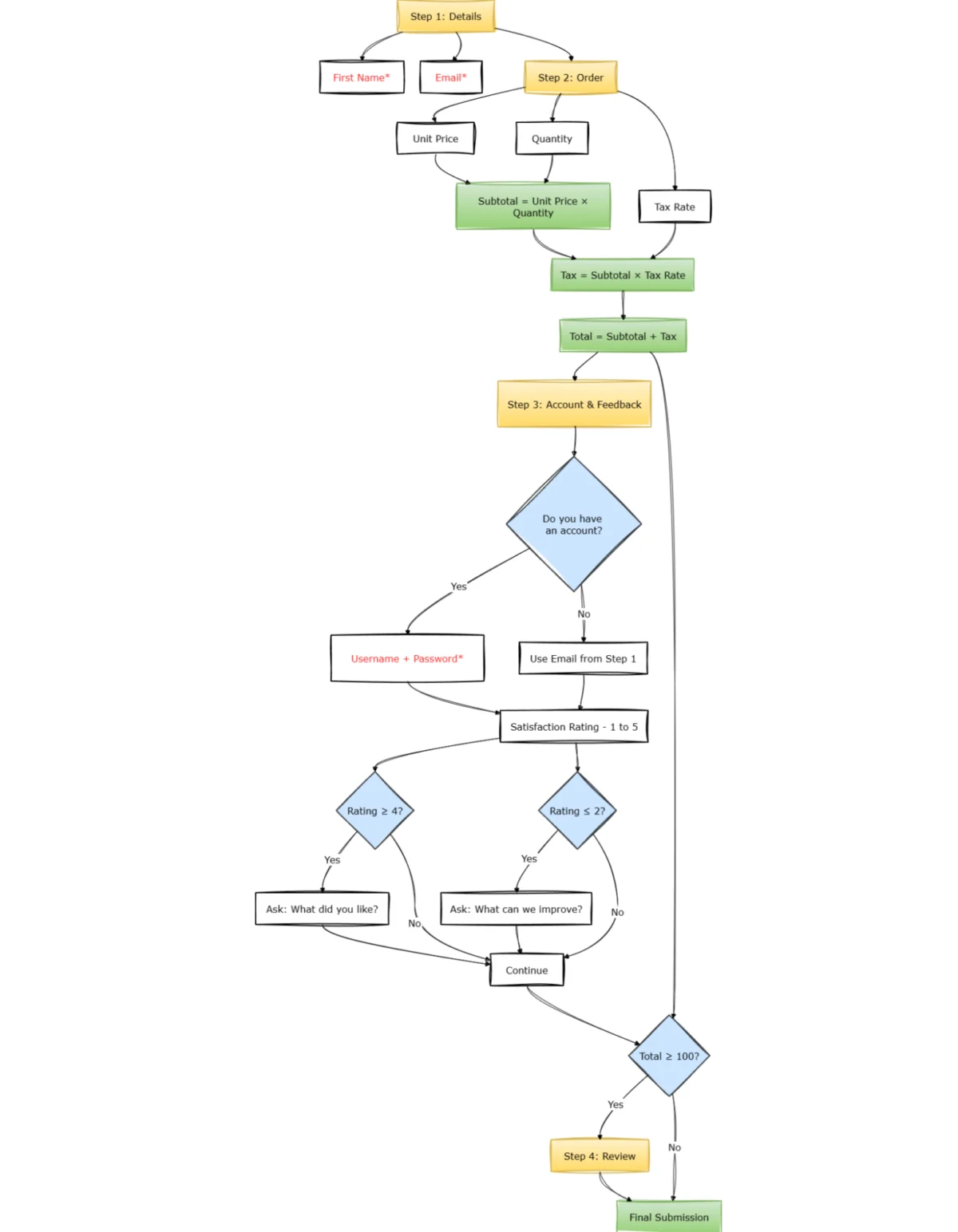
The standard mental model shared by modern React developers posits that forms are, and should always be, treated as UI components. In this paradigm, a stack typically comprising React Hook Form (RHF) for state management and Zod for schema validation has become the industry benchmark. This approach serves the vast majority of use cases effectively, particularly for standard interfaces such as login screens, user settings, and basic Create, Read, Update, and Delete (CRUD) modals. However, as software requirements scale, a quiet transformation often occurs: forms cease to be mere UI elements and evolve into complex rule engines. This architectural shift presents a critical challenge for engineering teams, forcing a choice between the familiar component-driven model and an emerging schema-driven alternative.
The Limits of the Component-Driven Paradigm
The prevailing React development strategy emphasizes composition. By using React Hook Form and Zod, developers can isolate re-renders and define the shape of their data with precision. This works seamlessly until a form begins to accumulate conditional visibility rules, cascading derived values, and complex multi-step navigation logic.
In a typical scenario, a developer might manage the first instance of conditional logic using an inline branch or a useWatch hook. As complexity grows, they may resort to Zod’s superRefine method to encode cross-field validation rules that exceed the capabilities of standard schema definitions. Eventually, the component tree becomes a repository for business logic rather than a representation of the user interface. This phenomenon is often described by senior architects as "logic leakage," where the step-by-step navigation of a form starts to dictate the application’s business flow.
Industry data suggests that as form complexity increases, the time spent on maintenance grows exponentially. According to a 2023 survey of frontend performance metrics, forms with more than ten conditional branches see a 40% increase in regression bugs when logic is managed solely within the component layer. This highlights a breakdown in the abstraction layer where the tool no longer matches the problem.
Case Study: A Comparative Analysis of Two Architectures
To understand the practical implications of this shift, consider a standard four-step order form requiring user details, order specifics (with calculated totals), account feedback, and a final review.
The React Hook Form and Zod Implementation
In the component-driven approach, the Zod schema defines the object’s shape, but it remains agnostic to the form’s pagination or navigation logic. Fields such as "username" or "password" are often typed as optional in the schema because their requirement is conditional, even if they are mandatory in practice when a user selects a specific option.
The React component must then handle:

- Local State: Managing the current step in the multi-page flow.
- Derived Calculations: Using
useMemooruseWatchto calculate subtotals and taxes in real-time. - Conditional Rendering: Using JSX branches to show or hide fields based on previous answers.
- Navigation Logic: Determining if a user should proceed to a "Review" page or submit directly based on the order total.
While this remains idiomatic React, it creates a system that is difficult to inspect. To understand the conditions under which a specific page appears, an engineer must trace logic through multiple hooks and render conditions. This architecture necessitates a full development cycle—code changes, pull requests, and deployments—for even minor adjustments to business rules.
The Schema-Driven Approach with SurveyJS
The alternative model treats the form as data rather than code. Using a schema-driven engine like SurveyJS, the entire form—including its structure, validation, visibility rules, and navigation—is defined in a single JSON object. This schema is then interpreted by a runtime "Model" that handles the logic.
In this model, visibility is handled via visibleIf properties within the JSON, and calculations are managed through internal expression engines. The React component is reduced to a thin wrapper that renders the engine and handles the final API submission. This decoupling allows the business logic to exist independently of the UI framework.
Chronology of React Form Evolution
The transition toward rule engines is the latest step in a decade-long evolution of form management in the React ecosystem:
- 2013–2015: The Era of Controlled Components. Developers manually managed state with
useStateor Redux-Form, leading to verbose code and performance bottlenecks. - 2016–2018: The Rise of Render Props. Libraries like Formik popularized the use of render props to manage form state, improving developer experience but often resulting in "wrapper hell."
- 2019–2021: The Hook Revolution. React Hook Form introduced a performance-first approach by using uncontrolled components and refs, significantly reducing re-renders.
- 2022–Present: The Shift to Headless and Schema-Driven Engines. As enterprise applications demand more flexibility, the industry is moving toward decoupling logic from the component tree entirely.
Supporting Data and Industry Implications
The shift toward schema-driven forms is driven by operational efficiency. Internal benchmarks from several fintech firms indicate that moving form logic to a JSON-based schema can reduce "time-to-market" for form updates by up to 60%. This is primarily because non-engineering stakeholders, such as product managers or legal teams, can potentially modify form behavior through internal tools without requiring a full software release.
Furthermore, the "rule engine" approach addresses the "Tuesday Afternoon Problem." In a component-driven model, a request to change a tax threshold or add a legal disclaimer requires an engineer to open a ticket, modify JSX, and wait for a CI/CD pipeline. In a schema-driven model, the JSON can be fetched from a database or a headless CMS, allowing for near-instantaneous updates.
Official Responses and Expert Analysis
Technical leads at major software consultancies have begun advocating for a "hybrid" approach. "We are seeing a clear divide in how forms are architected," says a principal engineer at a leading global tech firm. "For static, high-traffic pages like sign-up forms, the RHF+Zod stack remains unbeatable for its performance and SEO friendliness. However, for internal tools, insurance applications, and complex configuration wizards, the schema-driven model is becoming the mandatory standard to avoid technical debt."
The consensus among industry experts suggests that the choice of architecture should be dictated by the "weight" of the logic. If the primary complexity of a form lies in its layout and styling, the component model is superior. If the complexity lies in the conditions, outcomes, and rules, the schema model is the more honest fit for the problem.

Broader Impact on Frontend Development
The emergence of form rule engines signals a broader trend in frontend engineering: the move toward "Headless" architecture. Just as Headless CMSs decoupled content from presentation, and Headless UI libraries decoupled logic from styling, schema-driven forms are decoupling business rules from the component tree.
This transition has significant implications for the future of the React ecosystem. It suggests that as applications grow in complexity, the role of the React developer is shifting from writing imperative UI logic to building robust systems that can interpret and render data-driven configurations.
Conclusion and Strategic Recommendations
Choosing between a component-driven and a schema-driven approach is not a matter of selecting the "better" tool, but rather the "appropriate" abstraction.
Engineering teams should opt for React Hook Form and Zod when:
- The form is relatively static and serves as a core part of the user experience.
- High-performance, custom-styled UI is a priority.
- The validation logic is straightforward and unlikely to change frequently.
Teams should transition to a schema-driven model like SurveyJS when:
- The form features complex branching and multi-page navigation.
- Non-technical stakeholders need the ability to update rules or fields.
- The form behavior needs to be dynamic or persisted in a database for cross-platform use (e.g., sharing the same logic between a web app and a mobile app).
As the web continues to handle more complex business processes, the ability to recognize when a form has outgrown its UI component roots will be a defining skill for senior frontend architects. The goal is no longer just to make a form that works, but to build a system that is inspectable, maintainable, and resilient to change.

