
The Evolution of Design Frameworks: From Industrial Design to AI
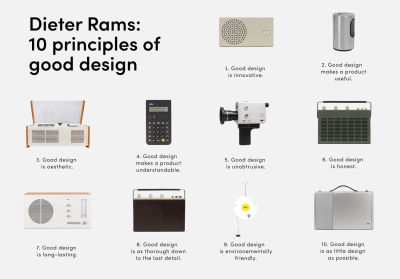
The concept of design principles is not a modern digital invention but rather a continuation of a lineage of industrial excellence. In the mid-20th century, Dieter Rams, the legendary designer for Braun, established ten principles for "good design" that remain the gold standard for the industry. Rams argued that design should be innovative, useful, aesthetic, understandable, unobtrusive, honest, long-lasting, thorough down to the last detail, environmentally friendly, and involve as little design as possible. These tenets were not merely aesthetic preferences; they were business imperatives that allowed Braun to dominate the consumer electronics market for decades.
As the industry transitioned from physical products to digital interfaces, the necessity for such frameworks became even more pronounced. In the early 2000s, the rise of "Design Systems" allowed companies like Google (Material Design) and Apple (Human Interface Guidelines) to scale their products globally while maintaining a unified voice. Today, the challenge has evolved again. With AI tools capable of producing "passable" designs nearly instantaneously, the danger for modern organizations is no longer a lack of output, but a lack of intentionality. Without established principles, product initiatives frequently become sporadic and ad-hoc, resulting in user experiences that feel vague, inconsistent, and disconnected from the brand’s core mission.
Current Industry Data and the Cost of Inconsistency
Market research indicates that design consistency has a direct correlation with consumer trust and operational efficiency. According to recent industry reports on the ROI of design, companies with high design maturity—defined by the consistent application of design principles and systems—outperform their competitors in revenue growth by nearly two-to-one. Conversely, "design debt," the cumulative cost of inconsistent UI and UX decisions, can slow down development cycles by as much as 30% as engineers and designers spend excessive time debating repetitive decisions that should have been standardized.
Furthermore, the "voice and tone" of a product, if not intentionally designed, is often defined by the users themselves or by the default settings of the AI tools used to build them. This lack of agency leads to products that lack a distinct point of view. Effective design principles provide this point of view by explicitly defining what an organization does not do as much as what it does. This strategic exclusion is what separates a visionary product from a generic one.
Establishing a Shared Purpose: The 8-Step Workshop Framework
Establishing design principles is a collaborative process that extends beyond the design department. Experts such as Marcin Treder and Maria Meireles advocate for a cross-functional approach involving stakeholders from engineering, product management, customer support, and marketing. To move from abstract ideas to actionable guidelines, many organizations are adopting a structured 8-step workshop methodology:
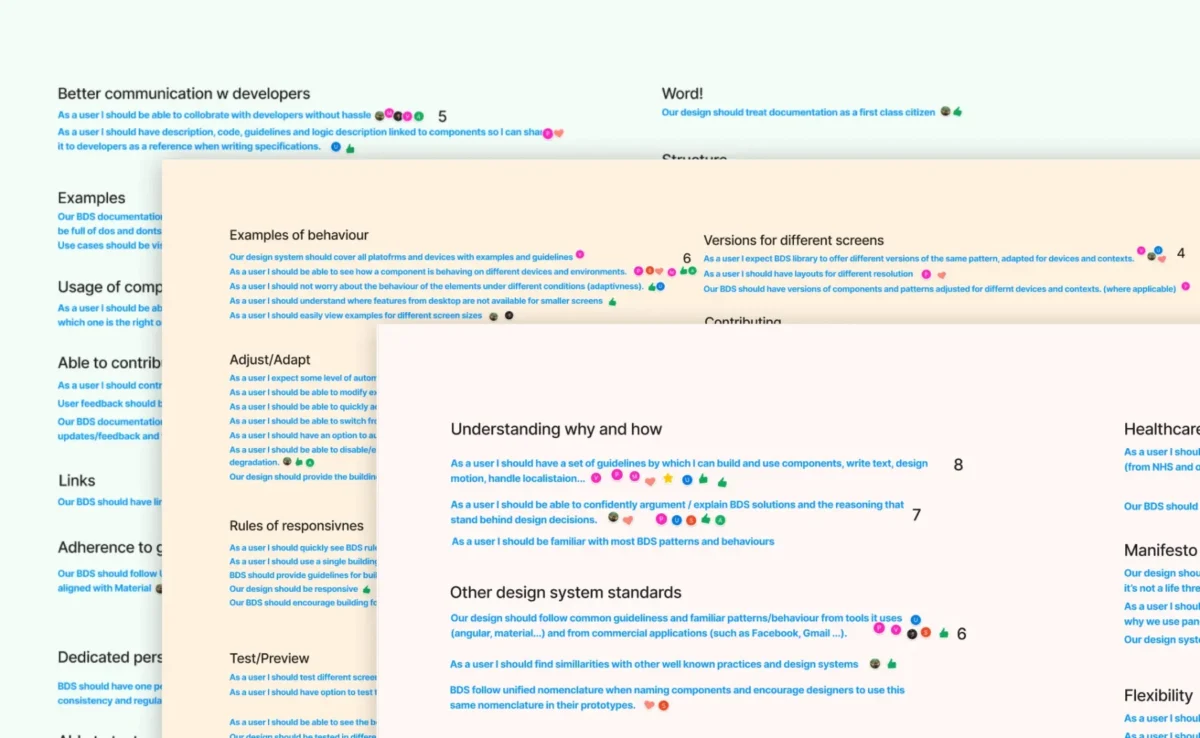
- Preparation and Research: The team gathers existing feedback, brand values, and user research to identify recurring themes and pain points.
- Keyword Brainstorming: Participants generate a list of keywords that describe the ideal state of the product (e.g., "transparent," "efficient," "playful").
- Affinity Mapping: These keywords are grouped into clusters to identify dominant themes.
- Drafting Principles: Each cluster is transformed into a short, punchy sentence that provides a clear directive.
- Critique and Refinement: The team evaluates whether the drafted principles are too vague. A good principle should be "arguable"—meaning a reasonable person could propose the opposite. For example, "Easy to use" is a weak principle because no one would argue for "Hard to use." In contrast, "Efficiency over Discovery" is a strong principle because it makes a specific trade-off.
- Dot Voting: Team members vote on which principles most accurately reflect the organization’s unique value proposition.
- Documentation: The finalized principles are documented with examples of "good" and "bad" applications to ensure clarity.
- Integration: The principles are embedded into the design system, pull request templates, and project kickoff documents.
The Role of Principles in the Age of AI Interfaces
The emergence of AI-driven interfaces has introduced a new layer of complexity to design alignment. Vitaly Friedman, a prominent UX expert and founder of Smashing Magazine, has recently highlighted the need for specific design patterns for AI. As AI systems become more autonomous, the design principles must address issues of transparency, trust, and human-in-the-loop interactions.
Industry leaders are now integrating AI-specific principles into their frameworks. These often include:
- Transparency of Origin: Clearly indicating when content is AI-generated.
- Graceful Failure: Designing how a system should behave when an AI model provides a low-confidence or incorrect output.
- User Empowerment: Ensuring that AI acts as a co-pilot rather than an autonomous agent that strips the user of control.
Friedman’s "Design Patterns for AI Interfaces" suggests that without these principles, the "hype and noise" surrounding AI can lead to features that are technologically impressive but functionally useless or even detrimental to the user experience.

Expert Perspectives and Organizational Reactions
Design leaders across the globe are increasingly vocal about the "humanity" of design principles. The sentiment is that in a world of automated efficiency, human-centered values become the primary differentiator. Ben Brignell’s "Principles.design," an open-source repository of over 230 design principles from various organizations, serves as a testament to the industry’s commitment to this cause. The repository covers everything from language and infrastructure to hardware and ethics, providing a searchable database for teams looking to benchmark their own standards.
Reaction from the developer community has been similarly supportive. Engineers often cite "decision fatigue" as a major hurdle in rapid development. When design principles are clearly defined, they act as a "North Star" that reduces the need for endless meetings and debates over button placements or modal behaviors. "It’s about making the right thing the easiest thing to build," noted one senior product engineer during a recent UX summit.
Broader Impact and Future Implications
The long-term impact of adopting rigorous design principles extends beyond the immediate product team. It influences organizational culture, making the company’s values tangible to every employee. For the end user, the result is a product that feels "honest and sincere," much like the Braun products of the Dieter Rams era.
As we look toward the future, the integration of design principles into automated workflows will likely increase. We may see "Principle-Linter" tools that automatically flag designs or code that violate established organizational guidelines. However, the core of the work remains inherently human. Design principles are a reflection of what a team stands for in the world—beyond profits and stock prices.
In conclusion, design principles are the antidote to the "sporadic and dull" initiatives that plague many modern corporations. By investing the time to define, share, and embed these values, organizations can navigate the complexities of the AI era with a clear sense of purpose. They ensure that as we build faster and more powerful tools, we do so without losing sight of the human needs and values that design is ultimately meant to serve. The move from "random design" to "principled design" is not just a trend; it is a necessary evolution for any organization that wishes to remain relevant in a world increasingly defined by machine-generated output.

