

The e-commerce landscape is experiencing a significant surge of innovation, with companies across the globe unveiling a suite of new products and services designed to empower merchants, optimize operations, and elevate customer experiences. This week’s rundown highlights advancements in artificial intelligence for store building and customer engagement, alongside crucial updates in shipping logistics, composable commerce frameworks, shoppable media, and payment processing. These developments signal a strategic shift towards more intelligent, integrated, and user-centric e-commerce ecosystems.
AI Revolutionizes Store Creation and Customer Engagement
The rapid evolution of Artificial Intelligence is profoundly reshaping how businesses establish and manage their online presence. This week saw several key players introduce AI-driven solutions aimed at simplifying complex processes and unlocking new avenues for growth.
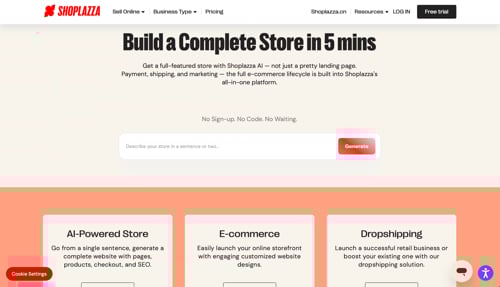
Shoplazza Launches AI Store Builder for Rapid E-commerce Deployment
Shoplazza, a prominent platform catering to direct-to-consumer (DTC) brands, has officially launched its AI Store Builder. This innovative tool is designed to drastically reduce the time and technical expertise required for merchants to create, launch, and operationalize their online stores. The process is initiated by merchants describing their products, brand positioning, and target markets using natural language prompts. The AI then autonomously constructs essential e-commerce components, including homepage layouts, product pages with descriptions and imagery, collection structures, and even foundational policy content. This approach significantly lessens the reliance on manual configuration and specialized technical resources, a critical development for small to medium-sized businesses (SMBs) aiming for agility in a competitive market. Data from Statista indicates that the global e-commerce market is projected to reach over $6.3 trillion by 2024, underscoring the increasing demand for efficient and scalable store-building solutions.

Stable Commerce Emerges as an AI-Powered E-commerce Platform
Joining the AI-driven storefront revolution is Stable Commerce, a new entrant in the e-commerce platform space. This AI-powered solution empowers merchants to create and manage online stores through an intuitive chat-based interface. Users can articulate their product offerings and desired store functionalities in plain language, and the AI agent subsequently generates a fully functional storefront. This includes page design, detailed product pages, seamless checkout integration, and shipping setup. Furthermore, merchants can leverage the same conversational interface for ongoing store management, enabling them to modify layouts, update product listings, or alter content with ease. This democratizes e-commerce store management, making advanced functionalities accessible to a broader range of entrepreneurs.
Adobe Expands AI Capabilities for Brand Visibility and Customer Lifecycle Management
Adobe has announced a significant push into generative AI with the introduction of a dedicated brand visibility tool. This new offering is specifically designed to enhance a brand’s presence on generative AI platforms, a burgeoning area for content discovery and interaction. In parallel, Adobe is expanding its Experience Manager with a contextual layer for AI agents, enabling more dynamic and personalized content delivery. The company also unveiled CX Enterprise, an agentic AI system engineered to streamline the entire customer lifecycle. From initial prospect acquisition and engagement through to driving conversions and fostering long-term loyalty, CX Enterprise aims to provide businesses with a more intelligent and automated approach to customer relationship management. This strategic move by Adobe positions them at the forefront of AI integration within enterprise content and customer experience solutions.
Kaltura Integrates Conversational Avatars and Video Intelligence into CMS Platforms
Kaltura, a recognized provider of advanced video solutions and agentic AI tools, has announced significant integrations with leading content management systems (CMS), including Adobe Experience Manager, WordPress, and Drupal. This collaboration allows organizations utilizing these platforms to embed Kaltura’s advanced video experiences as native components. The integration facilitates the deployment of agentic avatars designed to greet and assist website visitors, provide conversational search functionalities, and enable interactive video content. These advancements are poised to enhance user engagement and provide more dynamic, intelligent interactions within digital content. The increasing adoption of video in marketing, with projections suggesting video will account for over 82% of all consumer internet traffic by 2025, makes this integration particularly timely.
Parsnipp Launches AI Search and GEO Platform for Optimized Discovery
Parsnipp has introduced a new generative engine optimization (GEO) platform, a tool designed to help brands understand and improve their visibility within AI-driven discovery and search environments. The platform analyzes how brands appear across Large Language Models (LLMs) by identifying specific signals, misconfigurations, and content gaps. Key features include brand analytics across LLMs, competitor tracking, GEO content optimization, search persona modeling, and AI readiness recommendations. As AI search engines become more prevalent, tools like Parsnipp’s are becoming essential for ensuring brands are discoverable and effectively communicating their value proposition in these new digital paradigms.

Streamlining Logistics and Operations for E-commerce Merchants
Beyond the realm of AI, significant advancements are being made in the operational backbone of e-commerce, focusing on efficiency, cost reduction, and enhanced convenience for both merchants and consumers.
Australia Post Enhances Convenience for eBay Sellers with In-Store Label Printing
Australia Post has launched a new "Print in Store" capability, offering eBay sellers a streamlined method for generating shipping labels. Participating post offices now allow eBay sellers to print their shipping labels by simply scanning a QR code provided by eBay. This initiative simplifies the shipping process, reducing the need for sellers to manage their own printing equipment. This service follows Australia Post’s recent introduction of a new small parcel option for items under 250 grams, piloted in collaboration with eBay. These efforts reflect a growing trend of postal services partnering with e-commerce platforms to enhance the seller experience and facilitate more efficient logistics. The volume of e-commerce parcels continues to grow globally, with projections indicating a significant increase in last-mile delivery needs.
UPS Deploys RFID Sensing Technology to Eliminate Manual Scanning
UPS is implementing radio frequency identification (RFID) sensing technology across its U.S. small package network. This advanced technology is now integrated into all UPS delivery vehicles and facilities, as well as on every package shipped through UPS Stores. The RFID sensing system automatically confirms the pickup and possession of packages, thereby eliminating the need for manual scanning. This innovation promises to enhance tracking accuracy, improve operational efficiency, and provide greater visibility into the logistics chain. Such technological advancements are crucial for managing the increasing volume and complexity of e-commerce shipments.
Evolving Commerce Architectures and Payment Solutions
The underlying architecture of e-commerce platforms and the methods by which transactions are processed are also undergoing significant transformation, driven by demands for flexibility, security, and seamless integration.

Vaimo Launches Nexus, an Orchestration Platform for Composable Commerce
Vaimo, a specialized e-commerce developer, has introduced Nexus, a frontend orchestration platform designed for composable commerce. Nexus acts as an intermediary between frontend and backend systems, offering a composable architecture that avoids the need for large-scale rebuilds or prohibitive overhead. The platform features an orchestration layer that aggregates data across disparate systems, a high-performance frontend layer, and pre-built connectors for popular platforms like Commercetools, Adobe Commerce, Contentful, and Sanity. As a component of the Vaimo Accelerator program, Nexus aims to provide businesses with greater agility and control over their digital commerce experiences. The composable commerce market has seen substantial growth, driven by the need for flexible and adaptable e-commerce solutions.
Payabl. Launches Click to Pay with Visa to Enhance Checkout Security and Conversion
Financial technology provider Payabl. has launched "Click to Pay with Visa," a new service designed to improve checkout conversion rates and reduce fraud for merchants. This solution replaces manual card number entry with token-based checkouts, allowing customers to complete purchases in just a few clicks once their card is enrolled. Available through Payabl.checkout, the service enables merchants to easily activate Visa Click to Pay across various devices while maintaining existing security protocols. This move aligns with industry efforts to simplify and secure online payments, a critical factor in reducing cart abandonment rates, which can average around 70% for online shoppers.
Gr4vy Launches Toolkit for Agentic Payments and AI-Native Storefronts
Gr4vy, a payment orchestration platform, has announced support for agentic transactions, enabling merchants to manage and process payments within AI-driven environments. To further equip businesses for the future of commerce, Gr4vy is also releasing its Agentic Development Kit. This toolkit is designed to guide merchants in building and launching AI-native storefronts on platforms like ChatGPT and other generative AI technologies. According to Gr4vy, this allows merchants to deploy AI-native storefronts, orchestrate AI transactions in real-time, and maintain robust control over performance, security, and the overall customer experience. The integration of AI into payment processing signifies a new frontier in e-commerce, promising more personalized and efficient transaction flows.
Enhancing Marketing Campaigns and Media Engagement
The integration of marketing tools with e-commerce platforms continues to evolve, with a focus on creating more cohesive and impactful campaigns that drive engagement and conversions.
Klaviyo Expands Integration with Canva for Accelerated Marketing Campaigns
Klaviyo, a leading platform for email, text, and marketing automation, has announced an expanded integration with Canva. This enhancement allows marketers to seamlessly import their Canva designs into Klaviyo. Once imported, these designs can be further refined and personalized using Klaviyo’s robust segmentation, automation, and customer data capabilities. This collaboration aims to streamline the campaign creation process, enabling marketers to produce visually appealing and highly targeted campaigns more efficiently. The synergy between design tools and marketing automation platforms is critical for brands looking to deliver consistent and engaging customer communications across multiple touchpoints.
Wayvia Launches Shoppable Next Generation for Enhanced Shoppable Media
Wayvia, an omnicommerce platform, has unveiled Shoppable Next Generation, an AI-powered update to its shoppable media tool. This advanced solution empowers brands to transform any marketing touchpoint—including display ads, social media posts, and email campaigns—into shoppable moments within minutes. The update provides customizable landing page templates optimized for conversion, basket building, and brand awareness. Each template is designed to map directly to specific campaign objectives within Meta Ads Manager. This advancement signifies a move towards more integrated and interactive marketing strategies, where content directly drives commerce. The ability to create shoppable experiences across diverse media channels is becoming increasingly vital for capturing consumer attention and facilitating impulse purchases.
Empowering Small Businesses and B2B E-commerce
Dedicated solutions are also emerging to address the unique needs of small businesses and the complexities of the B2B e-commerce sector.
SiteGround Launches All-in-One E-commerce Platform for Small Businesses
SiteGround, known for its web hosting and small business growth services, has launched SiteGround Ecommerce. This new platform is specifically designed for new sellers, offering a comprehensive suite of tools for managing payments, shipping, taxes, orders, and inventory. Additional features include built-in marketing tools aimed at helping store owners improve their online visibility and convert visitors into customers. This initiative provides a more accessible entry point for small businesses looking to establish and scale their e-commerce operations without requiring extensive technical expertise.

BlueSwitch Launches Unified Commerce Suite for B2B Shopify Merchants
BlueSwitch, a Shopify Platinum Partner, has introduced its Unified Commerce Suite. This curated collection of production-ready Shopify modules is engineered to address the specific operational challenges faced by B2B merchants. The suite tackles critical gaps across pricing strategies, order management, customer onboarding, fulfillment processes, shipping logistics, and account workflows. By offering specialized solutions for the B2B market, BlueSwitch aims to enhance efficiency and streamline operations for businesses operating within this complex segment of e-commerce. The B2B e-commerce market is substantial and growing, with many traditional businesses seeking to modernize their sales channels.
The collective impact of these innovations points towards a future where e-commerce is more intelligent, automated, and deeply integrated into every aspect of the customer journey. From AI-driven store creation and personalized marketing to streamlined logistics and secure, flexible payment systems, the latest wave of e-commerce tools is poised to redefine how businesses connect with their customers and drive growth in the digital age.

