
Crystalys Therapeutics, a San Diego-based biopharmaceutical company focused on the development of transformative treatments for metabolic and inflammatory diseases, has announced the successful closing of a $130 million Series B financing round. This significant capital infusion, led by Frazier Life Sciences, arrives less than a year after the company emerged from stealth with a $205 million Series A. The funding is specifically earmarked to advance the global Phase 3 clinical development and eventual commercialization of dotinurad, a highly selective urate transporter 1 (URAT1) inhibitor designed to treat gout by lowering serum uric acid (sUA) levels.
The financing marks a critical milestone for Crystalys as it prepares to navigate the complex regulatory landscape of the United States and other international markets. With a total of $335 million raised in under twelve months, the company is positioned as one of the most well-capitalized private ventures in the rheumatology space. The Series B round saw participation from a diverse syndicate of "crossover" investors—firms that traditionally support both private and public entities—suggesting that Crystalys may be laying the groundwork for a future initial public offering (IPO).
The Clinical Evolution of Dotinurad
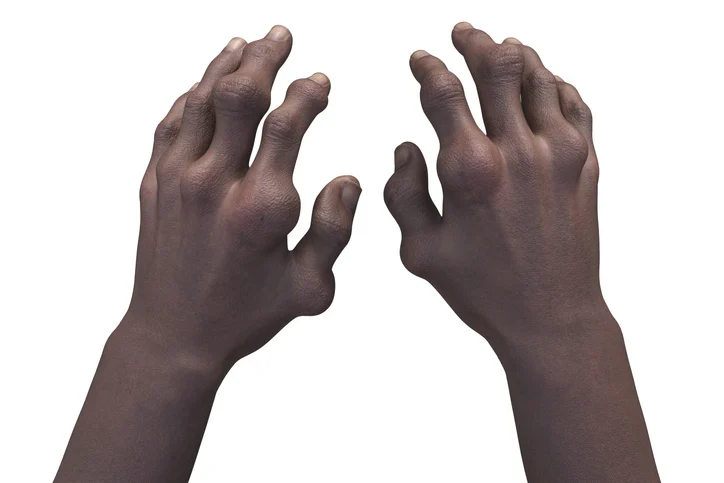
Dotinurad is a small molecule inhibitor that targets the URAT1 protein in the kidneys. In the human body, uric acid is a waste product filtered by the kidneys; however, the URAT1 transporter often reabsorbs this acid back into the bloodstream. For patients with gout, this reabsorption process is often overactive, leading to hyperuricemia—a condition where uric acid levels exceed the body’s ability to keep them in solution. When levels become too high, uric acid precipitates into needle-like crystals that deposit in joints and soft tissues, triggering agonizing inflammatory attacks known as gout flares.
By selectively blocking URAT1, dotinurad facilitates the excretion of uric acid through urine, thereby lowering systemic levels. According to James Mackay, CEO of Crystalys Therapeutics, the mechanism is straightforward yet potent: "If you block the transporter, you basically urinate out more uric acid."
The drug is currently being evaluated in two pivotal Phase 3 studies and one ongoing Phase 2 study. These trials are strategically designed to cover a broad spectrum of the gout patient population, including those who have failed to reach target uric acid levels on current standard-of-care treatments and those with comorbid conditions such as chronic kidney disease.
A History of Strategic Licensing and Global Success
While Crystalys is a relatively new player in the American biotech scene, dotinurad itself has a well-documented history of clinical success. The drug was originally discovered and developed by Fuji Yakuhin, a prominent Japanese pharmaceutical firm. Under the brand name Urece, dotinurad was approved in Japan in 2020 and has since been commercialized in several other Asian markets.
The rights to dotinurad for the U.S. and other specific global territories were initially secured by Urica Therapeutics. In a strategic move last year, Urica licensed these rights to Crystalys Therapeutics in exchange for an equity stake and future financial considerations. Under the terms of the agreement, Urica remains eligible for a 3% royalty on net sales should the product receive regulatory approval in the licensed regions. This arrangement allowed Crystalys to inherit a "de-risked" asset with a significant amount of existing safety and efficacy data from its use in Asian populations, providing a robust foundation for the ongoing U.S. FDA-pivotal trials.
The Gout Market: A Landscape Ripe for Innovation
Gout is often colloquially referred to as a "disease of kings," a historical misnomer that belies its status as the most common form of inflammatory arthritis in the world. In the United States alone, approximately 9.2 million adults suffer from the condition. Despite its prevalence, the therapeutic landscape for gout has remained largely stagnant for decades.
The current standard of care is allopurinol, a xanthine oxidase inhibitor (XOI) that was first approved in the 1960s. Allopurinol works by reducing the production of uric acid. While effective for many, a significant percentage of patients—estimated between 30% and 50%—do not achieve the clinically recommended sUA level of less than 6.0 mg/dL on allopurinol alone. For these "refractory" patients, the options are limited.
Until recently, Takeda Pharmaceutical’s Uloric (febuxostat) served as a common second-line option. However, Uloric became the subject of a FDA "black box" warning due to an increased risk of cardiovascular death, and Takeda eventually discontinued the product earlier this year, leaving a substantial void in the market. Amgen’s Krystexxa (pegloticase) is available for severe, uncontrolled gout, but it requires intravenous infusion and is generally reserved as a third-line treatment for patients with visible crystal deposits (tophi).
The emergence of URAT1 inhibitors like dotinurad represents a shift toward "uricosuric" therapy—treatments that increase acid excretion rather than just decreasing production. This approach is particularly relevant because the majority of gout patients are "under-excretors" rather than "over-producers" of uric acid.
Competitive Pressures and the URAT1 Race
Crystalys is not alone in its pursuit of the URAT1 market. The sector has seen a flurry of activity in recent months, most notably the acquisition of Arthrosi Therapeutics by Swedish Orphan Biovitrum (Sobi). In December 2023, Sobi entered into a deal worth up to $950 million to acquire Arthrosi and its lead candidate, pozdeutinurad (formerly AR882).
The competition intensified in May 2024 when Sobi released preliminary Phase 3 results for pozdeutinurad. The data showed that the drug successfully met its primary endpoint of reducing serum uric acid levels at six months compared to a placebo. With both Crystalys and Sobi moving toward the finish line, the gout market is poised for its first major therapeutic shakeup in over half a century.
The differentiation between these two candidates may ultimately hinge on safety profiles and dosing flexibility. Crystalys is betting that dotinurad’s high selectivity for URAT1—minimizing interactions with other transporters like OAT1 or OAT3—will translate into a superior safety profile, particularly concerning renal health.
Investor Confidence and the Path to an IPO
The Series B round was notable not just for its size, but for the caliber of the participating investors. Led by Frazier Life Sciences, the syndicate included Wellington Management, HBM Healthcare Investments, Soleus Capital, Cormorant Asset Management, and several others. Existing investors from the Series A round, including Novo Holdings and SR One, also doubled down on their commitment.
The presence of "crossover" investors like Wellington and Cormorant is a strong indicator of a company’s maturity. These firms typically invest in private companies with the expectation of an IPO within 12 to 18 months. When asked about the potential for going public, CEO James Mackay remained pragmatic: "We are keeping all our financing options open for now."
Regardless of the eventual exit strategy, the $130 million provides Crystalys with a comfortable "runway" to complete its Phase 3 program. The funds are earmarked for several key activities:
- Completion of Pivotal Trials: Finalizing the data collection for the global Phase 3 studies required for FDA submission.
- Regulatory Milestones: Preparing the New Drug Application (NDA) and engaging in pre-submission meetings with regulatory bodies.
- Commercial Readiness: Building the infrastructure for a commercial launch, including supply chain management and medical affairs teams.
- Expansion of Indications: Exploring the potential of dotinurad in other conditions related to hyperuricemia.
Broader Implications for Rheumatology
The success of Crystalys’s funding round reflects a broader trend in the biotech industry: a return of investor interest to "unsexy" but high-prevalence chronic diseases. While oncology and rare genetic disorders have dominated venture capital for the last decade, the massive unmet need in rheumatology is becoming impossible to ignore.
As gout is closely linked to metabolic syndrome, obesity, and hypertension—all of which are on the rise globally—the demand for effective, safe, and easy-to-administer oral therapies is projected to grow. If dotinurad successfully clears its Phase 3 hurdles, it could become a cornerstone of gout management, offering a new lease on life for millions of patients who currently live in fear of the next debilitating flare.
The medical community will be watching closely as Crystalys prepares to present more detailed data from its ongoing trials at upcoming scientific congresses. For now, the $130 million Series B serves as a powerful vote of confidence in both the science of dotinurad and the strategic vision of the Crystalys leadership team. With the gout treatment paradigm on the cusp of change, Crystalys Therapeutics has secured the resources necessary to lead the charge.

