
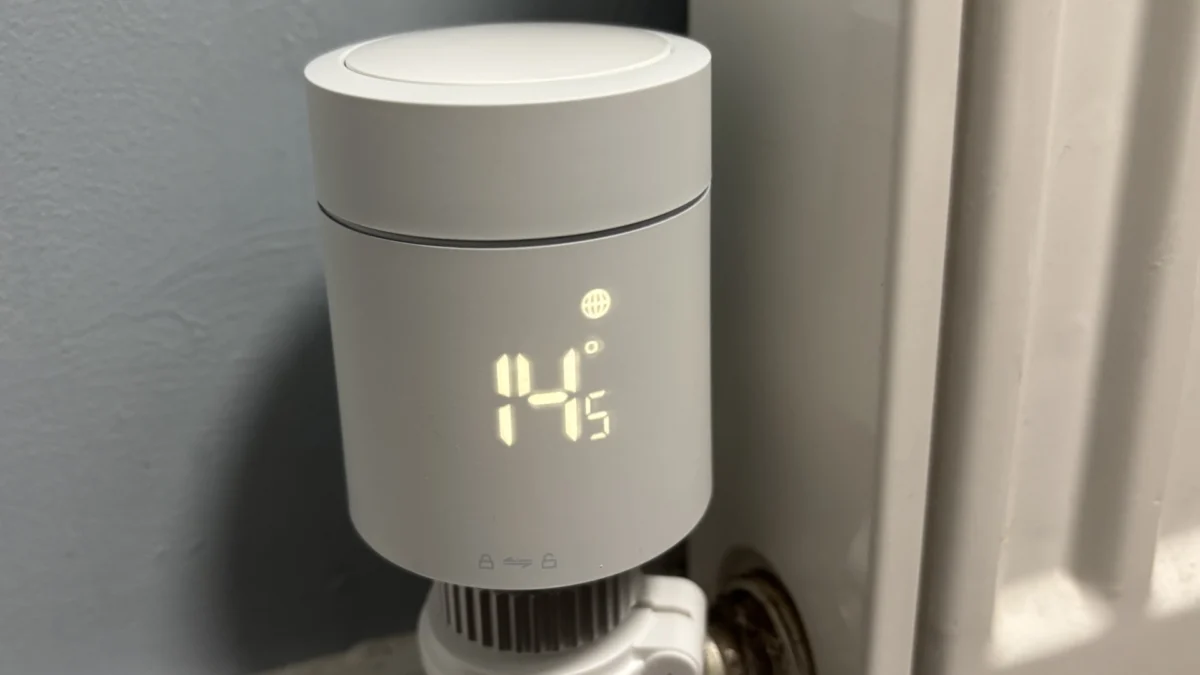
The Aqara Radiator Thermostat W600 emerges as a compelling smart thermostatic radiator valve (TRV) that bridges the gap between basic temperature regulation and advanced whole-home heating management. Priced competitively, this device introduces the much-anticipated Matter connectivity standard, offering a significant upgrade over its predecessor, the E1 model. Its thoughtful design, straightforward installation, and the crucial choice between the convenience of Matter over Thread and the richer feature set of Aqara’s proprietary Zigbee ecosystem make it a noteworthy contender in the burgeoning smart home heating market. When integrated within the Aqara ecosystem, the W600 proves itself to be a dependable and genuinely useful tool for achieving granular control over individual room temperatures. However, its performance outside of this native environment, while functional, exhibits a less polished user experience, suggesting that existing Aqara hub owners stand to gain the most from its capabilities.

A Strategic Position in the Smart Heating Landscape
Smart radiator thermostats occupy a unique niche within the smart home ecosystem. On one end of the spectrum are comprehensive heating platforms, such as those offered by Tado and Honeywell’s Evohome, which aim to manage an entire home’s heating system from the boiler outwards. At the other extreme are simpler smart thermostats that primarily offer remote control or basic scheduling, often saving users little more than a walk to the physical thermostat. The Aqara Radiator Thermostat W600 positions itself strategically between these two extremes, offering room-level control that operates independently of the main boiler system, yet with the added advantage of Matter over Thread compatibility. This dual-protocol approach, reminiscent of Eve Thermo but at a significantly lower price point, allows consumers to tailor their smart heating experience to their existing infrastructure and preferences.
Brands like TP-Link, Netatmo, and Shelly have also introduced TRVs in a similar price bracket, but none currently offer the same level of Matter integration as the W600. This makes Aqara’s offering particularly attractive to users looking to build a future-proof smart home infrastructure that can seamlessly integrate with a growing number of Matter-certified devices. The ability to control individual rooms independently can lead to significant energy savings by avoiding the overheating of unoccupied spaces and ensuring that only the necessary radiators are active.

Design and Installation: Refined Aesthetics Meet User-Friendly Setup
Visually, the W600 represents a clear design evolution from the Aqara Radiator Thermostat E1, which was released in 2022. The new model sports a more refined and confident aesthetic, drawing comparisons to higher-end options like Tado rather than appearing as a budget accessory. The matte white casing blends unobtrusively with most radiator designs, and the front-facing display is sharp, bright, and easy to read. Key information, including the current temperature and operational status, is clearly indicated by intuitive icons. A particularly user-friendly feature is the screen’s ability to rotate, ensuring readability regardless of the thermostat’s mounting orientation on the radiator valve.
Manual control is facilitated by twisting the thermostat’s body, a common and intuitive mechanism in TRVs. An additional button is located on the top of the unit, serving various functions. While this button is a necessary component, it is identified as one of the weaker aspects of the W600’s design. The various press combinations required for different operations, such as factory resets or mode switching, are not immediately obvious and often necessitate referring to the user manual for clarification. This could present a minor hurdle for users who prefer a completely intuitive interface without relying on documentation.

Installation, however, is a significantly smoother process. Aqara has included a comprehensive selection of valve adapters in the box, ensuring compatibility with M30x1.5 fittings and a wide array of other common radiator valve types. The mounting hardware itself is constructed from metal, lending a sense of solidity and durability that surpasses what is often found in more expensive competing products. Replacing an existing TRV, such as a Tado unit, with the W600 proved to be a swift operation, taking under five minutes once the correct adapter was identified and fitted.
Following the physical installation, the thermostat initiates an automatic calibration process. This crucial step allows the W600 to learn the full range of motion of the radiator valve, ensuring accurate temperature control. This calibration can also be manually triggered via the accompanying Aqara app if necessary. The app itself provides clear, step-by-step guidance throughout the installation process, complete with helpful diagrams. The W600 is powered by two AA batteries, which are accessed by removing the outer casing. A word of caution is warranted here: the internal LEDs are exceptionally bright once the casing is removed, so direct eye contact should be avoided. This is also where users will find the QR codes essential for both Matter and Aqara ecosystem pairing.

Ecosystem Support: A Tale of Two Protocols
A defining characteristic of the W600, and indeed many recent Aqara devices, is its dual-protocol capability. Users can choose to operate the thermostat either as a Matter over Thread device or as a Zigbee device integrated into the Aqara ecosystem. It is important to note that only one protocol can be active at any given time, requiring a deliberate choice during setup or a subsequent protocol switch.
By default, the W600 is configured for Thread connectivity. Transitioning to Zigbee involves a dedicated protocol change process that typically takes around five minutes to complete. The reverse process, switching back to Thread, requires the same duration and a factory reset, usually triggered by a specific button press sequence (double-tapping and then holding the button for ten seconds).

In Thread mode, the W600 can be seamlessly added to Matter-compatible smart home platforms such as Apple HomeKit or Amazon Alexa, provided a compatible Matter controller and Thread border router are present (e.g., an Apple TV or an Amazon Echo speaker). While direct integration with these platforms is possible, the Aqara app still offers the most comprehensive user experience, even when operating in Thread mode.
However, it is within the Aqara ecosystem, utilizing Zigbee, that the W600 unlocks its full potential. This mode enables advanced features such as window detection (which automatically turns off the heating when a sudden temperature drop indicates an open window), more sophisticated scheduling options, a child lock to prevent accidental adjustments, frost protection controls, and deeper integration with other Aqara sensors. A dedicated Aqara Zigbee hub is a prerequisite for this functionality, but for existing Aqara users, this is where the W600 truly demonstrates its value.

The thermostat is designed to work in conjunction with Aqara’s temperature and humidity sensors, including models like the T1, the W100 Climate Sensor, and even the FP300 multi-sensor. During testing, the FP300 was used to great effect. When paired, users can select whether the W600 relies on its internal temperature sensor or an external one. This is particularly beneficial in situations where the radiator’s placement might lead to skewed temperature readings. The Aqara app also provides temperature calibration features, allowing for fine-tuning of the thermostat’s accuracy.
Performance and Reliability: Delivering on Room-Level Comfort
Temperature adjustments on the W600 are made in precise 0.5-degree Celsius increments. Changes initiated through the Aqara app or connected smart home platforms are reflected on the thermostat’s display after a brief, though generally unfrustrating, delay.

In terms of operational noise, the W600 is remarkably unobtrusive. Aqara rates its noise level at under 30dB, and in practical use, it sounds very similar to other leading TRVs on the market. A soft mechanical whirring sound is audible during operation, but it is unlikely to disturb even sensitive sleepers.
The Aqara app offers robust scheduling capabilities, allowing for up to seven distinct time periods per day. Separate scheduling profiles can be created for multiple W600 units, enabling tailored heating plans for different rooms or zones. One minor inconvenience noted during testing is that adjustments made through third-party platforms do not always sync back seamlessly to the Aqara app. This can sometimes make it challenging to ascertain the exact active schedule without checking each connected platform individually.

The window detection feature proved to be reliable during testing, accurately responding to rapid temperature drops indicative of an open window. A child lock function is included, offering peace of mind for households with young children. Frost protection is enabled by default, safeguarding against potential damage to the radiator and plumbing during cold weather spells.
It is crucial to reiterate that the W600 functions as a radiator controller, not a full central heating system manager. It does not have direct connectivity to the home’s boiler. Therefore, it can only provide heat to a room when the boiler is already running due to demand from another part of the house. To achieve comprehensive heating control, users often need to integrate the W600 with a smart thermostat that manages the boiler. Automations can bridge this gap; for instance, setting the W600 to a desired temperature could trigger the main smart thermostat to activate the heating system.

The majority of the testing was conducted using the W600 in Zigbee mode, integrated with an Aqara M3 hub. Within a robust Aqara Zigbee network, the performance was excellent, with no reported dropouts or connectivity issues. Matter over Thread performance was also generally good, supported by multiple Eero devices acting as Thread border routers. However, there were occasional instances where the W600 was displayed as actively heating in Apple Home, even when no heat was actually being delivered. This issue was resolved by removing and reinserting the batteries, but it is a minor inconvenience that users might not wish to encounter regularly. Aqara also offers a room sync feature for coordinating multiple W600 units within the same space, though this functionality could not be tested due to the availability of only a single unit.
Final Verdict and Implications
The Aqara Radiator Thermostat W600 truly excels when utilized as an integral part of a broader Aqara smart home ecosystem. In its Zigbee configuration, it offers exceptional dependability, remarkable flexibility, and genuinely enhances the ability to manage heating on a room-by-room basis. The inclusion of Matter over Thread support is a significant advancement, providing greater interoperability for users invested in the Matter standard. However, at present, this Matter integration does not quite match the seamless consistency experienced within Aqara’s native ecosystem.

For individuals who already possess an Aqara hub and associated sensors, the W600 represents a logical and compelling upgrade from the E1 model. It stands as a strong alternative to more expensive smart TRVs available on the market, offering a blend of advanced features and affordability.
For those planning to rely exclusively on Matter without leveraging Aqara’s proprietary ecosystem, the W600 remains a viable option. However, it is important for these users to be aware that some compromises in terms of overall polish and feature completeness may be encountered. The W600’s success highlights the ongoing trend of smart home manufacturers embracing open standards like Matter while continuing to offer enhanced functionality within their own integrated systems, providing consumers with a nuanced set of choices for their connected homes. The ability to granularly control heating in individual rooms offers a clear pathway to energy efficiency and personalized comfort, making devices like the W600 increasingly essential components of the modern smart home.

How We Test
Our reviews are the result of extensive, real-world, long-term testing. As dedicated smart home technology reviewers, we understand the nuances of device performance and how they stack up against the competition. Our assessments are comprehensive, objective, and fair, and we do not accept payment for reviews. For a detailed understanding of our testing methodology, please refer to our guide on how we test.
Frequently Asked Questions
Do you need an Aqara hub for the Aqara Radiator Thermostat W600?
No, you can connect the smart TRV directly to Matter. However, you will gain access to more advanced features and a richer user experience by using an Aqara hub.

Can the Aqara Radiator Thermostat W600 control your boiler?
No, the W600 is designed exclusively for controlling radiator valves. It adjusts the flow of hot water to the radiator to regulate room temperature. Your central heating system must be turned on for the device to effectively manage room temperature.

