
Google has recently updated its comprehensive documentation on crawling infrastructure, introducing a pivotal new section titled "Optimize your crawl budget." This significant addition provides website owners and SEO professionals with crucial guidance on how to effectively expose a greater number of their web pages to Google’s sophisticated bots, a fundamental step for ensuring content is discoverable within the search engine’s vast index and ultimately appears in search results. The concept of a "crawl budget" is not new, but its detailed exposition within Google’s official documentation underscores its growing importance in the ever-expanding digital landscape, where the sheer volume of global URLs necessitates efficient indexing strategies. Websites that are poorly organized or technically deficient risk spending an inordinate amount of time being crawled, which can directly translate into a lower number of indexed pages and, consequently, reduced visibility in search engine results pages (SERPs).
The newly published guidelines aim to demystify the process of crawl budget optimization, offering actionable advice derived from Google’s operational insights. This updated documentation represents Google’s ongoing effort to empower website owners to present their content in the most accessible and efficient manner for its search algorithms. The implications of these guidelines extend to all corners of the web, from small personal blogs to large e-commerce enterprises, as effective crawling is a foundational element of organic search success.
Understanding the Crawl Budget: A Foundation for Visibility
At its core, a crawl budget refers to the number of URLs a search engine crawler, such as Googlebot, can and is willing to fetch from a website within a given timeframe. This "budget" is not a fixed quota but rather a dynamic allocation influenced by a multitude of factors, primarily the perceived value and health of the website. Google’s approach to crawl budgeting is rooted in efficiency and user experience. The search giant aims to crawl the web in a way that is beneficial to users by prioritizing fresh, high-quality content. For website owners, understanding and optimizing this budget is paramount. If Googlebot cannot efficiently discover and index a website’s pages, those pages will not be considered for ranking in search results, regardless of their quality or relevance.
The "Optimize your crawl budget" section within the updated documentation highlights that every new website initially receives a "conservative" crawl budget. This cautious approach allows Google to assess the website’s technical infrastructure and server capacity without overwhelming it. The goal is to ensure that Googlebot can thoroughly cover all essential content without causing performance issues for the website owner’s servers. This initial phase is critical for establishing a baseline for how Google perceives the site’s accessibility and stability.
As a website matures and demonstrates consistent activity, its crawl budget tends to increase. This growth is directly linked to the site’s size and the frequency of its updates. Googlebot is programmed to revisit websites that are regularly updated, particularly when these updates are systematically communicated through mechanisms like XML sitemaps. The documentation emphasizes that consistent, gradual updates are more beneficial than sporadic, large-scale changes. For instance, instead of publishing 100 new products simultaneously, a more effective strategy involves releasing them in smaller batches over time, such as three products per day for a month. This approach signals to Googlebot that the site is actively maintained and provides a steady stream of new content to discover and index.
Factors Influencing Crawl Frequency and Budget Allocation
Several key factors are outlined in the updated documentation that directly influence how frequently Googlebot visits a website and, consequently, its crawl budget. One of the most significant is the website’s performance, specifically its load time. Google has long advocated for faster websites, and this principle is directly tied to crawl efficiency. A website that loads quickly allows Googlebot to access and process more pages in a shorter amount of time, effectively increasing the number of pages that can be crawled within the allocated budget. Website owners are encouraged to actively monitor their site’s performance using tools like Google PageSpeed Insights and to implement strategies for improving loading speeds.
Another crucial determinant of crawl frequency is the popularity of a page. Pages that garner a high number of inbound links, both from external authoritative sources and from within the website itself (internal linking), are considered more important and relevant. Googlebot prioritizes crawling these popular pages more frequently, as they are more likely to contain valuable information that users are seeking. This underscores the enduring importance of robust link-building strategies, both for acquiring external backlinks and for creating a well-structured internal linking architecture that guides both users and crawlers through the site’s content.
Beyond these core factors, the documentation implicitly suggests that a well-organized and technically sound website contributes to a healthier crawl budget. This includes aspects such as a logical site structure, clear navigation, and the absence of technical errors that can hinder crawling. The ability to quickly and accurately identify and index content is a direct benefit of a site that is built with SEO best practices in mind.
The Nuances of URL Caching and Its Impact
A notable addition to the updated guidelines is the recommendation to support "304 (Not Modified) HTTP status codes." This mechanism is designed to optimize resource usage for both Googlebot and website servers. When a page has not been altered since its last crawl, returning a 304 status code signals to Googlebot that it can reuse the cached version of the page from its previous visit. This saves bandwidth and processing power for both parties.
However, the practical application of this recommendation warrants careful consideration. While supporting 304 codes is technically sound for improving efficiency, applying it indiscriminately could have unintended consequences for search visibility. For pages that are considered critical for SEO, such as product pages or core content articles, relying heavily on 304 codes might inadvertently signal to Google that the content is stale. This could potentially impact the page’s ranking or even its status within the search index. Therefore, a strategic approach is advised, potentially reserving the use of 304 codes for less critical pages, such as expired product listings, outdated policy documents, or pages with static information that rarely changes. The key is to balance the efficiency gains of caching with the need to ensure that frequently updated or important content is regularly re-crawled and re-indexed.
Practical Strategies for Crawl Budget Optimization
The updated documentation, while not explicitly listing a series of bullet points for "other ways to improve crawl frequency and speed" in the provided snippet, strongly implies several actionable strategies. These can be inferred from the core principles discussed:
- Enhance Site Architecture and Navigation: A logical, hierarchical site structure with clear navigation menus and breadcrumbs helps Googlebot discover pages more efficiently. Avoid deep nesting of pages and ensure that important content is accessible within a few clicks from the homepage.
- Prioritize Important Content: Ensure that your most valuable and frequently updated content is prominently linked from your homepage and other high-authority pages. This signals its importance to Googlebot.
- Optimize Internal Linking: Strategically link related pages within your website. This not only helps users navigate but also distributes link equity and helps crawlers discover new content. Use descriptive anchor text to provide context.
- Regularly Update XML Sitemaps: Keep your XML sitemaps current and accurate. Ensure that all important, indexable pages are included, and that outdated or non-indexable pages are removed. Submitting sitemaps through Google Search Console is a direct way to inform Google about your site’s structure and content.
- Improve Page Load Speed: As previously mentioned, invest in optimizing images, leveraging browser caching, minifying CSS and JavaScript, and utilizing a Content Delivery Network (CDN) can significantly improve load times.
- Manage URL Parameters Effectively: If your website uses URL parameters (e.g., for filtering or sorting), configure the "URL parameters" tool in Google Search Console to guide Googlebot on how to handle them, preventing duplicate content issues and unnecessary crawling of redundant URLs.
- Avoid Redirect Chains and Broken Links: Implement proper redirects (e.g., 301 redirects for permanent moves) and regularly check for and fix broken links (404 errors). These issues can waste crawl budget and frustrate both users and crawlers.
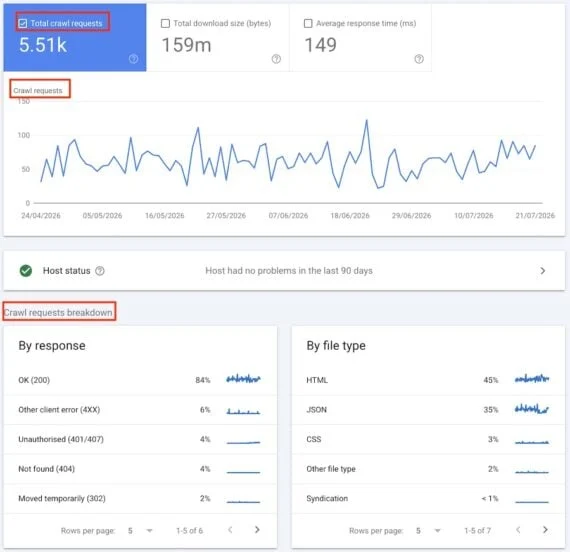
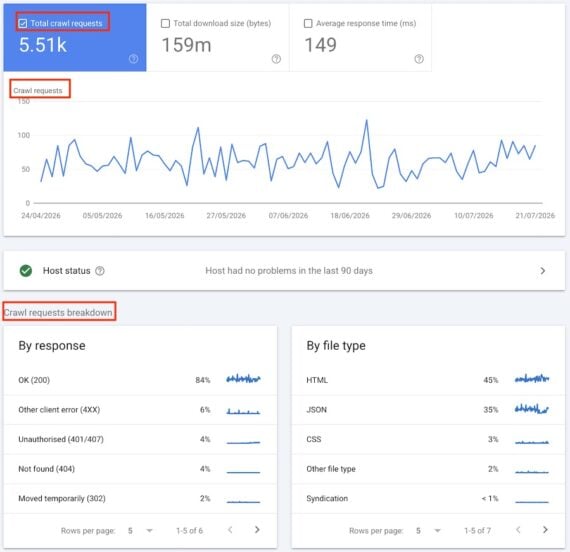
- Monitor Crawl Stats in Google Search Console: The "Crawl stats" report within Google Search Console is an invaluable tool for understanding how Googlebot interacts with your website. It provides data on crawl frequency, errors encountered, and the amount of data downloaded. Regularly reviewing this report can help identify potential issues and areas for optimization. The accompanying image in the original snippet, depicting a "Crawl stats report," serves as a visual reminder of this critical diagnostic tool.
The Broader Impact on Website Visibility and Strategy
The emphasis on crawl budget optimization by Google is not merely a technical update; it reflects a strategic shift in how search engines prioritize and process information. In an era of information overload, search engines are becoming increasingly sophisticated in identifying and rewarding websites that are not only content-rich but also technically sound and user-friendly.
For businesses and content creators, these guidelines serve as a clear directive: invest in the technical health and structural integrity of your website. A well-optimized crawl budget is no longer a secondary concern but a fundamental requirement for achieving and maintaining high visibility in Google Search. Websites that fail to adapt to these evolving expectations risk being overlooked, even if their content is of high quality.
The implications are far-reaching. E-commerce sites, for instance, need to ensure that their vast product catalogs are efficiently crawlable, enabling new products to be indexed promptly and existing ones to be updated without delay. Publishers must ensure that their articles, especially breaking news, are discovered and indexed as quickly as possible to capture timely search traffic.
Ultimately, Google’s updated documentation on crawling infrastructure and crawl budget optimization empowers website owners with the knowledge to work more effectively with search engine bots. By understanding and implementing these strategies, websites can enhance their discoverability, improve their indexing status, and, as a result, achieve greater visibility in the competitive landscape of online search. The proactive approach of providing such detailed guidance from Google signifies a commitment to fostering a healthier and more efficient web ecosystem for both users and content creators.

