
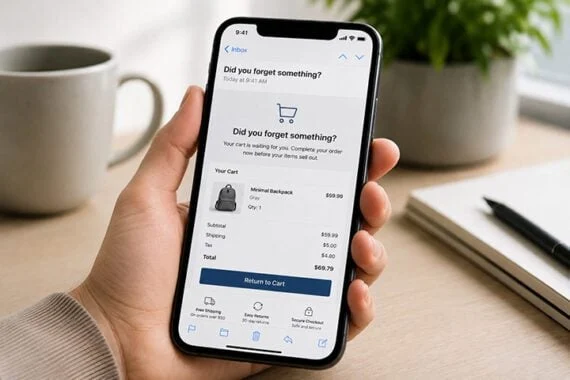
The landscape of e-commerce, a dynamic sector that has evolved dramatically over the past three decades, continues to grapple with a persistent challenge: abandoned shopping carts. While the initial instinct might be to view these instances as mere oversights, effective cart abandonment recovery strategies transcend simple reminders. They are sophisticated tools that leverage product specifics, instill customer confidence, and offer strategic incentives to bridge the gap between intent and conversion, thereby reactivating the sales funnel.
The ubiquity of online shopping has made cart recovery an enduring imperative for retailers. Data consistently highlights the magnitude of this issue, with the Baymard Institute reporting that an estimated 70% of all e-commerce shopping carts are abandoned before a purchase is completed. This translates to billions of dollars in unrealized revenue annually, underscoring the critical need for robust recovery mechanisms. While abandoned cart email remains a foundational channel, boasting an average open rate of 50.5% and a conversion rate of 10.7% according to Ringly, other channels like SMS and direct phone outreach are increasingly demonstrating their potential to surpass email in terms of engagement and recovery effectiveness.
The Root of the Problem: Unidentified Obstacles
A significant hurdle in current cart recovery practices stems from the reliance on rigid, pre-programmed sequences. These automated systems often operate under the assumption that a single, standardized approach will suffice for every abandoned cart. However, the reality is far more nuanced. An abandoned cart, by its nature, signifies an outcome—a stopped transaction—but not necessarily the underlying cause. While an e-commerce platform can readily identify the specific products left behind, it often lacks the immediate insight into why the shopper ultimately decided against completing their purchase. This deficit in understanding leads to a generalized approach that can miss the mark.
The obstacles leading to cart abandonment can broadly be categorized into three primary groups:
- Friction in the Checkout Process: This encompasses issues such as complicated or lengthy checkout forms, mandatory account creation, a lack of guest checkout options, and limited payment methods. Shoppers often abandon their carts if the process feels cumbersome or time-consuming.
- Unexpected Costs: High shipping fees, taxes, and other hidden charges that are only revealed at the final stages of checkout are a major deterrent. If these costs significantly inflate the initial price, customers may feel deceived and opt out.
- Lack of Trust and Reassurance: Concerns about website security, return policies, product quality, or a lack of clear contact information can make shoppers hesitant to commit to a purchase. Inadequate product information or unclear guarantees can also contribute to this.
Evolving Recovery Tactics
In response to these multifaceted obstacles, most cart recovery messages have evolved to incorporate a range of corresponding tactics designed to address potential customer hesitations. These tactics aim to re-engage the shopper by offering solutions or incentives that might overcome their initial reservations.
Commonly employed recovery tactics include:
- Simple Reminders: These are the most basic forms of recovery, serving as a gentle nudge to remind the shopper of the items they left in their cart. They often include images of the products and a direct link back to the cart.
- Product-Focused Content: These messages delve deeper, highlighting specific product benefits, features, or even showcasing related items that might appeal to the shopper. This can be particularly effective if the initial abandonment was due to a lack of perceived value or a need for more information.
- Incentives and Discounts: Offering a percentage discount, a fixed dollar amount off, or free shipping can be a powerful motivator for shoppers who were on the fence due to price concerns. This is a direct response to potential cost-related abandonment.
- Social Proof and Reviews: Incorporating customer testimonials, star ratings, or links to positive reviews can help build trust and reassure potential buyers about the quality and desirability of the products.
- Urgency and Scarcity: Limited-time offers or highlighting low stock levels can create a sense of urgency, prompting immediate action from shoppers who might otherwise delay their purchase.
- Customer Support and Guarantees: Providing easy access to customer service, clear return policies, and guarantees can alleviate concerns about post-purchase support and product satisfaction.
While each of these tactics can contribute to recovering a sale, it is crucial to recognize that no single option is universally effective. The success of a recovery message is highly dependent on the individual shopper’s motivations for abandoning their cart.
The Opportunity in Abandoned Carts
The sheer volume of abandoned carts presents a significant, yet often untapped, opportunity for e-commerce businesses. With approximately 70% of shopping carts failing to convert, the potential for revenue recovery is substantial. This reality has driven many e-commerce marketers to implement automated recovery strategies, seeking to reclaim a portion of this lost revenue.
Historically, abandoned cart emails have served as the primary recovery channel. Their widespread adoption is attributable to their relatively low cost and high reach. However, the effectiveness of email alone can be limited. More direct communication channels, such as SMS and phone outreach, are increasingly being recognized for their ability to drive higher engagement rates and achieve superior recovery outcomes. This shift reflects a growing understanding that personalized and timely communication is key to recapturing lost sales.
The Limitations of Fixed Sequences
Many existing cart abandonment automation platforms are built upon predefined triggers and branching logic. Merchants typically set a delay period, craft a series of messages, and establish specific conditions under which an offer should be presented. While this approach offers a degree of manageability, it necessitates that merchants attempt to anticipate every possible customer scenario and reason for abandonment.

This becomes particularly challenging for businesses with extensive product catalogs. Different products may have varying profit margins, require different consideration periods, and appeal to customers with diverse concerns. A one-size-fits-all sequence is unlikely to adequately address the unique circumstances surrounding each abandoned cart.
Furthermore, fixed sequences often make broad, potentially inaccurate assumptions. For instance, an automation might dispatch a discount coupon to a shopper who had no intention of using one and simply planned to return later. Conversely, it might dedicate significant messaging to product features for a shopper whose abandonment was solely triggered by unexpected shipping costs. This indiscriminate application of tactics can lead to wasted resources and a suboptimal customer experience.
Pathways to Enhanced Recovery: Manual Optimization vs. AI Decisioning
In essence, e-commerce marketers face two primary strategic options for improving both immediate cart conversions and long-term recovery rates: meticulous manual optimization of existing strategies or the adoption of advanced AI-driven decisioning.
Manual Optimization: A Data-Driven Approach
For merchants who opt for a manual optimization strategy, a focused approach on four key areas can yield significant improvements:
- Segmented Audiences: Instead of treating all abandoned carts equally, segmenting audiences based on factors such as cart value, product category, or customer history allows for more targeted messaging. A high-value cart might warrant a more generous offer than a low-value one.
- A/B Testing and Iteration: Continuous A/B testing of various elements—subject lines, message copy, call-to-action buttons, offer types, and timing—is crucial. This iterative process allows merchants to identify what resonates best with their specific customer base and refine their recovery sequences based on empirical data.
- Personalization Beyond Product: Moving beyond simply listing abandoned items, personalization can extend to acknowledging past purchases, referencing browsing history, or tailoring offers based on inferred customer preferences. This demonstrates a deeper understanding of the individual shopper.
- Channel Optimization: Determining the most effective communication channel for different customer segments and cart abandonment scenarios is vital. This might involve a multi-channel approach, starting with email and escalating to SMS or even personalized outreach for high-value carts.
Manual optimization necessitates a robust measurement framework. Key performance indicators such as revenue per recipient provide a clear understanding of the financial impact of each recovery sequence. Equally important are control groups—segments of shoppers who do not receive abandonment messages. By comparing the conversion rates of those who receive recovery outreach against the control group, merchants can accurately ascertain whether their efforts are generating incremental sales or merely capturing revenue from shoppers who would have converted anyway. This rigorous analysis is fundamental to ensuring that recovery efforts are genuinely effective and cost-efficient.
AI Decisioning: Intelligent Automation
A more sophisticated and increasingly prevalent recovery option is what customer engagement platforms refer to as "AI decisioning." This approach leverages artificial intelligence to move beyond rigid, pre-set rules and instead makes dynamic, individualized decisions for each abandoned cart scenario.
An AI decision system evaluates a confluence of customer and cart signals. These signals can include the value of the abandoned cart, the specific products within it, the shopper’s historical purchase data, and their browsing behavior leading up to the abandonment. The AI then compares these signals against a library of approved recovery tactics and objectives defined by the merchant. Based on this comprehensive analysis, it selects the optimal message, offer, and timing most likely to achieve the merchant’s predetermined outcome—typically, to complete the sale.
Under this model, the merchant retains strategic control and defines the "playbook." They would create the various treatments, such as simple reminders, product reassurance messages, offers of free shipping, or specific discount percentages. Crucially, merchants would also establish parameters and guardrails for the AI, including acceptable margin limits for discounts, constraints on message frequency to avoid overwhelming customers, and eligibility criteria for promotions.
The AI’s role is to intelligently deploy these pre-approved treatments on an individual basis. For example, it might recognize that a shopper who frequently browses high-ticket items and has a history of responding to free shipping offers would benefit most from that specific incentive. Conversely, a shopper who abandoned a cart with multiple items might receive a series of product-focused reminders followed by a modest discount.
This is a significant departure from conventional email automation. While fixed sequences rigidly execute a merchant’s pre-programmed instructions, AI decisioning continuously evaluates and adapts those instructions for each unique shopper. It learns from the outcomes of its decisions—which messages led to purchases, which were ignored, and which resulted in further abandonment. Over time, the AI model refines its predictive capabilities, becoming increasingly adept at identifying the most probable reasons for abandonment and selecting the most effective recovery strategy for similar shoppers under similar circumstances, even without explicit knowledge of the shopper’s exact thought process.
The Future of Cart Recovery: Intelligent Re-engagement
Ultimately, the objective of any cart abandonment automation should extend far beyond a simple notification that items have been left behind. Whether marketers opt for the meticulous, data-intensive approach of manual optimization or embrace the intelligent, adaptive capabilities of AI decisioning, the overarching goal remains consistent: to accurately identify the most probable obstacle preventing a sale and to proactively remove it. By doing so, businesses can not only reclaim significant lost revenue but also cultivate stronger customer relationships through more relevant and effective engagement. The evolution of e-commerce demands a sophisticated, data-informed approach to recovery, transforming abandoned carts from lost opportunities into valuable touchpoints for conversion and customer loyalty.

