
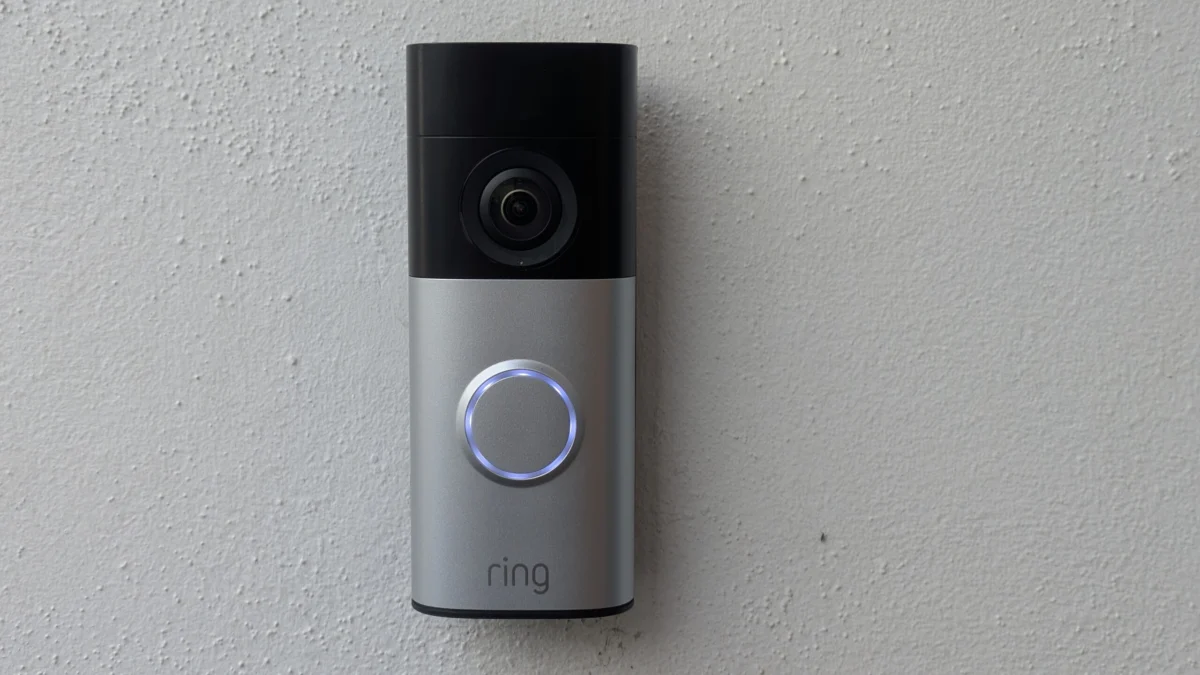
The Ring Wired Video Doorbell (2nd Gen) has arrived, aiming to solidify Amazon’s dominance in the burgeoning smart doorbell market. This latest iteration of Ring’s most accessible wired model boasts significant upgrades over its predecessor, offering a compelling combination of enhanced video quality, a wider field of view, and intelligent AI features. However, unlocking the full potential of this device hinges on a recurring subscription, a factor that will undoubtedly shape consumer purchasing decisions.
A Substantial Leap in Visual Fidelity and Field of View
The most striking improvement in the Ring Wired Video Doorbell (2nd Gen) is its revamped camera system. Gone is the previous 1080p landscape view with its 155-degree coverage, replaced by a square "Retinal 2K" sensor. This translates to a crisp 1920×1920 resolution, providing a remarkably detailed image. High Dynamic Range (HDR) is now standard, a crucial addition that significantly enhances detail extraction in both shadowed and brightly lit areas. This means that even on a glaringly sunny day or in the dim twilight, users can expect to see more nuanced visual information.
Furthermore, the new camera’s expanded 140-degree coverage, both horizontally and vertically, is a game-changer for doorstep monitoring. This wider perspective ensures that the doorbell can capture individuals standing as close as half a meter away, effectively capturing their feet and lower body. This is a significant advantage for security and delivery scenarios, allowing for better identification and tracking of visitors and parcel placements. The previous model’s narrower field of view could sometimes miss crucial details at close range, a limitation that has now been effectively addressed.
Navigating Naming Conventions and Installation Quirks

Consumers may encounter some naming confusion, as Ring officially designates this model as the "2nd Gen," while Amazon often refers to it as the "newest gen" or "newest model." Beyond nomenclature, the doorbell itself has seen a slight increase in size compared to its predecessor. This growth, while not dramatic, is accompanied by a new mounting design. This change means that users upgrading from an older Ring wired doorbell will likely need to re-drill mounting holes, as the new design is not backward compatible. While this is a minor inconvenience for existing Ring users, it is an important consideration for those looking to replace an older, non-Ring wired doorbell.
Another point of contention for some users will be the absence of an in-box chime. Unlike some competitors, the Ring Wired Video Doorbell (2nd Gen) will not automatically sound an existing traditional wired doorbell chime. This means that users who are upgrading from a conventional wired system will need to purchase a separate Ring Chime or rely solely on mobile notifications. This decision by Ring likely aims to streamline their product line and encourage integration within their own smart home ecosystem.
Design and Componentry: A Closer Look
Despite its wired nature, the Ring Wired Video Doorbell (2nd Gen) possesses a surprisingly substantial size, comparable to some battery-powered units like the TP-Link Tapo Video Doorbell Camera D235, though with a more rounded aesthetic. This size is likely attributed to the internal components required for its advanced features and Wi-Fi connectivity.
The installation process, while guided by Ring’s comprehensive in-app instructions, can be somewhat involved. Crucially, there is no adhesive mounting pad included; the doorbell must be affixed using the supplied screws. For those requiring a specific angle, an angled shim is provided to allow for minor horizontal adjustments, but vertical angling is not supported by this shim. Prospective buyers must ensure they have compatible low-power AC bell wiring in place. The review unit was supplied with a rail-mounted transformer suitable for modern consumer units, but this accessory would be redundant if existing wiring is already functional.
A critical step before purchase is to verify Wi-Fi signal strength at the intended installation location. The doorbell connects directly to a home’s Wi-Fi network. Notably, this particular model supports only 2.4GHz networks, which, while generally better at penetrating walls than 5GHz, may still present challenges in homes with weak Wi-Fi coverage at the front door. A minor but frustrating issue encountered during setup was the app’s handling of incorrect Wi-Fi passwords; a mistyped password necessitated a full doorbell reset and restart of the setup process. This could be an area for improvement in future software iterations to enhance user experience during initial configuration.

Feature Set: The Power of the Ring App and Subscription Tiers
The Ring application serves as the central hub for managing the doorbell’s functionalities, and it is generally lauded for its user-friendly interface. The app provides an at-a-glance snapshot of the doorbell’s current view, with a tap leading to a well-organized page that seamlessly integrates a live feed with a chronological timeline of events. This makes it exceptionally easy to review past activity. A calendar view further enhances navigation, allowing users to delve deeper into historical footage.
Users can customize various settings related to video, audio, and general operation. However, certain aspects are pre-configured. For instance, there is no user-selectable resolution or adjustable night mode. The doorbell relies solely on infrared (IR) for black-and-white night vision, which automatically activates when ambient light levels drop.
A significant portion of the doorbell’s advanced capabilities are contingent on a Ring subscription. Features such as AI Video Search, which allows for intelligent filtering of recorded events, are enabled only when Ring analyzes user videos, and are disabled by default for privacy considerations.
Integration with Amazon Alexa is a cornerstone of the Ring ecosystem. Users can link the doorbell to Echo devices for instant alerts, and to engage in audio or video conversations with visitors. Furthermore, motion detection or the act of someone pressing the doorbell can be configured to trigger Alexa routines, such as turning on porch lights to welcome guests. A limitation identified is the inability to trigger routines based on caller identity, meaning a routine cannot be initiated solely when a recognized household member approaches.
While motion detection can be fine-tuned using sensitivity controls and customizable motion zones, this model omits the Radar-based 3D Motion Detection found in more premium Ring devices. For doorbells facing busy streets, this advanced feature is highly recommended, as it allows for motion detection to be precisely calibrated based on distance, thereby reducing false alerts from distant pedestrian or vehicular traffic.

The ability to detect people or even familiar faces represents a significant step towards smarter home security. However, the activation and utility of these features are deeply intertwined with Ring’s subscription tiers. The basic "Ring Solo" plan, priced at approximately £5 per month or £50 per year for a single device, unlocks 180 days of video event history, along with person, package, and vehicle detection. Without any subscription, users are limited to live view on demand, real-time motion and caller alerts, and two-way audio communication – functionality that falls short of a comprehensive security solution. For enhanced AI capabilities, the "Pro Intelligence" add-on costs an additional £3 per month per device, granting access to AI Video Descriptions, Video Search, and Familiar Faces. For users with multiple Ring devices, the all-encompassing "Ring Pro" plan at £16 per month provides these advanced features across all their Ring devices.
Performance: Reliable Alerts and Clear Footage
In testing, the Ring Wired Video Doorbell (2nd Gen) demonstrated impressive performance, even when its sideways-facing wiring meant it wasn’t directly contending with the immediate visual clutter of a busy street. The subscription-based features, such as Familiar Faces and Video Descriptions, proved effective in accurately identifying family members and providing concise summaries of recorded clips.
The speed of Ring’s AI processing is noteworthy. Notifications arrived on the reviewer’s phone within moments of visitors arriving or the doorbell being pressed. While a handful of false alarms occurred, primarily when pedestrians crossed the pavement while a vehicle was absent from the driveway, adjusting the motion zone settings significantly mitigated these occurrences, though they were not entirely eliminated.
Video quality was generally very good. Footage was consistently clear enough to identify visitors during daylight, in low-light evening conditions, and under IR illumination at night. The video was sharp and well-exposed in natural light. A minor weakness was the doorbell’s tendency to overexpose bright highlights on sunny days, though it captured other elements of the scene effectively. At night, the exposure was optimized for callers, sometimes at the expense of detail in their immediate surroundings.
Final Verdict: A Capable Doorbell Hinged on Subscription Value

The Ring Wired Video Doorbell (2nd Gen) presents a compelling package, combining robust camera performance with an excellent alerting system. Its ultimate value proposition, however, is inextricably linked to a user’s willingness to commit to a subscription. Without a subscription, the doorbell’s functionality is significantly curtailed, rendering it less of a security tool and more of a basic intercom. The £5 per month subscription for Video Event History is almost essential, providing crucial footage retrieval capabilities in the event of an incident. Opting for the additional £3 per month for Pro Intelligence unlocks advanced AI features that demonstrably help in sifting through the deluge of alerts and footage, distinguishing important events from trivial ones.
During a one-month free trial of the full feature set, the doorbell offered rich notifications and effortless navigation through recorded video and alert histories. Its ease of use, coupled with its high-quality output, positions it as a strong contender in the "fit and forget" category of smart home security devices. The value proposition of Ring’s offerings often improves when integrated with other Ring products, particularly the Ring Alarm system, where multi-camera subscription plans can provide a more comprehensive and cost-effective security solution.
Testing Methodology: A Commitment to Real-World Evaluation
Our reviews are the result of extensive, long-term "living with" tests. Smart home devices, particularly video doorbells, are designed to operate within an ecosystem and offer a range of interconnected functionalities. Consequently, a brief, week-long evaluation is insufficient to provide a truly informed verdict. Our team, dedicated to testing smart home technology daily, possesses the expertise to identify what truly matters and how a specific device compares to its competitors. Our reviews strive to be comprehensive, objective, and fair, with no direct financial compensation influencing our assessments.
Frequently Asked Questions
Can the Ring Wired Video Doorbell be used without a subscription?
Yes, but with significantly limited features. Without a subscription, the device functions primarily as a live intercom and notification system, lacking the crucial video recording and advanced analytics that define a comprehensive security solution.

What is the full product name and specifications?
Ring Wired Video Doorbell (2nd Gen)
- Type: Smart video doorbell, silver finish
- UK RRP: £60
- US RRP: $80
- Dimensions: 54 x 26 x 133mm
- Weight: Not specified
- Release Date: March 2026 (Note: This appears to be an erroneous date in the original source; the 2nd Gen was released earlier).
- Smart Home Ecosystems: Amazon Alexa compatible.

