
The e-commerce sector is experiencing a surge of innovation, with a plethora of new services and platform updates aimed at streamlining operations, enhancing customer experiences, and bolstering merchant profitability. This week’s developments highlight a significant push towards leveraging artificial intelligence, optimizing post-purchase journeys, and expanding payment flexibility across various online retail channels. From integrated logistics networks to cutting-edge AI commerce agents and refined fraud prevention measures, businesses are being equipped with more sophisticated tools to navigate the complexities of the modern digital marketplace. These advancements signal a maturing e-commerce ecosystem that prioritizes efficiency, personalization, and security for both merchants and consumers.
Revolutionizing Logistics and Supply Chain Management
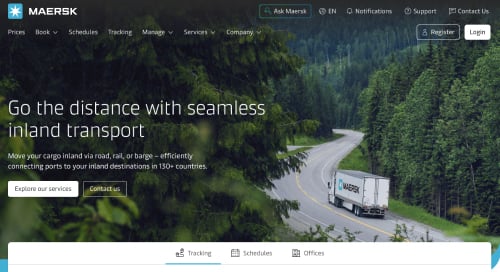
In a move to bolster global e-commerce logistics, Maersk has announced an expansion of its capabilities through a strategic partnership with ShippyPro. This collaboration integrates ShippyPro’s comprehensive shipping management platform with Maersk’s extensive logistics network. The synergy is designed to offer e-commerce merchants enhanced flexibility and a wider array of carrier choices as they scale their operations internationally. This development is particularly crucial for businesses looking to penetrate new markets, as efficient and cost-effective shipping remains a primary concern for customer satisfaction and operational success. By combining ShippyPro’s technology, which simplifies label printing, tracking, and rate shopping across multiple carriers, with Maersk’s global reach and infrastructure, merchants can anticipate a more seamless and adaptable approach to fulfillment. This partnership comes at a time when global supply chain disruptions have underscored the need for robust and agile logistics solutions, with companies like Maersk investing heavily in digital transformation to meet these evolving demands.

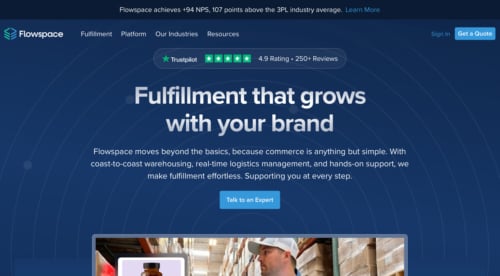
Further addressing fulfillment challenges, Flowspace has launched its Fulfillment Freedom Fund. This initiative provides eligible brands with up to $50,000 in volume-based transition support, aiming to alleviate the financial burdens associated with platform exits and onboarding complexities. The fund is intended to create a smoother transition for businesses seeking to optimize their warehousing and fulfillment strategies. Beyond financial assistance, participating brands gain access to Flowspace’s distributed network of fulfillment centers across the U.S. and Canada, managed by AI-powered software that optimizes inventory placement and order routing through a single dashboard. This offering is particularly beneficial for direct-to-consumer (DTC) brands experiencing rapid growth, who often face significant upfront costs and operational hurdles when switching fulfillment partners. The fund’s introduction reflects a growing understanding within the logistics sector of the unique challenges faced by scaling e-commerce businesses.
Complementing these efforts, Basic 3PL has launched GO on Shopline, a self-service onboarding tool designed to integrate natively with Shopline, an omnichannel commerce platform. This integration grants Shopline’s approximately 700,000 merchants access to a certified fulfillment network. The process simplifies verification and automatically routes verified users into Basic 3PL’s nationwide fulfillment network, managed by the Soapbox order management system. The goal is to optimize fulfillment speed and geographic proximity to customers. This move democratizes access to advanced logistics services for a broader range of e-commerce merchants, enabling smaller businesses to compete with larger enterprises by offering efficient and scalable fulfillment without the need for complex custom integrations.
The Rise of AI-Powered Commerce and Enhanced Search
Artificial intelligence is rapidly reshaping the e-commerce landscape, with several new tools and integrations focused on leveraging AI for discovery, transaction, and customer interaction. Shoppable has made its Universal Checkout plugin available within the ChatGPT plugin directory. This integration, built on Shoppable’s MCP server, allows ChatGPT users in the U.S. to discover products from multiple retailers and build carts directly within the AI chat interface. This represents a significant step towards seamless, AI-driven shopping experiences, where consumers can engage in natural language conversations to find and purchase items without leaving their preferred AI platform. The plugin offers brands a single point of connection for multi-retailer product discovery, cart consolidation, and transaction handling, streamlining the path from inspiration to purchase.
Similarly, ESW, an e-commerce engine and technology platform, has launched Agentic Commerce in collaboration with Microsoft Copilot. This new offering enables brands to optimize their product catalogs on AI platforms and facilitate secure checkouts and payments within AI-powered shopping environments. By integrating with platforms like Microsoft Copilot, ESW aims to reduce friction between product discovery and checkout, allowing transactions to be completed directly within the AI experience. This advancement is poised to redefine how consumers interact with brands online, moving towards more personalized and contextually relevant shopping journeys powered by AI agents.
The intersection of AI and security is also a growing focus. Fastly, a cloud computing and content delivery company, has joined Experian’s Agent Trust ecosystem. This partnership aims to enhance the verification and authorization of AI agents in commerce transactions. By combining Fastly’s programmable edge platform with Experian’s framework, organizations can better evaluate AI agent identity, delegated authority, intent, and payment credentials before requests reach backend systems. This is critical as autonomous commerce grows, ensuring that transactions initiated by AI are legitimate and secure, thereby mitigating fraud risks and building consumer trust in AI-driven purchasing.
Ensuring that products are discoverable by these AI agents is paramount. Novi has integrated with Syndigo, a product content syndication platform, to accelerate the flow of AI-optimized product content. This integration allows brands to push Novi-enhanced product content directly into Syndigo’s extensive retail network, which includes major players like Amazon, Walmart, and Target. By shortening the path from AI recommendation to product availability on retail shelves, this collaboration aims to boost conversion rates and improve the efficiency of content syndication processes, a critical but often complex aspect of e-commerce operations.
In the realm of site search, Algolia has introduced Dynamic Facets. This feature automatically surfaces the most relevant search filters based on a shopper’s query and behavior, adapting in real-time to prioritize attributes like size, color, or brand. By dynamically adjusting the prominence of these filters, Algolia aims to significantly improve the product discovery experience, making it faster, smarter, and more personalized for consumers. This enhancement addresses a common pain point in e-commerce search, where overwhelming or irrelevant filter options can lead to user frustration and cart abandonment.
Enhancing Payment Options and Post-Purchase Experiences
The payment landscape continues to evolve, with new options emerging to cater to consumer preferences and business needs. Amazon Business has integrated Affirm as its first buy-now, pay-later (BNPL) option at checkout. This collaboration allows eligible sole-proprietor customers to split the cost of purchases over time with no late or hidden fees, with the option expected to be available for all eligible customers by Black Friday. The inclusion of BNPL options on a platform like Amazon Business signals a broader acceptance and integration of flexible payment solutions in the B2B e-commerce space, potentially boosting order values and customer acquisition.
Further expanding into specialized commerce verticals, Neon has secured $13 million in Series A funding to advance its in-game commerce solutions. Led by Andreessen Horowitz and with participation from Krafton, Neon helps game publishers manage direct-to-consumer services, including web stores. The funding will be used to expand its team, build loyalty systems, and enter new markets. This investment highlights the significant growth potential in the gaming sector’s commerce capabilities, as publishers seek to monetize their intellectual property beyond in-game purchases and create richer fan engagement experiences.
The post-purchase experience, often overlooked, is also receiving increased attention. Swap has launched Checkout+, a premium add-on that bundles free returns and order protection into a single opt-in experience for shoppers. Brands can earn a share of the opt-in revenue, while Swap covers return shipping through its carrier network and handles claims through an automated portal. This initiative transforms the typically costly and cumbersome returns process into a potential revenue stream and a significant customer retention tool, offering a hassle-free experience for consumers and a more controlled cost structure for merchants.
Streamlining Marketing and Operational Efficiency
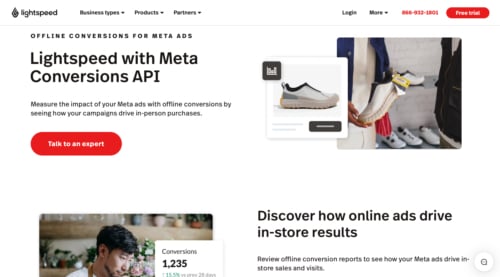
Optimizing marketing efforts and operational workflows remains a core focus for e-commerce businesses. Lightspeed Commerce has integrated with Meta Conversions API to enable retailers to measure the impact of Meta Ads on in-store sales. This integration allows for direct connection between Lightspeed retailers and Meta, enabling automatic syncing of in-store product catalogs and secure transmission of point-of-sale transactions to the Meta Conversions API. The unified sales data helps merchants improve ad relevance, enhance campaign performance, and achieve more accurate measurement of their advertising ROI, bridging the gap between online ad spend and offline revenue.
Shopify has expanded its Shop Campaigns to the U.K. and other new markets, following its U.S. and Canada launch. Shop Campaigns allows merchants to promote products across the Shop app and other third-party channels like Meta, Google, X, Snap, and Pinterest through a single campaign. Shoppers clicking on promoted products are directed to the product page within the Shop app, and merchants only pay for completed sales. This consolidated advertising solution simplifies multi-channel marketing for merchants, particularly small and medium-sized businesses, by offering a pay-for-performance model.
In the area of fraud and chargeback management, Cleo has updated its Chargeback Prevention solution. Leveraging AI-powered detection, the tool automatically analyzes data patterns to identify risks and demand signals for retail suppliers. Dynamic Insights provide real-time, personalized information through conversational intelligence, while 3PL Order Intelligence extends Cleo’s live order view into warehousing and fulfillment workflows for outsourced fulfillment scenarios. This enhancement aims to reduce chargeback rates and improve supply chain visibility, crucial for maintaining profitability and operational efficiency in a complex retail environment.
Empowering Merchants with Enhanced Control and Insights
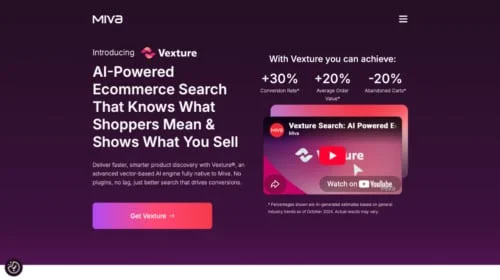
Platforms are continuously striving to offer merchants greater control and deeper insights into their operations. Miva has released its 26R2 update, which expands its Vexture merchandising capabilities, allowing for greater flexibility in product selection, promotion, and display. Merchants can now utilize AI prompts, collections, categories, and search queries to build merchandising showcases. Miva also reports improvements to its page caching architecture and expanded access to category facets, aiming to enhance storefront performance and merchant control over product presentation.
Meta has introduced Seller, a dedicated app for individuals selling on Facebook Marketplace. The app offers AI-powered listing creation, a unified inbox for communications, inventory management, and performance insights. Items created in the Seller app automatically appear on Marketplace, and existing selling history is carried over. The app’s performance data, including views, clicks, and message threads, provides sellers with valuable feedback to optimize their listings and sales strategies. This move by Meta aims to professionalize and streamline the selling experience on its popular Marketplace platform.
Finally, Whop has launched Whop CLI (Command-Line Interface), providing business owners and their AI agents with straightforward access to the platform’s full API. This tool simplifies the management of businesses launched and run through Whop, offering a language-based approach to its suite of tools. Building on previous launches like Whop Cards and Whop Ads, the CLI enhances the accessibility and usability of Whop’s business management solutions, catering to both human operators and emerging AI commerce agents.
These diverse advancements underscore a dynamic period of growth and innovation in e-commerce, with a clear trajectory towards more intelligent, integrated, and customer-centric solutions across the entire retail value chain.

