
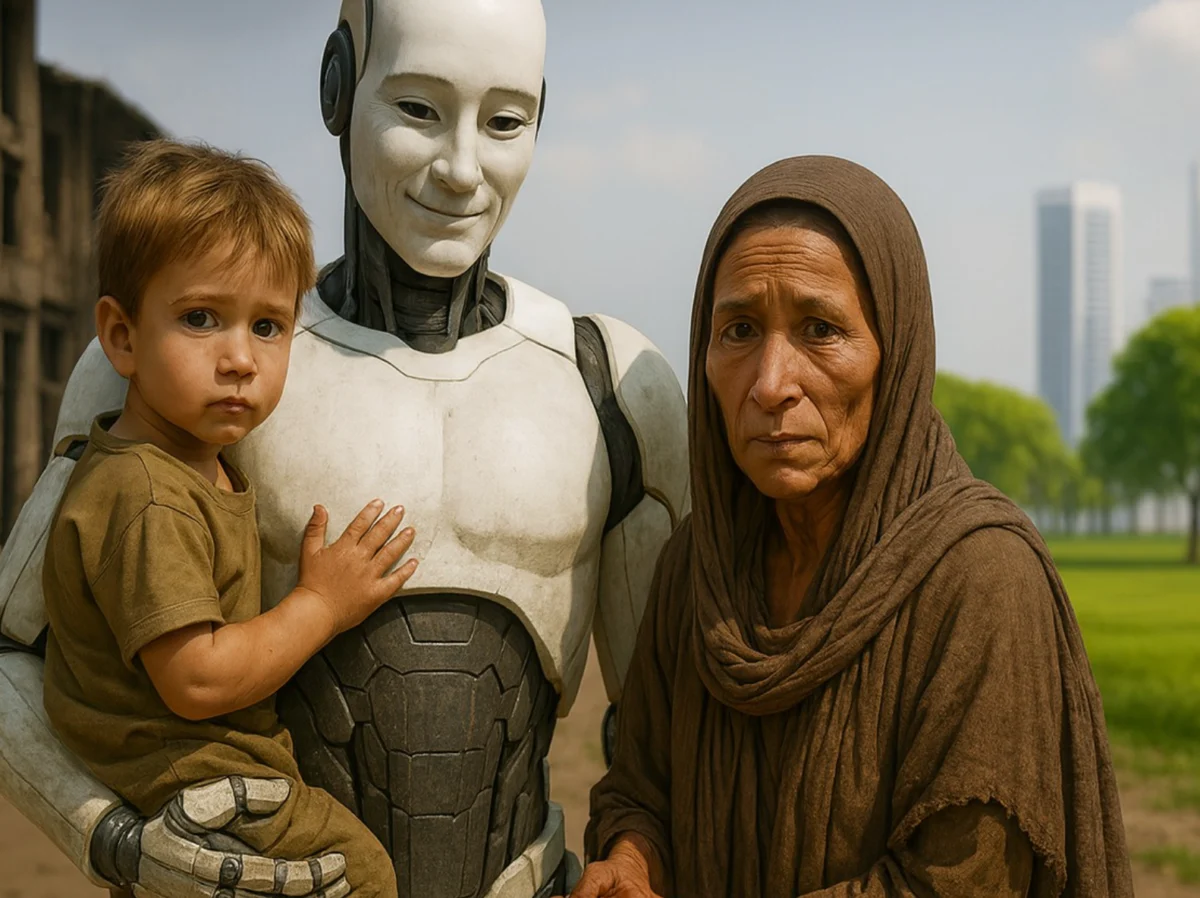
The era of humanoid robots as mere spectacles of engineering curiosity has come to a definitive end, replaced by a sophisticated landscape of industrial deployment and deep-learning integration. As these machines evolve from rigid laboratory prototypes into fluid, lifelike entities, global society stands at a crossroads, facing a transition that promises to redefine the boundaries between biological and synthetic life. The convergence of advanced electromechanical engineering, generative artificial intelligence, and material science is no longer a localized phenomenon of the tech industry; it is an impending psychological, economic, and existential shift that demands immediate scrutiny.
The Current Landscape: From PR Stunts to Industrial Utility
For decades, the public perception of robotics was shaped by machines like Honda’s ASIMO, which, upon its debut in 2000, was celebrated for its ability to navigate stairs and perform basic bipedal movements. While groundbreaking for its time, ASIMO remained largely a public relations tool—a symbol of corporate innovation rather than a functional worker. Today, the trajectory has shifted toward "General Purpose Robots" (GPRs) designed for high-stakes commercial environments.
The current state of the art is characterized by an aggressive race for physical deployment in heavy industry. Figure AI, a prominent player in the sector, recently transitioned its Figure 02 model from controlled laboratory demonstrations to the factory floors of BMW’s Spartanburg plant. During this multi-month pilot, the robots were tasked with handling complex sheet metal components, contributing to the assembly of vehicles in a live production environment. Simultaneously, Tesla has integrated its Optimus humanoids into its Gigafactories, utilizing them for internal logistics and parts sorting. These developments signify a shift from "hard-coded" robotics—where every movement is pre-programmed—to AI-driven systems that learn through observation and reinforcement.

A Chronology of the Android Evolution
To understand the velocity of this shift, one must examine the timeline of humanoid development over the last quarter-century. This progression highlights the transition from mechanical mimicry to cognitive autonomy.
- 2000 – The ASIMO Era: Honda introduces ASIMO, the first humanoid to achieve stable bipedal walking. It serves as a proof of concept for mobility but lacks the sensory processing required for autonomous tasks.
- 2013 – The DARPA Robotics Challenge: Triggered by the Fukushima nuclear disaster, this competition spurs development in robots capable of navigating disaster zones. It reveals the extreme difficulty of maintaining balance in unstructured environments.
- 2016 – The Social Robot Emergence: Hanson Robotics activates Sophia, a humanoid capable of 60 facial expressions. While her "intelligence" is largely scripted, she becomes a global symbol of the "Uncanny Valley"—the psychological discomfort humans feel when a robot looks nearly, but not perfectly, human.
- 2021 – The AI Convergence: Tesla announces the Optimus program, signaling the entry of Big Tech into the humanoid space. This period marks the integration of Large Language Models (LLMs) into robotic hardware, allowing machines to understand natural language commands.
- 2024-2025 – Physical Deployment: Companies like Figure AI, Apptronik, and Boston Dynamics (with the electric Atlas) move into "Pilot Phase 2," where robots work alongside humans in logistics and manufacturing.
Technological Foundations: The Intersection of AI and Material Science
The "brains" of modern humanoids are built on foundation models similar to those powering ChatGPT, but adapted for physical space. Systems such as NVIDIA’s GR00T (Generalist Robot 00_Technology) and Figure AI’s Helix software allow robots to process multimodal data—visual, auditory, and tactile—to make real-time decisions. Unlike their predecessors, these robots do not require millions of lines of static code; they utilize "End-to-End" neural networks, enabling them to learn tasks like folding laundry or sorting automotive parts by watching human demonstrations.

However, the physical "body" is also undergoing a revolution. To bridge the gap between machine and companion, scientists are developing artificial skin made from advanced silicone composites. These materials are engineered to mimic human touch sensitivity, thermoregulation (feeling warm to the touch), and flexibility. In tandem, micro-actuators and artificial muscle systems are being refined to replicate the subtle micro-expressions of the human face. The goal is to eliminate the "Uncanny Valley" by incorporating intentional human flaws—such as rhythmic breathing, blinking, and natural speech pauses—thereby making the interaction feel more authentic and less "creepy."
Economic Projections and Labor Market Disruption
The economic implications of humanoid deployment are vast. Proponents argue that robots will solve the "3D" jobs crisis: tasks that are Dull, Dirty, or Dangerous. In sectors like deep-sea mining, toxic waste management, and high-voltage electrical repair, humanoids can mitigate life-threatening risks. Furthermore, in nations with rapidly aging populations, such as Japan, South Korea, and Germany, humanoids are viewed as a necessary solution to a shrinking labor force.

Data from market research firms suggests the global humanoid robot market could reach a valuation of $38 billion by 2035, with some aggressive estimates from investment firms like Goldman Sachs suggesting even higher figures if technical hurdles are cleared. The logic is one of "Robot Labor Abundance." If the cost of building a humanoid drops below the cost of human labor, the price of manufactured goods, housing, and food could plummet. However, this creates a significant transition risk. Economists warn of a "displacement gap" where warehouse workers, drivers, and retail clerks are replaced faster than the economy can create new roles for them, potentially widening the wealth gap between tech conglomerates and the working class.
Socio-Psychological Impact: The Risk of Human Isolation
As humanoids become indistinguishable from humans, the psychological fabric of society may begin to fray. One of the most significant concerns raised by sociologists is the potential for "synthetic empathy" to replace genuine human connection. If an individual can purchase a companion that is programmed to be perpetually agreeable, patient, and attentive, the messy and often difficult nature of human-to-human relationships may become less appealing.

Research into human-robot interaction suggests that vulnerable populations—such as the elderly or socially isolated youth—are particularly susceptible to forming deep emotional bonds with AI entities. While this can alleviate loneliness in the short term, it raises questions about the "authenticity" of the experience. If a robot is programmed to "love" its owner, does that emotion have value? Furthermore, as these machines enter public spaces, the breakdown of "social trust" becomes a reality. When a person can no longer discern if they are interacting with a biological human or a synthetic one, the shared reality that binds communities together may dissolve.
Security Threats and the Potential for Misuse
The potential for the malicious use of hyper-realistic humanoids introduces unprecedented security challenges for both individuals and nation-states.

- Identity Theft and Social Engineering: A criminal could theoretically deploy a humanoid that mimics the physical appearance and voice of a specific individual to gain access to secure facilities or to commit high-level fraud.
- Surveillance and Data Harvesting: Humanoids in the home or workplace are, in essence, mobile sensor platforms. If hacked, they could provide a 360-degree, real-time feed of private lives, capturing everything from private conversations to biometric data.
- State-Sponsored Disinformation: In a geopolitical context, "physical deepfakes"—humanoids that look like political leaders—could be used to stage events or deliver speeches, creating chaos and undermining democratic processes.
Official Responses and the Search for Ethical Guardrails
In response to these emerging threats, policymakers and tech leaders are beginning to discuss the necessity of global regulations. While no comprehensive international treaty yet exists, several "guardrails" have been proposed by ethical committees and industry watchdogs:
- Mandatory Identification: Laws requiring that any humanoid robot must be clearly identifiable as a machine, regardless of how lifelike its skin or behavior may be. This could involve "digital watermarking" or physical indicators.
- The "Kill Switch" Mandate: A requirement for a hardware-level override that can deactivate a robot independently of its AI "brain," ensuring that humans maintain ultimate control.
- Economic Safety Nets: Discussions regarding "Robot Taxes" or Universal Basic Income (UBI) are gaining traction as a means to redistribute the wealth generated by robotic labor and support those displaced by automation.
Industry leaders, including figures from Figure AI and Tesla, have emphasized that the goal of the humanoid revolution is to "augment" human capability rather than replace it. However, critics argue that without legally binding frameworks, corporate interests will inevitably prioritize efficiency over ethical considerations.

Conclusion: Redefining Humanity in the Age of the Machine
The arrival of lifelike humanoid robots serves as a mirror, forcing humanity to confront what truly defines it. If a machine can walk, talk, problem-solve, and display emotion with the same proficiency as a human, the traditional markers of our species are challenged. This shift, while fraught with risk, also offers a unique opportunity. By delegating the mechanical and repetitive aspects of existence to synthetic counterparts, humans may be afforded the time to reinvest in art, philosophy, and the cultivation of genuine relationships.
The success of this transition depends not on the speed of technological advancement, but on the robustness of our ethical response. The goal of the humanoid revolution must be to preserve the "human" in humanity—using these sophisticated tools to enhance our world while maintaining the sacred boundaries of the biological experience. As we move closer to a world where the line between human and machine is nearly invisible, our focus must remain on ensuring that these entities remain our servants, never our replacements.

