

The field of user experience (UX) research is undergoing a significant shift as digital accessibility moves from a secondary compliance requirement to a primary driver of product innovation. Recent findings from a comprehensive exploratory study conducted by Fable, a leading accessibility testing platform, in collaboration with researchers from the University of California, Irvine, suggest that including participants with cognitive disabilities in the design process yields significantly higher volumes of usability insights compared to general population samples. The study, led by Kate Kalcevich, VP of Innovation at Fable, and Syed Fatiul Huq of UC Irvine, revealed that participants with cognitive disabilities identified 1.8 times more usability issues and provided 1.8 times more suggestions for improvement than participants from the general population. These findings underscore a critical opportunity for organizations to streamline their research efforts while simultaneously creating more robust, inclusive digital products.
Context and the Rising Prevalence of Cognitive Disability
Cognitive disability serves as an umbrella term for a wide range of conditions that affect how individuals process information, specifically impacting memory, focus, and learning. This category includes neurodivergent individuals—those with ADHD, Autism, or Dyslexia—as well as people experiencing cognitive decline due to aging or temporary situational factors like high stress. According to the Centers for Disease Control and Prevention (CDC), cognitive disability is the most prevalent disability type in the United States, affecting approximately 13.9% of the adult population. Furthermore, data from a Yale University study indicates that the number of adults reporting cognitive challenges is increasing rapidly, driven in part by an aging demographic and increased awareness of neurodivergence.
The project began in the summer of 2024 when a working group of expert researchers convened to establish standardized protocols for performing accessibility testing with this specific demographic. The initiative aimed to move beyond theoretical best practices by creating a practical, scalable framework for inclusive research. The group established four primary objectives: developing effective recruitment screeners, establishing best practices for researcher-participant interaction, creating quantitative surveys to measure experience, and documenting these methodologies for the broader UX community.
Chronology of the Exploratory Research Study
The research was conducted in several distinct phases to ensure the validity of the methodology before proceeding to the comparative study.
- Framework Development and Screening: The initial phase involved the creation of a specialized screener designed to identify participants who self-identified as having challenges related to memory, focus, and learning. Simultaneously, the team conducted an extensive review of existing academic and industry literature to synthesize current best practices for working with cognitive testers.
- The Pilot Study: A pilot study involving 25 testers was launched to test the initial framework. This phase allowed researchers to fine-tune their interview techniques and iteratively improve the guide for running user interviews.
- Tool Creation: Following the pilot, the team developed a survey tool designed to quantify the digital experiences of cognitive testers. This was integrated with the Accessible Usability Scale (AUS), a 10-question survey licensed under Creative Commons that evaluates the usability of websites and mobile applications specifically through an accessibility lens.
- The Comparative Study: In the final phase, Fable collaborated with the University of California, Irvine, to validate the hypothesis that cognitive testers uncover more insights than general population (gen pop) participants. This study involved 30 user interviews across three distinct website archetypes, with an even split of five cognitive and five gen pop participants for each site.
Methodology: Testing AI-Generated Digital Ecosystems
To ensure a controlled environment free from existing brand biases, the researchers utilized an AI prototyping tool to generate three distinct websites. Each site featured different aesthetic styles, functional goals, and content structures:
- Strong Snacks: A high-protein recipe site utilizing a "brutalist" design with bright colors and high-contrast imagery. Key tasks included filtering recipes by category and subscribing to a newsletter.
- Turning Pages: A curated bookstore website with a "moody" and classic design. This site featured complex functionality, including a book-matching swiping feature, custom book lists, and a full checkout flow.
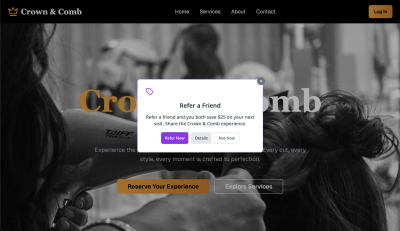
- Crown & Comb: A professional hair salon website with a clean, bold black-and-white aesthetic. This site was intentionally designed with complex navigation and a difficult-to-find "bridal package" to test the limits of user persistence and cognitive load.
The researchers, including Pranav Pidathala, Ali Brown, and Michael Fagan, facilitated 30 online interviews. During these sessions, participants completed specific tasks while "thinking out loud," allowing researchers to capture both behavioral data and qualitative commentary.
Quantitative Findings: The 1.8x Multiplier
The data analysis phase involved a meticulous review of every recording and transcript. Researchers defined an "issue" as any instance where a participant raised a concern, expressed difficulty, asked a clarifying question about functionality, or missed a task-critical element.
The results across all three websites were consistent:
- Total Issues Identified: Participants with cognitive disabilities identified 197 issues, whereas the general population group identified 113.
- Total Suggestions Made: The cognitive group offered 93 suggestions for improvement, compared to 54 from the gen pop group.
- The "Insight Multiplier": On average, cognitive participants identified 1.8 times more issues and provided 1.8 times more suggestions.
The data for individual websites provided further nuance. On the Strong Snacks site—the simplest design tested—cognitive participants found 3.4 more issues on average than the gen pop group. Their average AUS score was 76.8, significantly lower than the gen pop’s 90.5, indicating that even "simple" designs contain hidden friction points for those with cognitive needs.

On the Turning Pages site, which featured the most varied functionality, cognitive participants identified an average of 17 issues per person, compared to 11 for the gen pop. The average AUS score for the cognitive group dropped to 60.8, while the gen pop remained relatively high at 78.0.
Interestingly, on the Crown & Comb site—designed for maximum complexity—the cognitive participants actually gave a higher average AUS score (63.8) than the gen pop group (49.5). Analysis suggests this may be because the gen pop participants found the site’s intentional difficulty frustrating and "not engaging," whereas cognitive participants, who are often accustomed to navigating poorly designed interfaces, focused more on specific functional barriers and mental energy expenditure.
Qualitative Deep Dive: Identifying Cognitive Load and Friction
The study categorized issues into several themes: content, navigation, buttons/links (affordances), icons/visual elements, and media. Cognitive participants surfaced significantly more issues related to content clarity and visual affordances.
For example, on the Strong Snacks site, cognitive testers highlighted that auto-playing animations and a lack of clear headings made it difficult to focus on the recipes. They suggested that content should be easier to skim and that ingredients should be more clearly separated from the narrative text. While these are considered general design best practices, the cognitive group identified them as critical barriers rather than mere preferences.
In the Turning Pages study, cognitive participants were frequently confused by the "Add to book bag" interaction. They expressed a lack of trust in the system when they could not immediately see the result of their action or when the source of book recommendations was unclear. This lack of predictability in interactions was a recurring theme.

One of the most poignant qualitative findings came from a cognitive participant’s description of their experience on the Crown & Comb site. While a gen pop participant described the site as "frustrating" and "not engaging," the cognitive participant noted that the complexity made them feel "drained and less able to focus." This suggests that poor UX has a more profound impact on the overall well-being and functional capacity of individuals with cognitive disabilities than it does on the general population.
The Business Case: Implications for Retention and Growth
The implications of this research extend far beyond social responsibility. From a business perspective, the study highlights how cognitive inclusion can serve as an "on-ramp" to broader accessibility. By addressing the needs of the most sensitive users, companies inadvertently improve the experience for all users—a phenomenon known as the "curb-cut effect."
The U.S. Census Bureau projects that by 2060, one in four Americans will be an older adult (aged 65 or older). As this demographic expands, the prevalence of age-related cognitive decline will increase. Products that are not designed for clarity, predictability, and low cognitive load will see higher rates of user abandonment and lower customer loyalty.
A UX Manager at Bell Media, reflecting on the impact of such research, noted: "Two sessions with cognitive users feel like 200 because of the volume of insights we get." This efficiency allows UX teams to identify "universal challenges"—issues that affect everyone but are most visible when viewed through the lens of disability. For instance, a confusing checkout button might be a minor annoyance for a gen pop user who "muddles through," but it becomes a hard barrier for a cognitive user. By fixing that barrier, the company ensures that no user, regardless of their state of mind or ability, is forced to struggle, thereby reducing churn and increasing conversion rates.
Broader Impact and Future Directions
The study acknowledges certain limitations, such as the relatively small sample size and the use of different recruitment platforms for the two groups. However, the qualitative consistency of the findings provides a compelling argument for the integration of cognitive testers into standard UX workflows.
As digital environments become increasingly complex—incorporating AI, immersive interfaces, and dense information architectures—the need for cognitive accessibility will only grow. Researchers suggest that organizations should start by focusing on three key pillars:
- Clarity: Ensuring content is easy to read, skim, and understand.
- Predictability: Ensuring that buttons, links, and navigation behave in consistent, expected ways.
- Minimal Cognitive Load: Reducing unnecessary mental energy expenditure by removing distractions like auto-playing media and complex, multi-step flows without clear guidance.
In conclusion, cognitive inclusion in UX research is not merely an optional add-on for specialized projects. It is a strategic methodology that allows teams to identify more issues in less time, creating clearer content and simpler flows that benefit the entire user base. As the global population ages and the digital landscape evolves, the ability to build for cognitive diversity will likely become a defining characteristic of successful, user-centric organizations.

