
The European Commission has finalized the implementation guidelines for the Artificial Intelligence Act, signaling a definitive end to the era of ambiguous AI disclosures and establishing a rigorous legal framework for how synthetic content must be identified. While initial industry reactions were characterized by concerns over "sweeping measures" and "punitive fines," the finalized guidelines provide a more granular and structured approach to transparency, focusing specifically on content that could potentially mislead the public or influence democratic processes. Starting August 2, 2026, AI labeling will transition from a voluntary best practice to a mandatory legal requirement for any entity providing or deploying AI systems within the European Union. This mandate extends beyond the borders of the 27-member bloc, applying to any global corporation—regardless of its headquarters—that serves EU citizens or produces AI-generated output used within the region.
The Core Mandates of Article 50
The legal cornerstone of these new transparency requirements is Article 50 of the EU AI Act. This article distinguishes between different categories of AI interaction, each requiring a specific level of disclosure. The primary objective is to ensure that individuals are aware they are interacting with an AI system unless it is obvious from the context.
Under Article 50(4), the labeling requirements are specifically targeted at three primary categories of AI output. First, any AI system that generates or manipulates image, audio, or video content that constitutes a "deepfake" must be clearly labeled. Second, AI systems that generate text intended to inform the public on matters of public interest—such as political, scientific, or social issues—must disclose their synthetic origins. Third, providers of general-purpose AI models that generate content must ensure that their outputs are marked in a machine-readable format, allowing downstream users to identify the AI’s role in the content creation process.
The responsibility for compliance is shared between "providers," who develop the AI technology, and "deployers," who utilize the technology in a commercial or public-facing capacity. This dual-layered responsibility ensures that a company cannot evade legal obligations simply by licensing an external AI tool from a third-party vendor. If a company uses a third-party Large Language Model (LLM) to generate customer-facing reports, that company remains legally liable for ensuring the output is correctly disclosed.
Chronology of Implementation and the "Brussels Effect"
The timeline for the AI Act follows a phased approach designed to allow organizations to align their technical infrastructure with the new standards. The AI Act officially entered into force in August 2024. However, the transparency obligations detailed in Article 50 are subject to a two-year transition period, making them fully enforceable by August 2026.
- August 2024: The AI Act enters into force.
- February 2025: Prohibitions on "unacceptable risk" AI (such as social scoring) take effect.
- August 2025: Rules for General-Purpose AI (GPAI) models become applicable.
- August 2026: Full implementation of transparency and labeling requirements for most AI systems.
- August 2027: Obligations for high-risk AI systems (integrated into regulated products) come into full effect.
This timeline mirrors the rollout of the General Data Protection Regulation (GDPR) and the European Accessibility Act (EAA). Legal analysts suggest that this will trigger a "Brussels Effect," where global companies adopt the EU’s strict labeling standards as their universal baseline to avoid the logistical complexity of maintaining different interface standards for different regions.

The Technical Shift: Moving Beyond the "Sparkle" Icon
For the past several years, the technology industry has largely relied on a "sparkle" icon (✨) to denote AI-powered features. This icon, popularized by major platforms like Google, Adobe, and Microsoft, has become a shorthand for "enhanced by AI." However, the European Commission’s new guidelines suggest that such ambiguous symbols are insufficient for legal compliance.
The Commission has introduced a specific EU AI icon set designed to provide "clear and distinguishable" signals. Unlike the sparkle, which often suggests a "magical" enhancement, the new EU-standardized marks are designed to be descriptive and neutral. The icons are categorized into three variants:
- Basic AI Interaction: Notifying the user that they are communicating with a chatbot.
- Fully AI-Generated: For content that has no human authorship.
- Partially AI-Modified: For content where AI has substantively altered a human-made original.
The guidelines emphasize that an icon alone does not constitute compliance. Labels must be persistent, meaning they should remain attached to the content even when it is downloaded or reshared on social media. This requirement likely necessitates the adoption of metadata standards such as those proposed by the Coalition for Content Provenance and Authenticity (C2PA), which embed "content credentials" directly into digital files.

Defining the Threshold of "Substantive Editing"
One of the most complex aspects of the new regulation is the distinction between "AI-assisted" and "AI-generated" content. The European Commission has provided clarity on where the disclosure obligation begins and ends, focusing on the concept of editorial responsibility.
Assistive AI edits—such as grammar and spellchecking, basic color correction in photography, cropping, or AI-powered translation—generally do not require a disclosure label. These are viewed as tools that enhance human productivity without replacing human agency. In contrast, AI-generated summaries, composite imagery created from text prompts, and substantive rewrites of human drafts are classified as AI generation and must be disclosed.
A critical point of the guidelines is the "human-in-the-loop" exception. If an AI-generated text is substantively reviewed, edited, and approved by a named human editor who takes legal and editorial responsibility for the content, the mandatory AI label may not be required. However, the Commission warns that "skimming" or "cursory review" does not qualify as substantive editing. There must be an intentional manual intervention that transforms the AI’s output into a human-vetted product.

Supporting Data: The Scale of the Synthetic Content Challenge
The necessity of these regulations is underscored by the rapid proliferation of synthetic media. According to data from Sensity AI, the number of deepfake videos online has been doubling approximately every six months since 2018. Research from the Reuters Institute suggests that nearly 60% of internet users are concerned about their ability to distinguish between real and AI-generated news content.
The financial implications of non-compliance are significant. The EU AI Act establishes a tiered fine structure:
- Non-compliance with prohibited AI practices: Up to €35 million or 7% of total global annual turnover.
- Non-compliance with transparency and labeling: Up to €15 million or 3% of total global annual turnover.
- Providing incorrect or misleading information to regulators: Up to €7.5 million or 1.5% of total global annual turnover.
For a multi-billion-dollar technology firm, a 3% fine on global turnover represents a multi-hundred-million-euro risk, providing a powerful incentive for early and thorough adoption of the labeling standards.

Global Regulatory Convergence
The EU is not acting in isolation. The finalized guidelines arrive amid a global trend toward AI transparency. In the United States, several states have moved forward with their own mandates. California recently introduced legislation requiring the labeling of AI-generated political advertisements, while Utah’s Artificial Intelligence Policy Act focuses on disclosure in consumer protection contexts.
In Asia, China’s Cyberspace Administration (CAC) has already implemented "Deep Synthesis" regulations, which require "prominent labels" on any synthetically generated content that could confuse the public. South Korea has similarly proposed amendments to its Fair Trade Act to address AI-generated content in commercial marketing.
The EU’s Article 50 is seen as the most comprehensive of these efforts because it links transparency not just to the source of the content, but to the impact on the user. By focusing on "public interest" and "human-like interaction," the EU is attempting to future-proof the law against evolving AI capabilities.

Implications for User Experience and Interface Design
The transition to mandatory labeling will require a fundamental redesign of digital interfaces. Current UX patterns often bury AI disclosures in "About" pages or footer links. Under the new guidelines, these disclosures must be "prominent" and "plainly visible."
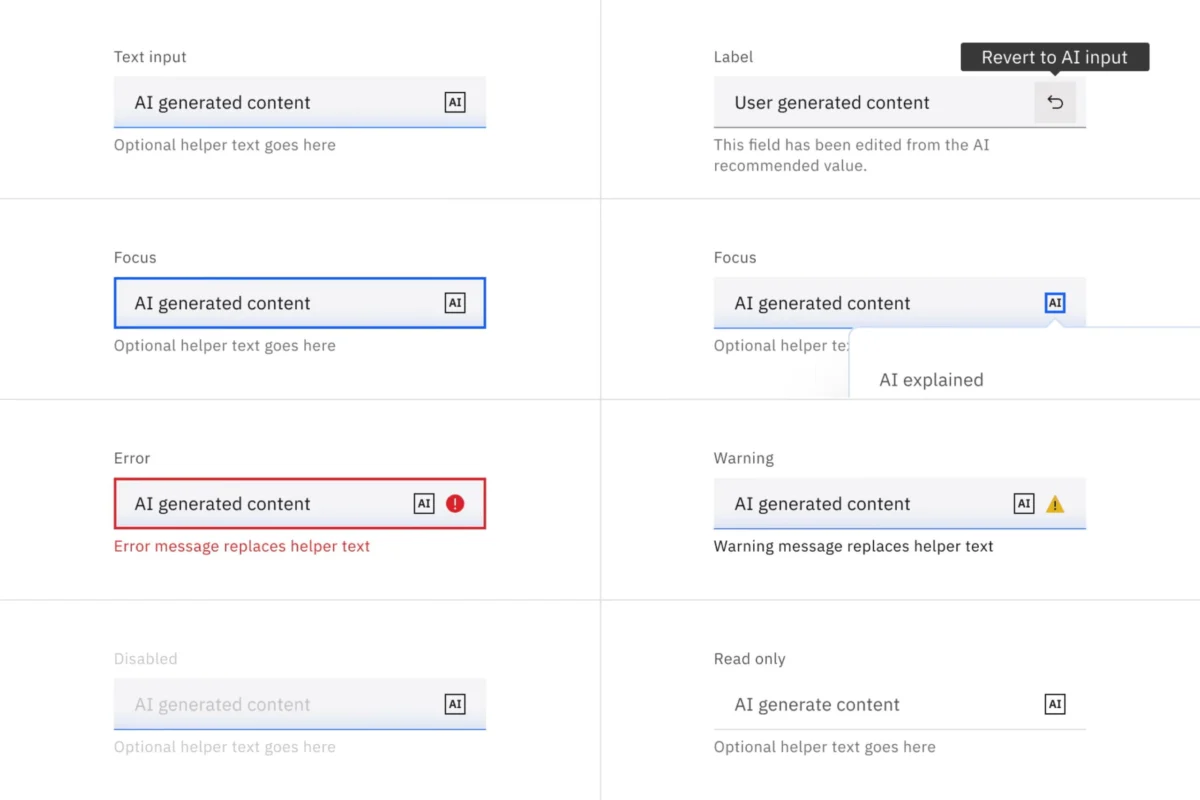
Design systems, such as IBM’s Carbon Design System, have already begun integrating "AI labels" that provide tiered information. A user might see a small icon next to an AI-generated data insight; clicking that icon opens an "explainability panel" that describes which model was used, the confidence level of the data, and whether the output was human-verified. This move toward "explainable AI" (XAI) is expected to become the industry standard for enterprise software and consumer applications alike.
Analysis of Broader Societal Impact
The implementation of these rules marks a shift in the digital social contract. For the past decade, the "move fast and break things" ethos of Silicon Valley allowed for the rapid deployment of transformative technologies with minimal oversight. The EU AI Act represents a counter-movement that prioritizes the "right to know" for the digital citizen.

While some industry critics argue that mandatory labeling could lead to "disclosure fatigue"—where users begin to ignore labels due to their ubiquity—proponents argue that the labels are essential for maintaining trust in digital ecosystems. By clearly demarcating "AI slop" from human-verified information, the regulations may actually increase the value of human-authored content.
Furthermore, these rules provide a vital safeguard for democratic institutions. As generative AI makes the production of high-quality misinformation nearly costless, the requirement for machine-readable labels allows social media platforms and search engines to automatically identify and categorize synthetic content, potentially slowing the spread of state-sponsored disinformation or non-consensual deepfakes.
As the August 2026 deadline approaches, the global tech industry must now move from the "panic" phase into the "execution" phase. The clarity provided by the Commission’s guidelines suggests that while the rules are strict, they are navigable for companies that prioritize transparency and user trust. The "sparkle" may be fading, but in its place, a more honest and accountable digital landscape is beginning to emerge.

