
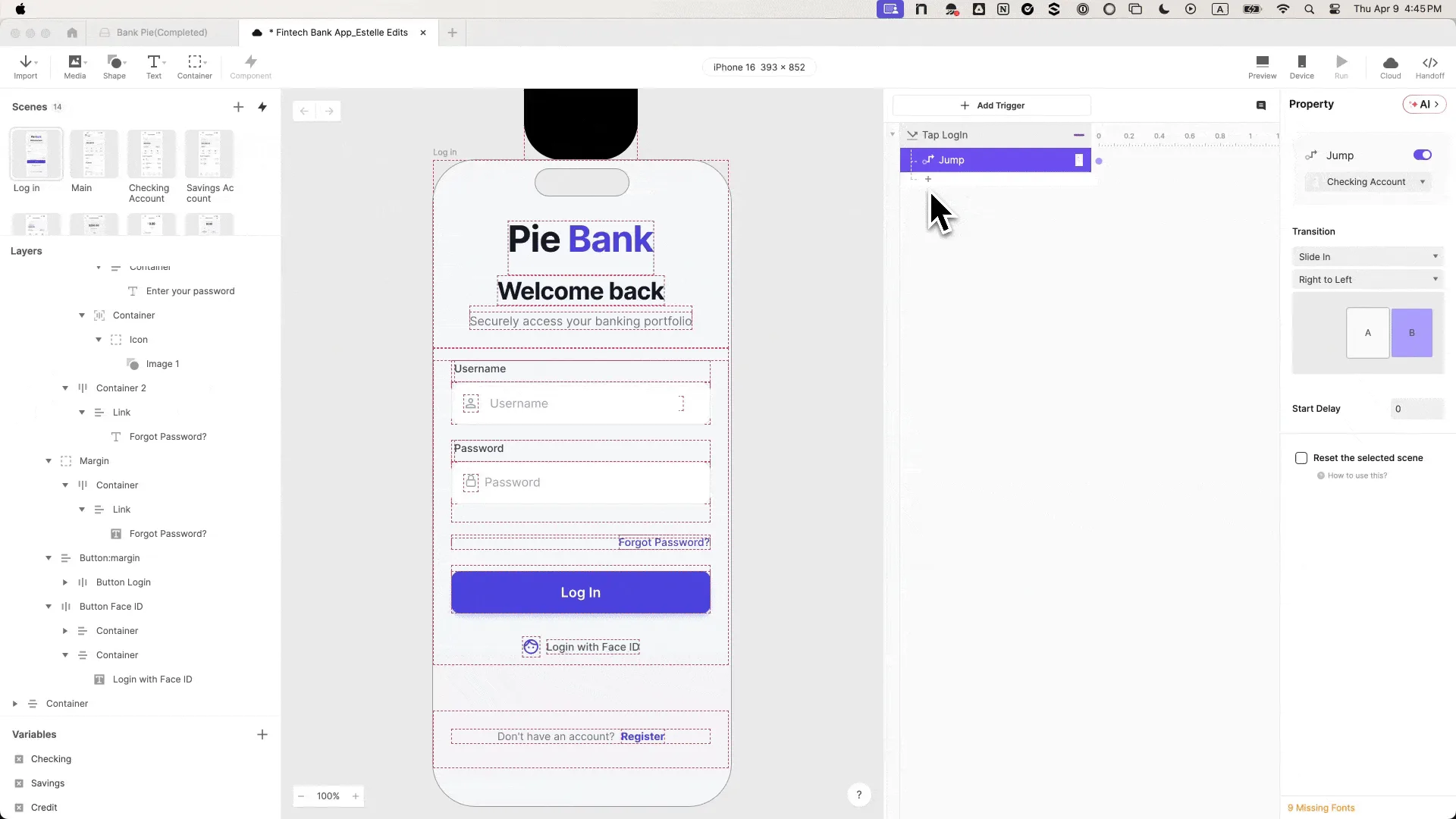
The landscape of user experience (UX) design for financial services is undergoing a fundamental shift as researchers identify a critical "moment of truth" in usability testing: the point where a participant recognizes a prototype as a simulation rather than a functional application. In the high-stakes environment of fintech, where trust and security are paramount, the traditional low-fidelity prototype often fails to elicit authentic user behavior. When a participant pauses at a login screen, hesitates over a non-functional input field, or notices a balance that does not logically compute, the validity of the subsequent data points is compromised. To address this, design teams are increasingly turning to advanced prototyping tools like ProtoPie to create "living" prototypes that utilize real logic, conditional variables, and native-feeling biometric animations.
The primary challenge in financial product testing lies in the "Uncanny Valley" of user interface design. Users of banking applications are conditioned to be hyper-aware of inconsistencies. A field that accepts any character as a password or a login button that navigates to a dashboard regardless of the input provided signals to the user that the environment is "safe" and "fake." This awareness triggers a shift from natural usage to "demonstration mode," where participants perform for the researcher rather than interacting with the product. By building a login flow that validates credentials and simulates Face ID with millisecond-perfect timing, designers can bridge this gap, ensuring that the feedback collected reflects real-world usage patterns.

The Evolution of Prototyping Fidelity
The transition toward high-fidelity prototyping is not merely a cosmetic choice but a response to the increasing complexity of mobile interactions. Historically, design workflows relied on static "hotspots"—simple clickable areas that linked one static image to another. While effective for basic site mapping, these tools cannot simulate the nuanced feedback loops required for modern fintech. The emergence of logic-based prototyping allows for the creation of "stateful" components: inputs that remember what was typed, buttons that only activate under specific conditions, and animations that respond to system-level events.
Industry data suggests that the cost of fixing a usability flaw after a product has reached the development stage is up to 100 times higher than fixing it during the design phase. However, if the design phase relies on low-fidelity prototypes that mask these flaws, the "savings" are never realized. In response, leading financial institutions are mandating higher fidelity standards for prototypes used in late-stage research.
Technical Chronology: Building a Functional Authentication Flow
To achieve the level of realism necessary for valid fintech testing, the development of a prototype must follow a rigorous technical sequence. This process transforms a static design into a logical system that mimics a shipped product.
Phase I: Establishing the Structural Foundation
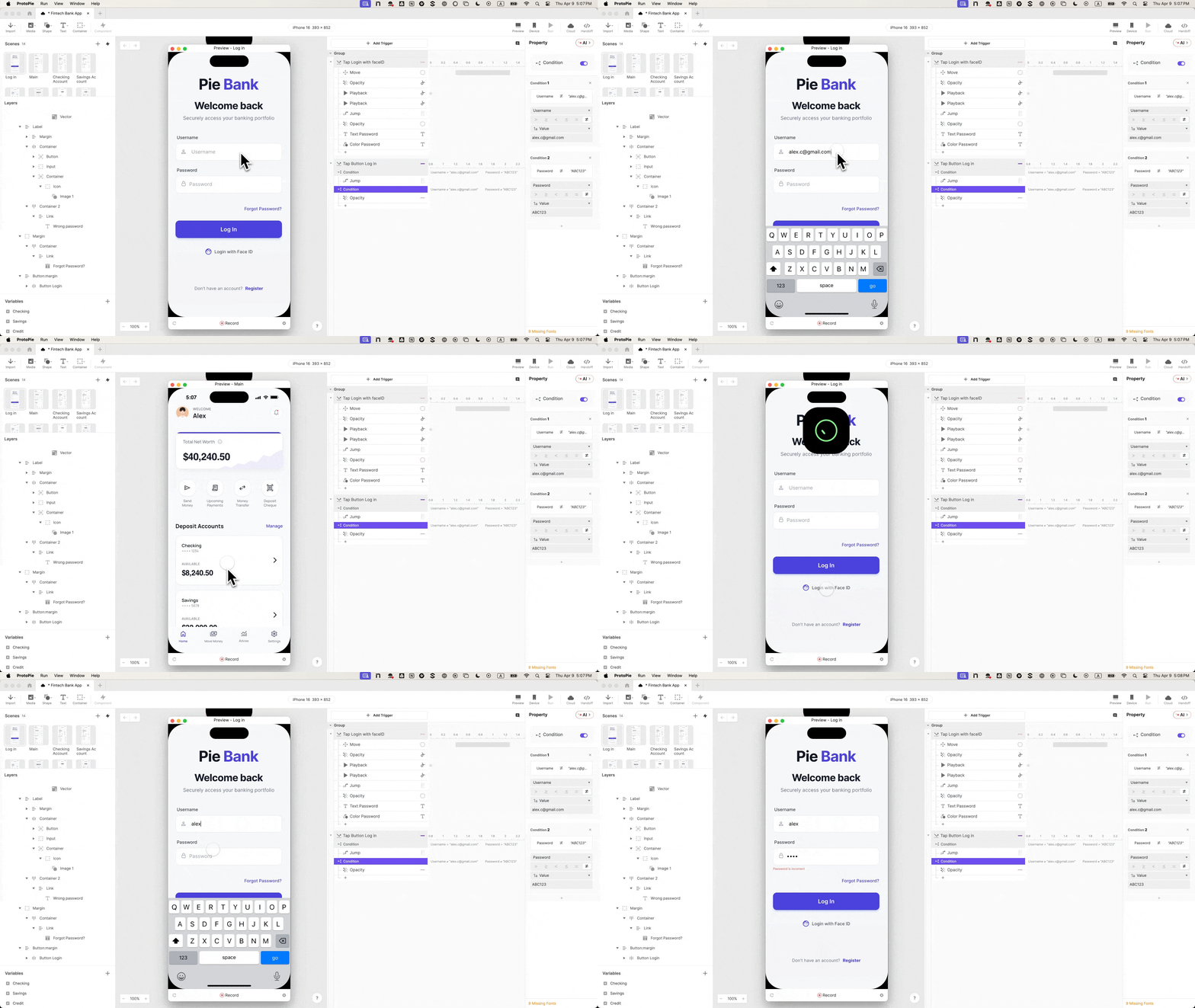
The process begins with the transition from design to logic. When importing assets from environments such as Figma, it is essential to maintain the scene hierarchy rather than importing flattened images. This preservation of layers allows every element—from the "Login" button to the individual background vectors—to be targeted by specific triggers and responses. A critical, often overlooked step in this phase is semantic naming. In a complex financial prototype, referencing "Rectangle 14" instead of "Username_Input_Field" creates technical debt that complicates the implementation of conditional logic.
Phase II: Transitioning from Static Visuals to Functional Inputs
The second stage involves replacing static placeholders with native input layers. Unlike traditional design tools, advanced prototyping software utilizes the device’s actual keyboard. This allows participants to type their real (or test) credentials, a vital step in maintaining the "illusion of reality." For banking apps, the "Text Password" property is crucial, as it automatically handles character masking. This small detail—seeing dots instead of plain text—is a psychological cue that reinforces the user’s perception of security.
Phase III: The Implementation of Logic and Variables
The most significant departure from traditional prototyping is the use of variables. By creating text-type variables for "username" and "password," the prototype gains a "memory." Through formulas such as input("Field_Name").text, the software captures the user’s keystrokes in real-time. This data is then used to fuel conditional triggers. For example, a "Tap" trigger on a login button is no longer a simple link; it becomes a logic gate that checks if the username variable equals a specific value and if the password field is not empty.
Addressing the "Error State" Gap
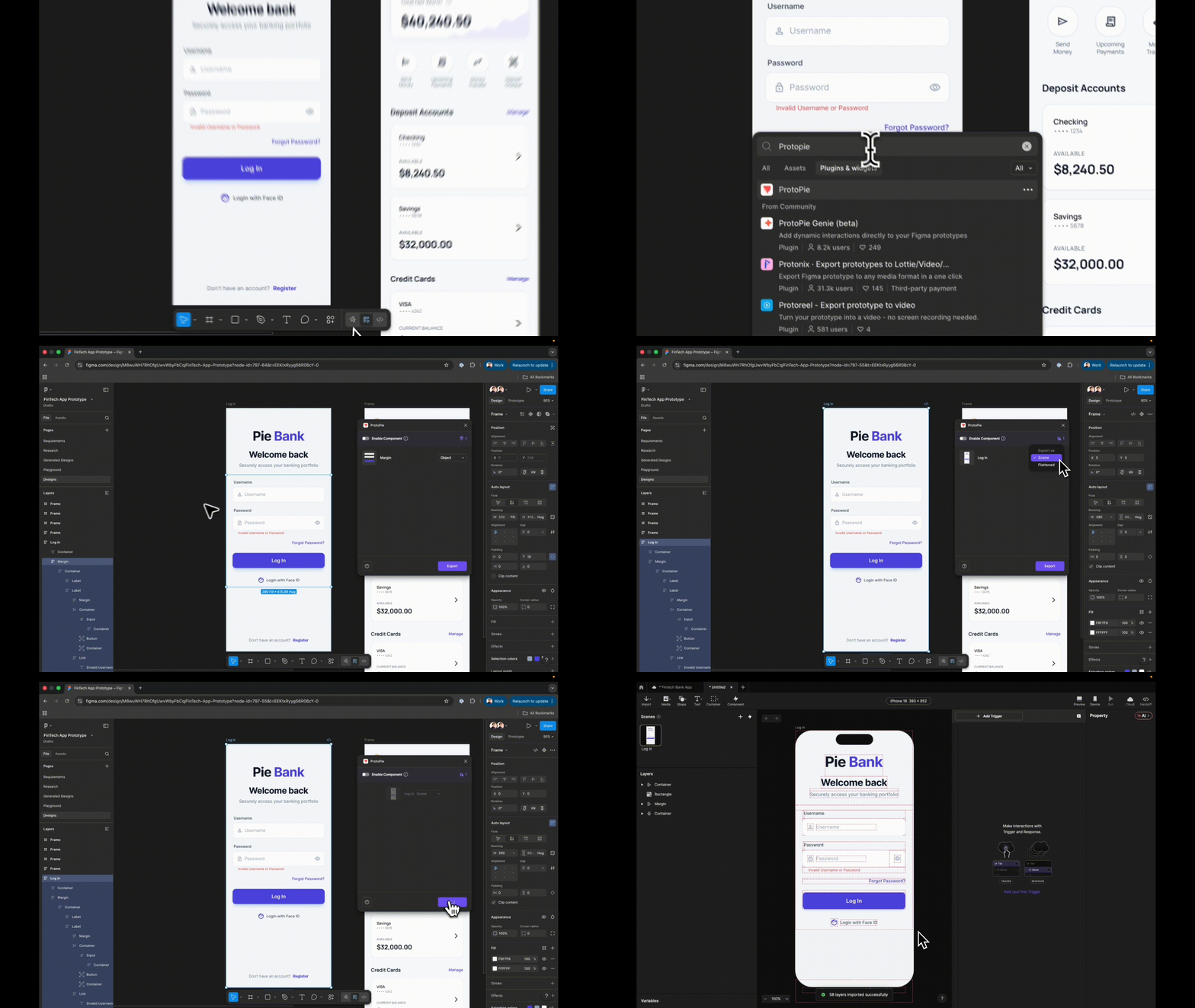
One of the most common omissions in UX design is the comprehensive testing of error states. In a standard prototype, if a user makes a mistake, the prototype often breaks or continues as if no error occurred. By building a live error state—where a hidden "Invalid Credentials" message appears only when the logic conditions are not met—researchers can observe how users handle friction.
In financial services, how a user reacts to a failed login is as important as how they navigate a successful one. Do they look for a "Forgot Password" link? Do they immediately attempt biometric recovery? These questions can only be answered if the prototype provides a realistic consequence for incorrect input.
Biometric Simulation: The Face ID Integration
As mobile banking becomes increasingly reliant on biometrics, simulating these interactions has become a requirement for high-fidelity testing. Integrating a Lottie animation—a JSON-based animation format—allows the prototype to display the familiar Face ID "scanning" graphic.

The realism of this interaction depends entirely on timing. A native iOS Face ID sequence follows a specific temporal pattern: the trigger, a slight delay as the "sensor" activates, the animation play-through, and a final transition to the dashboard. To replicate this, designers utilize a staggered response table:
- Move/Positioning: 0.0 seconds (The graphic enters the frame)
- Initial State: 0.0 seconds (The animation prepares)
- Play Animation: 0.5 seconds (The visual feedback occurs)
- Scene Jump: 1.0 seconds (The successful authentication concludes)
This sequence, when executed with "Reset selected scenes" enabled, ensures that the prototype remains performant and that the animation does not "stick" if the user navigates back to the login screen.
Industry Implications and Stakeholder Alignment
The move toward high-fidelity prototyping has profound implications for the broader product development lifecycle. From a research perspective, it eliminates "instructional bias," where a moderator must tell a participant to "pretend this button worked." From a stakeholder perspective, a prototype that behaves like a shipped product is a more persuasive tool for securing budget and buy-in.
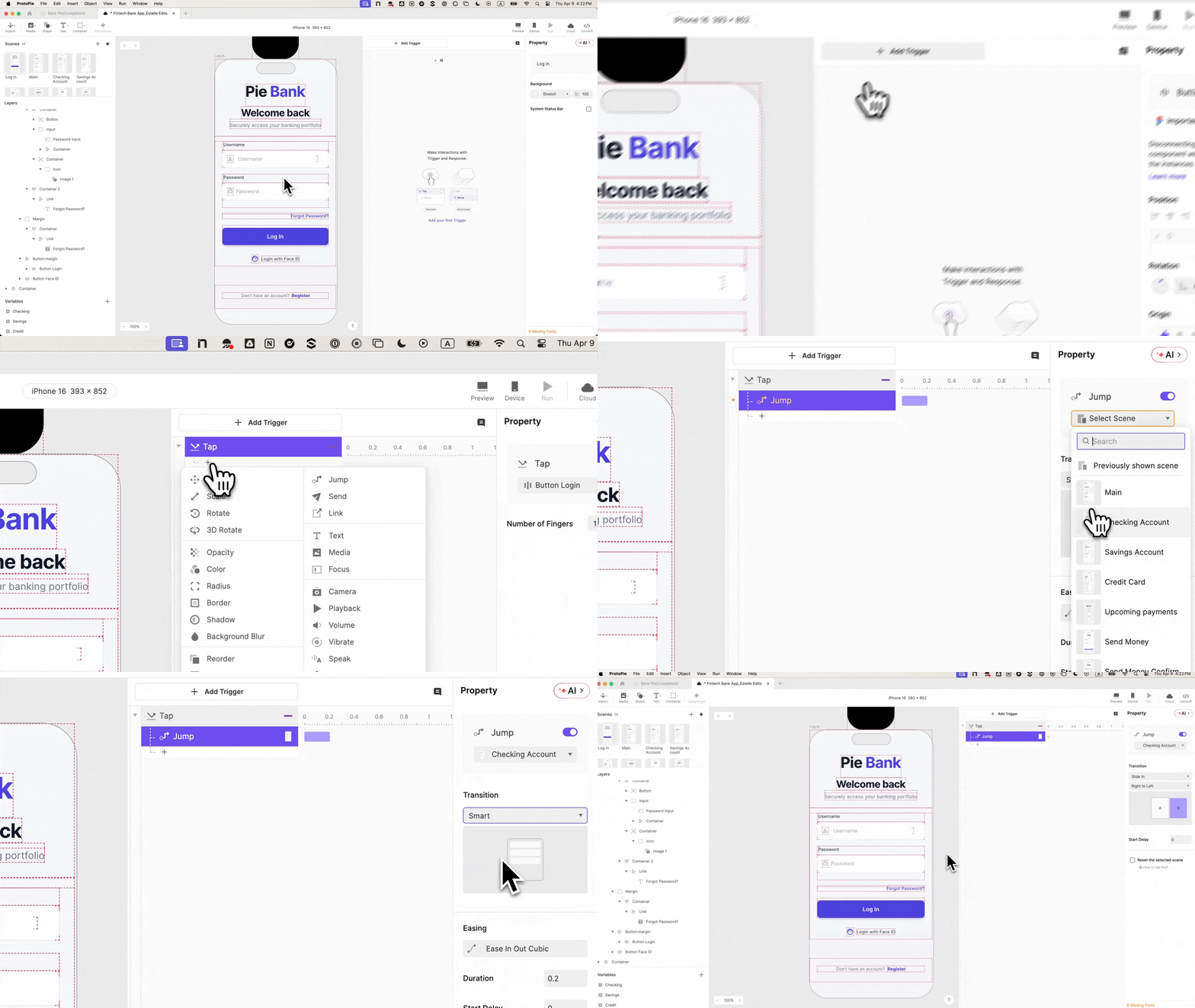
Furthermore, this approach revolutionizes the "handoff" between design and engineering. Historically, engineers had to interpret static mocks or watch recordings of a designer’s intent. With a logic-based prototype, the interaction panel serves as a functional specification. Engineers can see the exact conditional logic, the specific variables being used, and the precise timing of animations. This reduces the friction of "translation" and ensures that the final product more closely matches the validated design.
Expert Analysis: The Psychology of "Perceived Security"
Security experts note that in digital banking, "perceived security" is often as influential as "actual security" regarding user retention. If a user feels an app is flimsy because the login screen is buggy or unresponsive, they are less likely to trust the institution with significant capital transfers. High-fidelity prototyping allows banks to test the "emotional resonance" of their security features.
For instance, a Face ID animation that is too fast may feel "unsafe" to some users, while one that is too slow causes frustration. Finding the "Goldilocks zone" of biometric timing is a task that requires the granular control offered by tools like ProtoPie.

Conclusion: The Future of Fintech Prototyping
As the fintech sector continues to evolve with the integration of AI-driven insights and more complex multi-factor authentication methods, the tools used to design these experiences must keep pace. The era of "faking it" in usability sessions is drawing to a close. By investing the time to build functional, logic-driven login flows, design teams are not just creating better prototypes; they are ensuring that the financial products of tomorrow are built on a foundation of authentic user data and established trust.
The shift toward this level of fidelity represents a maturation of the UX profession. It acknowledges that in the digital age, the "experience" of a product is not just how it looks, but how it thinks and responds to the user. For the banking industry, where a single second of hesitation can be the difference between a completed transaction and a closed account, the precision of a high-fidelity prototype is no longer a luxury—it is a strategic necessity.

