
The integration of artificial intelligence into the product design lifecycle has reached a critical inflection point where the traditional methods of maintaining design systems are proving insufficient for the demands of Large Language Models (LLMs). While AI-generated prototypes promise to accelerate the transition from concept to code, the current output often suffers from significant "drift"—a phenomenon where the AI produces inconsistent results due to scattered design decisions, undocumented logic, and hard-coded values within design files. To address these systemic failures, industry experts are advocating for a fundamental shift in how design systems are structured, moving away from human-centric documentation toward machine-readable infrastructure.
The Challenge of Inconsistency in AI-Generated Design
The primary obstacle to high-quality AI-generated prototypes is not a lack of intelligence within the models themselves, but rather the ambiguity of the data they are fed. In many contemporary design environments, design systems are treated as visual libraries for humans rather than structured data for machines. Small inconsistencies—such as slightly varied hex codes, detached component instances, or non-standardized spacing—might be negligible to a human designer who can infer intent, but they act as "noise" for an LLM.
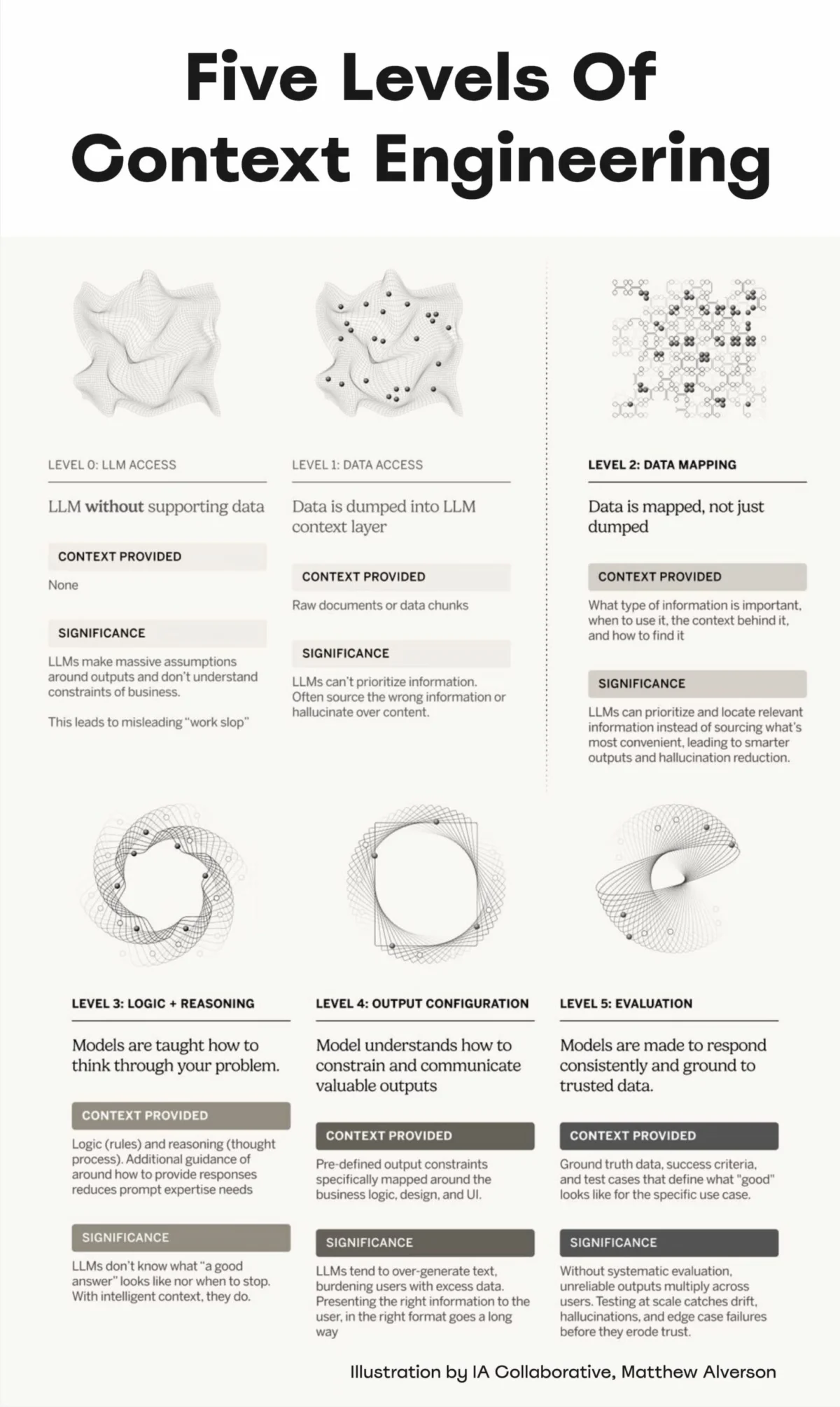
When an AI attempts to interpret a Figma file or a design flow without a rigorous underlying structure, it is forced to make assumptions. These assumptions lead to technical debt, accessibility failures, and a lack of visual cohesion. Recent insights from design leaders, including Hardik Pandya of Atlassian, suggest that the solution lies in "context engineering"—the practice of providing AI with a precise, prioritized framework of design decisions that minimizes the need for machine-side interpretation.
A Chronology of Design System Evolution
To understand the current shift, it is necessary to examine the evolution of design documentation over the last two decades.
- The Static Era (Pre-2010): Design systems existed primarily as PDF style guides. They were descriptive but entirely disconnected from the actual production code.
- The Atomic Era (2013–2020): Inspired by Brad Frost’s Atomic Design, systems became modular. Tools like Sketch and Figma allowed for "symbols" and "components," creating a visual link between design and implementation.
- The Tokenized Era (2020–2023): The introduction of design tokens allowed for the abstraction of visual properties (color, typography, spacing) into variables. This made systems more scalable and easier for developers to consume.
- The Machine-Readable Era (2024–Present): The current phase requires design systems to act as "infrastructure." Decisions are no longer just documented for human reference; they are formatted as structured data (often in Markdown or JSON) specifically designed to be ingested by LLMs to guide the generation of code and prototypes.
Design Decisions as Infrastructure
Treating design decisions as infrastructure implies that every choice—from the hierarchy of a heading to the specific accessibility requirements of a button—must be formalized in a way that an AI can use as a rule set. This approach moves the designer’s role from "pixel pusher" to "systems architect."

In an AI-ready system, a design decision is not considered "made" until it is documented in a spec file. This documentation must include not just the "what" but the "why" and the "how." For instance, an AI needs to know the "Do’s and Don’ts" of a component’s usage to avoid placing a primary action button in a low-priority area of the screen. By providing this level of granular guidance, organizations can reduce the error rate of AI prototypes by ensuring the model adheres to established design principles rather than inventing its own.
The Role of Automated Auditing: FigmaLint and Beyond
Maintaining the integrity of an AI-ready design system requires constant vigilance, as manual auditing is no longer feasible at scale. Tools such as FigmaLint have emerged to bridge this gap. As a free plugin, FigmaLint allows teams to audit design tokens, component states, and accessibility compliance automatically.
The utility of such tools extends beyond internal teams to the management of third-party vendors. When external partners deliver design systems, automated linting can detect "drift" before it enters the production pipeline. By identifying detached instances, missing interactive states, and hard-coded values, these tools ensure that the design documentation provided to the AI is "clean." This clean data is the prerequisite for generating high-quality code that requires minimal human intervention to reach a production-ready state.

The Three-Layer Architecture for AI-Ready Systems
A robust framework for preparing design systems for AI consumption involves three distinct but interconnected layers: Spec Files, the Token Layer, and the Audit Script.
1. Spec Files (The Narrative Layer)
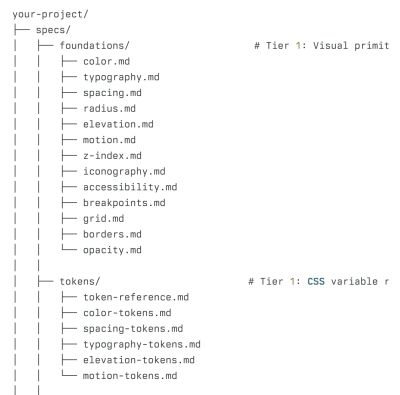
Spec files are structured Markdown files that serve as the "brain" for the AI. Unlike a visual mock-up, which an AI might misinterpret, a text-based spec file provides explicit instructions. These files detail spacing rules, color logic, and component usage guidelines. Because LLMs are inherently text-based, they can process Markdown more cost-effectively and accurately than they can "see" a complex design file. This layer ensures that the AI understands the logic behind the design, such as why a specific modal should be used over a drawer in a mobile context.
2. The Token Layer (The Variable Layer)
The token layer acts as a closed set of named variables. Instead of allowing an AI to pick an arbitrary "light blue" for a background, the token layer forces the AI to choose from a predefined list, such as color.background.primary.subtle. This eliminates the possibility of the AI inventing plausible but incorrect values. When the token layer is kept updated, the AI’s output remains synchronized with the actual codebase, facilitating a seamless transition from design to development.
3. The Audit Script (The Feedback Loop)
The final layer is a programmatic check that catches errors after the AI has generated a prototype. An audit script scans the output for any hard-coded values or deviations from the spec files. If a discrepancy is found, the script flags the error, allowing the AI—or a human developer—to correct it. This creates a self-correcting loop where the AI learns from its mistakes based on the rigid constraints of the design system.
Supporting Data and Industry Implications
The move toward AI-ready design systems is reflected in broader industry trends regarding software development efficiency. According to data from various DevOps research groups, teams that implement standardized, machine-readable documentation see a significant reduction in "handover friction"—the time spent by developers interpreting design intent.
Furthermore, as the cost of LLM tokens continues to fluctuate, the efficiency of Markdown-based spec files provides a financial incentive. Processing a text-based instruction set is significantly cheaper than utilizing multi-modal models to analyze high-resolution images of UI designs. This makes the "three-layer" approach not only a technical necessity but an economic one for large-scale enterprises.

Stakeholder Perspectives and Broader Impact
The transition to AI-ready systems is reshaping the roles of various stakeholders within the product development lifecycle:
- Product Designers: Designers are increasingly becoming "Context Engineers." Their value is no longer in the manual creation of layouts but in the definition of the rules that govern those layouts.
- Developers: For engineers, the benefit is a reduction in "cleanup" work. When AI produces code that is already aligned with the design system’s tokens and logic, developers can focus on complex business logic rather than CSS adjustments.
- AI Engineers: Those building the tools that generate interfaces require structured data to fine-tune their models. An AI-ready design system provides the "ground truth" needed to train more reliable, brand-specific agents.
The Future of Design Maintenance
As design systems continue to ship updates, the maintenance of AI-readiness will become a continuous process. Sync routines must be established to ensure that as a design system evolves, the corresponding spec files are updated in real-time. Failure to do so results in "version drift," where the AI generates prototypes based on outdated principles.
Ultimately, the promise of AI in design is not the replacement of human creativity, but the automation of technical execution. AI cannot magically resolve design debt or technical debt on its own. It requires a foundation of clear decisions, established priorities, and well-defined principles. By building design systems that are as readable to machines as they are to humans, organizations can unlock the true potential of AI-generated prototyping, moving toward a future where the distance between an idea and a functional interface is shorter than ever before. The work ahead for design teams is significant, as the "cleaning" and "structuring" of legacy systems will likely take years, but it is a necessary evolution for any team looking to remain competitive in an AI-driven landscape.

