
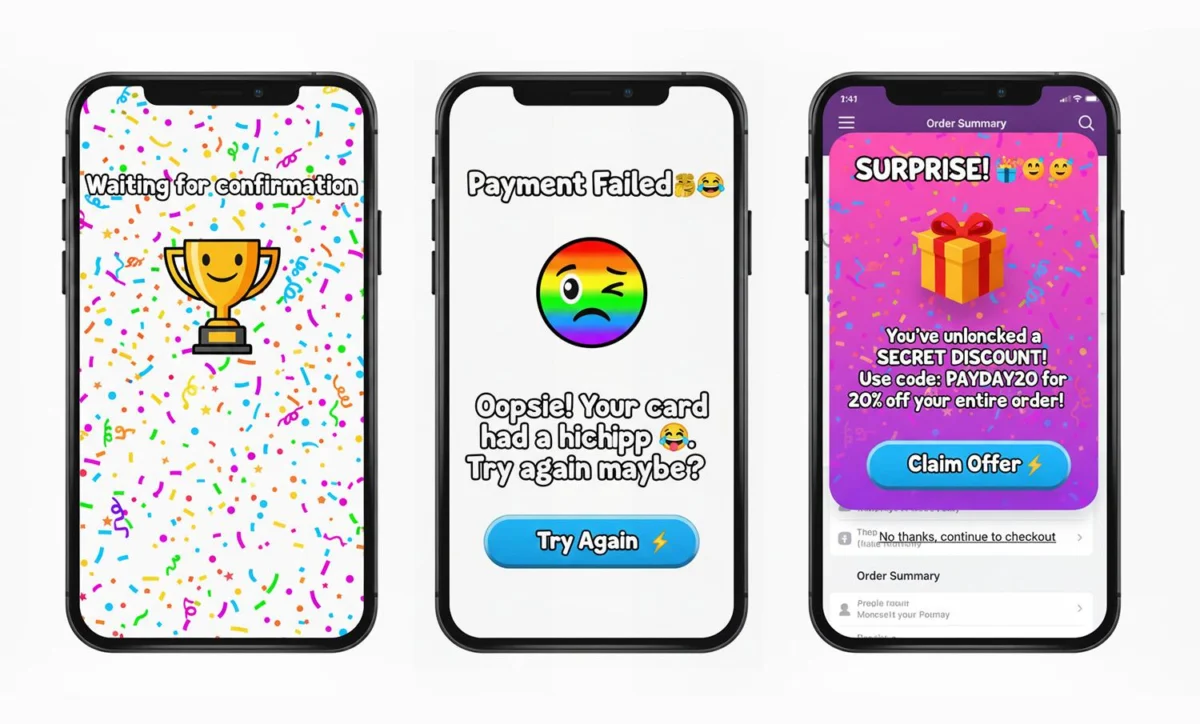
The discipline of digital product design is currently undergoing a fundamental shift from static pattern-matching to a more sophisticated form of "emotional orchestration." While traditional User Experience (UX) metrics have historically prioritized speed, efficiency, and task completion, contemporary design discourse is increasingly looking toward cinematic and narrative techniques to manage user sentiment. This evolution is centered on two competing concepts: Emotion in Flow and Emotion in Conflict. As digital products become more integrated into the daily lives of global consumers, the ability to guide a user through a spectrum of feelings—uncertainty, relief, confidence, and calm—without causing psychological friction has become a primary differentiator for market-leading applications.
The Conceptual Framework of Emotional Design
The current debate regarding emotional pacing in design finds its roots in the convergence of behavioral psychology and entertainment media. Alan Cohen and other leading design theorists argue that a product’s success is no longer determined solely by its pixels or pattern libraries, but by its "pacing." This perspective suggests that digital interfaces function similarly to films or television series, where the transition between different emotional states must be earned and telegraphed to maintain what is known as "immersion."
Emotion in Flow is defined as a state where emotional shifts within a product feel natural and telegraphed. In this state, the user remains immersed in the task, even as the tone shifts from the high-stakes tension of a financial transaction to the calm of a confirmation screen. Conversely, Emotion in Conflict occurs when a jarring transition—such as a misplaced joke, a surprise pop-up, or a jumpy animation—punctures the user’s emotional state, leading to cognitive dissonance and a breakdown in trust.
Case Studies in Entertainment: Anime vs. Western Cinema
To understand these concepts, analysts frequently point to the stark contrast in how modern entertainment handles tonal shifts. The anime series Dan Da Dan, which premiered on streaming platforms like Netflix in late 2024, serves as a primary example of Emotion in Flow. The series is noted for its radical tonal range, frequently oscillating between high-octane horror, absurdist comedy, and profound tenderness. Despite these wild shifts—such as moving from a comedic quest to a heartbreaking narrative about a kidnapped child—the experience remains coherent. This is achieved through careful "pacing bridges": visual cues and musical underscores that prepare the audience for a change in sentiment before it occurs.
In contrast, recent critiques of Western superhero films, specifically James Gunn’s upcoming Superman (2025), highlight the risks of Emotion in Conflict. Early analysis of the film’s directorial style suggests a tendency toward "tonal clashing." A specific example cited by critics involves a heartfelt, intimate conversation between Lois Lane and Clark Kent being undermined by a background "running gag" involving a monster. While intended as "delight," the background humor steals focus from the emotional core of the scene. In the context of product design, this is the equivalent of a "cheeky" error message appearing during a critical data loss event; the humor does not relieve the stress but instead increases the user’s cognitive load by forcing them to process conflicting signals.

A Chronology of Emotional Design Theory
The transition toward narrative-driven UX can be traced through several decades of technological evolution:
- The Functional Era (1980s–1990s): Design was purely utilitarian. The focus was on system reliability and command-line efficiency. Emotional response was rarely considered.
- The Aesthetic Era (2000s): With the rise of Apple’s "skeuomorphism," design began to evoke visceral reactions. The focus shifted to how a product looked and felt.
- The Emotional Design Era (2004–2015): Don Norman’s seminal work, Emotional Design, introduced the three levels of processing: Visceral (appearance), Behavioral (function), and Reflective (self-image and memory).
- The Narrative Era (2020s–Present): Current trends prioritize "Flow." Designers are now viewed as directors who must manage the "beat sheet" of a user’s journey, ensuring that every microinteraction serves a larger emotional arc.
Supporting Data and Psychological Impact
The importance of managing these emotional beats is supported by the Peak-End Rule, a psychological heuristic described by Nobel laureate Daniel Kahneman. The rule suggests that humans judge an experience largely based on how they felt at its peak (the most intense point) and at its end, rather than the total sum or average of every moment of the experience.
Data from usability studies indicate that when a user encounters Emotion in Conflict—such as a promotional modal appearing during a checkout process—the "peak" of the experience shifts from "achievement" to "frustration." According to industry research, products that maintain a consistent emotional flow see a 22% higher rate of user retention compared to those that utilize "disruptive delight" (humor or animations that interrupt critical tasks). Furthermore, cognitive load theory suggests that "accidental conflict" in design can slow down task completion by up to 15%, as the brain requires extra time to resolve the mismatch between the task’s gravity and the interface’s tone.

Practical Application in Digital Products
The translation of these cinematic ideas into software development involves the strategic use of microinteractions. These are the small, functional animations or feedback loops that act as "emotional glue."
Examples of Emotion in Flow
Modern payment gateways like Stripe or Apple Pay are often cited as the gold standard for Emotion in Flow. The process follows a predictable narrative arc:
- Uncertainty: The user wonders if the payment will work.
- Clarity: Clear steps and progress bars remove ambiguity.
- Anticipation: A brief loading state builds expectation.
- Achievement: A crisp checkmark and a soft haptic vibration provide a definitive peak.
- Calm: A receipt or a "next steps" button provides closure.
Examples of Emotion in Conflict
Common industry "red flags" that trigger emotional conflict include:

- The Premature Celebration: Confetti animations that fire before the system has actually confirmed a transaction.
- The Tonal Mismatch: Using a playful, "witty" voice in an error message regarding a high-stakes failure (e.g., "Oopsie! We lost your tax returns!").
- The Surprise Takeover: A promo modal for a newsletter subscription that interrupts a user in the middle of a complex data-entry task.
Industry Reactions and Expert Analysis
Design leaders have begun to speak out against the "over-gamification" of utility-based apps. In a recent roundtable discussion on digital ethics, several senior designers noted that the industry’s obsession with "delight" has often come at the expense of user dignity.
"Good emotional design clarifies the experience; great emotional design doesn’t need decoration to compensate for confusion," stated one lead architect at a major Silicon Valley SaaS firm. This sentiment reflects a growing movement toward "humane design," where the emotional state of the user is respected rather than manipulated for engagement metrics.
Analysts suggest that as Artificial Intelligence (AI) becomes more prevalent in interfaces, the risk of Emotion in Conflict will increase. AI agents that attempt to use "personality" or "humor" must be perfectly calibrated to the user’s current context. An AI that jokes while a user is trying to resolve a service outage will likely be viewed as an obstacle rather than an assistant.

Broader Impact and Future Implications
The shift toward "directed experiences" has significant implications for the future of the digital economy. As software becomes more complex, the ability to manage a user’s "emotional beat sheet" will become a core competency for product teams. Companies are already beginning to hire "UX Writers" and "Motion Designers" specifically to manage the transition between these beats, ensuring that the narrative of the product remains intact.
In the long term, the distinction between Emotion in Flow and Emotion in Conflict will likely define the winners and losers of the "attention economy." Users are increasingly gravitating toward products that provide a sense of "calm" and "clarity." By studying the successes of narrative media like Dan Da Dan and avoiding the pitfalls of tonal clashing seen in modern blockbusters, designers can create digital environments that are not just functional, but emotionally resonant.
The ultimate goal of this new design philosophy is to ensure that the user remembers the right peak and the right end—the feeling of achievement and the sense of closure—rather than the emotional whiplash of a poorly timed disruption. As Alan Cohen’s exploration suggests, design is about feelings as much as it is about pixels, and the most successful products of the future will be those that master the art of the flow.

