
Google’s recent update to its "Crawling infrastructure" documentation, specifically the introduction of the "Optimize your crawl budget" section, signals a significant shift in how website owners can ensure their content is discovered and indexed by the search engine giant. This new guidance underscores the critical importance of efficient crawling for website visibility, as pages must be successfully crawled to appear in Google’s search results. The update addresses the complex challenge of managing the sheer volume of global URLs, explaining that a poorly organized website can lead to longer crawl times and, consequently, fewer indexed pages.
The concept of a "crawl budget" is central to these updated guidelines. Googlebot, the search engine’s web crawler, has a finite amount of resources it can allocate to crawling any given website. This budget is influenced by numerous factors, and understanding how to maximize it is crucial for any website aiming to achieve optimal search engine rankings. The updated documentation provides actionable advice for webmasters to work more effectively with Googlebot, ensuring that their most important content is prioritized and regularly refreshed.
Understanding the Crawl Budget
The necessity for a crawl budget arises from the immense scale of the internet. With billions of web pages existing, Google cannot possibly crawl every page on every website with the same frequency. Instead, it employs a dynamic system to allocate its crawling resources. Websites that are well-structured, frequently updated, and provide a good user experience are more likely to receive a larger crawl budget, meaning Googlebot will visit and re-crawl them more often. Conversely, websites that are difficult to navigate, contain a high number of duplicate or low-quality pages, or are slow to load may receive a smaller crawl budget, hindering their potential for discoverability.
The newly added "Optimize your crawl budget" section provides a more structured approach for website owners to influence this allocation. Previously, many of these principles were implied or discussed in broader SEO contexts, but Google’s explicit documentation now offers a clearer roadmap. This update is particularly timely as search engines continue to evolve their algorithms, with a greater emphasis on user experience and content freshness.
Key Guidelines for Optimizing Crawl Budget
Google’s updated documentation outlines several key strategies for websites to maximize their crawl budget. These guidelines are designed to help webmasters ensure that Googlebot can efficiently discover and index their content.
1. Starting with a Conservative Crawl Budget:
When a new website is launched, Google assigns it a "conservative" crawl budget. This initial allocation is modest, intended to prevent new sites from overwhelming server resources. The aim is to allow Google to cover the essential content without causing performance issues. This cautious approach is a standard practice, ensuring that both Google and the website owner can gradually assess and optimize the site’s performance and content strategy before a larger crawl allocation is granted.

2. Gradual Increase Based on Site Size and Updates:
The crawl budget for a website is not static; it can increase over time. This growth is directly linked to the website’s size and the frequency of its updates. Regularly updating content, especially when these updates are reflected in XML sitemaps, signals to Googlebot that the site is active and has fresh content to offer. This encourages Googlebot to return more frequently, thereby increasing the crawl budget.
Google suggests a phased approach to content updates. For instance, instead of launching a large number of new products or blog posts all at once, a gradual rollout over a period can be more beneficial. An example provided is introducing three new products per day for a month, rather than all 100 on a single day. This consistent, steady stream of new or updated content helps maintain Googlebot’s interest and reinforces the site’s value.
3. Improving Site Load Time:
The speed at which a website loads has long been recognized as a critical factor in its SEO performance, and this now extends to crawl budget optimization. Faster websites are generally crawled more efficiently. Googlebot can process more pages in the same amount of time if the server responds quickly. Website owners are encouraged to monitor their site’s performance using tools like Google PageSpeed Insights and to actively work on improving loading speeds. This can involve optimizing images, minifying CSS and JavaScript, leveraging browser caching, and utilizing a Content Delivery Network (CDN).
4. Prioritizing Popular Pages:
Pages that are popular and receive significant attention are crawled more frequently. This popularity is often indicated by the number of inbound links, both external (from other websites) and internal (from within the same website). Pages with strong link profiles are seen as more authoritative and valuable, prompting Googlebot to revisit them more often to ensure the latest information is captured. Website owners can enhance this by building quality backlinks and implementing a robust internal linking strategy that directs users and crawlers to important content.
Navigating URL Caching and HTTP Status Codes
A notable addition to Google’s guidelines is the recommendation regarding "URL caching" and the support for the 304 (Not Modified) HTTP status code. This recommendation suggests that if a page has not changed since its last crawl, returning a 304 status code tells Googlebot to reuse its cached version. This not only saves server bandwidth and resources for the website owner but also allows Googlebot to allocate more of its crawling time to pages that have actually been updated.
However, the article’s author expresses a note of caution regarding the indiscriminate application of this recommendation. The experience suggests that using 304 status codes for all unchanged pages, particularly those considered important, might inadvertently affect their visibility in search engine results pages (SERPs) or even their indexing status. The implication is that Google might interpret a persistent 304 response as a sign of stagnation, potentially de-prioritizing the page for fresh crawls and updates. Therefore, it is advisable to use this feature strategically, perhaps for less critical pages like expired product listings or static policy pages, rather than for core content that benefits from regular re-crawling and indexing.
The Role of Search Console and Technical SEO
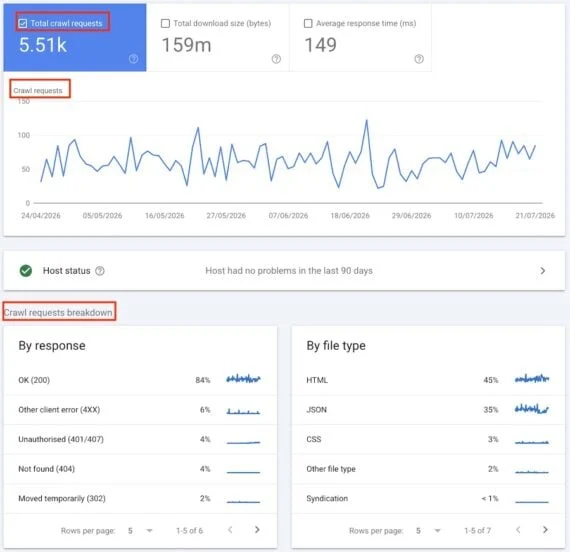
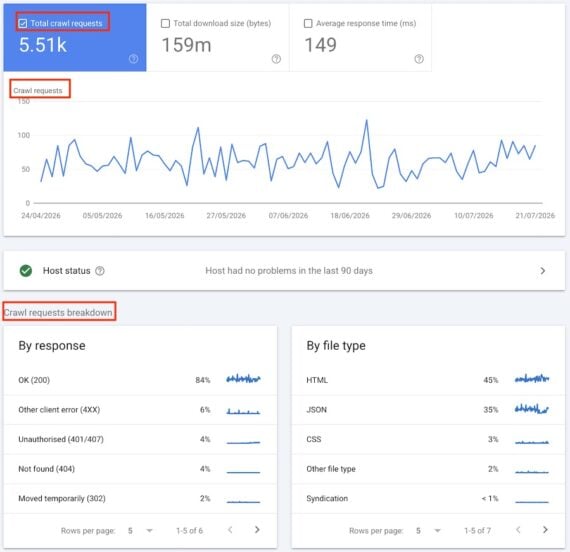
Google Search Console, a free service offered by Google that helps you monitor your site’s performance in Google Search, provides crucial data for understanding crawl budget. The "Crawl stats" report within Search Console offers insights into how often Googlebot visits a site, the number of pages crawled, the download size, and any errors encountered during crawling. Analyzing this report can help webmasters identify potential issues, such as server errors that prevent crawling or an excessive number of crawl requests to unimportant sections of the site.
Technical SEO plays a pivotal role in crawl budget optimization. This includes:
- Sitemaps: Ensuring that XML sitemaps are up-to-date, accurately list all important URLs, and are submitted to Google Search Console. Sitemaps act as a roadmap for Googlebot, helping it discover new and updated content efficiently.
- Robots.txt: Properly configuring the
robots.txtfile is essential to guide Googlebot. It should be used to disallow crawling of unimportant or duplicate pages (e.g., internal search results, private admin areas) to prevent wasting crawl budget on content that doesn’t need to be indexed. - URL Structure: Using clean, logical, and descriptive URLs makes it easier for both users and search engines to understand the content of a page. Avoid excessively long or parameter-heavy URLs where possible.
- Canonicalization: Implementing canonical tags correctly helps prevent duplicate content issues, ensuring that Google indexes the preferred version of a page.
- Pagination: For websites with paginated content, using proper
rel="next"andrel="prev"attributes or canonicalizing to a view-all page can improve crawl efficiency.
Broader Implications for Website Owners
The emphasis on crawl budget optimization by Google highlights a continued commitment to rewarding websites that are technically sound, user-friendly, and provide fresh, high-quality content. For businesses, this translates into a need for ongoing investment in website maintenance and content strategy.
Data and Trends:
Industry data consistently shows a correlation between website speed, user engagement, and search engine rankings. A study by Akamai in 2023 indicated that a one-second delay in page load time can lead to a 7% reduction in conversions. This underscores the financial incentive for optimizing site speed, which directly impacts crawl budget. Furthermore, Google’s own reports have shown that websites with higher user engagement metrics (e.g., lower bounce rates, longer dwell times) tend to perform better in search results. These metrics are indirectly influenced by crawl efficiency, as a well-crawled and up-to-date site is more likely to provide a positive user experience.
Timeline of Crawl Budget Evolution:
While the term "crawl budget" has been discussed in SEO circles for years, Google’s explicit documentation and focus on it have intensified in recent years. This evolution reflects Google’s increasing sophistication in managing its vast indexing operations and its desire to guide webmasters towards best practices that align with its algorithmic goals. The initial introduction of crawl budget considerations can be traced back to discussions around the 2000s, but the current level of detail and actionable advice is a more recent development, particularly with the latest updates to the crawling infrastructure documentation.
Reactions and Perspectives:
While Google’s official statements are the primary source of information, SEO professionals and webmasters have been actively discussing and adapting to these concepts. Many industry experts view the updated guidelines as a positive step, providing much-needed clarity. However, some express concern about the potential for misinterpretation or over-optimization, especially regarding the nuanced advice on URL caching. The consensus among seasoned SEO professionals is that these guidelines should be integrated into a holistic SEO strategy, rather than treated in isolation.
Analysis of Implications:
The increased focus on crawl budget has several implications for businesses:
- Content Freshness is Key: Websites that regularly publish new content or update existing pages will likely see their crawl budgets increase, leading to better visibility for new information.
- Technical Excellence is Non-Negotiable: Poor technical SEO, such as slow load times, broken links, or inefficient site architecture, can severely limit a website’s crawl budget and, consequently, its search engine performance.
- Strategic Content Management: Website owners need to be more strategic about what content they produce and how they present it. Prioritizing high-value pages and ensuring they are easily discoverable is paramount.
- Data-Driven Decisions: Utilizing tools like Google Search Console and performance monitoring software becomes even more critical for understanding how Googlebot interacts with a site and for identifying areas for improvement.
In conclusion, Google’s updated crawl budget documentation provides valuable insights for website owners seeking to enhance their online visibility. By understanding and implementing these guidelines, businesses can work more effectively with Googlebot, ensuring their content is discovered, indexed, and ultimately presented to users searching for relevant information. The emphasis on a well-optimized, technically sound, and regularly updated website remains a cornerstone of successful search engine optimization in the current digital landscape.

