
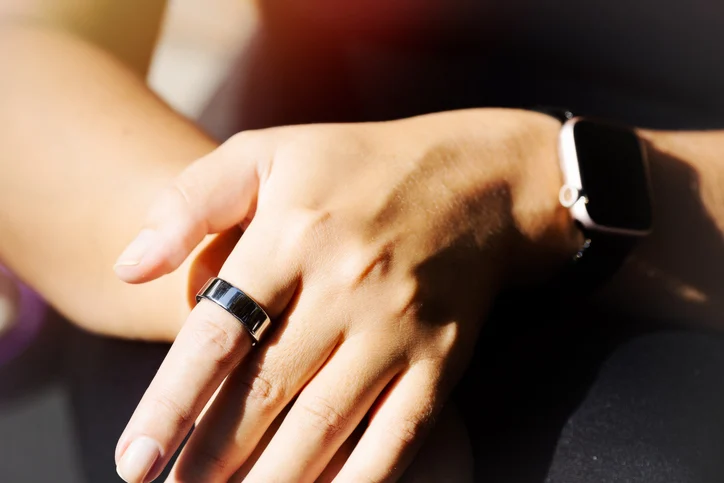
The wearable technology industry is facing a significant legal challenge as Oura, a prominent leader in the smart ring market, has become the subject of a class action lawsuit alleging that the company’s marketing claims regarding sleep tracking accuracy are fundamentally deceptive. Filed in the United States District Court for the Northern District of California, the lawsuit, Surber v. Oura Inc. et al. (Case No. 26-cv-08686), contends that the company’s assertions of achieving up to 95% accuracy in sleep stage tracking are not supported by independent scientific evidence. The litigation marks a pivotal moment for the "quantified self" movement, raising critical questions about the boundary between consumer wellness devices and clinical-grade diagnostic tools.
Allegations of False Advertising and Technical Limitations
The complaint, brought forward by California resident Madison Surber, centers on the premise that Oura’s marketing materials lead consumers to believe the device provides a level of precision comparable to clinical sleep studies. Surber, who purchased an Oura Ring 4 Gold in 2025 for over $500, alleges that she relied on these accuracy claims when making her purchase. The suit argues that had the true limitations of the device been known, she—and other members of the proposed class—would either have declined to purchase the product or would have paid significantly less for it.
At the heart of the legal argument is the technical distinction between how sleep stages are officially measured and how a finger-worn wearable operates. In a clinical setting, sleep staging is determined via polysomnography (PSG), which involves the use of electroencephalogram (EEG) sensors to monitor brain activity, electrooculogram (EOG) sensors to track eye movements, and electromyogram (EMG) sensors to monitor muscle activity. These metrics are the "gold standard" for identifying the four stages of sleep: Awake, Light (N1 and N2), Deep (N3/Slow Wave Sleep), and REM (Rapid Eye Movement).
The lawsuit asserts that because the Oura Ring lacks the hardware to monitor brain waves or eye movements, its claims of high-level accuracy are inherently misleading. Instead of direct measurement, the ring utilizes photoplethysmography (PPG) to track heart rate and heart rate variability (HRV), along with an accelerometer for movement and a negative temperature coefficient (NTC) sensor for skin temperature. The complaint alleges that Oura’s software then uses artificial intelligence to generate "estimates" or "proxy signals" rather than actual measurements of sleep stages, leading to a discrepancy between marketed performance and real-world utility.
Scientific Discrepancies and the 2025 Nature Study
To bolster the claims of inaccuracy, the legal filing cites a 2025 study published in the journal Nature. This independent research reportedly found that the Oura Ring’s accuracy in distinguishing between specific sleep stages was approximately 53% across 45 nights of data collection. This figure stands in stark contrast to the 95% accuracy figure cited in Oura’s promotional materials.
The discrepancy highlights a common point of contention in the wearable industry: the difference between "sleep-wake detection" and "sleep-stage classification." Many wearables are highly accurate (often above 90%) at simply determining whether a user is asleep or awake based on movement and heart rate. However, the accuracy typically drops significantly when the algorithms attempt to differentiate between REM sleep and light sleep, as these stages can exhibit similar physiological heart rate patterns despite having vastly different neurological profiles. The lawsuit alleges that Oura conflates these two types of accuracy to create an inflated perception of the device’s capabilities.
Chronology of Oura’s Market Expansion and Marketing Strategy
The filing of this lawsuit follows a period of rapid growth and aggressive marketing for Oura. Since the launch of its first-generation ring via a Kickstarter campaign in 2015, the Finnish company has positioned itself as the premium choice for sleep tracking.
- 2015-2021: Oura establishes itself as a niche favorite among biohackers and professional athletes, emphasizing recovery and "readiness" scores.
- 2022: The company introduces the Gen3 ring, incorporating more sophisticated sensors and a subscription-based model for data insights.
- 2024: Oura launches the Oura Ring 4, featuring "Smart Sensing" technology intended to adapt to the user’s finger for better signal quality. Marketing for this version heavily emphasized scientific validation and clinical-grade accuracy.
- Early 2025: Madison Surber purchases the Oura Ring 4 Gold, expecting the 95% accuracy advertised in digital and social media campaigns.
- August 2025: The class action lawsuit is filed in California, seeking an injunction against the allegedly false advertising and monetary restitution for affected consumers.
Throughout this timeline, Oura has consistently marketed its product not just as a fitness tracker, but as a sophisticated health tool capable of providing deep insights into one’s internal biology. This premium positioning, often accompanied by price tags ranging from $299 to over $500, has made the company a target for scrutiny regarding whether the hardware can truly deliver on its high-cost promises.
Oura’s Official Response and Defense Strategy
Oura has moved swiftly to defend its reputation and the scientific integrity of its technology. In an official statement, a company spokesperson emphasized that Oura stands by its accuracy claims and the peer-reviewed research supporting its algorithms.
"Like other consumer sleep wearables, Oura Ring estimates sleep stages using multiple physiological signals, including heart rate, heart rate variability, movement, breathing patterns, and temperature," the spokesperson stated. They further argued that there is "well-documented, peer-reviewed independent scientific evidence that sleep stages are associated with distinct, measurable, reproducible changes in physiology."
Oura’s defense rests on three primary pillars:
- Validation Studies: The company claims its sleep-staging algorithm was developed using a dataset of more than 1,200 nights of data and has been validated against PSG in multiple independent studies.
- Product Classification: The spokesperson noted that the Oura Ring is explicitly marketed as a consumer wellness device, not a medical device, and is not intended to be a substitute for a clinical sleep study or medical diagnosis.
- Algorithmic Sophistication: Oura contends that its proprietary use of "Smart Sensing" and machine learning allows it to interpret peripheral physiological data with a high degree of correlation to brain-state changes, even without direct EEG monitoring.
Following the filing of the suit, Oura published detailed blog posts authored by sleep scientists to explain the methodology behind their sensors. These posts aim to educate the public on how peripheral signals like HRV and respiratory rate are intrinsically linked to the autonomic nervous system’s shifts during different sleep cycles.
Legal and Industry Analysis: The "Substantiation" Threshold
Legal experts suggest that the outcome of the case may not depend on whether the ring is as accurate as a clinical PSG, but rather on how Oura "substantiated" its specific 95% claim. Shawn Collins, an attorney at Stradling, noted that the defense will likely focus on the prominence of disclaimers.
"Oura expressly disclaims on its website and various other places that its ring is not as accurate as the gold standard PSG study," Collins observed. He suggested that the plaintiff’s strategy involves attacking the "conspicuousness" of these disclaimers. If a consumer sees "95% accuracy" in large font but must click through several pages of terms and conditions to find the caveats, the marketing could be deemed "deceptive" under California’s strict consumer protection laws, such as the Unfair Competition Law (UCL) and the False Advertising Law (FAL).
Furthermore, the case touches upon the "wellness loophole" in regulatory oversight. The Food and Drug Administration (FDA) generally does not regulate "general wellness" products that make low-risk claims about sleep or fitness. However, when a company uses specific percentages and claims "clinical-grade" precision, they move closer to the boundary of medical device territory, which requires much more rigorous pre-market notification and validation.
Broader Implications for the Wearable Technology Sector
The Oura lawsuit is indicative of a broader trend of litigation hitting the health-tech sector. In recent years, companies like Apple, Fitbit, and Jawbone have faced similar challenges regarding heart rate accuracy and calorie-burn estimations. As these devices become more integrated into the healthcare ecosystem—with doctors sometimes using wearable data to inform patient care—the stakes for accuracy have never been higher.
Shashi Shankar, CEO of Novellia, a health data platform, believes the issue is fundamentally about the "trust gap." He argues that while wearables are excellent at identifying longitudinal trends—such as a user getting progressively less sleep over a month—they struggle with the "clinical reality" of a single night’s data.
"Where wearables fall short today is anchoring those signals to a patient’s clinical reality—their history, their conditions, their outcomes," Shankar remarked. He noted that Oura’s recent partnership with pharmaceutical giant Eli Lilly is a step toward "pharmaceutical-grade validation," which could eventually provide the clinical credibility needed to ward off such legal challenges. By tying wearable data to real-world outcomes in clinical trials, companies can move beyond "wellness" claims toward "evidence-based" health insights.
Future Outlook and Potential Outcomes
As the case moves through the federal court system, the discovery phase will likely involve a deep dive into Oura’s internal testing data. If the court finds that Oura’s 95% claim was based on a narrow set of conditions (such as only detecting "sleep vs. wake") while the marketing suggested "stage-by-stage" precision, the company could face significant financial penalties and be forced to overhaul its global marketing strategy.
Conversely, if Oura can demonstrate that its peer-reviewed validation studies are robust and that its disclaimers meet the "reasonable consumer" standard, the case could be dismissed, providing a legal shield for other wearable manufacturers.
For now, the litigation serves as a cautionary tale for the tech industry. As consumers spend hundreds of dollars on devices promised to optimize their health, the demand for transparency in data science is growing. The "quantified self" is no longer just a hobby for enthusiasts; it is a multi-billion-dollar industry where the difference between an "estimate" and a "measurement" can lead to a federal courtroom. The resolution of Surber v. Oura will likely set the standard for how health-tech companies must communicate the capabilities—and the limitations—of the sensors we wear on our bodies every day.

