
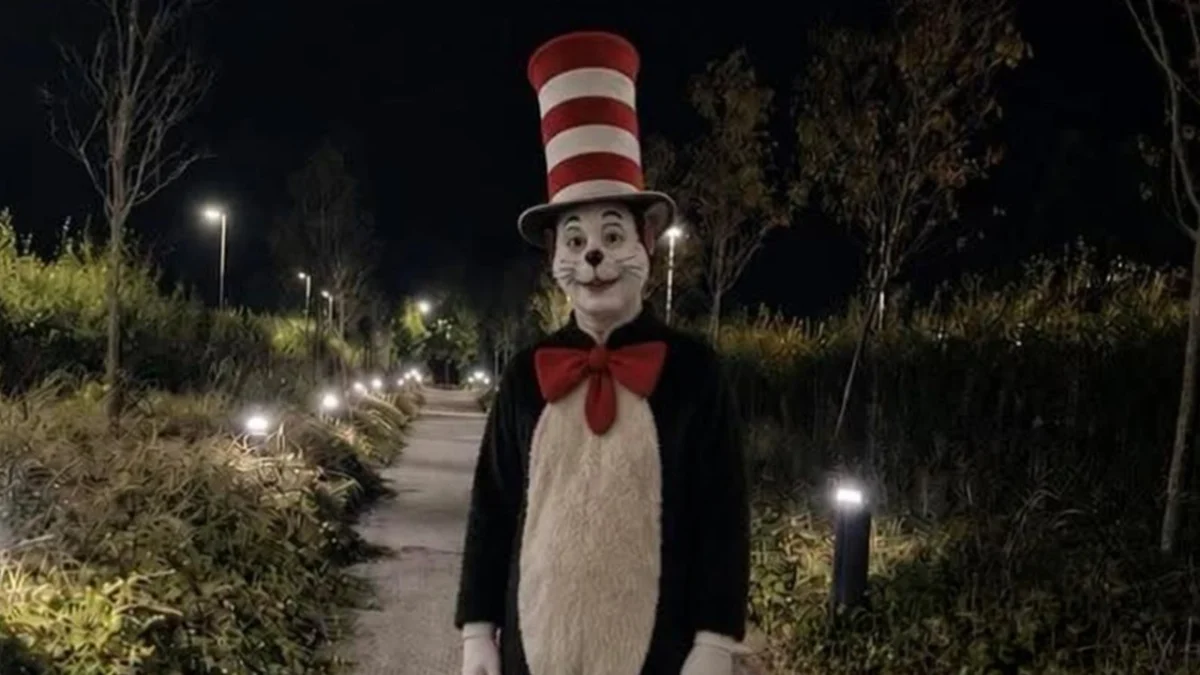
The digital landscape of August 2026 was significantly disrupted by the emergence of a sophisticated AI-driven hoax known as the Cat In the Hat Serial Killer Trend. This viral phenomenon, which primarily targeted communities in Ireland, the United Kingdom, and eventually the United States, centered on fabricated reports of a predatory individual stalking residential streets at night. The purported killer was described as wearing a costume identical to the one donned by actor Mike Myers in the 2003 live-action film adaptation of Dr. Seuss’s The Cat In the Hat. While law enforcement agencies across multiple jurisdictions eventually confirmed the "sightings" were the product of artificial intelligence and coordinated digital manipulation, the trend sparked widespread concern and a period of localized public anxiety reminiscent of previous social media-driven panics.
Emergence and the Wexford Incident
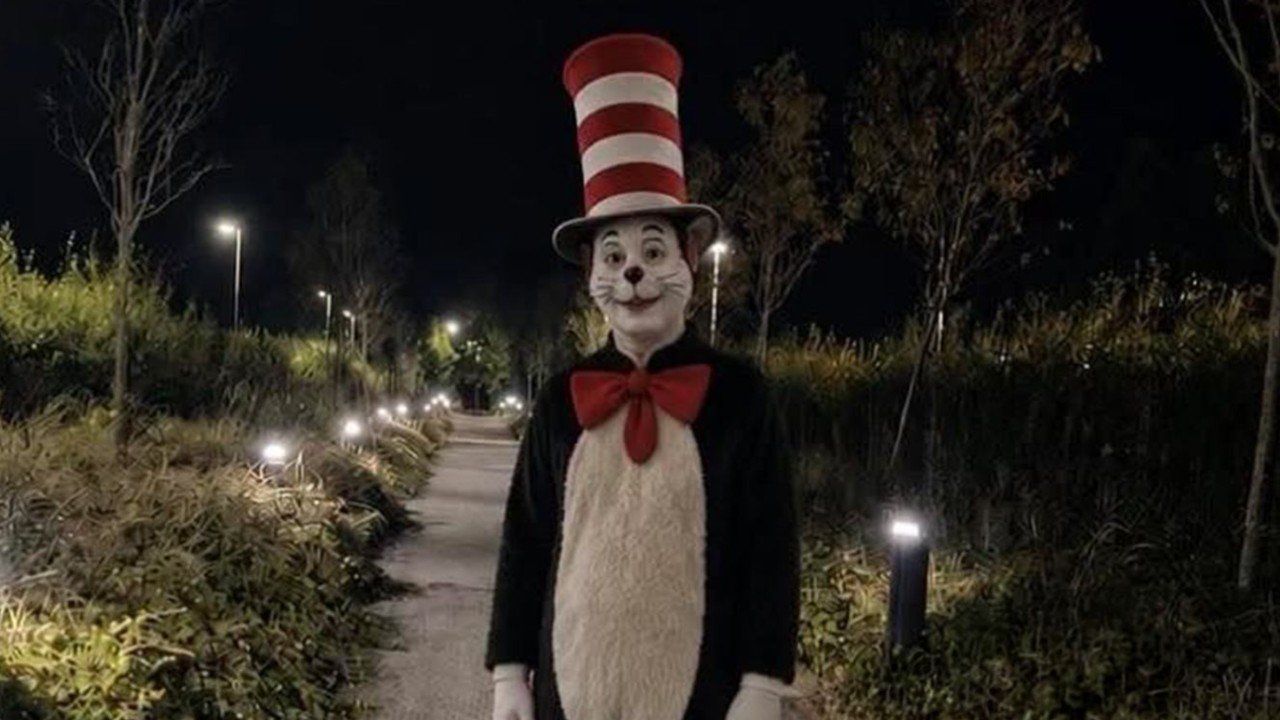
The genesis of the hoax can be traced to August 18, 2026, when a series of grainy, low-light images began circulating on Snapchat. These images appeared to show a tall, bipedal figure in a striped stovepipe hat and a black-and-white feline suit lurking in the driveways and gardens of Wexford, Ireland. The initial dissemination of these images was rapid, moving from private messaging apps to public forums such as the Arklow & Gorey Open Forum on Facebook. Parents expressed immediate concern, with many citing the distress the images caused their children.
By the afternoon of August 18, the "sightings" had transitioned to Reddit, specifically the /r/cork subreddit, where users shared screenshots of Snapchats warning residents to secure their homes. The visual evidence presented in these posts featured the "Cat" standing motionless near windows or peering around street corners. Despite the inherent absurdity of the costume, the context of "stalking" and the low-fidelity nature of the footage tapped into primal fears regarding home security and the "uncanny valley" effect of the 2003 film’s character design.
Technological Sophistication and AI Integration
What distinguished the Cat In the Hat Serial Killer Trend from previous urban legends was its heavy reliance on generative AI. Unlike the 2016 creepy clown sightings, which involved physical individuals wearing masks, the 2026 trend utilized advanced video synthesis to create realistic "proof." On August 22, 2026, a TikTok user under the handle @liannearie84 uploaded what appeared to be Ring doorbell camera footage. The video depicted the Cat approaching a porch and holding a handwritten note toward the lens. The video amassed over 800,000 views within a week, with many viewers unable to distinguish the AI-generated movement from real-world physics.
The use of AI allowed the hoax to bypass traditional geographic limitations. Within 48 hours of the Irish reports, similar "footage" emerged from Sheffield, England. An Instagram page, onlinesheffield, shared an image of the character perched atop a vehicle in the Meadowhall area, accompanied by claims that the individual was wielding a knife. This escalation from "stalking" to "armed threat" marked a turning point in the trend’s viral trajectory, prompting mainstream media inquiries and official police intervention.
Official Responses and Law Enforcement Clarifications
On August 20, 2026, An Garda Síochána, the national police service of the Republic of Ireland, issued a formal statement to address the growing hysteria. Following an internal investigation into the digital assets circulating online, officials confirmed that the images were sophisticated AI fabrications. A spokesperson for the Gardaí emphasized that there had been no physical sightings, no related assaults, and no credible evidence of an individual in a costume operating in the Wexford or Cork areas.
This sentiment was echoed by UK authorities several days later. As the hoax spread to South Yorkshire and other parts of Northern England, police forces issued public service announcements urging citizens not to "believe everything they read on social media." The Telegraph and The Mirror reported that law enforcement resources were being unnecessarily diverted to investigate "Cat in the Hat" calls, which hindered response times for genuine emergencies. Police warned that individuals found to be creating or spreading these fabrications to cause public alarm could face charges related to the malicious communications act.
Cultural Context: The Dark Cat In the Hat Subculture
The serial killer hoax did not emerge in a vacuum; it was the culmination of a burgeoning "Dark Cat In the Hat" meme subculture that had been gaining momentum throughout July 2026. This subculture involved re-editing scenes from the 2003 Mike Myers film to resemble "analog horror" or "found footage" films. Content creators used color grading, distorted audio, and cryptic captions to transform the slapstick comedy of the original movie into a disturbing psychological thriller.
The 2003 film has long been a subject of internet fascination due to its surreal art direction and Myers’ high-energy, occasionally abrasive performance. In 2026, an auction for the original screen-worn Cat suit further revitalized interest in the character. This convergence of nostalgia, the unsettling aesthetics of the costume, and the accessibility of AI video tools created a "perfect storm" for the hoax to take root. By recontextualizing a childhood figure as a nocturnal predator, creators tapped into a form of "liminal space" horror that resonates deeply with younger, digitally native demographics.
Chronology of the Trend’s Expansion
The spread of the hoax followed a predictable viral pattern, moving from niche communities to global influencers:
- August 18, 2026: First reports in Wexford, Ireland via Snapchat and Facebook.
- August 19, 2026: Viral TikTok coverage begins; @bainne_maru posts a video questioning the sightings, garnering 550,000+ views.
- August 20, 2026: Irish police (Gardaí) officially label the trend a hoax.
- August 22, 2026: AI-generated "Ring camera" footage appears, shifting the focus to the UK.
- August 23, 2026: Reports emerge in Sheffield; claims of weapons being involved begin to circulate.
- August 24, 2026: Influencer Christopher Kiely compares the event to the 2016 clown sightings, pushing the story to 3.8 million viewers.
- August 27, 2026: High-profile US-based influencers, such as Natalie Reynolds, begin "participating" in the trend by filming staged or AI-augmented encounters with the character.
Sociological Analysis and Comparisons
Sociologists have drawn direct parallels between the Cat In the Hat Serial Killer Trend and the 2016 creepy clown sightings. Both events represent a form of contemporary folklore or "legend tripping," where the digital medium acts as the campfire around which scary stories are told. However, the 2026 trend highlights a significant evolution in how misinformation is consumed. In 2016, the fear was based on the possibility of a physical prankster; in 2026, the fear was amplified by the inability to trust visual evidence due to AI.
The trend also reflects the "gamification" of fear. Users on TikTok and Instagram were encouraged to "capture" the Cat on their own cameras or share "leaked" footage to gain followers and engagement. This incentivized the creation of increasingly realistic and frightening content, regardless of its basis in reality. The participation of influencers like Natalie Reynolds, who filmed herself being "stalked" by the character, further blurred the lines between scripted entertainment and genuine news, leading many younger viewers to believe the threat was real.
Broader Implications of AI-Driven Hoaxes
The Cat In the Hat Serial Killer Trend serves as a case study for the dangers of AI-driven disinformation in the late 2020s. While this particular instance involved a fictional character and resulted in no physical harm, the ease with which the hoax bypassed the skepticism of millions is a cause for concern among digital literacy experts. The incident demonstrated that even when official government bodies (such as the Gardaí) debunk a story, the momentum of viral algorithms can keep a falsehood alive for weeks.
As generative AI tools become more integrated into social media platforms, the distinction between parody, meme, and malicious hoax continues to erode. The Cat In the Hat trend suggests that the future of urban legends will not be found in oral traditions, but in the seamless blending of real-world environments with synthetic entities. For law enforcement and public safety officials, the challenge lies in managing the psychological impact of these digital phantoms, which can cause real-world panic despite having no physical presence.

