
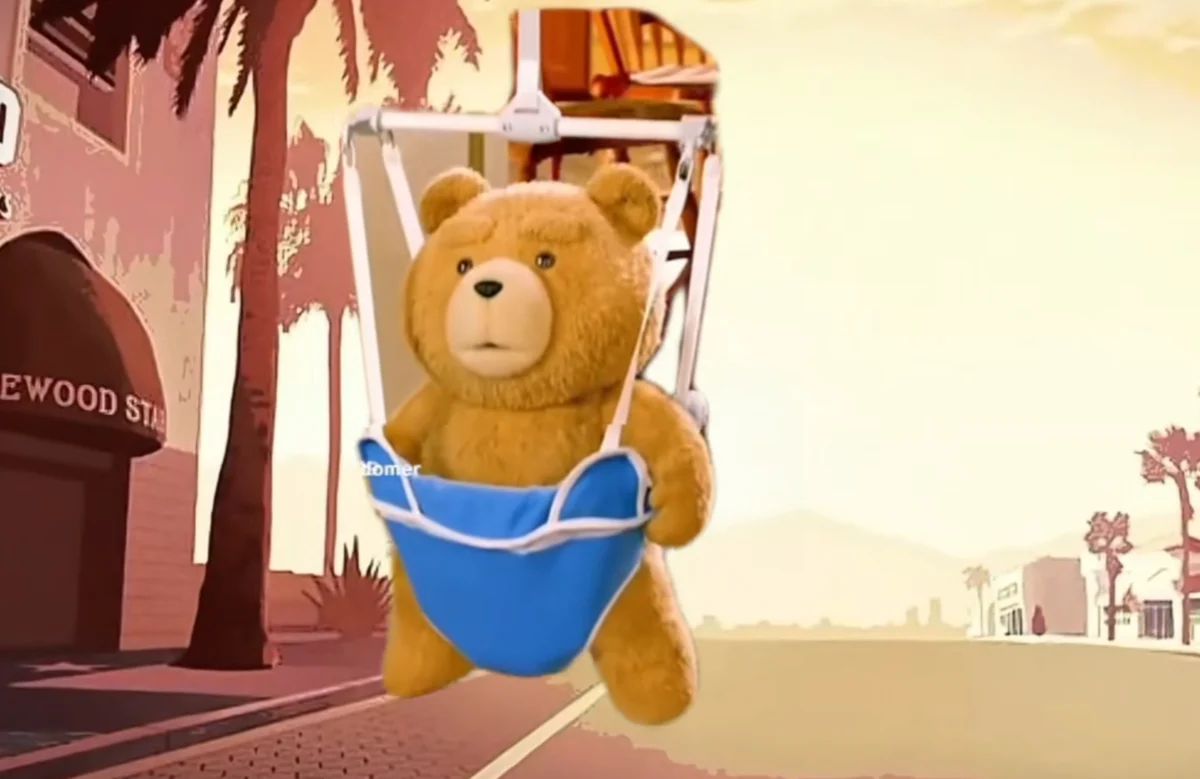
The digital landscape of late 2026 has been significantly shaped by a peculiar yet pervasive phenomenon known as the Hey Can I Have This meme. Derived from the Peacock original series Ted, a prequel to the popular film franchise created by Seth MacFarlane, the meme features the titular anthropomorphic bear engaged in a moment of mundane yet rhythmic absurdity. Since its emergence in August 2026, the clip has transcended its original comedic context to become a primary vessel for "brainrot" content—a subgenre of internet culture characterized by surrealism, high-frequency repetition, and overstimulating audiovisual edits. As this trend continues to dominate platforms like TikTok, it provides a unique case study into the mechanics of modern virality, the evolution of the "exploitable" format, and the shifting consumption habits of younger digital demographics.
The Origin and Television Context
The source material for the meme is located within the second season of the Ted television series. Specifically, the line "Hey, can I have this?" is uttered by Ted, voiced by Seth MacFarlane, in the sixth episode titled "Roe v. Weed." The scene takes place within the Bennett family home, a central setting for the series which explores Ted’s life in the early 1990s. In this particular sequence, Ted is seen harnessed into a blue baby swing, bouncing with a degree of enthusiasm that contrasts with his adult personality.
The television series itself was designed as a nostalgic R-rated comedy, leveraging the established chemistry between the CGI bear and his human companions. However, the specific segment used in the meme strips away the narrative weight of the episode, focusing instead on the visual of the bouncing bear and the simple, inquisitive nature of the dialogue. This reduction of complex media into a singular, repeatable loop is a hallmark of contemporary meme-making, where the "vibe" or visual rhythm of a clip often outweighs its original scripted intent.
Chronology of Viral Proliferation
The transition of the clip from a streaming television scene to a global social media trend began in late August 2026. While the show had been available for some time, the specific isolation of the "Hey, can I have this?" segment catalyzed its viral status.
On August 23, 2026, a TikTok user operating under the handle @part.time.domer uploaded what is currently recognized as the earliest high-impact iteration of the meme. This post featured the isolated clip of Ted in the baby swing, paired with the original audio. Within a span of nine days, the video amassed over 1.7 million views and approximately 188,700 likes. This initial success served as a proof-of-concept for the format, signaling to other content creators that the clip possessed the necessary "stickiness" for further exploitation.
By August 26, the trend began to diversify. A dedicated account, @heycanihavethis, was established, further cementing the phrase as a recognizable brand within the TikTok ecosystem. Their contribution garnered over 773,800 views in less than a week. The momentum continued through the end of the month, with user @tex_editz63 posting a version on August 29 that reached 1.5 million views, and user @overwatch_futa contributing a variant on August 30 that secured nearly half a million views in 48 hours.
The Mechanics of Brainrot and Overstimulation
To understand the success of the Ted meme, one must analyze the "brainrot" aesthetic. This term, while colloquial, describes a specific style of content designed for maximum sensory engagement and minimum cognitive load. Brainrot memes often utilize "exploitable" templates—media files that can be easily edited, layered, or repurposed.
The Hey Can I Have This meme fits this mold through several key features:
- Rhythmic Motion: The bouncing of the baby swing provides a natural visual beat, making it easy to sync with various music tracks or sound effects.
- Simple Catchphrase: The dialogue is short, clear, and universally applicable, allowing it to function as a reaction to almost any scenario.
- Absurdity: The sight of a foul-mouthed, middle-aged bear persona in a baby’s toy creates a visual dissonance that appeals to the surrealist humor favored by Gen Z and Gen Alpha.
Furthermore, the meme often appears in "overstimulation" videos. In these edits, the Ted clip might be played alongside other viral videos—such as Minecraft parkour, ASMR sand cutting, or Grand Theft Auto V stunt races—all on a single screen. This format is designed to capture the fragmented attention spans of modern viewers, providing a constant stream of dopamine-triggering visuals.
Technological Facilitation via CapCut
A significant factor in the rapid spread of the Ted meme is the integration of CapCut, a video editing application owned by ByteDance. CapCut allows users to create and share "templates," which function as pre-set editing frameworks. When a user sees a "Hey, can I have this?" edit they enjoy, they can simply click the CapCut link to replace the background or add their own text while keeping the Ted animation and timing intact.
This democratization of video editing has lowered the barrier to entry for viral participation. It has transformed the audience from passive consumers into active creators, allowing the meme to evolve through thousands of variations. Some users have placed Ted in historical settings, while others have used the clip to satirize consumer culture, with Ted "asking" for expensive luxury items or absurd, non-existent products.
Supporting Data and Engagement Metrics
The statistical footprint of the meme across late August and early September 2026 indicates a high level of "cross-pollination" between accounts. The primary hashtags associated with the trend, including #ted, #heycanihavethis, and #brainrot, have seen exponential growth in total views.
| Date (2026) | User | Views (Approx.) | Likes (Approx.) |
|---|---|---|---|
| August 23 | @part.time.domer | 1.7 Million | 188,700 |
| August 26 | @heycanihavethis | 773,800 | 87,100 |
| August 29 | @tex_editz63 | 1.5 Million | 333,300 |
| August 30 | @overwatch_futa | 449,700 | 72,600 |
These figures represent only a fraction of the total engagement, as they do not account for the hundreds of smaller accounts utilizing the sound or the "re-shares" on other platforms such as Instagram Reels and YouTube Shorts. The search interest for "Ted meme" and "Hey can I have this" saw a sharp vertical spike starting August 25, 2026, peaking in early September.
Broader Cultural and Industry Implications
The emergence of the Ted meme carries broader implications for the entertainment industry and digital marketing. For Peacock and the creators of the Ted series, the meme serves as "organic" marketing. While the show’s content is intended for an older audience, the meme has introduced the character to a younger demographic that might not have otherwise engaged with the streaming service. This "Netflix effect"—where social media virality leads to a surge in viewership for older or existing content—is a powerful tool in the streaming wars.
From a sociological perspective, the meme reflects the ongoing evolution of language. Phrases like "Hey, can I have this?" become linguistic shorthand within digital communities, used to express desire, irony, or simply to signal membership within a specific online subculture. The "brainrot" classification also highlights a growing divide in media consumption; while older generations may find the repetitive and nonsensical nature of the meme confusing, younger users view it as a form of "digital comfort food"—familiar, predictable, and entertaining.
Conclusion
The "Hey, Can I Have This?" Ted meme is more than a fleeting internet joke; it is a manifestation of the current state of digital creativity and platform-driven virality. By leveraging a recognizable character, a simple but effective visual loop, and the technical ease of template-based editing, the meme has successfully captured the attention of millions. As digital culture continues to move toward higher-intensity, more abstract forms of humor, the Ted meme stands as a landmark example of how traditional media can be disassembled and rebuilt to suit the tastes of a new generation. Whether it remains a staple of the "brainrot" genre or eventually fades into the archives of internet history, its impact on the 2026 digital landscape is undeniable.

