
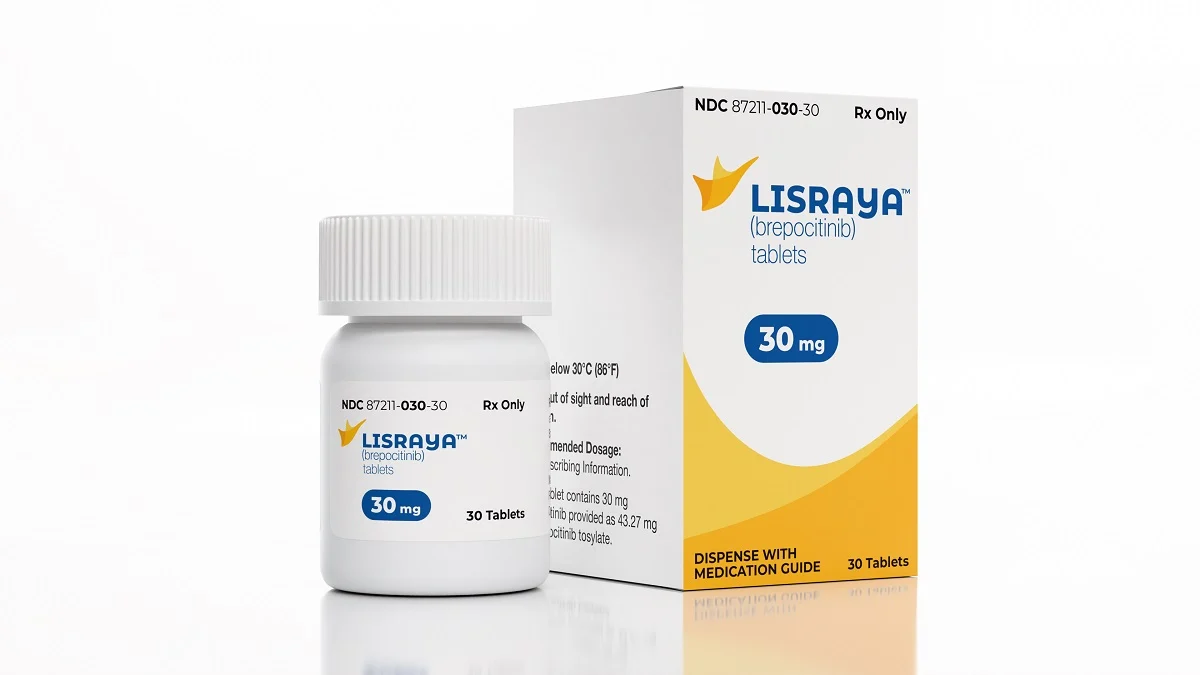
The U.S. Food and Drug Administration (FDA) has granted approval to Lisraya (brepocitinib), a once-daily oral medication for the treatment of dermatomyositis in adults, marking the first time a therapy has been specifically developed and approved to target the underlying inflammatory drivers of this rare autoimmune condition. Developed by Priovant Therapeutics, a subsidiary of Roivant Sciences, the approval ends a decades-long drought in therapeutic innovation for a patient population that has historically relied on broad-spectrum immunosuppressants and off-label treatments. Lisraya, a small-molecule inhibitor targeting both Janus kinase 1 (JAK1) and tyrosine kinase 2 (TYK2), was made available to patients immediately following the regulatory announcement, providing a new mechanism of action for a disease characterized by debilitating muscle weakness and painful skin manifestations.
The Clinical Landscape of Dermatomyositis
Dermatomyositis (DM) is a chronic, systemic inflammatory disorder that primarily affects the skin and skeletal muscles. It is classified as one of the idiopathic inflammatory myopathies. The condition is characterized by a distinct set of symptoms, most notably a reddish or purplish skin rash that typically appears on the eyelids, knuckles, elbows, knees, chest, or back. Beyond the dermatological impact, patients suffer from progressive proximal muscle weakness, which can significantly impair basic motor functions such as climbing stairs, lifting objects, or even swallowing.
According to Roivant Sciences, approximately 70,000 individuals in the United States live with dermatomyositis. For these patients, the standard of care has remained largely stagnant for over 50 years. Physicians have traditionally relied on high-dose corticosteroids to manage acute flares. While effective at reducing immediate inflammation, long-term steroid use is associated with severe side effects, including osteoporosis, diabetes, weight gain, and increased susceptibility to infections. When steroids prove insufficient, clinicians often turn to broad immunosuppressants like methotrexate or azathioprine, or expensive and logistically intensive intravenous immunoglobulin (IVIG) infusions. None of these prior options, however, were specifically engineered to address the unique molecular pathways of dermatomyositis.
Mechanism of Action: A Dual-Target Approach
Lisraya represents a shift toward precision medicine in the immunology space. The drug is a potent inhibitor of two specific proteins: JAK1 and TYK2. These proteins act as signaling hubs for various cytokines, including type I and type II interferons, which are known to be overexpressed in the muscle and skin tissues of patients with dermatomyositis.
While the FDA has previously approved several JAK inhibitors for conditions such as rheumatoid arthritis and psoriatic arthritis, Lisraya is unique in its dual-targeting profile. By simultaneously blocking JAK1 and TYK2, the drug provides a broader suppression of the specific inflammatory cascade associated with DM than single-target inhibitors might achieve. This targeted approach is intended to provide disease control while potentially allowing patients to reduce their reliance on systemic steroids, a primary goal in the management of chronic autoimmune diseases.
Clinical Trial Data and Regulatory Path
The FDA’s decision was supported by data from a robust Phase 3 placebo-controlled study involving 241 adult patients with dermatomyositis. The trial was designed to evaluate the efficacy of brepocitinib using the Total Improvement Score (TIS), a composite index that measures changes across six domains, including muscle strength, skin disease activity, and patient-reported outcomes.
The results, which were published in the New England Journal of Medicine in March, demonstrated that patients treated with Lisraya achieved significantly higher average TIS scores compared to those in the placebo group over a 52-week period. Furthermore, additional data published in JAMA Dermatology highlighted the drug’s specific efficacy in clearing skin lesions and reducing the severity of rashes.
Safety data from the clinical program indicated that the most common adverse reactions included upper respiratory tract infections, headaches, fatigue, and nausea. Consistent with other drugs in the JAK inhibitor class, Lisraya’s prescribing information includes a "black box" warning regarding the risks of serious infections, malignancy, major adverse cardiovascular events (MACE), and thrombosis. This class-wide warning stems from a 2021 FDA safety review of JAK inhibitors following post-marketing studies of earlier drugs in the category.
Roivant’s "Vant" Model and the Acquisition of Brepocitinib
The approval of Lisraya is viewed by industry analysts as a significant validation of Roivant Sciences’ unique business model. Rather than discovering drugs in-house, Roivant identifies "de-prioritized" or "orphaned" assets within the pipelines of large pharmaceutical companies. Roivant then forms a subsidiary, or "Vant," dedicated to the clinical development and commercialization of that specific asset.
Lisraya was originally discovered and developed by Pfizer. Following the FDA’s 2021 crackdown on the JAK inhibitor class, many large pharmaceutical companies scaled back their investments in these molecules due to perceived regulatory risks. Roivant CEO Matt Gline identified this as a strategic opportunity, noting that the "abandonment" of the category by others left a clear path for a company willing to focus on high-unmet-need orphan diseases.
Roivant formed Priovant Therapeutics in partnership with Pfizer to advance brepocitinib. Under the terms of the agreement, Pfizer retained a 25% equity stake in Priovant, allowing the pharmaceutical giant to maintain a financial interest in the drug’s success while Roivant managed the intensive Phase 3 development and regulatory submission process.
Pricing and Market Positioning
Priovant has set the list price for Lisraya at $35,000 per month, which equates to approximately $420,000 annually. This pricing strategy reflects the drug’s status as an orphan therapy for a rare disease. While the price is significantly higher than that of JAK inhibitors used for more common conditions—such as Pfizer’s Xeljanz, which costs roughly $76,000 per year—it is consistent with other specialized biologics and orphan drugs.
Market analysts at Leerink Partners had previously estimated that brepocitinib could reach $4.2 billion in annual revenue by 2032. However, those projections were based on an anticipated list price of $350,000 per year. The higher-than-expected launch price may increase the drug’s revenue potential, provided that the company can secure favorable placement on insurance formularies and demonstrate long-term value to payers.
Because dermatomyositis is a chronic condition, many patients may require treatment for years or even decades. Roivant and Priovant have indicated that they will implement patient assistance programs to ensure that out-of-pocket costs do not become a barrier to access for eligible patients.
Chronology of Development
The journey of brepocitinib from a laboratory concept to an FDA-approved treatment spans over a decade of scientific inquiry and corporate maneuvering:
- 2010s: Pfizer develops brepocitinib as a dual JAK1/TYK2 inhibitor, initially exploring its use in common conditions like psoriasis and lupus.
- 2021: The FDA issues a safety communication regarding the JAK inhibitor class, leading to new label requirements and a cooling of industry interest in the category.
- Late 2021: Roivant Sciences and Pfizer announce the formation of Priovant Therapeutics to focus specifically on brepocitinib for orphan autoimmune diseases.
- 2023: Priovant announces that brepocitinib failed to meet its primary endpoint in a Phase 2 study for systemic lupus erythematosus, leading the company to pivot its focus entirely to dermatomyositis and other rare indications.
- March 2024: Positive Phase 3 data for dermatomyositis are published in the New England Journal of Medicine.
- Late 2024: The FDA officially approves Lisraya (brepocitinib) for adult dermatomyositis.
Future Indications and Industry Impact
While the approval in dermatomyositis is a major milestone, Priovant is actively seeking to expand Lisraya’s label to include other rare immunological disorders. The company is currently conducting a Phase 3 trial in non-infectious uveitis, an inflammatory eye disease, with preliminary data expected by the end of the current calendar year.
Additionally, a Phase 3 study is underway for cutaneous sarcoidosis, with a data readout projected for 2028. Priovant is also enrolling patients for a Phase 2b/3 study in lichen planopilaris, a rare condition that causes permanent hair loss through the destruction of hair follicles. Each of these conditions currently lacks FDA-approved targeted therapies, representing a multi-billion dollar expansion opportunity for the Lisraya franchise.
The successful launch of Lisraya serves as a case study in the "de-risking" of pharmaceutical assets. By focusing on a niche, high-severity indication where no other targeted options existed, Roivant was able to overcome the broader regulatory stigma surrounding JAK inhibitors.
Matt Gline, CEO of Roivant, characterized the approval as "the first brick in a large wall of patient benefit." For the medical community, the arrival of Lisraya provides a long-awaited alternative to the "blunt instrument" approach of corticosteroids. For the pharmaceutical industry, it reinforces the viability of the "Vant" model in bringing specialized treatments to market for rare disease populations that are often overlooked by larger manufacturers.

