
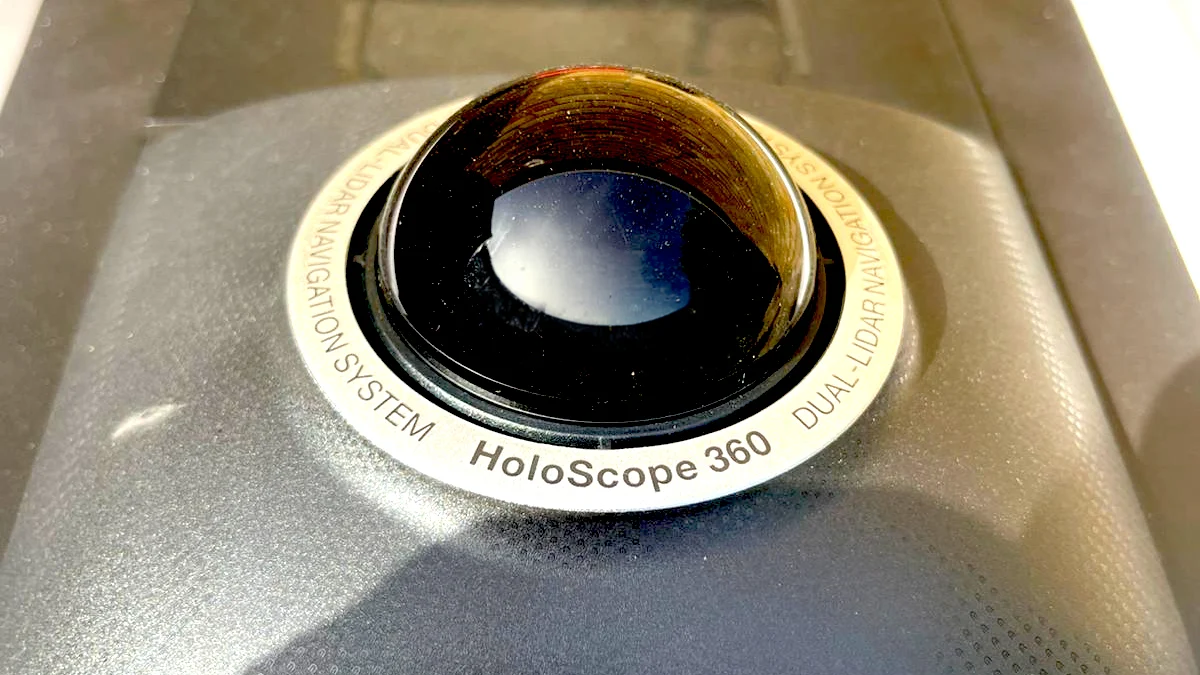
The landscape of automated lawn maintenance is undergoing a significant transformation, driven by the widespread adoption of LiDAR (Light Detection and Ranging) technology in robotic lawn mowers. While GPS-based models have eliminated the need for cumbersome boundary wires, they often still demand a substantial setup process. LiDAR, a sophisticated sensing technology already proven in robotic vacuum cleaners, is emerging as a key differentiator, promising not only more intelligent navigation but also a dramatically simplified user experience. This advancement is fueling a wave of innovation, with prominent brands like Segway, Mammotion, Ecovacs, and Roborock rapidly integrating LiDAR into their latest offerings, signaling a clear industry shift.
Understanding LiDAR: A Deeper Dive into the Technology
At its core, LiDAR operates on a principle familiar to owners of advanced robot vacuums. The system emits rapid pulses of laser light. By meticulously measuring the precise time it takes for these pulses to reflect off surrounding objects and return to the sensor, LiDAR constructs a real-time, three-dimensional map of its environment. This continuous scanning process allows the mower to accurately determine its position without relying on external reference points or pre-programmed layouts.
Historically, early LiDAR implementations featured a rotating turret, enabling a 360-degree sweep of the laser. This design, common in many robot vacuums for years, has now evolved. Modern robotic mowers are increasingly equipped with solid-state LiDAR units. These advanced sensors possess no moving parts, allowing them to be seamlessly integrated into the mower’s chassis, flush with its surface. This miniaturization not only contributes to a sleeker aesthetic but also enhances reliability and potentially reduces manufacturing costs, making the technology more accessible. The shift from mechanical to solid-state LiDAR represents a significant engineering leap, mirroring advancements seen in other sensor technologies.
Navigational Paradigms: LiDAR vs. RTK vs. Boundary Wire
The robotic lawn mower market is currently navigating a period of technological evolution, with three primary approaches to navigation vying for prominence:
-
Boundary Wire (The Traditional Approach): This is the foundational technology in robotic mowing. It involves the installation of a low-voltage perimeter cable, either buried beneath the lawn’s surface or secured with stakes, to delineate the mowing area. The mower is programmed to recognize and avoid crossing this wire, effectively confining its operation to the designated zone. While straightforward, the installation process can be time-consuming and labor-intensive, particularly for larger or intricately shaped lawns. Furthermore, the wire itself can be susceptible to damage from garden tools or burrowing animals.
-
RTK (Real-Time Kinematic Positioning): RTK systems leverage satellite signals, primarily GPS, to achieve highly precise location accuracy, often within a few centimeters. This method is analogous to the navigation used in advanced surveying equipment. To function effectively, RTK requires an unobstructed view of the sky. The system can operate in two main configurations: either through a dedicated base station installed in the garden that transmits correction signals to the mower, or via cloud-based RTK services, which rely on a continuous internet connection (Wi-Fi or cellular) for data transmission. While offering impressive accuracy, RTK’s reliance on satellite signals can be a vulnerability in areas with dense tree canopies, urban canyons created by tall buildings, or other obstructions that can disrupt signal reception.
-
LiDAR (Light Detection and Ranging): LiDAR stands apart by eschewing satellite signals altogether. As highlighted by companies like Ecovacs, RTK’s dependence on external infrastructure makes it susceptible to inaccuracies when signals are obstructed. In contrast, LiDAR’s active laser scanning provides a consistent and reliable method of environmental mapping. It doesn’t rely on any signals originating from outside the garden’s boundaries. This intrinsic self-sufficiency is a significant advantage, particularly in complex or challenging garden environments.
The "Wire-Free, Drop and Mow" Revolution: LiDAR’s Core Appeal
The most compelling selling point of LiDAR-equipped robotic lawn mowers is the eradication of the laborious boundary wire setup. This "wire-free, drop and mow" capability represents a paradigm shift in user convenience. Tony Ho, Vice President of Business Development at Segway Navimow, articulated this advantage clearly when discussing the company’s new i2 LiDAR model. He emphasized the elimination of the need for an RTK base station and the frustrations associated with a mower losing its bearings due to signal blockage from trees. Crucially, it removes the entire boundary wire installation process.
Ho further likened LiDAR’s functionality to a mower’s innate sense of landmarks, drawing a parallel to human navigation: "like human beings – we look for landmarks, right?" This analogy underscores LiDAR’s ability to perceive and remember its surroundings. The Segway i2 LiDAR model exemplifies this rapid deployment, utilizing solid-state LiDAR and integrated vision systems to map a garden in mere seconds. This allows an owner to unbox the mower and commence lawn mowing on the same afternoon, a stark contrast to the hours or even days required for traditional installations. Reviews of models like the Ecovacs GOAT O1200 LiDAR Pro have consistently praised the incredible speed of setup facilitated by LiDAR technology.
LiDAR’s Distinct Advantage in Challenging Environments

The resilience of LiDAR in navigating areas where satellite-only systems falter is where it truly justifies its inclusion. These "dead zones," where GPS signals struggle, are precisely where LiDAR demonstrates its superior performance. Moreover, LiDAR is not necessarily an either/or proposition; it can be effectively paired with RTK to create even more robust navigation systems.
A prime example of this hybrid approach is seen in the Mammotion Luba 3 AWD. This mower integrates 360-degree LiDAR with network RTK, enabling it to maintain uninterrupted operation even when GPS reception is lost. This functionality is likened to a robot vacuum skillfully navigating a complex room, demonstrating its ability to adapt to changing environmental conditions.
This combined approach is particularly beneficial in gardens characterized by:
- Dense Tree Canopies: Overhanging branches can significantly weaken or completely block satellite signals, rendering RTK systems unreliable. LiDAR’s independent mapping capability ensures continuous operation.
- Narrow Walled Corridors: In confined spaces, satellite signals can bounce off walls, creating a distorted and inaccurate positional reading for GPS-based systems. LiDAR’s direct sensing overcomes this challenge.
- Urban Canyons: Tall buildings surrounding a property can create "canyon" effects, blocking satellite signals and leading to navigation errors for RTK. LiDAR’s local environmental mapping provides a stable reference.
Exploring the Limitations of LiDAR Mowers
Despite its significant advantages, LiDAR is not a universally superior solution to RTK, particularly in certain scenarios. One key limitation arises in very large, open, and relatively featureless lawns. In such environments, LiDAR mowers still require physical reference points within a range of approximately 75 meters to accurately determine their position. Without these discernible features, the system’s precision can diminish.
Furthermore, LiDAR technology, in isolation, can struggle with the detection of small, low-lying obstacles. To address this, most manufacturers integrate cameras alongside LiDAR sensors. This dual-sensor approach allows the mower to combine the spatial mapping capabilities of LiDAR with the visual recognition power of cameras, ensuring a more comprehensive and safer operation by identifying a wider range of potential hazards. The development of these hybrid sensor suites reflects an industry understanding that no single technology is a panacea for all lawn mowing challenges.
The Evolving Ecosystem: Brands and Models Embracing LiDAR
The integration of LiDAR technology is rapidly becoming a defining feature of next-generation robotic lawn mowers. Segway, a prominent player in this space, unveiled its extensive Navimow range at CES 2026. This lineup features multiple tiers, including the compact i2 series, which employs solid-state LiDAR for smaller to medium-sized gardens. For more complex layouts, the flagship X4 and the H2 models offer advanced capabilities. Segway’s approach, termed "multi-modal navigation," strategically blends network RTK, visual SLAM (Simultaneous Localization and Mapping), and, in select models, solid-state LiDAR, creating a sophisticated and adaptable system.
Mammotion is also at the forefront of this technological integration with its Luba 3 AWD and Luba mini AWD LiDAR models. These mowers adopt a similar layered strategy, combining LiDAR, RTK, and dual-camera vision under their proprietary "Tri-Fusion" navigation system. Ecovacs has expanded LiDAR integration into its GOAT product line, while Roborock has incorporated the technology into its X1 and Z1 mowers. Newer entrants, such as Anthbot, have also embedded LiDAR into their M5 models. A common thread across these diverse offerings is that LiDAR is largely being implemented as a complementary layer within hybrid navigation systems, rather than as a standalone replacement for RTK or camera-based systems. This collaborative approach to sensor integration underscores the industry’s focus on optimizing performance across a wide spectrum of real-world garden conditions.
Determining the Optimal Technology: A Garden-Centric Approach
The ultimate decision regarding which technology is best suited for a particular lawn care scenario hinges less on brand loyalty and more on the specific characteristics of the garden itself. For open lawns with an unobstructed view of the sky, a well-configured RTK and camera system may suffice, potentially offering a more cost-effective solution.
However, for gardens that present significant navigational challenges, such as dense tree cover, narrow passages, or surrounding tall structures, LiDAR technology is reported to make a substantial practical difference. Anecdotal evidence from owner forums and professional reviews consistently suggests that the most capable robotic lawn mowers are those that employ a multi-technology approach. Systems that effectively combine RTK, LiDAR, and camera-based perception are proving to be the most adept at handling the widest variety of real-world garden environments.
The ongoing evolution of robotic lawn mower technology, with LiDAR at its vanguard, promises a future where maintaining a pristine lawn is more accessible, efficient, and less labor-intensive than ever before. As manufacturers continue to refine these sophisticated systems, consumers can anticipate increasingly intelligent and adaptable solutions tailored to the unique demands of their outdoor spaces. Future reviews and comparative analyses will be crucial in guiding consumers towards the most effective and technologically advanced options available, regardless of the underlying navigation paradigm.

