
The Psychology of Fidelity in Financial UX
The necessity for high-fidelity prototyping in the financial sector is driven by the unique psychological profile of the FinTech user. Unlike social media or entertainment applications, financial interfaces are scrutinized for accuracy and security. Users are conditioned to look for "red flags," such as balances that do not update in real-time, fields that accept invalid data without error, or authentication flows that lack the expected security rigors.
Research into user testing methodologies suggests that when a prototype lacks functional logic, participants shift from "natural usage mode" to "critique mode." In this state, they provide feedback on what they think they would do, rather than demonstrating their actual habits. For FinTech companies, where the cost of a post-launch UX overhaul can run into hundreds of thousands of dollars, the ability to capture authentic behavior during the design phase is a critical business requirement. To address this, design teams are increasingly moving away from static click-through models toward logic-based prototypes that utilize variables, conditional branching, and native device capabilities.
Chronology of Prototyping Evolution
The shift toward functional prototyping has followed a clear chronological path over the last decade. In the early 2010s, "paper prototyping" and static wireframes were the industry standard, focusing on layout rather than interaction. By 2015, tools like InVision popularized the "hotspot" model, allowing for basic navigation but maintaining a static core.
The current era, beginning around 2020, has seen the rise of "advanced logic" tools such as ProtoPie. This evolution was accelerated by the COVID-19 pandemic, which forced a transition to remote usability testing. Without a moderator physically present to guide a user through a "broken" prototype, the need for the prototype to handle errors and inputs autonomously became a technical necessity. Today, the industry standard for FinTech involves "high-fidelity logic," where the prototype mimics the backend behavior of a shipped product.
Technical Implementation: Building the Functional Login
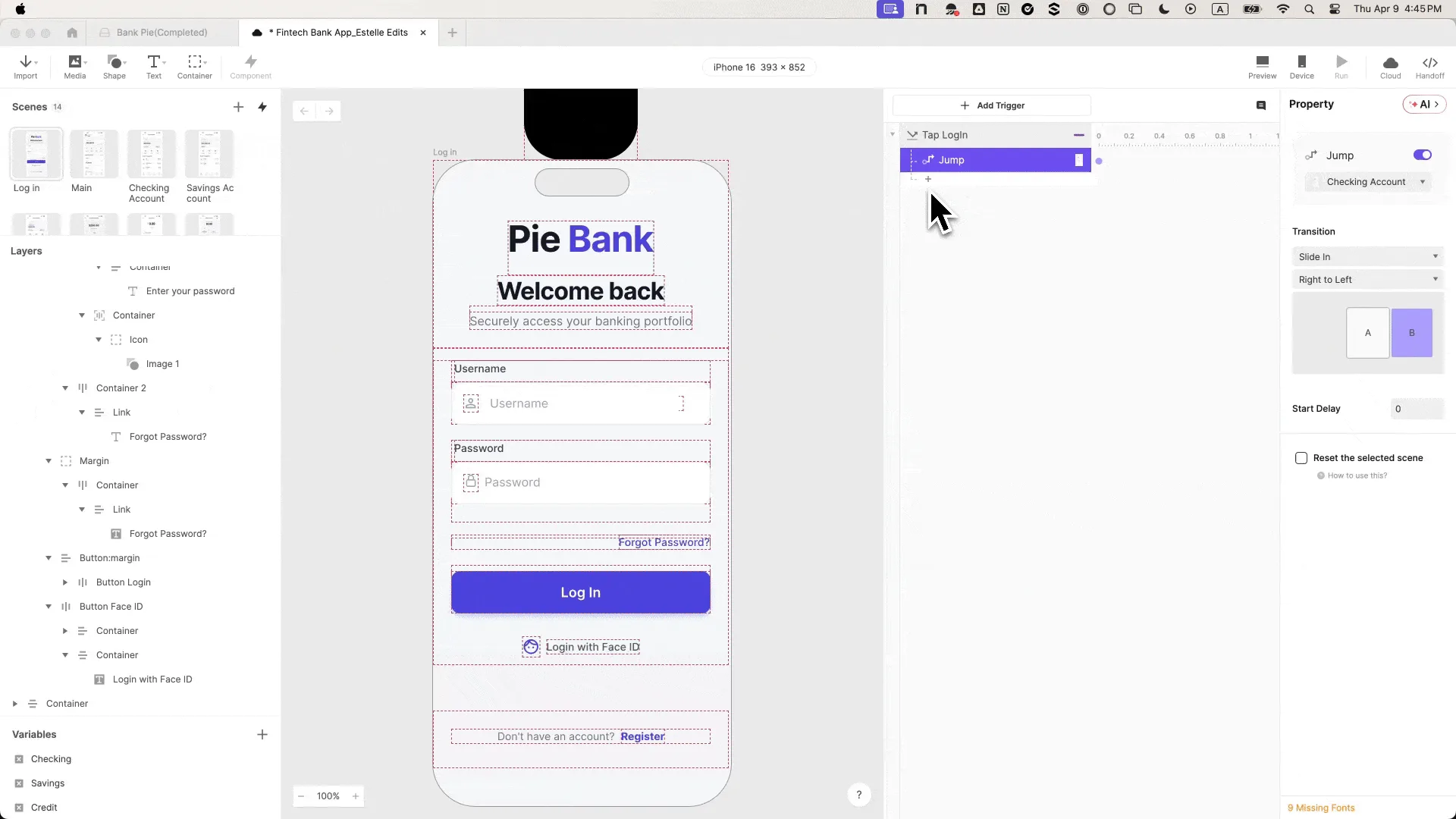
The process of creating a prototype that sustains user trust begins with the authentication flow. By making the login experience real, designers can establish a "contract of realism" with the participant. The following technical workflow outlines the transition from a static design to a functional, testable application.
1. Preserving Hierarchy in Design Transfer
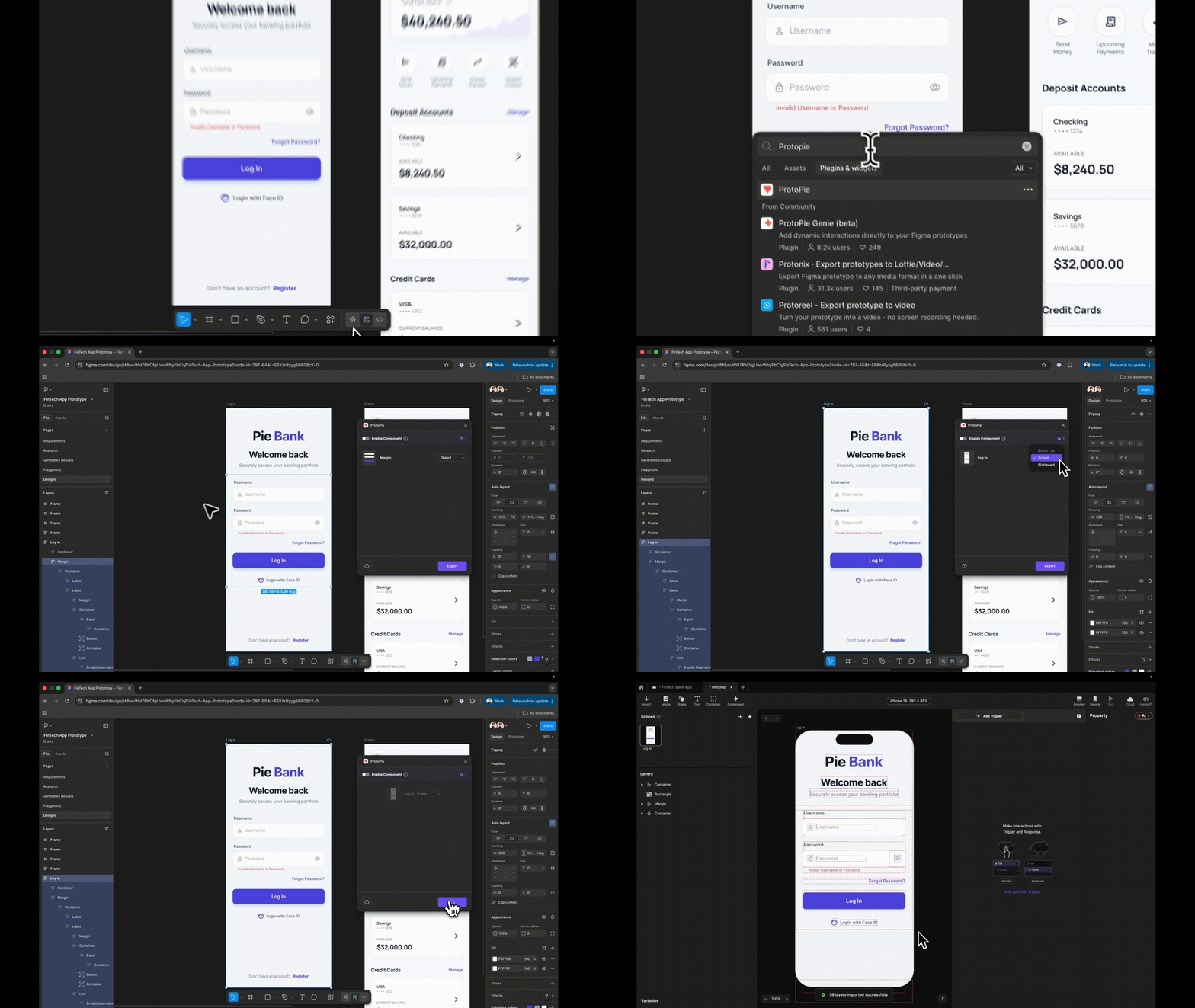
The initial step involves moving assets from design environments like Figma into a logic-enabled environment. A common error in this phase is "flattening" layers to save time. However, for a prototype to be interactive, the layer hierarchy must be preserved. Each element—the username field, the password mask, and the login button—must remain a separate, targetable entity. Proper naming conventions are not merely organizational; they are functional requirements for the formulas and variables that will drive the logic in later stages.
2. Implementing Native Input Handling
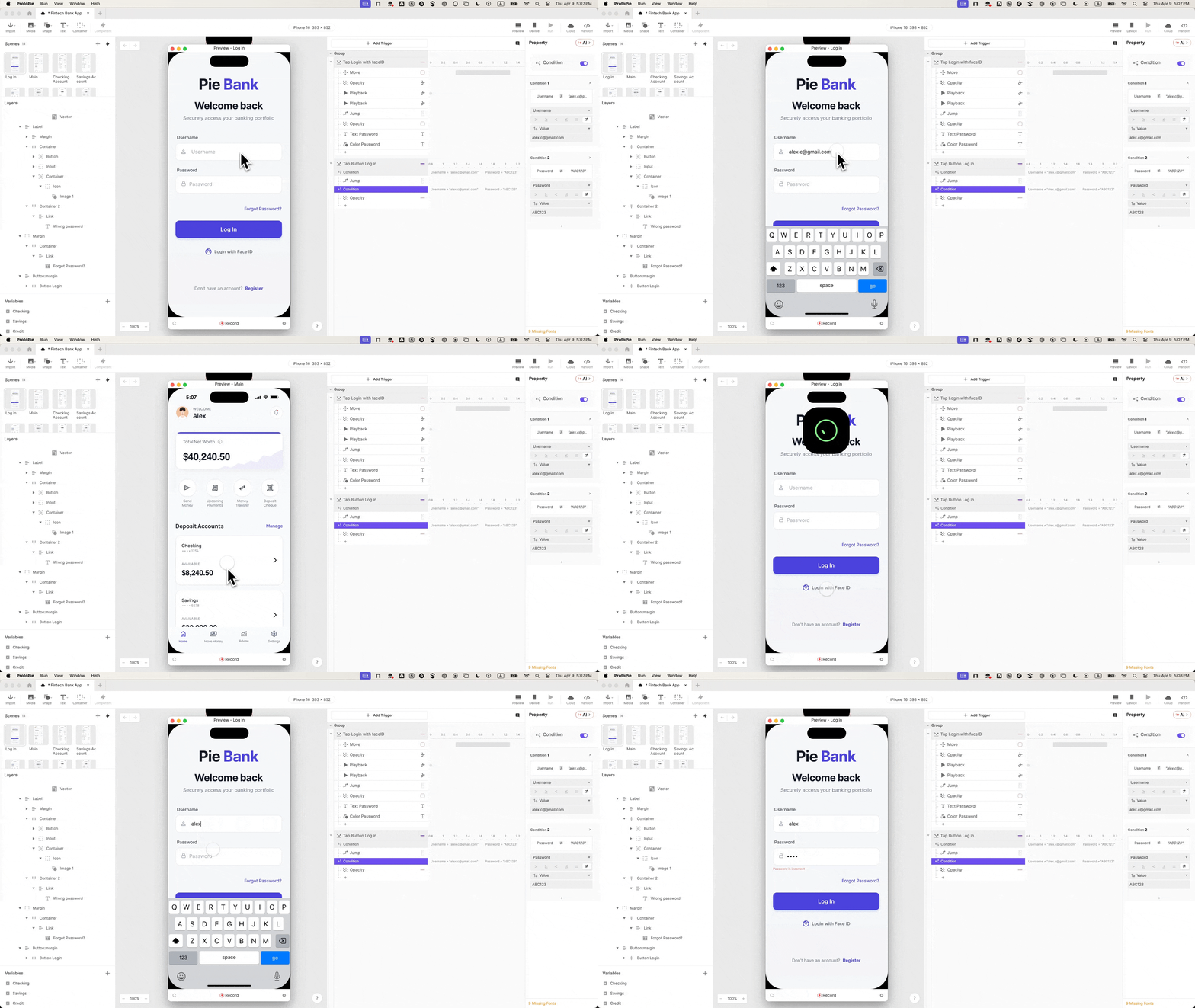
Static prototypes often rely on "taps" to simulate typing, where a user clicks a field and text magically appears. This is a primary trigger for the "usability pause." By utilizing native input layers, designers allow participants to use their actual device keyboard. This small change ensures that the physical act of entering credentials—a high-friction task in real life—is accurately represented in the test data.
3. Security Simulation and Masking
In financial applications, the visual masking of a password (the conversion of characters to dots) is a non-negotiable security affordance. High-fidelity tools now allow for this with a single property change, requiring no custom code. When a participant sees their password masked in real-time, it reinforces the perception of security, allowing them to proceed with the same caution they would use in a live banking app.
The Role of Variables and Conditional Logic
The core of a functional prototype lies in its ability to "remember" and "react." This is achieved through the use of variables and conditional logic. In a standard FinTech prototype, two text-based variables—one for the username and one for the password—act as a temporary database.
Data Binding and Validation
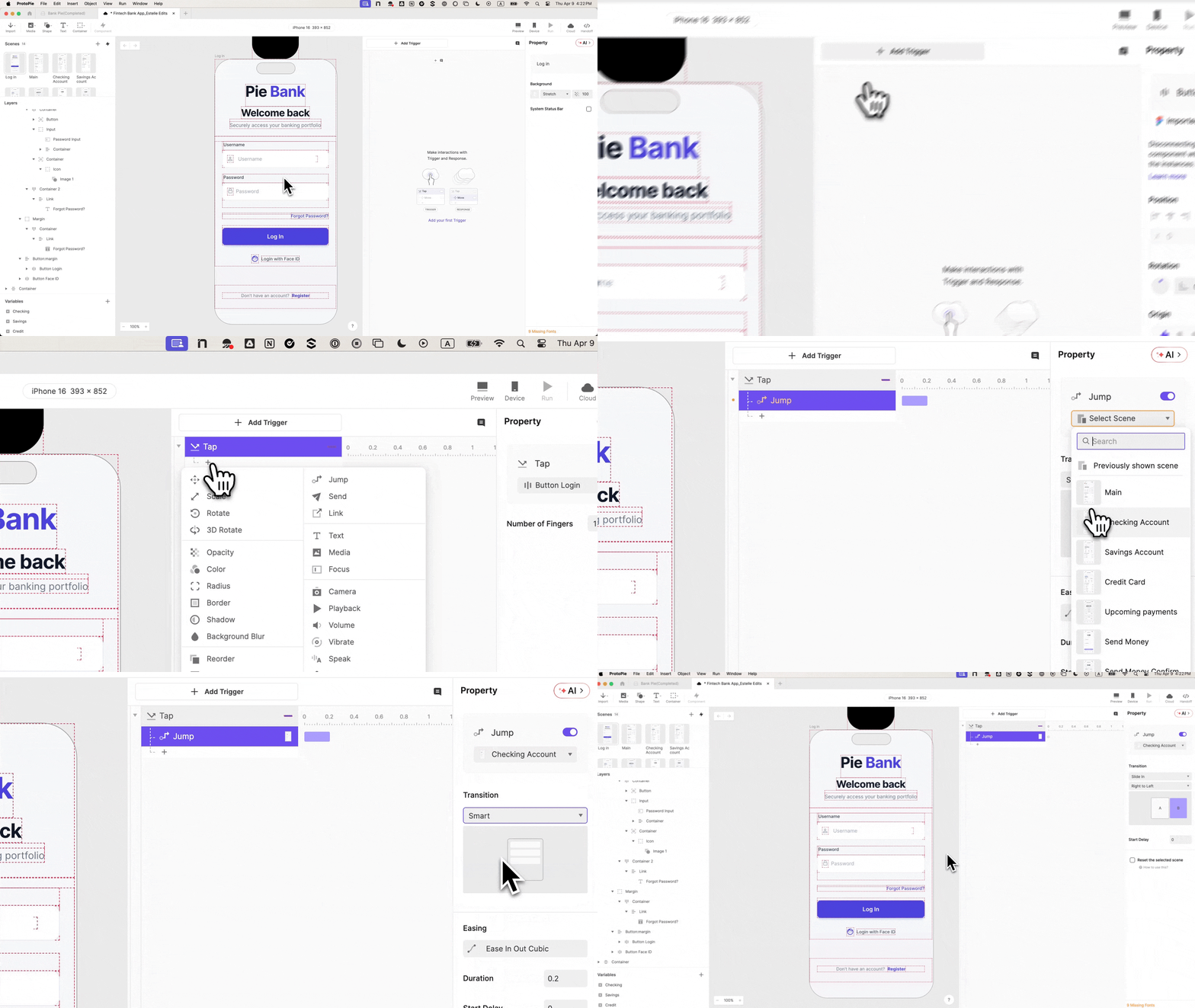
By binding the input fields to these variables, the prototype captures exactly what the user types. This allows for the implementation of conditional rules. For example, a "Jump" response to the dashboard scene should only be triggered if the username variable equals a specific string and the password variable meets length requirements.
This creates two distinct paths for the user:

- The Success Path: Correct credentials lead to the account overview.
- The Failure Path: Incorrect or empty fields trigger a live error state.
The inclusion of an error state is perhaps the most overlooked aspect of UX research. Observing how a user reacts to a failed login—whether they look for a "forgot password" link or carefully re-type their credentials—provides more insight into the app’s usability than a perfect, error-free run.
Enhancing Realism with Biometric Integration
For modern mobile banking, biometric authentication (Face ID or Touch ID) is the primary entry point for most users. If a prototype skips this step or simulates it with a simple fade-in, the immersion is broken. Integrating Lottie animations—a JSON-based animation format—allows designers to include the exact Face ID "spinning" and "checkmark" graphics used by iOS or Android.
Timing is critical in this phase. To make a biometric login feel native, designers must stagger responses. A typical sequence involves moving the biometric icon into view, playing the animation for approximately 0.5 seconds, and then delaying the transition to the next screen by another 0.5 seconds. This mimics the processing time of a real device, preventing the "instant jump" that often characterizes lower-quality prototypes.
Analysis of Impact: Research Integrity and Handoff
The shift toward functional prototyping has profound implications for both the research and development phases of product design. From a research perspective, high-fidelity prototypes produce a higher "signal-to-noise" ratio. When the prototype handles the technical details of the login, the researcher can focus on high-level questions: Is the navigation intuitive? Do users understand their financial health at a glance?
Stakeholder Alignment and Engineering Efficiency
Beyond research, functional prototypes serve as a definitive source of truth for stakeholders. Executives are often better able to visualize the final product when they can interact with it naturally. Furthermore, in the engineering handoff process, a prototype that includes logic, timing, and variables acts as a functional specification. It reduces the ambiguity of "design intent," as developers can inspect the exact conditions and triggers used to build the interaction.
Broader Implications for the FinTech Industry
As the FinTech landscape becomes increasingly crowded, the differentiator for many companies is the "frictionless" nature of their user experience. Regulatory requirements, such as Know Your Customer (KYC) and Anti-Money Laundering (AML) protocols, often introduce necessary friction into the user journey. High-fidelity prototyping allows teams to test exactly how much friction a user can tolerate before abandoning the process.

Industry analysts suggest that the next frontier in prototyping will involve "data-driven" simulations, where prototypes connect to real-time APIs to show actual market data or mock transaction histories. This level of realism will further bridge the gap between design and reality, ensuring that financial products are not only beautiful but also robust and trustworthy from the very first click.
The "pause" at the login screen is a warning sign that the design process has failed to meet the user’s expectations of reality. By investing in functional fidelity—through real inputs, conditional logic, and native animations—FinTech teams can eliminate this distraction. The result is a research environment where users stop "testing the app" and start "using the product," providing the authentic insights necessary to build the next generation of financial tools.

