
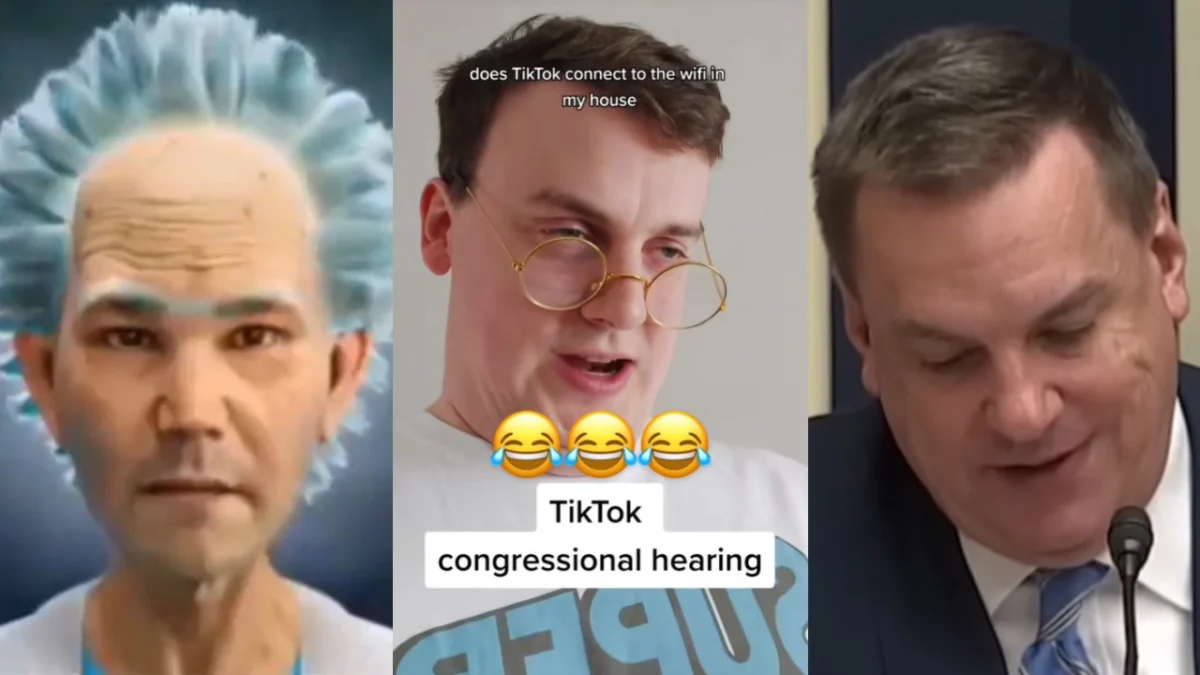
The digital landscape of the mid-2020s has been characterized by the rapid transformation of political discourse into viral entertainment, a phenomenon most recently exemplified by the resurgence of a 2023 congressional inquiry as a global musical trend. What began as a contentious moment during a United States House Committee hearing has evolved into a complex ecosystem of memes, "phonk" music remixes, and high-quality animations. This transition highlights the enduring nature of digital content and the unique ways in which younger generations process political events through the lens of irony and rhythmic subversion.
The Genesis of a Viral Inquiry: The 2023 Congressional Hearing
The origin of the phrase "Does TikTok connect to the WiFi in my house?" traces back to March 23, 2023, during a high-stakes testimony by TikTok CEO Shou Zi Chew before the House Energy and Commerce Committee. The hearing was ostensibly convened to address concerns regarding data privacy, national security, and the potential influence of the Chinese government over the platform’s parent company, ByteDance.
During a particularly intense round of questioning, Representative Richard Hudson, a Republican from North Carolina, sought to clarify how the application interacts with local network infrastructure. Hudson asked, "Mr. Chew, does TikTok access the home WiFi network?"
Mr. Chew, appearing momentarily perplexed by the technical premise of the question, responded, "Only if the user turns on the WiFi. I’m sorry, I may not understand the question."
Hudson followed up by asking if it was possible for the app to access other devices on the same home network if it was connected to the WiFi. This line of questioning was intended to probe the "lateral movement" of data—a legitimate cybersecurity concern where a compromised device or app might scan a local network for other vulnerabilities. However, the phrasing was widely criticized by technology experts and social media users as being technically illiterate. Critics argued that the question fundamentally misunderstood how mobile applications function, as nearly every modern app requires internet connectivity, typically provided via WiFi or cellular data, to operate.
The Immediate Satirical Response
The exchange immediately became a focal point for online mockery. Critics of the hearing argued that the lawmakers’ lack of basic technological understanding undermined the seriousness of the privacy concerns they were attempting to address. Within forty-eight hours, the "technological gap" between aging legislators and the digital-native user base of TikTok became a central narrative of the event.
On March 25, 2023, a TikTok creator known as @someguymark posted a parody video that utilized the audio from the hearing. In the skit, the creator exaggerated the representative’s confusion, framing the question as an absurdly basic inquiry that ignored the fundamental reality of 21st-century connectivity. Although the original video was later removed, its impact was cemented through the "Stitch" and "Duet" features of the platform, allowing the audio to propagate across thousands of derivative videos. This initial wave of content established the audio as a "sound" synonymous with the "Boomer" archetype—a term used by younger generations to describe older individuals who are perceived as being out of touch with modern technology.
The 2026 Musical Evolution: The Phonk Remix
While many political memes fade within weeks, the "WiFi inquiry" experienced an unprecedented revival in late 2026. On August 21, 2026, a creator known as @zenziko6 uploaded a "phonk" remix of the original audio. Phonk, a subgenre of electronic music characterized by distorted bass, cowbell melodies, and a dark, high-energy atmosphere, has become the de facto soundtrack for "sigma" edits and "slander" videos on TikTok.
The Zenziko remix took the stuttering, confused dialogue of the hearing and layered it over an aggressive, rhythmic beat. This transformation stripped the dialogue of its original political gravity, turning it into a rhythmic hook. The remix garnered over 1.4 million views within three weeks, signaling a shift from political satire to a broader cultural aesthetic. This version of the audio was categorized by the creator as "slander audio," a genre of content used to mock specific groups or situations through fast-paced visuals and repetitive, catchy soundbites.
Chronology of the 2026 Viral Spread
Following the release of the phonk remix, the audio became the foundation for a diverse range of creative outputs across multiple platforms:
- August 27, 2026: The YouTuber EKS3R released a dedicated animation featuring the remix. The video, which utilized stylized, high-contrast visuals, reached over 348,000 views in less than a fortnight. This marked the transition of the meme from TikTok-specific content to long-form video platforms.
- August 31, 2026: The anime community adopted the trend when TikToker @m1hatee posted an edit featuring characters from the manga and anime series The Quintessential Quintuplets. Specifically focusing on the character Miku Nakano, the video demonstrated how viral audios are often divorced from their original context to serve as "background music" for character-centric fan edits. This video alone achieved nearly one million views in two weeks.
- September 5, 2026: The "brain rot" aesthetic—a term used to describe hyper-edited, surreal, and often nonsensical digital content—solidified the meme’s status. A creator named @brrbrrpatapiti5 released an edit featuring the series Bocchi the Rock!, garnering over 367,000 views in five days.
- September 2026 (Ongoing): The audio began appearing in crossovers with other popular franchises, including Rick and Morty and Angry Birds. These videos often used the audio to accompany "kinetic typography" (animated text) that pulsed in time with the phonk beat.
Technical and Sociological Analysis
The longevity of the "Does TikTok connect to the WiFi?" meme offers a unique case study in digital sociology. From a technical perspective, the meme serves as a persistent reminder of the friction between legislative oversight and technological advancement. Cybersecurity analysts note that while Hudson’s question was poorly phrased, the underlying concern—how apps manage permissions on a Local Area Network (LAN)—is a valid area of inquiry. However, in the "attention economy" of social media, the nuance of cybersecurity policy was eclipsed by the humor of the delivery.
Sociologically, the meme represents a form of "digital resistance." By taking the words of a lawmaker and turning them into a dance track or an anime edit, the user base effectively reclaims the narrative. It is a way for a demographic that feels targeted by potential app bans to infantilize the authorities who propose such measures.
Furthermore, the choice of the "phonk" genre is significant. Phonk is often associated with "drift" culture and high-intensity gaming videos. By applying this "hard" musical style to a moment of legislative confusion, creators create a humorous juxtaposition: the aggressive, confident beat versus the hesitant, confused questioning of the congressman.
Official Responses and Public Sentiment
While Representative Hudson’s office did not issue a formal statement regarding the specific musical remixes, the 2023 hearing as a whole was widely discussed by both political parties. Supporters of the inquiry argued that the focus on "WiFi" was a minor distraction from more pressing issues of data harvesting and the potential for the app to serve as a propaganda tool. Conversely, digital rights groups, such as the Electronic Frontier Foundation (EFF), noted that the hearing highlighted a desperate need for more tech-literate representation in government.
Public sentiment, as measured by engagement metrics on platforms like TikTok and X (formerly Twitter), remained overwhelmingly skewed toward the satirical. The "WiFi" meme became a shorthand for any instance where a person in power demonstrates a lack of fundamental digital literacy.
Broader Implications and Future Outlook
The "Does TikTok Connect To The WiFi In My House?" phenomenon suggests that the future of political memory is increasingly auditory and rhythmic. Historical events are no longer just recorded in text or video archives; they are sampled, remixed, and integrated into the daily content consumption of millions.
This trend poses a challenge for political communication. When a serious inquiry can be transformed into a "phonk" hit within days, the ability of lawmakers to maintain a "serious" public image becomes increasingly difficult. It also suggests that the "half-life" of a political blunder has been extended indefinitely; as long as the audio exists, it can be revived by new subcultures and musical movements years after the original event.
As we move further into the 2020s, the "WiFi" meme stands as a landmark in the evolution of internet culture—a moment where the technical misunderstandings of the past were codified into the rhythmic anthems of the future. Whether it is through the lens of Rick and Morty animations or aggressive electronic remixes, the question of TikTok’s connectivity has been answered not by technical experts, but by the relentless creativity of the digital collective.

