
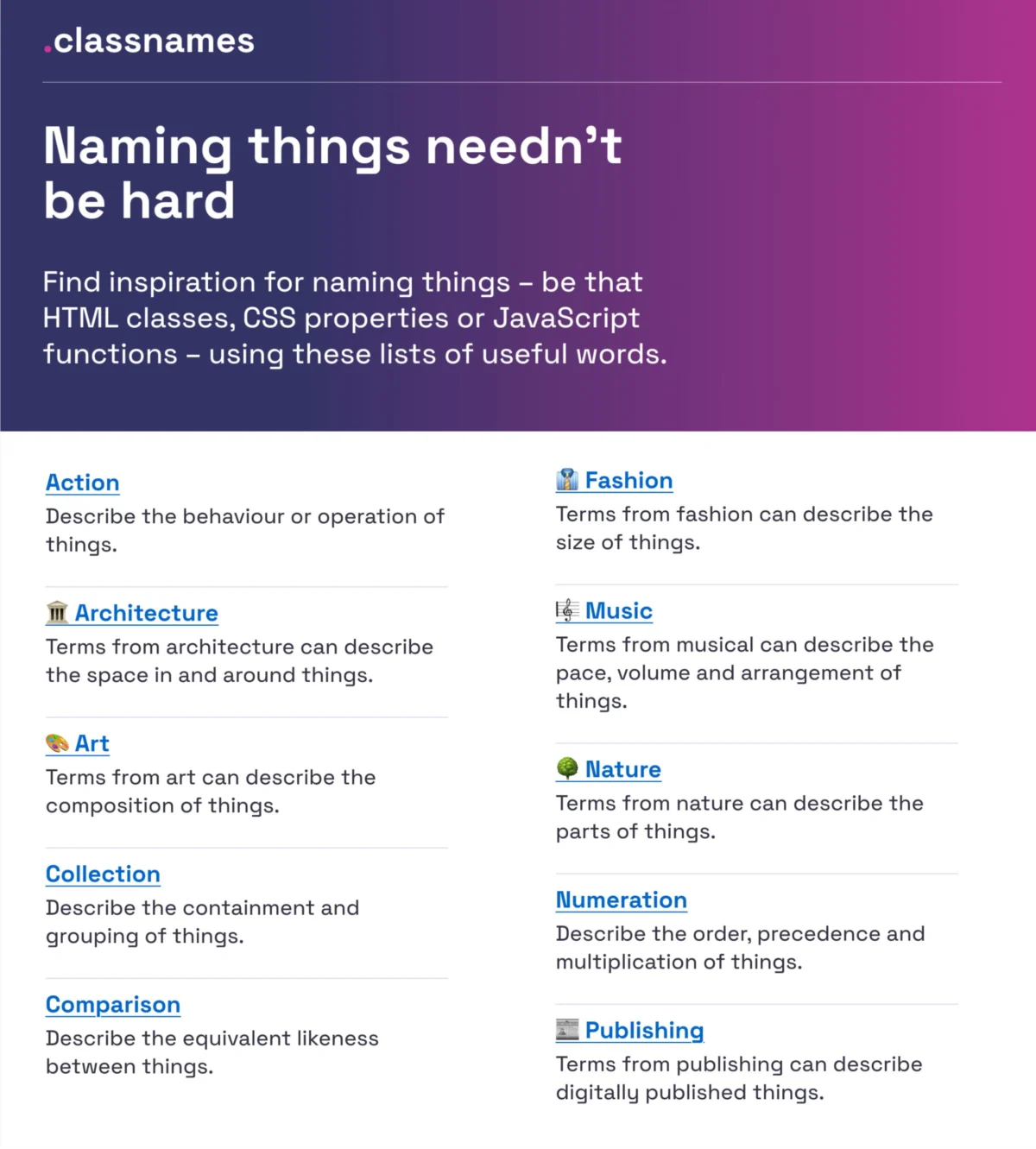
In the rapidly evolving landscape of digital product development, the linguistic framework used by design and engineering teams has emerged as a critical factor in organizational efficiency. Naming, often cited as one of the two most difficult challenges in computer science, serves as the bridge between abstract design concepts and functional code. As design systems become the standard for modern enterprises, the demand for a standardized, scalable naming convention has shifted from a matter of preference to a technical necessity. This guide examines the methodologies, resources, and frameworks currently defining the industry standard for UI component taxonomy.

The Foundational Challenge of Digital Taxonomy
The primary obstacle in digital naming is the tension between genericism and specificity. When names are too broad, they fail to convey the necessary context for implementation; when they are too specific, they inhibit the reuse of components across different modules. This friction often results in "semantic debt," where team members lose time debating terminology or, worse, creating duplicate components because they cannot find existing ones under their expected names.
Industry data suggests that developers spend up to 30% of their time navigating and understanding existing codebases. A significant portion of this "navigation time" is attributed to deciphering inconsistent naming conventions. To address this, organizations are increasingly turning to structured repositories and linguistic frameworks to harmonize the dialects of designers, developers, and product managers.

The Evolution of Naming Methodologies
The history of UI naming has moved through several distinct phases. In the early era of web development, naming was largely presentational (e.g., blue-button or left-sidebar). As CSS architecture matured, methodologies like BEM (Block, Element, Modifier) introduced a functional hierarchy. Today, the industry is moving toward "Design Tokens"—a system of platform-agnostic variables that represent the visual atoms of a brand.
A critical resource in this evolution is the "Classnames" repository by Paul Robert Lloyd. This tool encourages professionals to think beyond the immediate visual function of a component, offering thematically grouped lists of words derived from nature, architecture, art, and music. By drawing from established fields, teams can find metaphors that describe behavior and association more accurately than traditional technical jargon.

Color Nomenclature and Semantic Mapping
Color naming represents one of the most significant points of failure in design systems. While a designer might refer to a color as "Sky Blue," a developer might see #87CEEB. To bridge this gap, David Aerne’s repository of color names provides a database of over 30,000 unique identifiers. This repository allows teams to assign human-readable names to hex codes, facilitating better communication during handoffs.
However, modern systems are moving toward semantic color naming. Rather than naming a color "Blue," teams are encouraged to name it action-primary-enabled. This ensures that if the brand color changes from blue to green, the name remains accurate to its function. Experts suggest that a hybrid approach—mapping a primitive color name (e.g., blue-500) to a semantic token (e.g., background-brand)—provides the highest level of flexibility.

Structural Guidelines for Layers and Groups
Consistency in naming must extend into the design software itself. Javier Cuello, a prominent figure in design system methodology, has outlined several best practices for layer and group organization. His research indicates that effective names must be:
- Short and Meaningful: Avoiding unnecessary filler words.
- Logical: Following a predictable hierarchy.
- Collaborative: Known and agreed upon by the entire team.
- Abstracted from Visuals: Independent of specific visual properties that might change.
Cuello’s "do’s and don’ts" highlight a common pitfall: naming layers after their visual appearance (e.g., Round_Red_Box) rather than their intent (e.g., Status_Indicator_Critical). By focusing on intent, the design remains robust even as the visual style evolves.

Case Study: Intuit’s Multi-Brand Taxonomy
The challenge of naming becomes exponentially more complex in multi-brand environments. Intuit, the parent company of TurboTax, QuickBooks, and Mailchimp, faced the task of creating a design token taxonomy that could serve vastly different brand identities. Nate Baldwin, a key architect of Intuit’s system, detailed the transition from a rigid brand-specific system to a flexible, multi-tiered taxonomy.
The Intuit model utilizes a "Global-to-Alias" structure. Global tokens represent the raw values, while Alias tokens represent the application of those values. This allows the system to change the "look" of a component for Mailchimp without affecting the "look" of the same component in QuickBooks, all while using the same underlying code structure. This level of abstraction is now considered the benchmark for enterprise-level design systems.
Industry Standardization via The Component Gallery
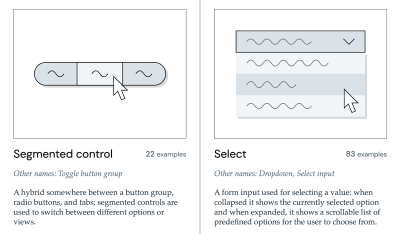
To avoid "reinventing the wheel," many teams now reference Iain Bean’s "Component Gallery." This resource tracks how more than 50 common UI components—from accordions to breadcrumbs—are named across hundreds of real-world design systems.
Data from the gallery shows that while most systems agree on basic terms like "Button" or "Checkbox," there is significant variance in more complex components. For example, a "Modal" might be called a "Dialog," "Overlay," or "Lightbox" depending on the system. The gallery provides a visual dictionary that helps teams choose the most widely understood term, thereby improving the "discoverability" of components for new hires and external partners.

The Impact of Naming on Feature Adoption
Naming is not merely a technical concern; it has a direct impact on the end-user experience. Erin Gannon, a UX strategist, has published research linking poor feature adoption to confusing nomenclature. When a feature is named using internal company jargon rather than the user’s own language, the user is less likely to understand its value or incorporate it into their workflow.
Gannon’s "Job-to-be-Done" naming model suggests that features should be named based on the outcome they provide. For example, instead of a technical name like "Data Aggregator," a more user-centric name might be "Monthly Summary." Her guide emphasizes that the most effective names are discovered through user testing, where participants are asked to describe a feature in their own words.

Enterprise Implementation: The Vodafone UK Model
At the enterprise level, the complexity of variables requires a highly orchestrated map. The Vodafone UK Design System team developed a "Variables Taxonomy Map" that breaks down tokens into four distinct collections:
- Brand/Primitive: The core palette and typography.
- Semantic: The functional application of those primitives.
- Component: Specific values for UI elements.
- Page/Template: High-level layout variables.
This map, which builds on the foundational work of Nathan Curtis, ensures that any team member can look at a token name and immediately understand its role in the hierarchy. This transparency is vital for maintaining a system that spans thousands of pages and multiple digital platforms.

Tools for Automated Governance
As systems grow, manual governance becomes impossible. Tools like Romina Kavcic’s "Design Token Naming Guide" and interactive builders allow teams to configure their own naming structures automatically. These tools help prevent "naming drift," where individual contributors begin to deviate from the established convention over time.
Furthermore, resources like "Onym" provide a repository for naming products and services, offering etymological insights and vetting tools to ensure that a chosen name does not have unintended meanings in different languages or cultures.

Broader Implications and Economic Impact
The move toward standardized naming conventions is part of a larger trend toward "DesignOps"—the optimization of design processes to increase output and quality. By investing in a robust naming system, organizations can significantly reduce technical debt.
A study of design system ROI suggests that companies with mature systems see a 34% increase in speed-to-market. A substantial portion of this efficiency comes from the reduction of communication overhead. When the designer, the developer, and the product manager all use the same word for the same thing, the need for meetings and clarification documents is drastically reduced.

Conclusion: The Unified Language of Digital Products
The conclusion is clear: the right name is the one that is understood and utilized by the entire team. Naming is a collaborative act that requires input from various stakeholders to ensure that the resulting dialect is both technically sound and user-friendly.
While the tools and resources mentioned in this guide provide a strong starting point, the most successful organizations are those that treat their naming convention as a living document. By addressing naming conflicts in a backlog and continuously refining their taxonomy based on usage data, teams can build digital products that are more scalable, maintainable, and intuitive for the end-user. In the digital economy, clarity is a competitive advantage, and that clarity begins with a name.

