

This week’s curated list of new services for merchants includes updates on agentic commerce, product review pages, email marketing, multichannel selling, local commerce, omnichannel marketing, returns management, WordPress development, and cross-border commerce.
Got an ecommerce product release? Email [email protected].
Agentic Commerce Takes Center Stage
The burgeoning field of agentic commerce, powered by artificial intelligence, is rapidly transforming how consumers interact with online platforms and how businesses manage their digital presence. Meta’s Muse AI agent has emerged as a significant player, recently topping Apple’s App Store charts. The integration of Muse with major e-commerce platforms like PayPal and Shopify signals a shift towards more autonomous shopping experiences. Muse is designed to act on user instructions, enabling shoppers to navigate the purchasing journey with minimal manual intervention.

PayPal is collaborating with Meta to facilitate transactions made through Muse, aiming to streamline the checkout process for users leveraging the AI agent. Simultaneously, Shopify’s partnership will enable "agentic checkout" via its Shop Pay service. This integration allows for a more fluid and intuitive payment experience, where the AI can potentially pre-fill information, select preferred payment methods, and even manage certain post-purchase actions based on predefined user preferences. The implications for conversion rates and customer loyalty are substantial, as a more frictionless buying process can significantly reduce cart abandonment. Industry analysts suggest that this move by Meta, PayPal, and Shopify could set a new standard for AI-driven commerce, pushing competitors to accelerate their own AI integration strategies.
Further underscoring the impact of AI on customer support, Yuma AI has launched Voice AI, an extension of its customer support platform for e-commerce. This new feature allows an AI agent to handle live phone calls, identify callers, retrieve order history, and execute a range of support actions, including address corrections, order cancellations, item removals, refunds, and subscription updates. The AI agent verbally confirms each change with the customer and records and transcribes calls for merchant review. This development addresses a critical need for efficient and scalable customer service in e-commerce, particularly during peak seasons, potentially reducing operational costs for businesses and improving customer satisfaction through immediate issue resolution.
Baselayer, an identity and risk infrastructure company, has secured $35 million in Series A funding, signaling strong investor confidence in the development of agentic identity technology. The company, which already serves financial institutions and payment companies, is extending its infrastructure to autonomous AI agents. This move is crucial for the secure and reliable operation of AI agents, particularly those involved in financial transactions or accessing sensitive data. By providing a robust identity layer, Baselayer aims to enable AI agents to operate with the same level of trust and security as human users in regulated environments. This funding round suggests that the infrastructure supporting AI agent interactions is becoming a critical area of investment, paving the way for more sophisticated and widespread AI agent adoption across various sectors.
Expanding Multichannel and Local Commerce Capabilities
The landscape of e-commerce is increasingly becoming a multichannel environment, and several recent service updates reflect this trend. Amazon has introduced new multichannel selling tools within its Seller Central platform, empowering merchants to manage listings, orders, and profitability across a wider array of sales channels. Sellers can now connect their accounts from platforms like eBay, Shopify, TikTok, and Walmart directly to Seller Central, with plans to integrate more channels in the future. This move by Amazon aims to consolidate merchant operations and provide a more unified view of their business performance, regardless of where sales are occurring. Crucially, off-Amazon data remains secure and private, accessible only to the seller, addressing potential concerns about data ownership and control. This enhanced functionality could significantly simplify inventory management and sales reconciliation for businesses operating across multiple online marketplaces.

In a related development, Amazon is also enabling merchants to extend Prime delivery to their own websites through its Multichannel Fulfillment (MCF) service. This allows businesses to offer the fast and reliable delivery experience that Prime customers expect, directly from their own branded storefronts. Coupled with the MCF Preferred Pricing Program, which offers merchants savings of 15-25% on fulfillment fees across various sales channels, Amazon is positioning itself as a comprehensive logistics partner for businesses of all sizes. This initiative is particularly beneficial for direct-to-consumer (DTC) brands looking to enhance their customer experience and compete with larger retailers offering rapid shipping.
Local commerce is also receiving a significant boost with Square’s integration with Apple Business. Square sellers can now connect their business locations to Apple Maps, Siri, Apple Wallet, and other Apple services directly from their Square Dashboard. This integration allows for easy management of location data and the addition of actionable links such as "Menu," "Order," "Pickup," "Delivery," "Book," or "Schedule Appointment." By making it easier for consumers to discover and engage with local businesses through the ubiquitous Apple ecosystem, this partnership aims to drive foot traffic and online orders for Square merchants. The ability to integrate direct calls to action within Apple’s native applications is a powerful tool for small businesses seeking to enhance their local visibility and customer engagement.
Enhancing Brand Visibility and Customer Insights
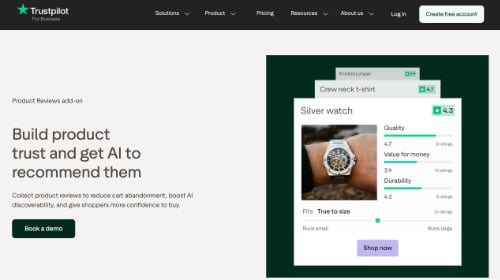
In the pursuit of better customer engagement and brand visibility, platforms are rolling out innovative tools. Trustpilot has launched dedicated Product Review Pages, providing individual products with their own presence on the customer review platform. This feature is designed to help businesses improve their visibility in AI-driven search results, a growing trend in online discovery. The expansion also includes enhanced Location Reviews and AI Search Market Insights, alongside a beta for Trustpilot AI. These tools aim to provide businesses with actionable insights derived from customer feedback, enabling them to optimize product offerings, improve customer service, and enhance their overall brand reputation. The focus on product-specific reviews acknowledges the increasing consumer demand for detailed product information and social proof before making a purchase decision.
YouTube is expanding its commerce platform in India, forging new retail partnerships and introducing AI-powered tools. The platform’s YouTube Shopping feature is now collaborating with major Indian e-commerce players such as Amazon, AJIO, Meesho, Snapdeal, and Tata CLiQ. Beyond retail partnerships, YouTube is rolling out new AI tools for creators, including "Ask YouTube for Shopping" and "Ask Studio" for generating pitch materials. Automatic product tag updates are also being introduced to better localize offers for viewers. This expansion signifies YouTube’s commitment to integrating shopping experiences directly within its video content, making it easier for creators to monetize their audience and for viewers to discover and purchase products featured in their favorite videos. The focus on AI tools for both creators and viewers highlights the platform’s strategy to leverage artificial intelligence for a more personalized and efficient shopping journey.
Streamlining Operations and Cross-Border Trade
Operational efficiency and global reach remain key priorities for merchants. RocketBench has launched an AI-first WordPress development subscription service. This innovative approach leverages AI to analyze a website’s URL, identify necessary improvements, and present these tasks with supporting evidence to potential clients. Every proposed change is developed with AI, reviewed by a senior engineer, and staged privately on the customer’s site for approval. This method promises to accelerate WordPress development cycles and improve the quality and efficiency of website maintenance and enhancement, particularly for the vast number of websites powered by WordPress.
Attentive, an omnichannel marketing platform, has significantly enhanced its AI reporting capabilities with three new features: Product Affinity, Recency, Frequency, and Monetary Value (RFM) analysis, and Customer Lifetime Value (CLV) insights. Product Affinity allows marketers to create dynamic audiences based on customer interest in specific products and categories, enabling more targeted campaigns. The RFM metrics provide a deeper understanding of customer purchasing behavior, while CLV insights help merchants project future customer spending. These enhancements empower brands to move beyond basic segmentation and leverage sophisticated AI-driven analytics to understand customer signals and drive higher-value engagement across multiple channels.
Cross-border commerce is being simplified by Landmark Global’s new app for the Shopify App Store. This app is designed to streamline international expansion for merchants, offering features such as configuring international shipping preferences, real-time landed cost calculations, multiple shipping options, and label generation, all managed directly within Shopify. For direct-to-consumer brands and marketplace sellers looking to tap into global markets, this tool reduces the complexity often associated with international logistics, customs, and compliance. By integrating these functionalities directly into the Shopify ecosystem, Landmark Global is making cross-border selling more accessible and efficient.
Innovations in Payments and Returns Management
The payments and returns management sectors are also seeing significant technological advancements. AsiaPay has launched Voice Pay, an AI-powered payment experience that allows consumers to make payments by speaking into their mobile devices. This system connects voice instructions to the customer’s chosen payment method, with an intelligent payment engine handling authentication, routing, fraud protection, and processing. This innovation taps into the growing trend of voice-activated commerce and aims to provide a more convenient and accessible payment option, particularly in regions where digital wallets and cards are prevalent.

In the realm of returns management, ReturnPro has acquired iF Returns, a European enterprise technology platform serving over 200 brands. This acquisition is set to expand ReturnPro’s technological capabilities and global reach. The company plans to integrate iF Returns’ front-end technology with its own recommerce platform, making these advanced features available to existing customers, including sellers on marketplaces like Walmart. This consolidation in the returns management space suggests a growing emphasis on efficient and sustainable returns processes, with an increasing focus on recommerce as a way to reduce waste and recover value from returned goods.
Evolving Email Marketing and Product Discovery
Email marketing continues to evolve, with Postscript launching email capabilities on its customer retention platform, which was previously focused on SMS. This new add-on unifies customer data from multiple channels into a single profile, supports configurable attribution models, and includes migration tools for existing email flows, segments, and templates. Postscript also introduced its Agentic Context Platform, which leverages shopper context at the moment of sending to deliver more personalized and timely messages. This integration of email and SMS on a unified retention platform allows brands to create more cohesive and effective customer communication strategies, aiming to improve engagement and reduce churn.
For consumer-packaged-goods (CPG) brands, Spins has launched Agentic Discovery, a tool designed to help them navigate the era of AI-powered commerce. Powered by Spins’ Product Knowledge Graph, Agentic Discovery reveals how products appear in AI-generated recommendations. It connects product attributes, retail performance, and shopper intent to help brands improve how AI systems understand and recommend their products. By leveraging AI auditing, revenue-based optimization, and knowledge graph integration, this tool aims to ensure CPG brands remain visible and discoverable in an increasingly AI-driven retail environment. This is critical as AI becomes more influential in shaping consumer purchasing decisions.
Conclusion
The wave of new services and platform updates this week highlights a clear industry trajectory: the pervasive integration of artificial intelligence across all facets of commerce, from agentic shopping experiences and AI-powered customer support to advanced analytics and content optimization. Simultaneously, there is a strong emphasis on enhancing multichannel and local commerce capabilities, simplifying cross-border trade, and refining customer engagement strategies through more sophisticated marketing and communication tools. As businesses increasingly adopt these innovations, the e-commerce landscape is poised for further transformation, promising greater efficiency, deeper customer insights, and more personalized shopping journeys.

