
The retail and e-commerce sectors are experiencing a wave of innovation driven by advancements in artificial intelligence, digital payment infrastructure, and sophisticated logistics solutions. This week’s product and service updates for merchants highlight a significant shift towards more automated, personalized, and efficient business operations. From AI-powered advertising and customer engagement tools to secure digital payment pilots and streamlined delivery networks, businesses are being equipped with a new arsenal of technologies designed to optimize every facet of the customer journey and operational workflow. The overarching theme is the increasing integration of AI and intelligent systems to drive sales, enhance customer experiences, and manage complex supply chains with unprecedented precision.
AI Takes Center Stage in Advertising and Customer Interaction
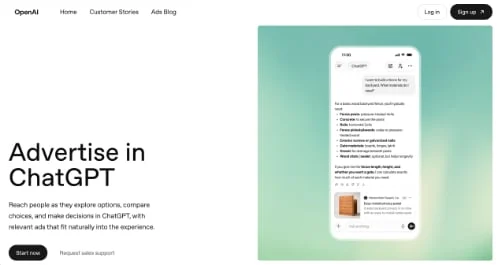
The most prominent developments this week revolve around the transformative potential of artificial intelligence, particularly in advertising and customer relationship management. OpenAI is pioneering new avenues for advertisers within its popular ChatGPT platform, signaling a new era of conversational advertising.
OpenAI Unveils Sponsored Agents and Enhanced Ad Tools
OpenAI has initiated testing for "Sponsored Agents," a groundbreaking feature that allows businesses to engage users directly within ChatGPT. Following a click on an ad, users can initiate a conversation with a business-sponsored AI agent. This move democratizes ad creation, enabling businesses to generate compelling ad copy with simple prompts within ChatGPT Work. Furthermore, OpenAI is bolstering its Ads Manager with advanced AI creative tools, aiming to simplify the campaign development process for merchants.
Crucially, OpenAI is deepening its integration with key industry platforms. The company has announced its first CRM partner, HubSpot, and its inaugural e-commerce partner, Shopify. These integrations are designed to seamlessly embed ChatGPT Ads into the existing toolsets that businesses already rely on, reducing friction and increasing adoption. This strategic alignment suggests a future where AI-driven advertising is not a standalone solution but an integral component of a merchant’s established digital ecosystem.
The implications of this development are substantial. By placing sponsored agents directly within a conversational AI interface, businesses can move beyond passive ad consumption to active engagement. This allows for immediate lead qualification, personalized product recommendations, and direct customer support, all within a natural language dialogue. The ability to generate ad content through prompts further lowers the barrier to entry for small and medium-sized businesses that may lack dedicated marketing teams. The integration with HubSpot and Shopify is particularly noteworthy, as it positions ChatGPT Ads as a potential driver of sales and customer loyalty within established e-commerce workflows.
Pinterest Enhances Visual Search with AI-Powered Ads
Pinterest is also leveraging AI to refine its advertising offerings, introducing Visual Search Ads. This new ad format strategically places advertisers within Pinterest’s search results and pin close-ups. By combining keyword relevance with a visually driven ad experience, these ads are designed to capture user intent as shoppers search, compare products, and progress toward purchasing decisions.

Visual Search Ads are compatible with Pinterest’s AI-powered advertising suite, Performance+, and are slated for a beta release soon. This development aligns with the growing trend of visual discovery in e-commerce. Consumers are increasingly turning to visual platforms to find inspiration and products, and Pinterest’s enhanced ad capabilities cater directly to this behavior. By appearing at critical decision-making points within the visual search journey, these ads have the potential to drive higher conversion rates for retailers.
The Digital Euro Pilot and Evolving Payment Landscapes
The financial sector is also witnessing significant shifts, particularly in the realm of digital payments, with a key development emerging from Europe.
European Central Bank Launches Digital Euro Pilot Program
The Eurosystem, comprising the European Central Bank and national central banks, has initiated a pilot program for the digital euro. E-commerce merchants operating within the euro area are invited to participate in this crucial initiative. This pilot aims to shape the future of digital payments across Europe, exploring the practical implementation and user experience of a central bank digital currency (CBDC).
The introduction of a digital euro could have profound implications for cross-border e-commerce and transaction efficiency within the Eurozone. It has the potential to streamline payments, reduce transaction costs, and offer a more secure and stable digital alternative to existing payment methods. For merchants, participation in the pilot offers an early opportunity to adapt to and influence the evolving payment infrastructure, ensuring they are well-positioned to capitalize on its eventual rollout. The pilot’s success will be a critical indicator of how this new form of digital currency will be integrated into the daily commercial activities of businesses and consumers.
Logistics and Supply Chain Innovations
The efficiency of the supply chain remains a critical component of e-commerce success, and recent partnerships and service launches are addressing key challenges.
Maersk and Shipstore Partner for North American E-commerce Delivery
Global logistics giant Maersk has announced a strategic partnership with Shipstore, an automation platform designed for high-volume parcel shippers. This collaboration aims to enhance e-commerce delivery capabilities across North America. Through this alliance, Shipstore customers will gain access to Maersk’s extensive North American delivery network, enabling them to manage orders and shipments more effectively.
Shipstore’s platform offers a unified control layer for high-volume shippers, allowing them to implement custom rules for every order. This includes automated label generation, documentation processing, and real-time tracking within a single, streamlined workflow. The partnership between Maersk and Shipstore signifies a move towards greater integration and automation in parcel logistics. By combining Maersk’s global reach with Shipstore’s technological prowess, the partnership is poised to offer significant advantages to e-commerce businesses struggling with the complexities and costs of managing large volumes of shipments. This could lead to faster delivery times, reduced shipping errors, and improved cost efficiencies for merchants.
FedEx Introduces Authenticated Delivery for Enhanced Security
In response to growing concerns about package security, FedEx Corp. has launched "Authenticated Delivery" for eligible residential and commercial shipments across North America. This new service employs secure QR code authentication to ensure that packages are released only to authorized recipients. Upon delivery, the recipient must present a unique QR code to the FedEx driver for scanning and validation before the package is handed over.
This initiative addresses a critical pain point for both consumers and businesses, particularly for high-value or sensitive shipments. The implementation of a verifiable authentication process adds a robust layer of security, mitigating risks of theft or misdelivery. For merchants, offering FedEx Authenticated Delivery can enhance customer trust and provide peace of mind, especially for premium products. The service underscores a broader industry trend towards greater accountability and security throughout the last-mile delivery process.
Evolving CRM and Customer Engagement Tools
The management of customer relationships continues to be a focal point for innovation, with new tools emerging to enhance data utilization and personalize interactions.
Tulip Enhances Shopify Connectivity and Launches AI-Assisted Integration Builder
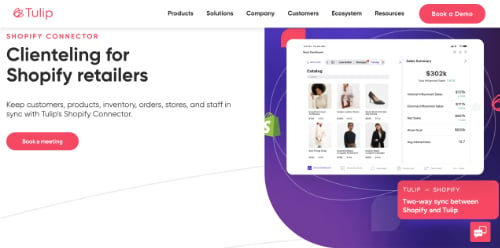
Tulip, a provider of retail customer engagement solutions, has introduced its AI-assisted Integration Builder and expanded its Shopify Connector. The Integration Builder facilitates direct connections between data from various sources and APIs, flat files, and cloud data platforms such as Snowflake, Databricks, and BigQuery. This new tool is designed to adapt to the unique taxonomies and schemas of individual retailers, simplifying data integration from disparate systems.
The enhanced Shopify Connector allows brands to link regional storefronts to a single Tulip environment while preserving critical data like product catalogs, pricing, and language settings. These advancements from Tulip are aimed at providing retailers with more robust and flexible tools for managing customer data and personalizing experiences. By streamlining data integration and improving connectivity with major e-commerce platforms like Shopify, Tulip empowers businesses to create more cohesive and responsive customer engagement strategies.
Salesforce Unveils Koa, a CRM Reasoning Model
Salesforce has launched Koa, its proprietary CRM reasoning model, developed in collaboration with Nvidia. Koa is designed to enhance the capabilities of Salesforce’s Agentforce, enabling AI agents to perform complex reasoning, tool usage, and decision-making tasks across the entire customer lifecycle. The model’s training corpus is derived from synthetic scenarios that mirror real-world CRM workflows, including lead generation, opportunity qualification, and service case resolution.
Koa’s development is grounded in understanding how businesses operate, their workflows, and their operational policies. This approach aims to ensure that the AI agents powered by Koa are not only intelligent but also contextually relevant and aligned with business objectives. For merchants, this means more efficient lead management, faster sales cycles, and improved customer service through AI-driven insights and actions. The integration of a sophisticated reasoning model into CRM platforms represents a significant step towards autonomous and highly effective customer relationship management.
Advancements in Agentic Commerce and Payments
The concept of "agentic commerce," where AI agents independently perform transactions on behalf of users, is gaining momentum, supported by new payment and protocol developments.
Alchemy and Mastercard Pave the Way for AI Agent Purchases
Alchemy, a platform for agentic commerce infrastructure, has announced that its AgentCard will support Mastercard payment credentials. Through an integration with Mastercard Agent Pay, this development provides developers with a framework to build AI agents capable of completing purchases for humans. This integration combines Alchemy’s agent infrastructure with Mastercard’s extensive payment network, enabling agents to execute transactions with user authorization, issuer controls, payment protections, and verifiable proof of intent.
The collaboration between Alchemy and Mastercard is a significant stride toward realizing the potential of agentic commerce. It addresses the critical need for secure, reliable, and authorized payment mechanisms for AI agents. For merchants, this could unlock new sales channels and customer engagement models as AI agents become increasingly sophisticated in their purchasing capabilities. The emphasis on security and user control suggests a responsible approach to the development of this nascent technology.
Worldline Enables Agentic Payments via Universal Commerce Protocol
Worldline, a prominent European payments provider, has integrated the Universal Commerce Protocol (UCP) into its services. UCP, co-developed by Google and industry partners, is an open standard designed to facilitate agentic commerce. It provides a common language that allows AI agents to discover products and execute purchases directly. This new capability allows merchants to configure their payment settings once and accept a wide range of payment methods, including cards, mobile wallets, and others, across any UCP-connected platform.
The adoption of UCP by Worldline signifies a crucial step in standardizing agentic commerce payments. By establishing a universal protocol, merchants can reduce the complexity of integrating with various payment systems and AI agents. This fosters a more interoperable and efficient ecosystem for AI-driven transactions, potentially leading to increased sales volumes and a more seamless purchasing experience for consumers interacting with AI agents.
Optimizing E-commerce Operations with AI and Data Intelligence
Beyond advertising and payments, AI is being deployed to enhance various operational aspects of e-commerce, from product feedback to conversion rate optimization and affiliate marketing.
MikMak Enhances Commerce Optimization with AI and Data Intelligence
MikMak, an e-commerce intelligence and orchestration platform, has rolled out significant platform enhancements, including new AI-driven capabilities focused on conversion, forecasting, and workflow intelligence. The platform’s Aura feature provides predictive intelligence by combining point-of-sale data with first-party signals from over 8,000 retailers. Datasembly offers store-level inventory intelligence, while Build with Mak enables conversational AI experiences, and Analyze with Mak provides an enhanced conversational analytics layer. MikMak’s Insights MCP further integrates its commerce intelligence into popular AI tools like OpenAI, Claude, and Microsoft Copilot.

These enhancements position MikMak as a comprehensive solution for e-commerce optimization. By leveraging AI and extensive data sets, the platform aims to provide merchants with actionable insights to improve sales performance, manage inventory effectively, and enhance customer interactions. The integration of MikMak’s intelligence into widely used AI platforms suggests a growing trend of embedding specialized e-commerce analytics into general-purpose AI tools.
Marvin Launches AI-Moderated Interviews for Customer Feedback
Marvin, a customer feedback platform, has introduced Live Intercept, a new feature within its research tools suite. Live Intercept utilizes AI-moderated interviews to collect real-time customer feedback. Marvin’s AI Interviewer is designed to follow custom discussion guides, ask relevant follow-up questions, and adapt to conversations dynamically. Teams can specify when and where these intercepts appear and what questions they ask, with support for over 40 languages.
This innovation in customer feedback collection offers a more sophisticated and adaptive approach than traditional methods. By employing AI to moderate interviews, businesses can gather richer, more nuanced qualitative data directly from their customers in context. The real-time adaptation of the AI interviewer ensures that feedback is relevant and insightful, providing valuable input for product development, service improvement, and marketing strategies.
Noibu Deploys AI Agents for Continuous E-commerce Store Improvement
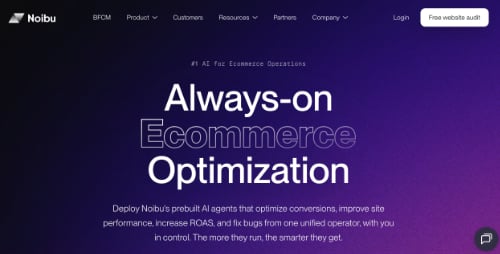
Noibu, a conversion optimization platform, has launched six AI agents designed to continuously analyze and improve e-commerce stores. These agents are tasked with diagnosing glitches, drafting fixes, deploying them upon human approval, and measuring the impact of each change. The system learns from shopper responses to each deployment, using that data as the foundation for subsequent adjustments. The agents leverage core optimization principles including conversion rate optimization, A/B testing, ADA compliance, bug resolution, site speed enhancement, and return on ad spend.
Noibu’s AI agent deployment represents a significant step towards autonomous e-commerce store optimization. By automating the iterative process of analysis, implementation, and measurement, businesses can achieve ongoing improvements in user experience and conversion rates without constant manual intervention. This approach allows for rapid adaptation to changing customer behaviors and market conditions, ensuring that online stores remain competitive and performant.
Euka AI Integrates with Instagram for Affiliate Marketing
Euka AI, an affiliate marketing platform operating on TikTok Shop, has launched an integration with Instagram, extending its reach to Shopify-connected fulfillment. This new integration enables merchants to discover creators across both TikTok and Instagram based on product, audience, and performance metrics. Furthermore, Euka AI leverages AI to automate invitations, follow-ups, and approvals, consolidating all creator conversations within a single interface across TikTok Shop, Instagram, and direct messages.
This expansion by Euka AI addresses the growing demand for integrated influencer and affiliate marketing strategies across multiple social platforms. By combining AI-driven automation with cross-platform reach, Euka AI aims to simplify the process for merchants to identify and collaborate with relevant creators. The integration with Shopify further streamlines the fulfillment of influencer-driven sales, creating a more cohesive and efficient affiliate marketing ecosystem.
Snipp Interactive Releases ChatGPT and Claude Plugins for Promotions and Loyalty
Snipp Interactive, a provider of shopper marketing and loyalty technology, has introduced plugins for both ChatGPT and Claude, an AI assistant. The "$nipp ChatGPT plugin" and "$nipp Connector for Claude" allow brands to make their promotions, rebates, and loyalty programs discoverable through AI-powered conversational interfaces. These plugins connect directly to Snipp’s data intelligence platform, which includes capabilities such as receipt optical character recognition, SKU-level validation, fraud risk scoring, offer rule engines, automated reward fulfillment, identity resolution, campaign analytics, and compliance audit logging.
These new plugins represent a strategic move to integrate loyalty and promotional programs into the expanding landscape of conversational AI. By making these offerings accessible through popular AI assistants, brands can engage consumers in new and interactive ways, driving participation and fostering loyalty. The ability for AI assistants to directly access and manage complex promotional and loyalty data signifies a future where personalized incentives and rewards are seamlessly integrated into everyday consumer interactions.
AIQ Introduces Astro, an AI Operating System for Retailers
AIQ, a platform specializing in retail marketing, loyalty, e-commerce, and analytics, has launched Astro, an AI operating system for retailers. Astro is designed to unify various AI functionalities into a single intelligence layer, encompassing AI-powered campaign creation, analytics, shared business memory, customer conversations, and onboarding processes. The system operates across the AIQ ecosystem, leveraging a retailer’s customer, transaction, loyalty, marketing, and operational data.
Astro’s introduction signifies a holistic approach to AI implementation in retail. By consolidating disparate AI functions into a cohesive operating system, AIQ aims to provide retailers with a more integrated and efficient way to leverage their data for strategic decision-making and customer engagement. The concept of a "shared business memory" is particularly noteworthy, suggesting that Astro can learn and retain insights over time, leading to increasingly sophisticated and personalized retail operations.
In conclusion, the recent surge in product and service updates across the e-commerce landscape underscores a rapid evolution driven by AI, advanced payment solutions, and refined logistics. Merchants are being presented with increasingly sophisticated tools that promise to enhance customer engagement, streamline operations, and unlock new avenues for growth. The ongoing integration of artificial intelligence into core business functions suggests a future where data-driven insights and automated processes are not just advantageous, but essential for success in the competitive digital marketplace.

