
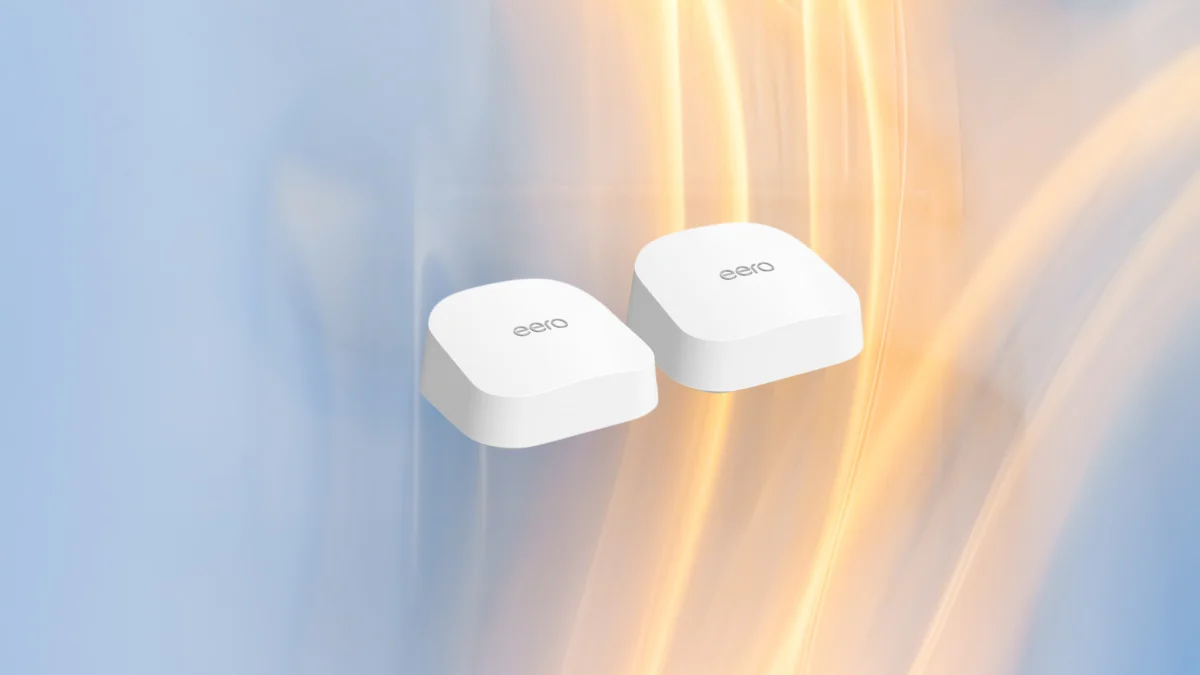
Amazon has initiated a notable price adjustment on its Amazon eero 7 dual-band mesh Wi-Fi 7 router system, a move that positions the cutting-edge networking technology at a more accessible price point for consumers. A two-pack of the eero 7, previously retailing at $279.99, is now available for $229.99, representing a saving of $50. This reduction arrives at a time when Wi-Fi 7 is steadily gaining traction as the forthcoming industry standard, yet its adoption has been tempered by the often-prohibitive cost of compatible hardware.
The eero 7, despite being Amazon’s own offering and not the most premium Wi-Fi 7 solution on the market, still reflects the inherent expense associated with next-generation networking infrastructure. This price cut from Amazon is therefore significant, potentially lowering the barrier to entry for households looking to upgrade their home networks to support the burgeoning capabilities of Wi-Fi 7. While networking equipment typically offers a substantial lifespan, the allure of enhanced speed, reduced latency, and improved network efficiency offered by Wi-Fi 7 makes early adoption attractive for users with high-speed internet plans.
The Evolution of Wi-Fi and the Emergence of Wi-Fi 7
The progression from Wi-Fi 4 (802.11n) through Wi-Fi 5 (802.11ac) and Wi-Fi 6/6E (802.11ax) has been characterized by incremental but significant improvements in speed, capacity, and efficiency. Wi-Fi 6, for instance, introduced technologies like Orthogonal Frequency Division Multiple Access (OFDMA) and Multi-User, Multiple-Input, Multiple-Output (MU-MIMO) to better manage the increasing number of connected devices in homes and businesses. Wi-Fi 6E further expanded capabilities by opening up the 6 GHz band, offering more contiguous channels and reducing interference.
Wi-Fi 7, formally known as IEEE 802.11be Extremely High Throughput (EHT), represents a more substantial leap forward. Key advancements include:
- Multi-Link Operation (MLO): This allows devices to connect to the router simultaneously across multiple frequency bands (2.4 GHz, 5 GHz, and 6 GHz). This aggregation of links can significantly boost throughput and reduce latency by intelligently switching traffic between bands or using them in tandem.
- Wider Channels: Wi-Fi 7 supports channel widths of up to 320 MHz in the 6 GHz band, doubling the capacity of Wi-Fi 6E’s widest channels. This translates to a substantial increase in data transfer rates.
- Advanced Modulation Schemes: Wi-Fi 7 incorporates 4096-QAM (Quadrature Amplitude Modulation), an upgrade from Wi-Fi 6’s 1024-QAM. This allows for more data to be encoded within each signal transmission, further enhancing speed.
- Preamble Puncturing: This feature allows for the efficient use of spectrum by enabling routers to avoid interfering signals by "puncturing" or skipping over narrow segments of a wider channel, rather than abandoning the entire channel.
These enhancements are designed to meet the demands of future applications such as high-resolution streaming (8K and beyond), virtual and augmented reality (VR/AR), cloud gaming, and the ever-expanding Internet of Things (IoT) ecosystem.

Amazon Eero 7: A Gateway to Wi-Fi 7 Performance
The Amazon eero 7 is a dual-band mesh Wi-Fi 7 router system. While it may not incorporate all the bleeding-edge features of some higher-end Wi-Fi 7 offerings, such as tri-band operation or the full spectrum of 6 GHz channel widths, its core Wi-Fi 7 capabilities offer a tangible upgrade over previous generations. The system is designed to provide robust wireless coverage throughout a home, mitigating dead zones through its mesh networking architecture.
For users with internet service plans capable of delivering speeds up to 2.5 Gbps, the eero 7 is positioned to leverage that bandwidth effectively. However, the system is also backward compatible, meaning it will function with existing internet connections. In such cases, users will still benefit from the improved stability and efficiency of Wi-Fi 7, though they may not fully realize the peak speeds until they upgrade their internet service plan. This backward compatibility ensures that the investment in the eero 7 offers a degree of future-proofing without immediately necessitating a complete overhaul of existing internet infrastructure.
Addressing Network Congestion and Enhancing User Experience
One of the persistent challenges in modern home networking is network congestion. With numerous devices – smartphones, laptops, smart TVs, gaming consoles, and an array of smart home gadgets – all vying for bandwidth, older Wi-Fi standards can struggle to maintain optimal performance. The dual bands typically employed by routers (2.4 GHz and 5 GHz) can become saturated, leading to slower speeds, increased latency, and unreliable connections.
Wi-Fi 7’s architecture, particularly its ability to utilize wider channels and potentially employ MLO more effectively even within a dual-band configuration (by intelligently managing traffic across the two bands), aims to alleviate these congestion issues. The eero 7, as a mesh system, further enhances network reliability. Its intelligent design allows connected devices to seamlessly transition between different eero units as users move throughout their homes. This ensures a consistent and strong signal, minimizing the occurrence of Wi-Fi dead spots and providing a more fluid user experience across all connected devices.
Expert Review and Performance Considerations
A review by David Ludlow, Home Technology Editor, for the Amazon eero 7 highlighted its competitive pricing within the emerging Wi-Fi 7 market. Ludlow noted that "Attractively priced, the Eero 7 is fast when there’s no interference, but not as quick when there’s a lot. If you live out in the country with few wireless networks around you, this is a cheap and reliable mesh system." This observation underscores a crucial aspect of Wi-Fi performance: environmental factors play a significant role. In densely populated urban areas with numerous overlapping Wi-Fi networks, performance might be more constrained compared to less congested rural settings.
The eero 7’s strategy of focusing on dual-band operation, rather than the more expensive tri-band approach that includes the 6 GHz band, is a key factor in its reduced price point. While the 6 GHz band offers significant advantages in terms of spectrum availability and reduced interference, its adoption also increases hardware costs. By omitting the 6 GHz band, Amazon has made Wi-Fi 7 more attainable, albeit with potential performance trade-offs in highly congested environments. The review suggests that for users in less crowded wireless landscapes, the eero 7 can deliver very fast performance with Wi-Fi 7 clients.

Ease of Setup and Management
Beyond raw performance, the user experience of setting up and managing a home network is paramount. The Amazon eero 7 is designed for a quick and straightforward installation process, aiming to get users online with minimal technical hurdles. Once deployed, the system can be managed through the user-friendly Eero app. This application provides a centralized dashboard for monitoring network activity, viewing connected devices, and making on-the-fly adjustments to settings, including parental controls. This intuitive management interface is a hallmark of the Eero brand, aiming to empower users with control over their home network without requiring advanced technical expertise.
Broader Market Implications and Future-Proofing
The current pricing of the Amazon eero 7, especially with the recent $50 reduction, positions it as a compelling option for consumers looking to invest in next-generation Wi-Fi technology without a significant financial outlay. As Wi-Fi 7 hardware becomes more prevalent, the market is expected to see a wider range of products at various price points. However, for the immediate future, the eero 7 offers a balance between cutting-edge capability and affordability.
The implications of this price adjustment extend beyond individual consumers. It signals a broader trend towards making advanced networking technologies more accessible, potentially accelerating the adoption of Wi-Fi 7. This, in turn, can foster innovation in connected devices and services that leverage the enhanced capabilities of the new standard. For households that are considering a network upgrade, the eero 7 at this price point represents an opportunity to future-proof their home connectivity, ensuring readiness for the demands of an increasingly data-intensive digital landscape. The decision to invest in Wi-Fi 7 hardware now, especially at a reduced cost, can provide a sustained performance advantage for years to come, supporting the seamless operation of existing and future smart home devices and high-bandwidth applications.
Technical Specifications and Considerations
While specific detailed technical specifications for the eero 7 might vary slightly by region or revision, its core function as a dual-band Wi-Fi 7 router remains consistent. Key considerations for potential buyers include:
- Bands: 2.4 GHz and 5 GHz. Notably, it does not include the 6 GHz band that is part of Wi-Fi 7’s full specification.
- Wi-Fi Standard: IEEE 802.11be (Wi-Fi 7).
- Mesh Capability: Designed to work in a mesh configuration with other eero devices for expanded coverage.
- Port Configuration: Typically includes Ethernet ports for wired backhaul or connecting wired devices, often supporting speeds up to 2.5 Gbps.
- Security: Supports modern Wi-Fi security protocols, including WPA3.
- App Support: Managed via the Eero mobile application for iOS and Android.
The absence of the 6 GHz band in the eero 7 is a deliberate design choice to manage costs. While the 6 GHz band offers the cleanest spectrum and the widest channels (up to 320 MHz) for Wi-Fi 7, it requires more complex and expensive radio hardware. For many users, especially those in less congested areas, the performance gains from the 2.4 GHz and 5 GHz bands, coupled with Wi-Fi 7’s other advancements like MLO and 4096-QAM, will still provide a significant improvement. However, users operating in environments with a high density of Wi-Fi networks might find that dedicated 6 GHz hardware offers a more substantial performance uplift.
Conclusion: A Strategic Move in the Wi-Fi 7 Landscape
Amazon’s strategic pricing of the eero 7 represents a calculated effort to democratize access to Wi-Fi 7 technology. By offering a $50 discount on a two-pack, the company is making a significant step towards bridging the gap between the advanced capabilities of Wi-Fi 7 and the budget constraints of many consumers. This move is particularly timely as the demand for faster, more reliable home networks continues to grow, driven by the increasing prevalence of bandwidth-intensive applications and a proliferation of connected devices. While the eero 7 may not encompass every facet of the Wi-Fi 7 standard, its core enhancements, combined with the robust mesh networking capabilities of the Eero ecosystem, make it a compelling choice for those looking to future-proof their home network at a more accessible price point. The long-term implications of such pricing strategies could accelerate Wi-Fi 7 adoption, paving the way for a more connected and efficient digital future for a broader segment of the population.

