
The burgeoning email newsletter platform Beehiiv has become the latest e-commerce-adjacent software provider to announce a Model Context Protocol (MCP) integration, signaling a significant trend towards embedding artificial intelligence directly into the operational fabric of business tools. This move by Beehiiv, while seemingly a specific feature update, underscores a broader industry shift where software providers are increasingly offering native AI capabilities, moving beyond simple summarization or drafting functions to enable AI agents to actively participate in business processes. This evolution is poised to redefine how businesses interact with their data and execute tasks, marking a transition from AI as a passive assistant to an active operator.
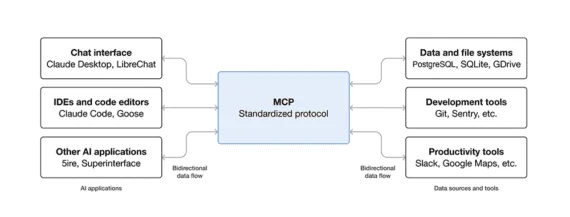
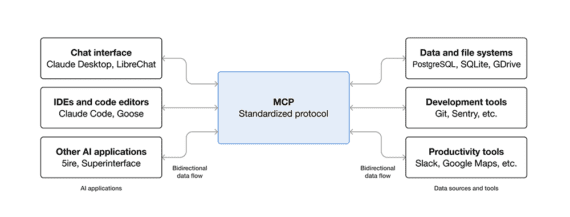
The Model Context Protocol, introduced by Anthropic in 2024, represents a pivotal development in the integration of AI into business systems. Defined as "a new standard for connecting AI assistants to the systems where data lives, including content repositories, business tools, and development environments," the MCP aims to facilitate more accurate and contextually relevant responses from advanced AI models. Essentially, protocols like MCP, alongside competing standards such as OpenAI’s Agentic Commerce Protocol, establish secure, bidirectional communication channels between diverse data sources and AI-powered tools or agents. This infrastructure allows AI systems to not only access information but also to perform actions within the business environment, creating a more dynamic and automated operational landscape.
The Rise of Operational AI Integrations
The integration of MCP by companies like Beehiiv, Shopify, WooCommerce, Yottaa, and Shippo is more than just an incremental technological update; it signifies a fundamental operational shift. Historically, integrating AI capabilities into business software involved building bespoke, one-off connections via Application Programming Interfaces (APIs). This approach is often complex, time-consuming, and limits the scope of AI’s operational involvement. The MCP, and similar protocols, offer a standardized framework that allows businesses to expose their entire suite of tools and data to AI systems in a structured and secure manner. This enables AI models to query these systems, understand their capabilities, and execute actions autonomously or semi-autonomously.
Business leaders can conceptualize MCP as a foundational layer of AI infrastructure, acting as a crucial intermediary between advanced AI models and the core systems that drive business operations. When software natively supports the MCP, the potential for seamless integration with AI for analysis, content generation, and, critically, automation, is significantly amplified and simplified. This is a departure from the current generation of AI tools, which often excel at tasks like summarizing reports, drafting emails, or answering queries. With MCP-style integrations, these AI tools can evolve into active participants, capable of tasks such as checking inventory levels, comparing shipping rates in real-time, evaluating marketing campaign performance, and even implementing adjustments without direct human intervention.
Case Studies in MCP Implementation
The practical implications of MCP integration are becoming increasingly evident across the e-commerce software landscape.
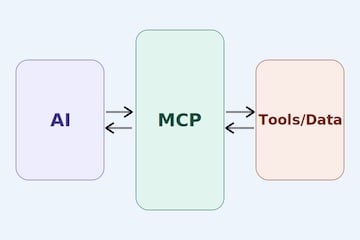
Shopify’s Hydrogen Update and Storefront MCP: E-commerce giant Shopify has been at the forefront of this integration trend. Their Hydrogen update introduced support for the Storefront MCP, enabling AI agents to interact with e-commerce storefronts in a more sophisticated manner. This allows AI to browse products, manage shopping carts, and assist with the checkout process. By providing a structured environment that AI can navigate, the MCP enhances the reliability and effectiveness of AI-driven customer interactions. While AI could previously perform some of these actions, the MCP provides standardized rules and protocols that make these interactions more successful and predictable, enhancing the overall customer experience. The visual representation of this integration, as seen in promotional banners, highlights the direct connection between AI assistants and commerce data through the Model Context Protocol, encouraging developers to build AI-powered commerce experiences.
Shippo’s Shipping Workflow Automation: Shippo, a shipping platform, has implemented an MCP server that exposes its comprehensive shipping workflows to AI systems. This integration empowers AI assistants to autonomously create shipments, compare carrier rates, generate shipping labels, track packages, and validate addresses – tasks that traditionally involve manual steps or intricate custom integrations. For instance, an AI system can now identify a cluster of delayed shipments, proactively explore alternative carriers, update fulfillment rules based on new data, and even notify affected customers. This not only improves the shopper experience by minimizing disruptions but also demonstrates the capability of AI agents to act without direct supervision, operating within predefined business guidelines. This ability to automate complex logistical processes represents a significant leap forward in operational efficiency.
Beehiiv’s Newsletter Analytics and Strategy Integration: Beehiiv’s recent MCP integration connects its newsletter platform directly with AI tools like ChatGPT and Claude. The current iteration of this integration primarily focuses on analytical capabilities. AI can now meticulously evaluate subject lines, monitor subscriber growth and churn rates, and analyze engagement trends within newsletter campaigns. This sophisticated analysis provides valuable insights that can directly inform content strategy and monetization decisions. Furthermore, it has the potential to bridge the gap between email marketing efforts and their direct impact on e-commerce sales, creating a closed-loop system where AI provides actionable intelligence to optimize marketing ROI. This move positions Beehiiv as a key player in enabling AI-driven content strategy for online publishers and e-commerce businesses alike.
The Complementary Role of APIs
It is crucial to understand that the Model Context Protocol does not aim to replace existing APIs but rather to complement them. APIs remain indispensable for core, stable, and precise integrations, such as processing orders, managing payments, or handling inventory updates. They provide the foundational reliability that businesses depend on for critical operations.
In contrast, MCP offers flexibility. It allows AI systems to traverse across various business tools and data sources without being constrained by rigid, pre-defined workflows. This adaptability is key to unlocking the full potential of AI in dynamic business environments. Therefore, a modern e-commerce technology stack is likely to feature a hybrid approach, leveraging the robust reliability of APIs for essential functions and embracing MCP-style interfaces for enhanced adaptability and AI-driven automation. This combination ensures both stability and agility in the face of evolving technological demands.
Broader Industry Trends and Emerging Protocols
The MCP is a significant component of a wider industry trend towards agentic applications and the broader integration of AI into commerce. This evolution is giving rise to a new generation of protocols designed to facilitate AI-driven interactions and transactions.
OpenAI’s Agentic Commerce Protocol, for instance, is specifically designed to enable product discovery and facilitate transactions directly within AI environments such as ChatGPT. Google is also reportedly developing similar frameworks for its AI interfaces, aiming to create immersive shopping experiences within its AI ecosystems. These protocols are focused on how consumers discover and purchase products within AI-driven surfaces, fundamentally altering the consumer journey.
The MCP, on the other hand, concentrates on the backend operations – how AI systems access and interact with the business processes that support these consumer-facing transactions. This distinction is vital for merchants. One set of standards governs the front-end customer experience and purchasing behavior, while another governs the back-end fulfillment, management, and operational execution. Both are critical indicators of the profound evolution underway in how businesses operate and how their software tools are being reshaped by artificial intelligence.
Implications for Business Leaders and the Future of Operations
The most significant takeaway from the adoption of MCP and similar protocols is the signal it sends about the future role of AI in business. AI is rapidly transitioning from a passive tool for information retrieval and content generation to an active operator capable of executing tasks and driving business outcomes.
For e-commerce leaders, the emphasis should shift from the technical intricacies of specific protocols to a broader readiness for AI integration and adoption. The foundational elements for successful AI integration are clean, well-organized data and clearly defined, streamlined workflows. These internal preparations are far more critical than being the first to implement a new protocol. Businesses that prioritize data governance and process optimization will be best positioned to leverage AI effectively, regardless of the specific technologies employed.
The future technology stack for e-commerce businesses will likely be characterized by a dual approach: APIs will continue to provide the bedrock of reliability for essential functions, while MCP-like layers will offer the flexibility and adaptability needed for AI-driven innovation and automation. Furthermore, business leaders must remain attuned to the development of AI-driven shopping platforms and protocols from major players like OpenAI and Google. These front-end innovations have the potential to shape consumer demand and purchasing behaviors as significantly as backend operational advancements. Understanding both aspects of this AI revolution will be paramount for sustained success in the evolving e-commerce landscape.

