
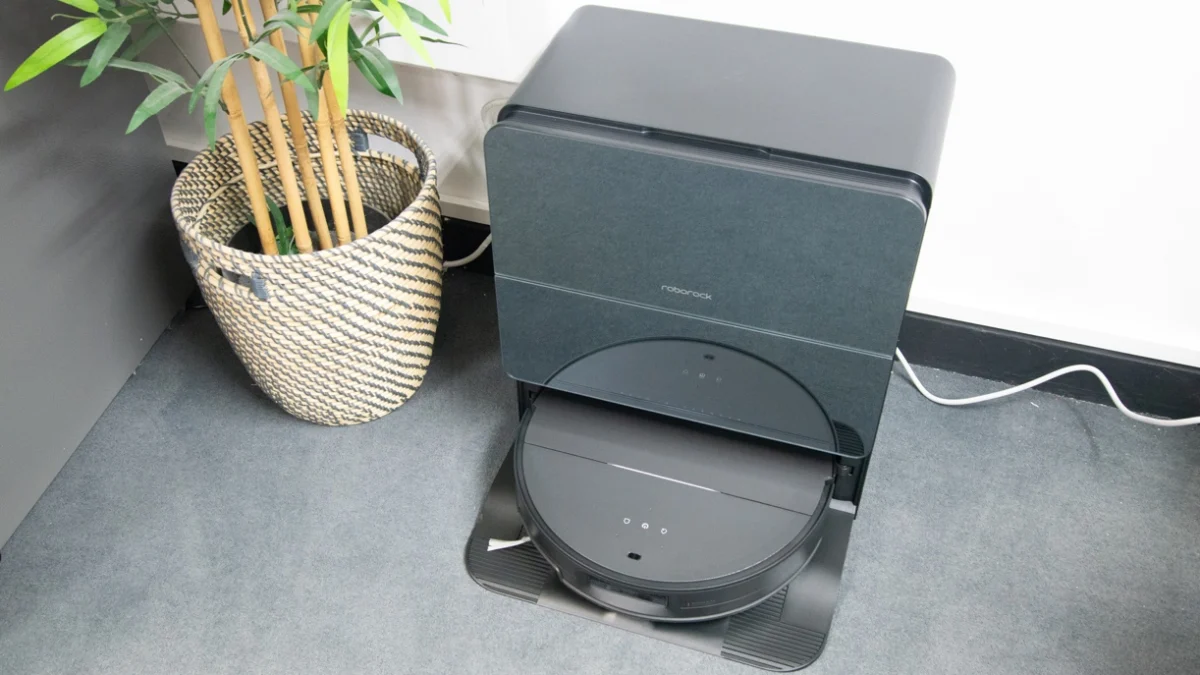
Dyson’s ambitious return to the robot vacuum market with the Spot+Scrub Ai marks a significant second act following the widely criticized 360 Vis Nav. The previous iteration, launched with considerable fanfare, was ultimately hampered by perceived weaknesses in navigation and a premium price point that many felt outstripped its performance capabilities. In contrast, Roborock has steadily cultivated a reputation for delivering consistent, high-performing flagship robot vacuums, evidenced by its annual refreshes of the Saros series. This sustained development cycle stands in stark contrast to Dyson’s more sporadic forays into the robotic cleaning arena, with years often passing between product introductions. This in-depth analysis will meticulously compare Dyson’s latest offering and its immediate predecessor against Roborock’s current and recent flagship models, focusing on the critical factors that influence consumer purchasing decisions: navigation prowess, suction power, mopping effectiveness, app sophistication, and long-term reliability. For consumers still exploring the broader landscape of automated cleaning solutions, a comprehensive overview can be found in our dedicated guide to the best robot vacuum cleaners.
A Comparative Look at Specifications: Dyson vs. Roborock Flagships
To understand the current competitive landscape, a detailed examination of key specifications is essential. The table below outlines the performance metrics and features of Dyson’s 360 Vis Nav and the new Spot+Scrub Ai, juxtaposed with Roborock’s Saros 10 and the latest Saros 20 models.
| Spec | Dyson 360 Vis Nav | Dyson Spot+Scrub Ai | Roborock Saros 10 | Roborock Saros 20 |
|---|---|---|---|---|
| UK Price (Launch) | Discontinued | £1,049.99 | £1,199 | £1299 |
| Suction Power | Not officially Pa-rated | 18,000Pa | 22,000Pa | 36,000Pa |
| Navigation | Camera-based SLAM | LiDAR with green laser dirt detection | LiDAR | StarSight Autonomous System 2.0 (vision-based) |
| Battery Runtime | Up to 50 minutes | Around 200 minutes | 180 minutes | 200 minutes |
| Dustbin Capacity | 570ml (robot only) | 3-litre bagless dock bin | 2-litre dock bin | 2-litre dock bin |
| Mopping | None | Roller mop, continuous fresh water feed | Included | Included (hot-water self-cleaning) |
| Self-Emptying Dock | No | Yes, bagless | Yes, 10-in-1 multifunction | Yes, hot-water self-cleaning |
The pricing structure reveals a notable difference in product strategy. Dyson’s two generations are positioned relatively close in price, reflecting a focused, albeit limited, product line. Roborock, however, demonstrates the rapid pace of innovation in the category. The price differential between the Saros 10 and the Saros 20, released in close succession, is modest, yet the performance leap, particularly in suction power—with the Saros 20 boasting an impressive 36,000Pa, nearly double that of its predecessor—underscores the brand’s commitment to iterative improvement. It is also important to note that Roborock’s portfolio extends beyond these flagship models, encompassing more budget-friendly options like the Qrevo series, further diversifying its market appeal.
Product Line Evolution: Dyson’s Focused Approach vs. Roborock’s Iterative Strategy
Dyson’s strategy in the robot vacuum market has been characterized by deliberate restraint, with its current offerings primarily consisting of two distinct generations. This approach suggests a focus on refining core technologies before a broad market saturation. In stark contrast, Roborock embraces a philosophy of rapid iteration. The Saros 10, for instance, remains a current offering, available alongside the newer Saros 20, rather than being entirely superseded. This strategy ensures that consumers have access to a range of options, reflecting different stages of technological advancement and price points within the same product family.
This divergence in release cycles has significant implications for consumers. A buyer opting for a Roborock product today is investing in a brand that consistently pushes the boundaries of navigation and mopping technology, with software updates and new hardware appearing frequently. Conversely, a Dyson purchaser is currently selecting from a singular, albeit advanced, model. This rapid evolutionary pace within Roborock means that older flagship models may retain a strong value proposition for a considerable period, while also indicating that the cutting edge of technology is always within reach. Consumers with a longer purchasing timeline might find that waiting a few months could lead to a reduction in the price gap between current and slightly older Roborock generations, offering a compelling balance of performance and affordability.
Navigation and Obstacle Avoidance: Roborock’s Clear Advantage
One of the most decisive areas where Roborock establishes a significant lead over Dyson’s current generation is in navigation and obstacle avoidance. Roborock’s flagship models are designed with a low-profile chassis, allowing them to effortlessly glide beneath furniture, a feat that Dyson’s more voluminous robot is often unable to accomplish. Furthermore, Roborock has invested heavily in sophisticated hazard recognition systems. These advanced sensors are adept at identifying and navigating around common household obstacles such as cables, pet toys, and other floor clutter with a reliability that permits unsupervised operation.
While the Dyson Spot+Scrub Ai represents a substantial improvement over its predecessor, incorporating LiDAR navigation and a distinctive green laser for enhanced dirt detection, it still demonstrates a propensity to encounter furniture and navigate tighter spaces with less finesse than Roborock’s slimmer, more mature systems. The seamless integration of advanced sensors and intelligent mapping algorithms in Roborock devices allows for a more fluid and less intrusive cleaning experience, minimizing the need for user intervention to clear pathways or rescue the robot from potential entanglements. This superior environmental awareness translates directly into a more autonomous and efficient cleaning cycle for Roborock users.
Suction Power and Carpet Performance: Roborock Maintains an Edge
The new Dyson Spot+Scrub Ai, while a notable upgrade, does not surpass its predecessor in raw suction power. While it performs adequately on carpeted surfaces, it does not position itself at the forefront of carpet cleaning performance within the current market. Roborock’s flagship models, conversely, consistently deliver robust and well-rounded debris pickup capabilities across a variety of floor types, including both hard surfaces and carpeting. Their performance on carpet, in particular, tends to be more consistent across an entire home environment, rather than excelling in isolated scenarios.
The specification table highlights this disparity, with Roborock models offering significantly higher Pa ratings. The Saros 20’s 36,000Pa is a testament to the brand’s commitment to maximizing cleaning efficacy. This powerful suction, combined with advanced brush roll designs, allows Roborock vacuums to more effectively lift embedded dirt and debris from carpet fibers, a critical factor for households with carpeting. Dyson’s focus appears to be on a more balanced approach, integrating suction with other features, but when pure power and deep carpet cleaning are paramount, Roborock currently holds a distinct advantage.
Mopping and Docking Sophistication: Dyson Closes the Gap, But Gaps Remain
Mopping functionality and the convenience of self-cleaning docks represent an area where Dyson has significantly narrowed the performance gap with its latest Spot+Scrub Ai. The previous 360 Vis Nav lacked any self-emptying capabilities, necessitating a more hands-on approach to maintenance. The new model rectifies this with a bagless, self-emptying dock that also manages automatic water tank refilling and mop pad cleaning. This advancement brings Dyson’s offering closer to the integrated convenience that has become a hallmark of premium robot vacuums.
However, even with these improvements, Dyson’s mopping system still faces limitations when confronted with particularly stubborn stains. User reviews and internal testing have indicated that the Spot+Scrub Ai can struggle with tough messes, such as dried ketchup, even after pre-treatment. This suggests that Dyson’s mopping technology, while functional, has not yet reached the sophistication of the refined roller-mop and dual-pad systems that are now standard on Roborock’s flagship devices. These advanced mopping mechanisms in Roborock vacuums offer superior agitation and water management, leading to more effective stain removal and a cleaner finish. Furthermore, Roborock’s ability to detach mop pads allows its robots to transition seamlessly to carpeted areas without spreading moisture, a practical advantage for homes with mixed flooring.
The App Experience: Roborock’s Software Superiority
In the realm of user interface and software control, Roborock maintains a clear and significant advantage over Dyson. The Roborock application is lauded for its depth and sophistication, offering users a comprehensive suite of customization options. These include intricate scheduling capabilities, the ability to define specific cleaning zones with granular control, and, on supported models, live camera viewing for remote monitoring of the home environment. This level of detailed control empowers users to tailor cleaning routines precisely to their needs and preferences.
While Dyson’s app has seen improvements with the introduction of the Spot+Scrub Ai, it has been identified in reviews as a comparative limitation. The more advanced features and intuitive user experience offered by the Roborock app provide a tangible benefit in daily operation. For individuals who value the ability to fine-tune cleaning parameters, review real-time cleaning progress, or leverage advanced automation features, Roborock’s mature software ecosystem represents a compelling practical advantage that extends far beyond mere specification comparisons. The seamless integration of powerful hardware with user-friendly and feature-rich software is a critical differentiator in the competitive robot vacuum market.
Reliability, Longevity, and Support: Navigating the Long-Term Landscape
Reliability in the robot vacuum category, across all manufacturers, remains a dynamic area, with consumers reporting varied experiences regarding warranty claims and repair processes. While specific brand loyalties can influence perception, the general uncertainty surrounding support services is a widespread concern. In this context, Dyson’s established UK service network and physical retail presence offer a tangible benefit for consumers who prioritize direct, in-person support over potentially complex online repair procedures. This established infrastructure can provide peace of mind for those who value immediate access to assistance.
Roborock, on the other hand, addresses long-term ownership costs by offering affordable and widely accessible third-party replacement parts. This strategy helps to mitigate the financial burden of upkeep over the lifespan of the device, even if official support channels may occasionally be slower to respond. For consumers who have had positive experiences with Dyson’s broader product ecosystem, such as owning a Dyson stick vacuum or an air purifier, that pre-existing trust may carry significant weight, potentially outweighing a purely feature-by-feature comparison.
The total cost of ownership, extending beyond the initial purchase price, is an important consideration. Roborock’s accelerated product release cycle means that older flagship models may depreciate more rapidly in terms of resale value and long-term parts compatibility compared to Dyson’s more deliberately paced product launches. A buyer investing in the current Roborock flagship today might find that the technology becomes comparatively dated more quickly due to the category’s swift evolution. Conversely, a Dyson owner is more likely to be utilizing hardware that remains broadly relevant for a longer duration, owing to the brand’s less frequent introduction of new robot vacuum generations. This slower refresh rate can contribute to a perception of sustained technological relevance.
Who Should Consider Dyson?
Despite Roborock’s demonstrable strengths in navigation, app sophistication, and overall debris pickup, Dyson’s latest robotic offering, the Spot+Scrub Ai, signifies a considerable leap forward from its predecessor. For consumers who can secure this model at a competitive price point, perhaps during a promotional period, it presents a compelling option. Its integrated docking station, with its self-emptying and self-cleaning capabilities, addresses a significant pain point that plagued earlier Dyson robot vacuums. This advancement alone makes it a noteworthy contender for those prioritizing convenience and reduced manual intervention.
However, for a broader segment of consumers, particularly those who prioritize a high degree of hands-off automation, navigate homes with diverse flooring types, or seek the most polished and feature-rich app experience, Roborock generally emerges as the more robust overall choice. The consistent performance and advanced capabilities of Roborock’s current offerings provide a more comprehensive solution for a wider range of household cleaning needs.
Dyson or Roborock: The Final Verdict
In this head-to-head comparison, Roborock emerges as the preferred choice for the majority of consumers. The brand consistently delivers more reliable navigation, a demonstrably superior app experience, and more effective mopping across a diverse array of home layouts. Furthermore, Roborock’s accelerated pace of hardware innovation ensures that consumers are continually benefiting from the latest advancements in robotic cleaning technology.
Dyson’s comeback with the Spot+Scrub Ai is a significant achievement, effectively closing much of the performance gap that made its previous robot vacuum easily dismissible. The improvements in dock convenience and automated maintenance are particularly noteworthy. Nevertheless, the Spot+Scrub Ai still lags behind its competitors in the critical software and sensor integration aspects that increasingly define the distinction between a merely competent robot vacuum and a truly exceptional one. The nuanced understanding of the home environment, the seamless interaction with user preferences, and the overall autonomy of the cleaning process are areas where Roborock continues to set the benchmark.

