
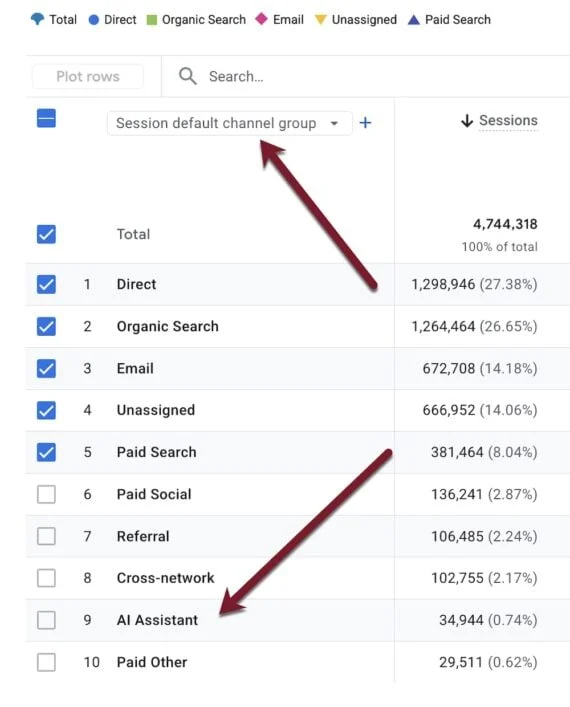
Google Analytics 4 (GA4) has introduced a significant new feature, the "AI Assistant" channel, launched in May, designed to specifically measure and analyze traffic originating from generative AI platforms. This development marks a pivotal moment in understanding the evolving landscape of digital traffic acquisition, as businesses and marketers now have a dedicated tool to quantify the impact of emerging AI technologies on their websites. Prior to this, traffic from AI chatbots and similar platforms was often miscategorized or lost within broader traffic segments, hindering accurate performance evaluation. The introduction of this channel aims to rectify that, providing granular insights into user journeys initiated through advanced AI interfaces.
The "AI Assistant" channel, as defined by Google’s "Analytics Help" portal, encompasses traffic generated from prominent conversational AI platforms, including but not limited to ChatGPT, Gemini, and Claude. This explicit categorization is crucial for marketers seeking to understand which AI tools are driving engagement and conversions. However, it is important to note what this channel does not include. Google has clarified that traffic originating from AI Overviews and "AI Mode" features within search engines will not be attributed to the "AI Assistant" channel. Instead, these clicks will continue to be reported under the "Organic Search" category, reflecting their integration into traditional search engine result pages. This distinction is vital for maintaining accurate reporting and avoiding confusion between distinct types of AI-driven traffic.
Navigating the New AI Assistant Channel in GA4
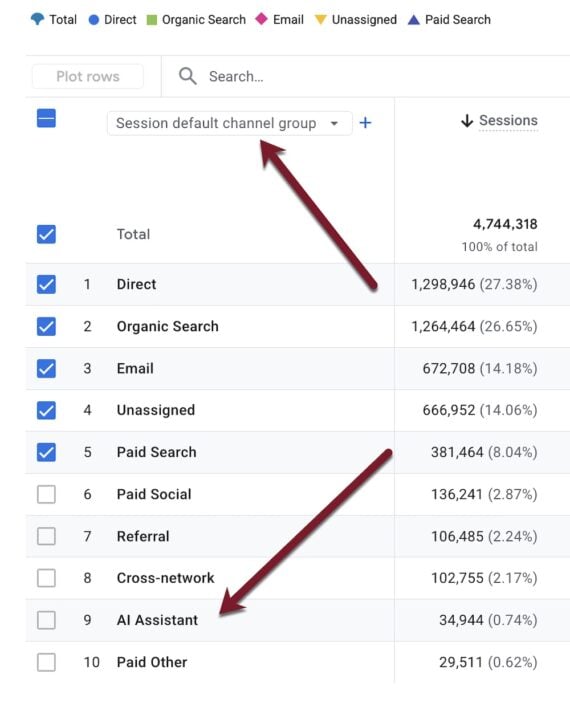
For users looking to access and analyze this new data, Google Analytics 4 provides a straightforward pathway. The "AI Assistant" channel can be found within the "Traffic Acquisition" reports. Navigate to Reports > Acquisition > Traffic acquisition. Within this section, users can select the "Session default channel group" dimension. Here, "AI Assistant" will appear as a distinct channel, alongside established categories such as Direct, Organic Search, and Paid Search.
This report offers a suite of performance metrics specifically for AI-assisted traffic. These include crucial indicators of user engagement such as the number of events per session, average time spent per session, and other key performance indicators (KPIs) that reflect how users interact with a website after arriving from an AI source. By monitoring these metrics, businesses can gauge the quality of AI-driven traffic and its contribution to overall website goals.
Identifying Landing Pages Driven by AI
Beyond simply tracking overall traffic volume, the "AI Assistant" channel provides valuable insights into which specific landing pages are being cited and driving clicks from AI platforms. This functionality is particularly important for content strategists and SEO professionals aiming to optimize their content for AI consumption.
To identify these AI-cited landing pages, users should navigate to Reports > Engagement > Pages and screens. This report typically displays a site’s highest-traffic pages. To isolate AI-driven traffic, users can apply a filter. Click "Add filter" at the top of the graph. The filter configuration requires selecting "Session default channel group" as the dimension, choosing "exactly matches" as the condition, and then inputting "AI Assistant" as the value. Applying this filter will reveal the pages on your site that are receiving the most traffic directly from generative AI platforms.
Comparing AI Traffic Performance Against Other Channels
A key advantage of the new "AI Assistant" channel is its capacity for comparative analysis. Marketers can now directly juxtapose the performance of AI-assisted traffic against other significant traffic sources, such as organic search, direct traffic, or paid advertising. This comparison allows for a nuanced understanding of how AI traffic influences user behavior and contributes to business objectives relative to other channels.
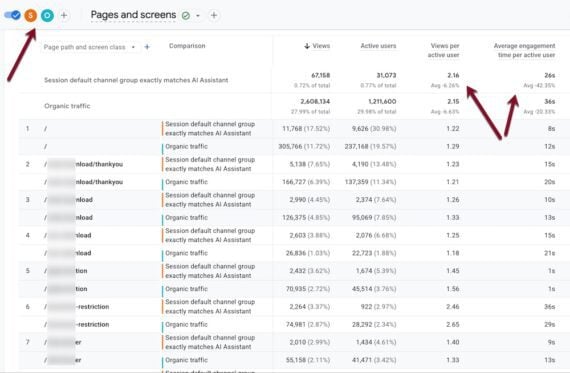
To perform such comparisons, users can return to the "Pages and screens" report. Instead of applying a filter, click the "Add comparison" button, located above the graph. Select "Create new" and follow the same steps as when applying a filter: choose "Session default channel group" as the dimension, "exactly matches" as the condition, and "AI Assistant" as the value. This will enable a direct comparison of key metrics between AI-assisted traffic and the site’s overall user activity.
For a more targeted comparison, such as contrasting AI traffic with organic search traffic, users can create a new comparison following the same steps. Once the AI Assistant comparison is set up, remove "All users" from the comparison view. This allows for a granular page-by-page analysis of engagement metrics across AI-assisted traffic and the chosen comparison channel (e.g., Organic Search). This feature is invaluable for understanding the unique engagement patterns and potential conversion pathways associated with AI-driven visitors.
In preliminary testing and observed data, there appears to be a divergence between traffic generated from top organic search pages and those cited by AI. This suggests that AI platforms may be surfacing content in ways that differ from traditional search engine result pages. To gain deeper insights into the specific prompts or queries that lead to AI citations, it is advisable to utilize specialized SEO tools like Semrush or Ahrefs. These tools can help identify the underlying prompts that are driving AI visibility for specific content.
Leveraging Regular Expressions for Granular AI Traffic Tracking
While the "AI Assistant" default channel offers a streamlined approach to categorizing AI traffic, it does not explicitly reveal the specific generative AI platforms contributing to this traffic. For those requiring a more granular breakdown, the use of regular expressions (regex) presents a powerful alternative for tracking individual AI traffic sources directly within GA4.
This advanced method involves creating custom dimensions or segments that can identify traffic originating from specific AI domains. This can be particularly useful for understanding the unique characteristics of traffic from platforms like ChatGPT, Gemini, Perplexity AI, or Claude.
To implement this, users can navigate to GA4’s Admin section and set up a new Custom Dimension. The dimension scope should be set to "Session," and the "Event Parameter" should be populated with "session_source." In the "Value" field, a carefully crafted regular expression can be pasted to capture traffic from various AI sources.
A comprehensive regex string that can identify traffic from a range of popular generative AI platforms includes:
.*chatgpt.com.*|.*perplexity.*|.*edgepilot.*|.*copilot.microsoft.com.*|.*openai.com.*|.*gemini.google.com.*|.*claude.ai.*|.*grok.x.ai.*
This regex string is designed to capture URLs containing common identifiers for these AI platforms. For instance, .*chatgpt.com.* will match any traffic where "chatgpt.com" appears in the URL. Similarly, .*gemini.google.com.* targets traffic from Google’s Gemini. By employing such regex patterns, users can create detailed reports that break down AI traffic by its specific source, offering a level of detail that complements the broader "AI Assistant" channel.
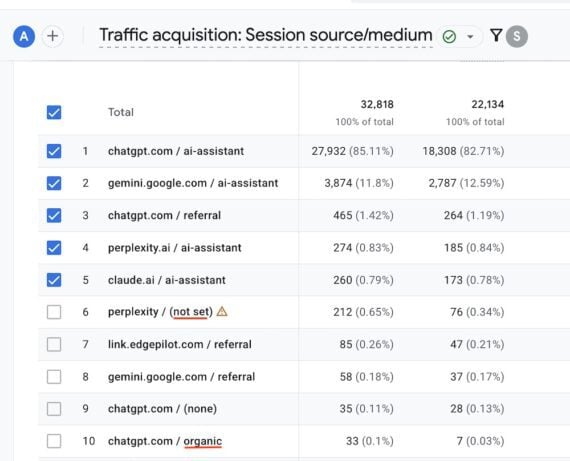
The results from using this regex approach can offer a fascinating perspective. In observed instances, traffic attributed to "Organic" and "(not set)" sources within the broader GA4 reporting often does not appear in the AI Assistant channel. This observation suggests potential data discrepancies or differing attribution models between these tracking methods. However, the regex method provides a clear breakdown, listing specific AI platforms such as chatgpt.com, gemini.google.com, perplexity.ai, and claude.ai, often with an "AI Assistant" medium, offering a robust view of AI-generated traffic.
Implications and Broader Context
The introduction of the "AI Assistant" channel in Google Analytics 4 is a strategic move by Google to adapt to the rapidly evolving digital landscape. As generative AI tools become increasingly integrated into user workflows, their impact on website traffic is becoming undeniable. This new feature empowers businesses to move beyond anecdotal evidence and gain concrete data on how AI is influencing discovery, engagement, and potentially, conversions.
Background and Chronology:
The development and launch of the "AI Assistant" channel can be seen as a natural progression in Google’s efforts to provide comprehensive web analytics. GA4 itself represented a significant shift from its predecessor, Universal Analytics, with a focus on event-based tracking and more sophisticated user journey analysis. The integration of AI traffic measurement is a direct response to the growing prominence of AI-powered search and content discovery.
- May [Year of Launch]: Google Analytics 4 officially launches the "AI Assistant" channel.
- Ongoing: Users begin accumulating data and exploring the capabilities of the new channel.
- Present: Businesses are actively analyzing their AI-assisted traffic performance, identifying key landing pages, and comparing AI-driven engagement with other traffic sources.
Supporting Data and Analysis:
While specific aggregate data on the overall volume of AI-assisted traffic is still emerging, the ability to track it is crucial for several reasons:
- Content Optimization: Understanding which content is being surfaced by AI allows for targeted content creation and optimization. This includes ensuring content is accurate, comprehensive, and easily digestible for AI models.
- Marketing Strategy Refinement: Marketers can assess the ROI of efforts aimed at AI visibility. If AI traffic is proving to be highly engaged or converting well, it may warrant increased investment in AI-friendly content and SEO strategies.
- Competitive Analysis: By monitoring AI traffic trends, businesses can gain insights into how their competitors are leveraging AI and adapt their own strategies accordingly.
- Understanding User Behavior: The way users interact with content discovered through AI may differ from traditional search. Analyzing metrics like time on site and engagement events can reveal these behavioral nuances.
Reactions from Related Parties (Inferred):
While direct quotes from third-party AI providers or industry analysts specifically commenting on this GA4 feature are not provided in the original text, the implications are clear:
- AI Platform Providers: The GA4 channel validates the growing influence of generative AI platforms, potentially encouraging further development and integration.
- SEO Professionals: This feature offers a new dimension to SEO, moving beyond traditional search engine optimization to include AI-driven discovery. It necessitates a deeper understanding of how AI models consume and present information.
- Digital Marketers: The ability to track and measure AI traffic provides a critical piece of the puzzle for comprehensive digital marketing attribution and performance analysis.
Broader Impact and Implications:
The introduction of the "AI Assistant" channel signifies a broader trend: the increasing integration of AI into the core of digital marketing and analytics. As AI continues to evolve, its role in how users discover information and interact with online content will only grow. GA4’s proactive approach in providing dedicated tracking for this emerging traffic source positions businesses to better navigate this evolving landscape.
This feature underscores the dynamic nature of the digital ecosystem and the continuous need for analytics tools to adapt. The distinction between AI Overviews and chatbot traffic, while seemingly technical, highlights Google’s nuanced approach to categorizing AI’s impact. This precision is vital for accurate data interpretation and strategic decision-making.
For businesses, this development is not just about tracking a new channel; it’s about understanding a new paradigm of information discovery. The ability to analyze AI-assisted traffic empowers them to remain competitive, adapt their strategies, and ultimately, better serve their audiences in an increasingly AI-influenced digital world. The ongoing analysis of this data will undoubtedly shape future marketing tactics and the very definition of digital acquisition in the years to come.

