
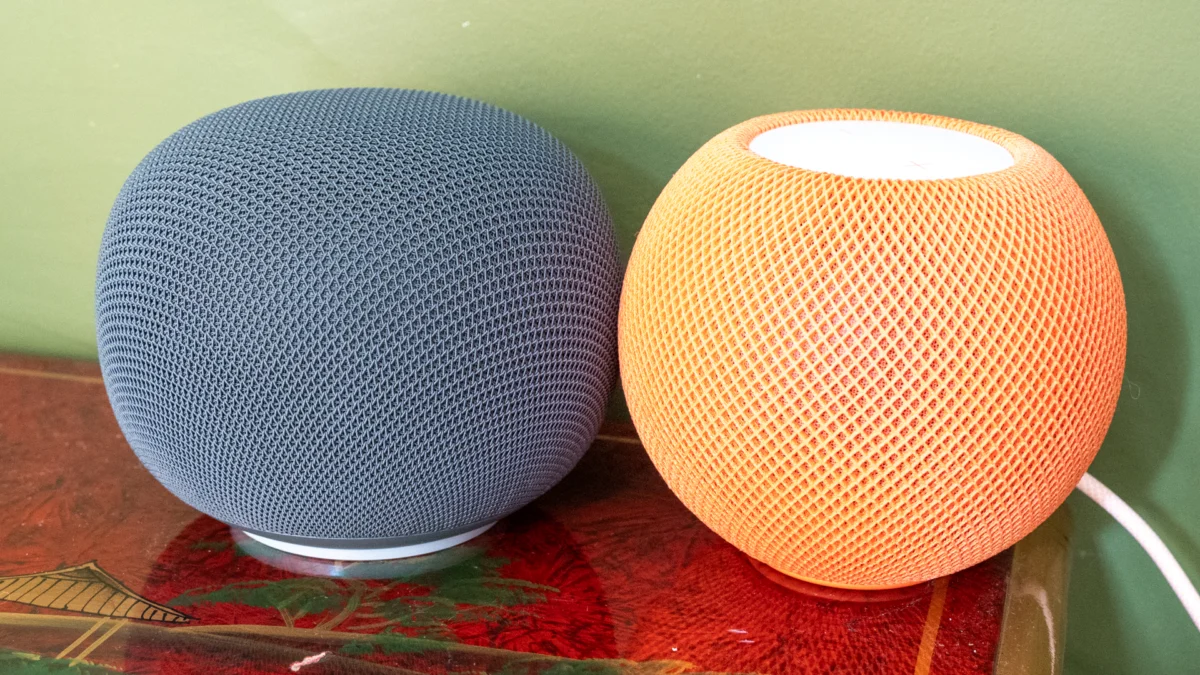
Google is significantly upgrading Gemini for Home, its intelligent assistant integrated into the Google Home ecosystem, with a suite of improvements aimed at bolstering its performance in everyday smart home scenarios. The latest update, detailed in a recent Google Home support document, focuses on enhancing Gemini’s ability to understand voice commands amidst background noise, accelerating response times for routine requests, and refining its multilingual capabilities. These enhancements are poised to make the smart home experience more reliable and intuitive for users.
The most impactful change is Gemini’s improved voice recognition in noisy environments. Previously, smart assistants often struggled to decipher commands when competing sounds, such as television chatter, kitchen appliances, or multiple conversations, permeated the room. This limitation could lead to frustration and a diminished user experience, particularly in high-traffic areas of the home. Google’s advancement in this area is designed to overcome these acoustic challenges, ensuring that Gemini can more consistently pick up and interpret user requests even in acoustically complex settings. This development is a direct response to user feedback and addresses a fundamental hurdle in the widespread adoption and seamless integration of voice-controlled smart home technology.
Beyond noise cancellation, the update addresses the critical aspect of responsiveness. Gemini for Home is now engineered to reduce latency for common commands like setting alarms and timers. In the fast-paced rhythm of daily life, even minor delays in executing simple tasks can interrupt workflow and reduce the perceived intelligence of an assistant. By shaving off milliseconds from these routine operations, Google aims to create a more fluid and immediate interaction, making Gemini feel more proactive and less like a passive listener. This focus on speed is crucial for building user trust and encouraging deeper engagement with the smart home platform.
The ongoing evolution of smart home technology is increasingly catering to diverse household needs, and Gemini’s enhanced multilingual understanding is a testament to this trend. The assistant can now comprehend commands spoken in up to three different languages concurrently. This feature is particularly beneficial for households with multilingual members, eliminating the need for users to switch their device’s language settings or adapt their speech patterns. This inclusivity fosters a more natural and accessible smart home environment, breaking down communication barriers and making technology more approachable for a broader demographic.
Furthermore, Google has refined how Gemini handles custom voice commands within its "Routines" feature. Routines allow users to string together multiple smart home actions with a single voice command, such as "Good morning," which might turn on lights, adjust the thermostat, and read the news. The update ensures that when a Routine is triggered by voice, or assigned to a specific speaker or display, Gemini will interpret the written commands within that Routine as if they were spoken directly to that particular device. This means that custom commands embedded in Routines will be executed more consistently, especially in homes equipped with multiple smart speakers and displays, leading to a more predictable and reliable automation experience.
Background and Chronology of Smart Assistant Development
The journey of smart assistants like Gemini has been marked by continuous iterative improvements, driven by advancements in artificial intelligence, natural language processing, and machine learning. Early iterations of voice assistants were often limited to basic command recognition and struggled with nuanced language or complex requests. The introduction of more sophisticated AI models, such as Google’s own LaMDA and now Gemini, has enabled assistants to understand context, engage in more natural conversations, and perform a wider array of tasks.
The concept of smart home integration gained significant traction in the mid-2010s with the rise of smart speakers like Amazon Echo and Google Home. Initially, these devices focused on simple voice commands for music playback, weather forecasts, and basic queries. However, as the underlying technology matured and user adoption grew, the focus shifted towards creating a more interconnected and automated home environment. The development of platforms like Google Home and Amazon’s Alexa Skills Kit allowed third-party developers to integrate their devices and services, leading to a proliferation of smart home gadgets.
The introduction of Gemini for Home represents a significant leap forward in Google’s strategy to unify its AI efforts across different platforms. Gemini, announced in late 2023, is Google’s most capable AI model, designed to be multimodal, meaning it can understand and operate across text, code, audio, image, and video. Its integration into Google Home signifies an effort to leverage this advanced AI to power a more intelligent and adaptable smart home experience. This update, rolling out progressively, builds upon the foundation laid by previous generations of Google Assistant, bringing a new level of sophistication to everyday smart home interactions. The timeline for these updates typically involves phased rollouts to ensure stability and gather user feedback, with the current enhancements likely being part of a broader strategy to solidify Gemini’s position as a leading AI for home automation.
Supporting Data and Technological Advancements
The improvements in Gemini for Home are underpinned by significant advancements in several key technological areas:
-
Speech Recognition in Noisy Environments: Google’s progress in this domain is likely driven by deep learning models trained on vast datasets of audio recorded in diverse and noisy environments. Techniques such as multi-channel audio processing, beamforming (where microphones focus on the direction of the speaker’s voice), and advanced noise suppression algorithms are crucial. Research in the field of robust speech recognition has shown that sophisticated neural networks can achieve significant improvements in Word Error Rate (WER) reduction, even in environments with high signal-to-noise ratios. For instance, studies have indicated that state-of-the-art models can reduce WER by over 20% in challenging acoustic conditions compared to previous generations.
-
Latency Reduction: Minimizing response time involves optimizing the entire pipeline from voice capture to command execution. This includes efficient on-device processing for initial command recognition, faster cloud-based natural language understanding, and optimized communication protocols between devices and cloud servers. Google’s edge computing capabilities and its global network of data centers play a vital role in reducing the physical distance data needs to travel, thereby decreasing latency. Innovations in model compression and efficient inference engines allow for faster processing of AI models on the assistant’s hardware.
-
Multilingual Understanding: The ability to process multiple languages simultaneously requires sophisticated language identification models and advanced multilingual natural language understanding (NLU) models. These models are trained on parallel corpora of text and speech across different languages. Techniques like transfer learning, where models trained on one language are adapted to others, are crucial. Google’s extensive experience in machine translation and its vast linguistic datasets provide a strong foundation for these capabilities. The development of unified models that can handle multiple languages within a single architecture represents a significant engineering feat.
-
Routine Command Interpretation: Enhancing the interpretation of custom commands within Routines involves improving the contextual understanding of the assistant. This means Gemini needs to not only understand the individual commands but also their relationship to the trigger and the specific device executing them. This likely involves more sophisticated state tracking and intent recognition algorithms that can infer the user’s precise intention based on the context of the Routine and the active device.
Official Statements and Developer Perspectives
While specific direct quotes from Google executives regarding this particular update are not available in the provided text, the article summarizes Google’s stated intent: "Google says the changes are designed to make the assistant more reliable for everyday smart home tasks." This highlights a strategic focus on practical usability and user satisfaction.
From a developer perspective, these improvements are significant. For those building devices and services that integrate with the Google Home ecosystem, a more reliable and responsive assistant means a better end-user experience for their own products. For example, a smart lighting manufacturer would benefit from users being able to reliably control their lights via voice, even if there’s background noise. The enhanced multilingual capabilities also open up broader market opportunities for device manufacturers, as their products can be more easily adopted by diverse user bases.
Broader Impact and Implications for the Smart Home Landscape
The enhancements to Gemini for Home signal a continued push by Google to refine the core functionalities of smart assistants, moving beyond novelty features to address practical pain points. The focus on robustness in noisy environments and speed for routine tasks suggests a maturation of the technology, where the emphasis is shifting from simply enabling smart home control to making that control seamless and intuitive.
The improved multilingual support is a crucial step towards global inclusivity in the smart home market. As smart home technology becomes more pervasive, catering to the linguistic diversity of users is not just a convenience but a necessity for widespread adoption. This could influence how other manufacturers approach their own smart assistant integrations, prioritizing multilingual support from the outset.
The refinements to Routines and device status reporting also indicate a commitment to improving the overall reliability and predictability of the Google Home platform. For users invested in the ecosystem, these seemingly small fixes can cumulatively lead to a significantly less frustrating and more enjoyable experience. This focus on reliability is vital for building long-term user loyalty in a competitive smart home market.
The update also touches upon broader implications for device management and user interface design within the Google Home app. The changes to how cameras and doorbells are identified (filled icons, accented tile colors) and how Matter switches report their status are examples of how Google is attempting to make its app more informative and easier to navigate. Similarly, the improvements to camera playback, particularly for Android users, address common frustrations with video buffering and availability, directly impacting the perceived value of smart security devices.
In essence, this update represents a strategic investment by Google in the foundational elements of its smart home offering. By addressing core usability challenges, Google aims to solidify Gemini’s role as an indispensable assistant in the modern home, fostering deeper user engagement and setting a higher bar for competitor offerings in the increasingly sophisticated smart home arena. The long-term impact will be a more accessible, responsive, and ultimately more useful smart home experience for millions of users worldwide.

