
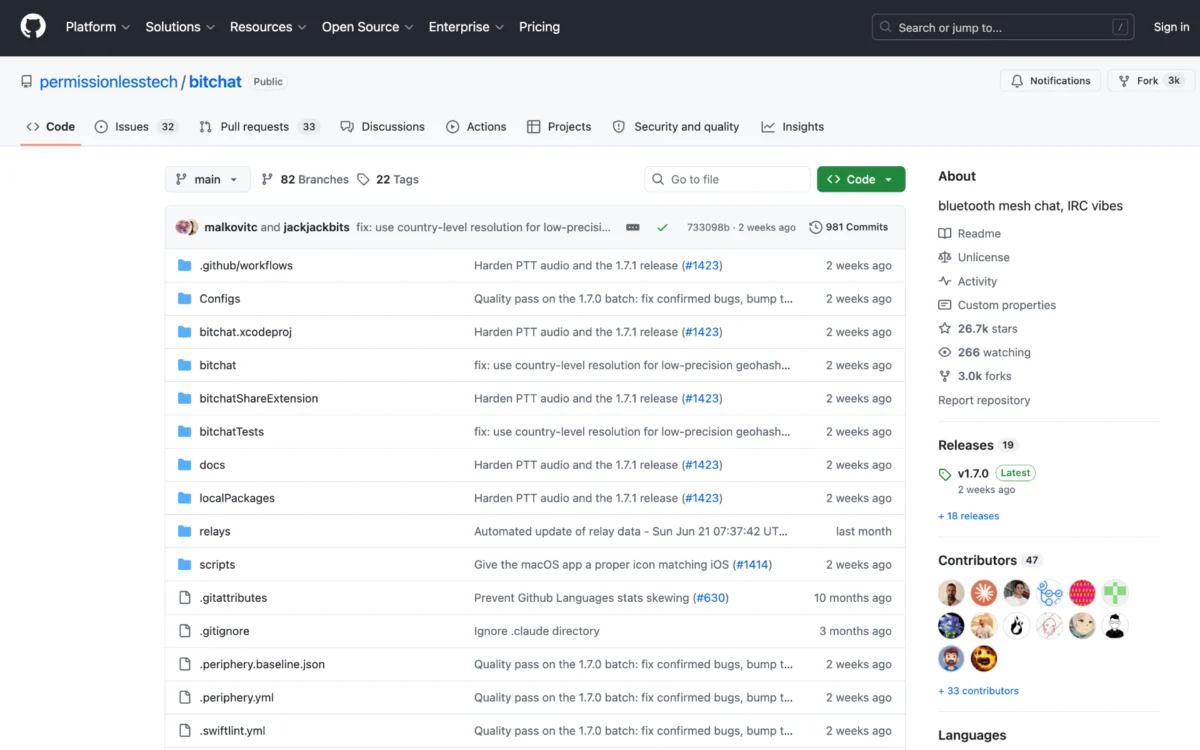
An unprecedented move by the Indian government to compel GitHub to remove repositories associated with Jack Dorsey’s offline, Bluetooth-powered messaging application, Bitchat, has ignited a fierce debate over the legal boundaries of digital censorship, the future of open-source software, and the fundamental rights to communication in an increasingly surveilled online landscape. The directive, revealed by Dorsey himself, signals a significant escalation in India’s efforts to control information flow, particularly in the context of burgeoning social unrest.
The controversy unfolded rapidly on Friday when Jack Dorsey, co-founder of Twitter (now X) and a vocal proponent of decentralized technologies, posted on X what he claimed was an official notice from India’s Ministry of Home Affairs. The notice, delivered to GitHub, demanded the restriction of access to three Bitchat repositories within a mere three-hour window. At the heart of the government’s argument was the assertion that Bitchat’s anonymous and decentralized architecture inherently facilitates unlawful activities, enables users to communicate undetected during state-imposed internet shutdowns, and obstructs lawful interception and traceability by authorities. This broad-brush approach, targeting the very design principles of an application rather than specific illicit content, immediately raised alarm bells among digital rights advocates and the open-source community worldwide.
The Crucible of Protest: India’s "Cockroach Movement"
This aggressive digital intervention is not occurring in a vacuum but is directly linked to a period of heightened social and political ferment in India. For weeks, New Delhi has been the epicenter of widespread student-led protests, dubbed the "cockroach movement," which have drawn thousands of young people to the streets. These demonstrations were sparked by allegations of widespread examination paper leaks, leading to demands for the resignation of Indian Education Minister Dharmendra Pradhan and broader calls for accountability and systemic reform.
The government’s response to these protests has included stringent measures to quell dissent, notably imposing restrictions on marches toward the parliament and, critically, implementing localized internet shutdowns. These digital blackouts, a tactic increasingly employed by Indian authorities, are intended to disrupt communication and coordination among protesters. However, such measures often have the unintended consequence of driving users towards alternative, resilient communication platforms. Local media outlets have widely reported that protesters, seeking to circumvent these internet restrictions, turned to offline messaging applications like Bitchat and Briar, recognizing their ability to function without traditional internet connectivity. This surge in usage, particularly Bitchat’s rapid adoption, appears to have directly prompted the government’s extraordinary takedown request.
Bitchat’s Unprecedented Surge and Technical Underpinnings
Bitchat, a brainchild of Jack Dorsey’s vision for decentralized communication, operates on a peer-to-peer (P2P) mesh network primarily utilizing Bluetooth technology. This design allows users in close proximity to communicate directly with each other, forming a localized network even in the complete absence of cellular data or Wi-Fi. Messages can hop from one device to another, effectively creating a resilient communication channel that bypasses traditional internet infrastructure. Its anonymous nature further enhances its appeal in environments where surveillance is a concern, as it lacks central servers that can log user data or be compelled to provide it to authorities.

The app’s popularity in India experienced an explosive growth spurt in the days leading up to the government’s notice. Market intelligence firm Sensor Tower provided compelling data to TechCrunch, illustrating this dramatic shift. Between July 17 and July 23, India accounted for approximately 85% of Bitchat’s global downloads, a stark contrast to the mere 1% recorded in the preceding 30 days. In a span of just five days, Bitchat was downloaded over 91,000 times in India, with daily downloads experiencing a staggering thirty-two-fold increase on July 19 alone. By Thursday, the app’s daily active users (DAU) in India soared to over 330,000, marking its highest recorded engagement level in the country. This data unequivocally demonstrates Bitchat’s pivotal role in enabling communication amidst the internet shutdowns, making it a clear target for authorities seeking to reassert control over information flow.
A New Frontier in Digital Censorship: Targeting Software Design
The Indian government’s latest directive marks a notable departure from its historical approach to content moderation and takedowns. Traditionally, authorities have relied on Section 69A of the Information Technology (IT) Act and the accompanying 2009 Blocking Rules to request the removal of specific unlawful content nationwide. These legal provisions generally focus on content deemed harmful or illegal, such as hate speech, misinformation, or content inciting violence. However, as Mishi Choudhary, founder of SFLC.in, a prominent Indian digital rights legal advocacy group, highlighted to TechCrunch, the current notice against Bitchat cites legal provisions that do not explicitly authorize the removal of an entire software project based on its fundamental operational design rather than any specific illegal content it might carry.
Choudhary noted that while the document bore the format of recent government takedown notices, its legal justification appeared to stretch the existing framework. Unlike typical takedown requests that identify URLs, posts, or messages containing illicit material, the Bitchat notice makes a sweeping claim: that the app’s inherent ability to function during network restrictions and without central servers inherently facilitates unlawful activity, making "lawful interception, attribution, and traceability" difficult. This argument effectively criminalizes the very architecture of a privacy-enhancing, resilient communication tool, setting a dangerous precedent for open-source development and digital innovation.
Digital Rights Under Siege: Legal and Ethical Concerns
The Internet Freedom Foundation (IFF), a New Delhi-based digital rights advocacy group, swiftly questioned the efficacy and legality of the government’s request. In a public statement on X, IFF pointed out the inherent futility of deleting a GitHub repository in terms of actually disabling the application. "The order also fails on its own terms as deleting a repository does not delete the application from any phone that carries it, and the mesh keeps functioning without servers," the group asserted. Crucially, IFF highlighted a more insidious consequence: "What the takedown actually prevents is scrutiny of the underlying code." By removing the open-source code, the government not only attempts to stifle future development but also hinders independent security audits and public understanding of the software’s mechanisms, thereby diminishing transparency.
Raman Chima, global program director at the Association for Progressive Communications, a worldwide digital rights network, echoed these concerns. He emphasized that the apparent notice went beyond merely targeting the messaging service itself; it sought to eradicate its open-source code from GitHub. "They’re [the Indian government] not just targeting the designated service provider, but they’re trying to say that open-source development of this type of product… should not occur," Chima articulated. This sentiment underscores a broader attack on the principles of open collaboration and the free dissemination of code, cornerstones of modern software development and innovation.
Adding another critical dimension, Namrata Maheshwari, Asia Pacific policy manager and encryption policy lead at digital rights group Access Now, stressed the profound human rights implications. Blocking an offline messaging platform during internet restrictions, she argued, risks transforming partial shutdowns into a complete "communication blackout" that violates fundamental rights. Maheshwari asserted that protesters in any democracy possess the inherent right to communicate privately and coordinate peacefully. The ability to use tools like Bitchat becomes paramount when traditional communication channels are deliberately throttled by the state, underscoring the vital role these technologies play in upholding civil liberties.

GitHub’s Stance and the Transparency Challenge
GitHub, the world’s largest platform for software development and version control, finds itself at a crucial juncture. As a repository for millions of open-source projects, it has often navigated complex demands from governments worldwide. The company maintains a public repository of government takedown requests, a transparency initiative designed to inform users about content removals. However, as of Friday, this public record did not contain any recent requests related to Bitchat, leaving the immediate status of the Indian government’s directive unclear.
When queried about the apparent notice, GitHub referred to its general policy on government takedown requests. Rose Coogan, the company’s principal online safety counsel, stated, "When we receive a complete government takedown request, we notify the affected account owners and give them an opportunity to appeal. We share every government takedown request we take action on publicly." This statement implies that if GitHub were to comply with the Indian government’s request, it would likely inform Bitchat’s developers and subsequently publish the request in its transparency report. The absence of such an entry suggests either that GitHub has not yet acted on the request, is in the process of reviewing it, or that the specific repositories in question were not the primary ones maintained by Dorsey’s team or the community. The Indian Home Ministry, despite requests for comment, remained silent on the matter.
Broader Implications: A Global Battle for Digital Autonomy
The attempt to remove Bitchat’s open-source code from GitHub transcends a mere content dispute; it represents a significant ideological and technological battle. If successful, it would set a concerning precedent, potentially empowering governments to target any software whose design inherently resists state surveillance or censorship, regardless of whether it is used for illicit activities. This could have chilling effects on the development of privacy-preserving technologies and on the open-source community, which thrives on the free exchange and collaborative improvement of code.
India has a documented history of internet shutdowns, often leading the world in the frequency of such disruptions. These shutdowns, while justified by authorities as necessary for maintaining law and order or preventing the spread of misinformation, are widely criticized by human rights organizations for stifling dissent and impacting economic activity. The Bitchat episode highlights the cat-and-mouse game between governments seeking to control digital spaces and developers creating tools to circumvent such control. It also underscores the growing tension between national sovereignty claims over digital infrastructure and the global, borderless nature of the internet and open-source development.
Furthermore, this incident brings into sharp focus the debate around encryption and decentralized technologies. While governments often express concerns about these tools being used by malicious actors, proponents argue that they are essential for protecting privacy, enabling free speech, and fostering secure communication for journalists, activists, and ordinary citizens in oppressive regimes. The targeting of Bitchat, a tool designed for resilience rather than specifically for illegal acts, suggests a broader governmental discomfort with technologies that inherently limit state control.
The outcome of this standoff between the Indian government and the open-source community, with GitHub caught in the middle, will have far-reaching consequences. It will test the resilience of open-source principles against state power, potentially redefine the legal parameters for regulating software, and ultimately influence the future of digital freedom in one of the world’s largest democracies. As the "cockroach movement" continues to challenge the status quo on the streets, the digital battle over communication tools like Bitchat will undoubtedly shape the narrative of protest and state control in the digital age.

