
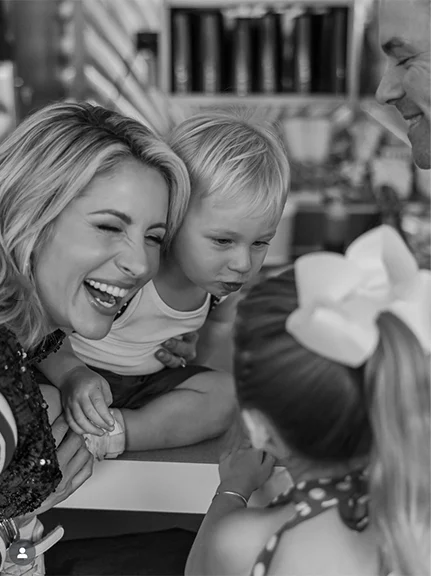
ESPN personality Laura Rutledge has openly shared her distinctive philosophy on parenting, emphasizing humor, flexibility, and a resolute refusal to take herself too seriously, a stance that resonates deeply with working mothers navigating the complexities of career and family life. Rutledge, a prominent figure known for her engaging on-air presence and lighthearted approach to her professional environment, reveals that these very traits are the bedrock of her success and well-being in motherhood, particularly with her two children, Reese and Jack, and their family puppy. Her insights, initially shared through personal reflections, provide a valuable lens through which to view the challenges and unexpected joys of contemporary parenting, advocating for authenticity over an often-unattainable ideal of perfection.
Background: A Demanding Career Meets the Realities of Family Life
Laura Rutledge has carved out an impressive career at ESPN, becoming one of the network’s most recognizable and versatile broadcasters. Her roles, spanning college football, NFL, and baseball coverage, demand rigorous preparation, extensive travel, and an unwavering professional demeanor. This high-pressure environment contrasts sharply with the unpredictable world of raising young children, a dichotomy that many working parents, particularly mothers, grapple with daily. Rutledge’s public persona, characterized by a playful sense of humor evident in her well-known on-set pranks and self-deprecating wit, has endeared her to audiences. This inherent goofiness, as she describes it, is not merely a professional tool but a fundamental aspect of her personality that she consciously deploys to spread joy and navigate life’s inevitable difficulties, including the demanding journey of motherhood.
The decision for a public figure to share such personal reflections offers a rare glimpse behind the curated facade often presented by media personalities. In an era where social media frequently showcases idealized versions of family life, Rutledge’s candidness about the "unpredictable chaos" and the "goofy" aspects of her daily existence provides a relatable and refreshing counter-narrative. This transparency is particularly impactful for the millions of working mothers globally who often feel immense pressure to maintain an image of effortless competence in both their professional and personal spheres.
The Philosophy: Embracing Imperfection for Parental Well-being
At the core of Rutledge’s parenting philosophy is the conviction that true joy in motherhood stems from letting go of rigid expectations and embracing the spontaneous, often messy, reality of raising children. This perspective stands in stark contrast to societal pressures that frequently promote meticulously planned schedules, perfectly executed routines, and an illusion of complete parental control. For Rutledge, the unpredictability inherent in parenting, far from being a source of frustration, has become a wellspring of laughter and cherished memories.
Child development experts and psychologists specializing in family dynamics frequently highlight the detrimental effects of striving for unattainable perfection in parenting. Research indicates that parental stress and burnout are significant issues, often exacerbated by unrealistic self-expectations and external societal pressures. A study published in the Journal of Child and Family Studies noted that parental perfectionism is often linked to higher levels of stress, anxiety, and parental dissatisfaction. Rutledge’s advocacy for flexibility and humor aligns with recommendations from mental health professionals who encourage parents to adopt a more compassionate and realistic approach to their roles, recognizing that adaptability is a crucial skill for both parents and children.
Key Tenets of Rutledge’s Approach: Learning from Life’s Unscripted Moments
Rutledge articulates her philosophy through several key principles, each illustrated by relatable anecdotes that underscore the value of authenticity and humor in parenting.
1. When the Game Plan Falls Apart: The Power of Flexibility
In her professional life, Rutledge approaches broadcasts with meticulous preparation, understanding that readiness provides a significant advantage. Naturally, she initially attempted to apply this same level of planning to her morning routines with Reese and Jack. However, children, by their very nature, do not adhere to scripts. Rutledge recounts a morning where her perfectly mapped-out schedule was derailed by her daughter’s insistence on wearing a "sparkle cape" to school and her son’s impromptu decision to try potty training. What began as a deviation from the plan transformed into a "favorite part of the day" with an unplanned "potty training cheer."
This anecdote powerfully illustrates a universal parental truth: control is often an illusion. Sociologists and family therapists consistently observe that a significant source of parental stress stems from the futile attempt to manage every detail of a child’s life. The mental load on mothers, in particular, often involves anticipating and planning for every contingency, leading to exhaustion when plans inevitably go awry. Rutledge’s experience underscores the importance of flexibility and humor as far more valuable tools than any perfectly executed schedule. When parents loosen their grip on how things "should" go, the unplanned moments often become the most memorable and joyful. This adaptability is not just beneficial for parental well-being but also models resilience for children, teaching them to navigate unexpected situations with grace and a positive attitude.
2. When Your Kid Becomes Your Most Honest Critic: Embracing Authenticity
Children possess an unfiltered honesty that can be both disarming and profoundly insightful. Rutledge cherishes her daughter Reese’s candidness, noting her vocal and confident nature. She recalls an instance where, after spending time on her hair, Reese innocently asked, "Is it supposed to look like that?" Rather than feeling offended, Rutledge found herself laughing. She recognized that her daughter wasn’t being critical but genuinely seeking clarification, highlighting how children often see right through adult pretenses.
This experience sheds light on the developmental stage where children are acutely observant and truthful, often mirroring back the reality that adults might attempt to mask. Psychologists emphasize the importance of parental authenticity in fostering secure attachment and open communication with children. When parents can laugh at themselves and acknowledge their imperfections, they model self-acceptance and demonstrate that it’s okay not to be perfect. This approach not only makes parenting "a whole lot more fun," as Rutledge states, but also builds a foundation of trust and genuine connection, allowing children to feel safe in expressing their own truths.
3. When Your Pre-Mom Identity Meets Your Mom One: The Art of Integration
Before motherhood, Rutledge’s professional life at ESPN involved presenting a polished, camera-ready persona. With the arrival of her children, these two worlds inevitably collided, leading to humorous and enlightening moments. She describes prepping for broadcasts while wiping biscuit crumbs off her pants, cleaning up puppy pee, or rushing out the door with a toy microphone instead of her keys. The "put-together Laura" and the "mom Laura" merge in often hilarious and unexpected ways.
The challenge of integrating professional and parental identities is a central theme for working mothers globally. Statistics from the U.S. Department of Labor consistently show that mothers are a significant portion of the workforce, and many struggle with the societal expectation to keep their "work self" and "mom self" perfectly separate. This pursuit of a pristine work-life "balance" often leads to exhaustion and feelings of inadequacy. Rutledge’s experience validates the reality that these worlds are bound to crash into each other, and attempting to maintain strict boundaries is often an unsustainable endeavor. Her decision to simply laugh when these collisions occur is a powerful message about embracing integration over rigid separation. It normalizes the messiness of modern life and encourages other working parents to find joy in the authentic, unpolished moments that define their dual roles.
4. When Your Kid Gets Silly in Public: Prioritizing Connection Over Perception
The joy of childhood often manifests in spontaneous silliness, a trait Rutledge’s daughter Reese exemplifies with her impromptu dance parties, even in public spaces. Rutledge recounts an instance at an airport where Reese began dancing by their gate. Instead of feeling embarrassed or attempting to rein her in, Rutledge joined her daughter in twirling and giggling. While people undoubtedly stared, Rutledge states that she "didn’t care" because the joy on Reese’s face was far more valuable than maintaining an image of composure.
This anecdote highlights a critical aspect of conscious parenting: choosing connection with children over external validation or societal expectations. Developmental psychologists stress the importance of play and shared joyful moments in strengthening parent-child bonds and fostering a child’s sense of security and self-worth. In a society that often prioritizes decorum and public perception, Rutledge’s choice to engage in a silly, public moment sends a powerful message. Children will remember the moments of shared laughter and connection, not whether their parents looked "cool" or "composed." This principle encourages parents to embrace spontaneity and prioritize the emotional well-being and happiness of their children above the fleeting judgments of strangers.
5. When Your Kid Outsmarts You: The Humility of Parental Growth
As an ESPN analyst, Rutledge spends her days dissecting complex football plays and analyzing coaching strategies, skills that might lead one to believe she could easily stay one step ahead of her children. However, she readily admits this assumption was incorrect. She and her husband, Josh, recently found themselves "crying-laughing" after Reese managed to completely orchestrate her own bedtime routine, leaving them wondering how their daughter had so effectively taken control.
This experience is a testament to the cognitive development and evolving cleverness of children. As children grow, they become astute observers of parental patterns, testing boundaries and developing their own strategies for getting what they want. While these moments can sometimes be challenging, Rutledge finds immense joy in them, recognizing the humor in being outsmarted by someone who "can’t reach the top shelf yet." This perspective fosters humility in parenting, reminding adults that the journey of raising children is also a journey of continuous learning and adaptation for the parents themselves. It encourages a playful approach to power dynamics within the family, finding amusement rather than frustration when children demonstrate their growing independence and ingenuity.
Broader Implications and Impact
Laura Rutledge’s candid sharing of her parenting experiences and philosophy extends beyond mere personal anecdotes; it offers significant broader implications for the discourse surrounding modern parenting, particularly for working mothers and public figures.
Role Model for Working Parents: By openly discussing the challenges and triumphs of integrating a high-profile career with active parenting, Rutledge serves as a relatable role model. Her willingness to showcase the less-than-perfect moments normalizes the struggles faced by millions of parents who juggle professional responsibilities with family demands. This normalization can reduce feelings of isolation and inadequacy, fostering a sense of community among those navigating similar paths.
Mental Health and Parental Well-being: The emphasis on humor, flexibility, and not taking oneself too seriously directly contributes to improved parental mental health. By encouraging parents to let go of unrealistic expectations and embrace the chaos, Rutledge’s philosophy offers a tangible strategy for reducing stress, anxiety, and burnout. This approach aligns with therapeutic recommendations for fostering resilience and cultivating joy in demanding life stages.
Challenging Idealized Media Portrayals: In an age dominated by carefully curated social media personas, Rutledge’s transparency offers a refreshing counter-narrative. Her willingness to share unvarnished moments of motherhood challenges the often-idealized portrayals of family life presented by celebrities and influencers. This authenticity is crucial for fostering a more realistic and healthy understanding of parenting, moving away from aspirational perfection towards relatable reality.
Fostering Genuine Child-Parent Connection: At its core, Rutledge’s philosophy prioritizes genuine connection and shared joy over adherence to strict rules or external judgments. This focus on authentic interaction, play, and mutual understanding is vital for developing strong, secure attachments between parents and children, laying the foundation for healthy emotional development and resilience in children.
In conclusion, Laura Rutledge’s insights into motherhood, while rooted in her personal experiences, offer a universally applicable framework for approaching parenting with greater ease, joy, and authenticity. Her message—that learning to enjoy parenting more begins by not taking oneself too seriously—is a powerful reminder that flexibility, humor, and a willingness to embrace imperfection are not just coping mechanisms, but essential ingredients for a fulfilling and connected family life in the 21st century. As public figures increasingly share their personal lives, Rutledge’s approach stands out for its profound relatability and its potential to positively influence countless parents seeking to navigate the beautiful, often messy, journey of raising children.

