
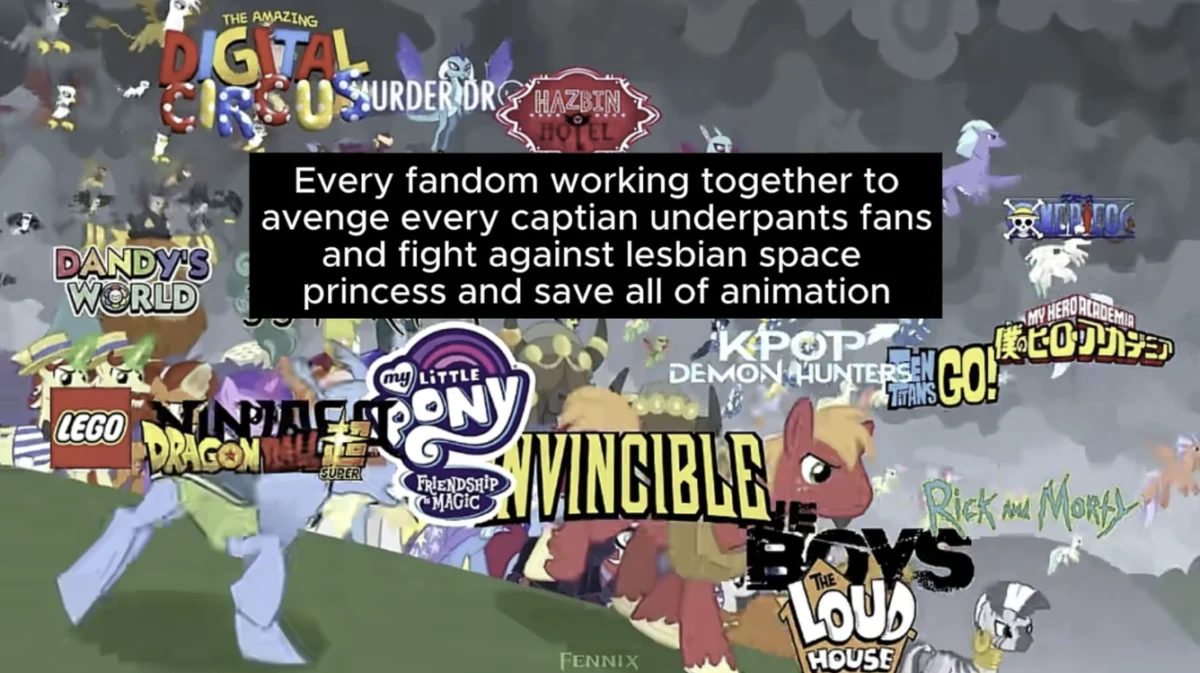
The digital landscape of August 2026 was defined by a rare and unexpected cultural phenomenon known as the Lesbian Space Princess Fandom War, alternatively titled The Great Fandom Truce of 2026. This event, which primarily unfolded across the social media platform TikTok, saw a massive coalition of disparate and traditionally adversarial online fanbases unite for a singular purpose: the collective mockery and rejection of the 2025 Australian adult animated science-fiction comedy film, Lesbian Space Princess. What began as isolated reviews of a niche regional film rapidly escalated into a global meta-meme, illustrating the power of "negative solidarity" in the modern social media era.
The Cinematic Catalyst: Production and Initial Reception
To understand the scale of the 2026 "Truce," one must examine the origins of the film at the center of the controversy. Lesbian Space Princess was released in 2025, written and directed by the filmmaking duo Emma Hough Hobbs and Leela Varghese. Produced in Australia, the film was conceived as a subversive, high-energy science-fiction comedy aimed at an adult audience. The narrative follows Princess Saira, an introverted and socially anxious lesbian residing on the planet Clitopolis. The plot is set in motion when her ex-girlfriend, Kiki, is abducted by a villainous group known as the "Straight White Maliens," forcing Saira into an intergalactic rescue mission.
Upon its initial limited release and festival circuit run in late 2025, the film was a critical darling. It achieved a rare 98% approval rating on the review aggregator Rotten Tomatoes and secured the prestigious Teddy Award at the Berlin International Film Festival—an accolade dedicated to films with LGBTQ+ themes. Critics praised its bold aesthetic, unapologetic humor, and its subversion of traditional space opera tropes. However, during this period, the film remained largely confined to the Australian and New Zealand markets, maintaining a quiet, high-brow reputation within the indie animation scene.
The Netflix Catalyst and the Shift to Viral Backlash
The transition from critical success to internet infamy began in mid-August 2026. Following a licensing agreement, Lesbian Space Princess was added to Netflix’s streaming library in several major international regions, including North America and Europe. The platform’s recommendation algorithms pushed the film to a broad demographic of viewers who were largely unfamiliar with the film’s specific brand of Australian satirical humor or its indie origins.
The backlash was almost instantaneous. By August 21, 2026, clips from the film began circulating on TikTok, where users stripped the movie of its critical context and focused on its most provocative elements. One of the first major salvos was fired by TikTok user @xtoofarx, who uploaded a snippet of the film’s opening sequence with the caption, "Possibly the worst way to start your movie." The video resonated with the platform’s "cringe culture" appetite, amassing 5.4 million views and over 535,000 likes in a 72-hour window.
The criticism leveled against the film was multifaceted. Many viewers found the humor "terminally online," a derogatory term used to describe dialogue and jokes that rely heavily on internet subcultures, Tumblr-era tropes, and hyper-specific political jargon. The film’s nomenclature—specifically "Clitopolis" and "Straight White Maliens"—became focal points for derision, with many users characterizing the writing as "forced" or "on-the-nose."
The Great Fandom Truce: Mechanics of the Meme
As the wave of negativity intensified, a secondary meme emerged that would define the event. Users noticed that the dislike for Lesbian Space Princess was so universal that it transcended the usual boundaries of online fandom rivalries. Historically, fanbases for properties like Hazbin Hotel, Five Nights at Freddy’s (FNAF), and various shonen anime are known for frequent "wars" over shipping, power-scaling, or general aesthetic preferences.
In a surprising turn, members of these communities began posting content depicting their respective fandoms "shaking hands" or signing fictional peace treaties. The central motif of this trend involved using characters from different media extending their hands toward the viewer or each other, accompanied by the solemn catchphrase, "Just this once."
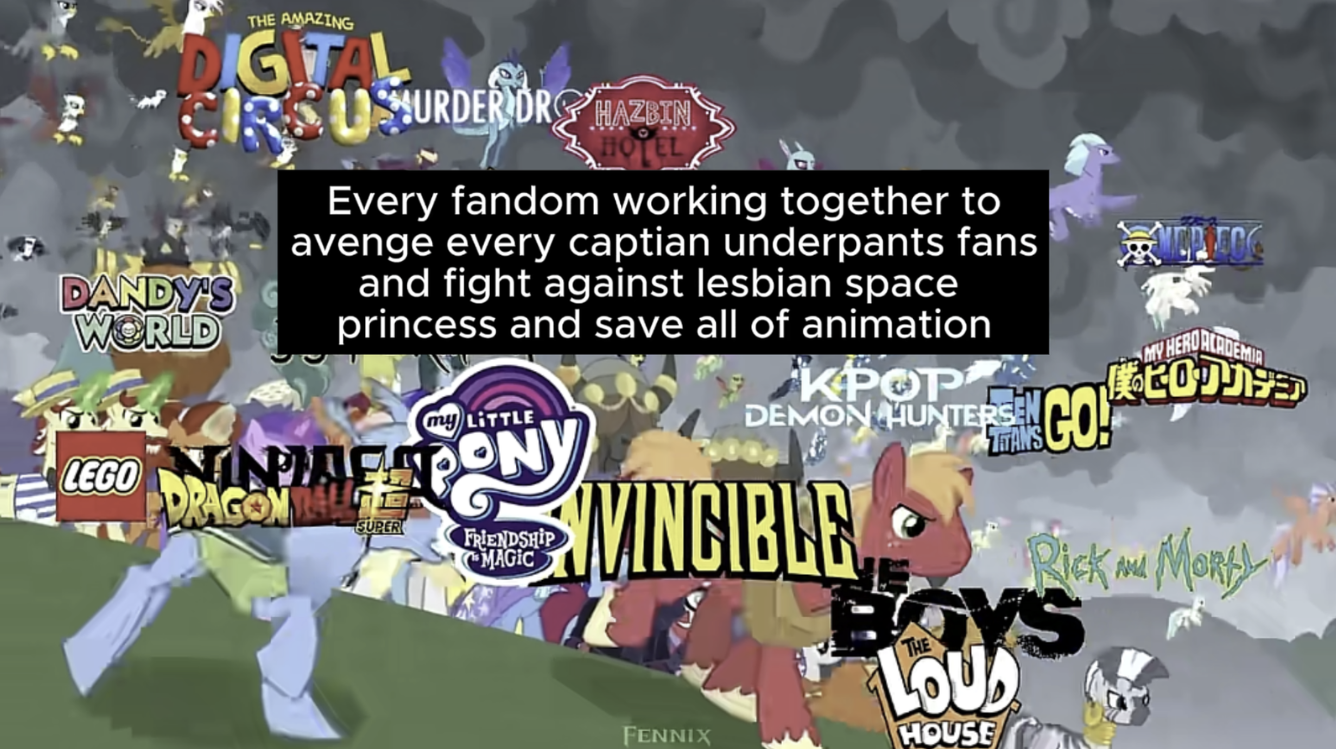
This format was a direct spiritual successor to the 2010s-era "Fandoms Grab Your Weapons" meme from Tumblr, but with a cynical twist: instead of uniting to defend their interests, they were uniting to attack a common perceived "enemy." On August 22, 2026, the trend reached its zenith when @blitzing00 posted a high-effort video edit showing a montage of characters from Hazbin Hotel, Invincible, and Dragon Ball Z teaming up. The video, captioned "We need to team up to stop this… Even HB fans don’t want this," garnered 1.5 million views, signaling that even fandoms often accused of being "cringe" themselves were distancing themselves from the film.
Chronology of the Online "Pile-On"
The timeline of the Fandom War reveals the rapid-fire nature of modern digital discourse:
- August 15–19, 2026: Lesbian Space Princess appears on Netflix in international territories. Early "hate-watching" begins in small circles.
- August 21, 2026: Viral clips reach the TikTok mainstream. The "cringe" narrative is established.
- August 22, 2026: The "Truce" meme is born. TikTok users @blitzing00 and @fennix4007 (using My Little Pony footage) solidify the crossover format. The hashtag #LesbianSpacePrincess begins trending globally.
- August 23, 2026: Meta-commentary begins. Influencers like @pinoypins publish "situation summaries," explaining the lore of the "Great Fandom Treaty" to casual observers. Total views across related hashtags exceed 50 million.
- August 24, 2026: The discourse broadens to include sports and music fandoms, with users joking that "the Swifties and the Kanye fans have finally found common ground."
Political Polarization and the "Woke Slop" Discourse
While much of the mockery was centered on the film’s perceived lack of comedic timing, the "war" also took on a political dimension. Right-wing social media commentators and anti-"woke" influencers seized upon the film as a primary example of "agenda-driven media." The "Straight White Maliens" antagonist group was frequently cited as evidence of anti-white or anti-heterosexual sentiment in modern animation.
This segment of the backlash amplified the film’s visibility, as it moved from being a simple "bad movie" to a symbol of a larger cultural struggle. Detractors used the term "slop"—a slang term for low-quality, high-volume content—to describe the film, suggesting it was produced solely to satisfy diversity quotas rather than for artistic merit. This narrative often ignored the film’s high critical ratings and award-winning status, focusing instead on the aesthetic and linguistic choices that grated against mainstream internet sensibilities.
Analysis of the Critical-Audience Divide
The Lesbian Space Princess Fandom War serves as a significant case study in the widening gap between professional critics and the general internet public. The 98% Rotten Tomatoes score suggests that, within the context of independent cinema and queer storytelling, the film was successful in its goals. Critics likely appreciated its subversion of genre and its specific, high-concept satire.
Conversely, the TikTok audience—dominated by Gen Z and Alpha users—evaluated the film through the lens of "vibe" and "relatability." In an era where "cringe" is one of the most severe social penalties online, the film’s earnestness and its roots in 2010s-era Tumblr humor were seen as outdated. The "Truce" was, in many ways, a performative act of "coolness," where fandoms that are often the target of mockery (such as My Little Pony or Hazbin Hotel) could deflect that negative attention onto a newer, more vulnerable target.
Broader Impact and Implications for Independent Animation
The fallout of the 2026 Fandom War has raised concerns among independent animators regarding the risks of global distribution. While Netflix provides an unparalleled reach, it also exposes niche projects to audiences they were never intended for. For Emma Hough Hobbs and Leela Varghese, the "war" presented a paradox: their film achieved a level of global recognition that most indie projects never reach, yet that recognition was rooted in near-universal derision.
Industry analysts suggest that this event may lead to a "chilling effect" in the naming and marketing of independent films, as creators attempt to avoid the specific linguistic triggers that lead to "cringe" categorization. Furthermore, the event demonstrated that "fandom" is no longer just about the love of a property, but about the collective navigation of digital social status. The "Great Fandom Truce of 2026" remains a landmark moment in social media history, proving that nothing brings the internet together quite like something it collectively loves to hate.

