
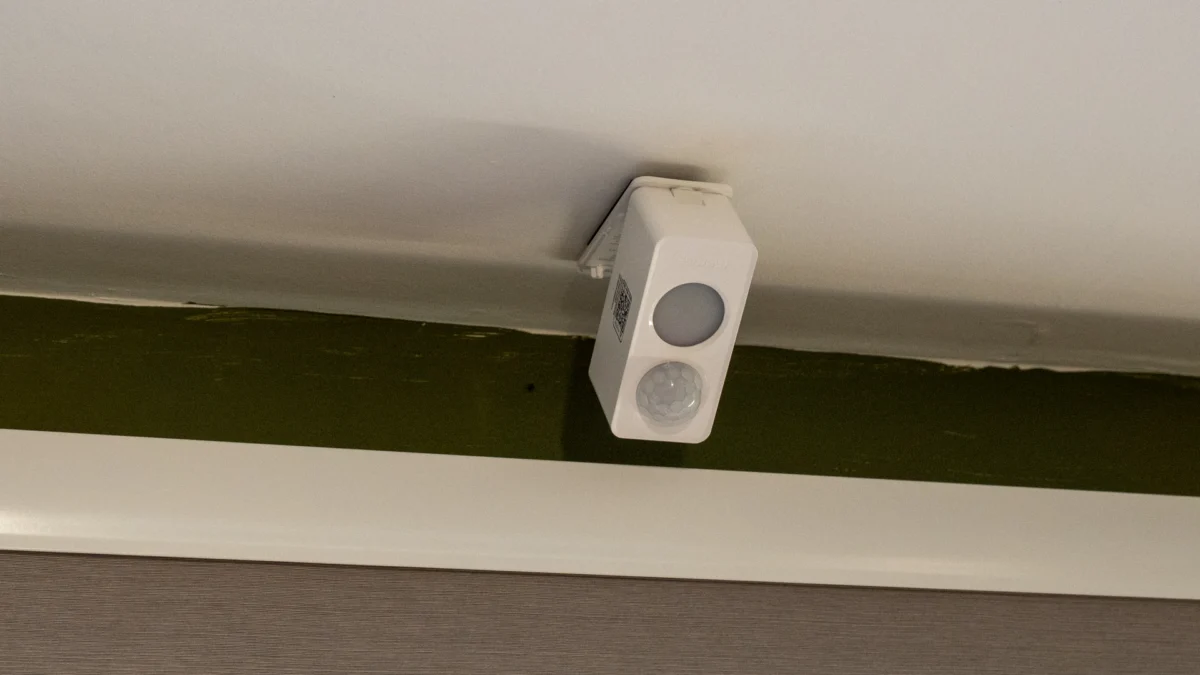
The Meross Thread Smart Presence Sensor MS605 emerges as a technically ambitious device in the rapidly evolving smart home landscape, offering a potent blend of dual-sensor technology and Matter-over-Thread compatibility. While promising unparalleled flexibility with its multi-zone detection and light-sensing capabilities, its advanced feature set necessitates a significant investment in user configuration, potentially deterring those seeking a simple plug-and-play experience. This in-depth review explores the sensor’s capabilities, the intricacies of its setup, its performance in real-world scenarios, and its place within the broader ecosystem of smart home devices.
At its core, the MS605 is engineered to overcome the limitations of traditional motion sensors. It integrates both Passive Infrared (PIR) and millimeter-wave (mmWave) radar technologies, a combination designed to enhance detection accuracy and reduce false positives. The PIR sensor is adept at detecting immediate movement, while the mmWave radar excels at identifying the subtlest of human presence, such as breathing or slight shifts in posture, even when stationary. This dual-sensor approach is further augmented by the ability to divide the detection area into three distinct zones, allowing for granular control over automation triggers based on proximity. Adding to its versatility, the MS605 also incorporates a light sensor, enabling automations that respond to ambient light conditions, such as turning on lights when motion is detected and the room is dark.

However, the path to unlocking this advanced functionality is not without its challenges. The initial setup process, which requires a Bluetooth connection to the Meross app, can be irksome. The Bluetooth connection is intentionally designed to conserve battery life, meaning that any adjustment to the sensor’s settings necessitates a manual button press on the device itself to re-establish the link. This recurring step, while a nod to power efficiency, can become a point of frustration for users frequently tweaking their smart home automations.
The Meross app provides a comprehensive suite of configuration options, reflecting the sensor’s advanced capabilities. An automatic mode is intended to simplify the calibration process. Users are instructed to activate any potential sources of interference, such as fans or air conditioning units, then leave the room, allowing the software to analyze the environment and adapt. The theory is that the sensor will learn to ignore these background disturbances. Yet, as user experiences suggest, this automated calibration is not always successful, often requiring manual intervention to achieve reliable detection.
For those instances where the automatic setup falters, the Meross app offers two primary avenues for refinement. Users can review a log of detected events and manually flag false positives, thereby training the sensor over time. Alternatively, and perhaps more powerfully, the app allows for manual adjustment of sensitivity for each of the three detection zones. This granular control permits users to fine-tune the sensor’s responsiveness to specific areas within its field of view, a feature rarely found in more basic motion sensors.

The interplay between the PIR and mmWave sensors can also be configured. The default setting prioritizes mmWave detection followed by PIR confirmation. However, users can opt for a PIR-first approach, where the PIR sensor initiates detection, and the mmWave sensor then confirms sustained presence. Furthermore, for environments where PIR detection might be problematic or unnecessary, the sensor can be configured to rely solely on mmWave technology. This adaptability is crucial for diverse use cases, from dimly lit hallways to busy living rooms.
The ability to segment the detection area into three independent zones represents a significant leap in presence sensing. This feature enables sophisticated automations. For example, an automation could be set to turn on all the lights in a room when motion is detected in the furthest zone, while only activating specific task lighting or climate control when presence is confirmed in a closer zone, such as a desk or a seating area. This level of nuanced control allows for a more intuitive and energy-efficient smart home experience.
Beyond motion and presence, the MS605’s light sensor provides another layer of automation potential. This allows for scenarios where lighting is adjusted not only based on occupancy but also on the ambient light levels. For instance, lights could be programmed to turn on only if motion is detected and the room is below a certain lux threshold, further optimizing energy usage and user comfort.

The integration of Matter over Thread is a key selling point for the Meross MS605, positioning it as a future-proof device compatible with a wide array of smart home ecosystems. Matter, an industry-wide standard, aims to simplify smart home device connectivity, ensuring interoperability between devices from different manufacturers. Thread, a low-power, mesh networking protocol, provides a reliable and secure backbone for these Matter devices.
However, the practical implementation of Matter can lead to variations in functionality depending on the host ecosystem. When connected to Apple Home, the MS605 appears as three distinct motion sensors and a light sensor. While automations can be triggered by these sensors, the nuanced presence timing settings configured within the Meross app are not directly controllable via Apple Home’s automation engine. Users are effectively reliant on the timings established in the Meross app for these advanced presence durations.
Integration with Amazon Alexa presents further disparities. In testing, the light sensor functionality was reportedly absent when connected to Alexa, limiting the sensor’s utility within that particular ecosystem. This highlights the ongoing development and maturation of Matter integrations across different platforms, where feature parity is not always guaranteed.

In contrast, platforms like Homey appear to offer a more comprehensive integration. Connecting the MS605 to Homey provides access to all the features seen in Apple Home, with the added benefit of allowing automations to be directly triggered by the duration of detected presence or absence. This offers a more fluid control over sophisticated presence-based automations, where the timing of events can be precisely managed. However, a potential pitfall exists where overlapping timing configurations between the Meross app and the host platform (e.g., Homey) could lead to unexpected delays or doubled waiting periods for automations to execute, requiring careful management of settings across both applications.
The performance of the Meross MS605, when finally calibrated to a user’s satisfaction, is generally impressive. The dual-sensor technology, particularly when configured to prioritize mmWave or a specific combination of PIR and mmWave, demonstrates remarkable speed and accuracy in detecting subtle movements and sustained presence. In testing scenarios, the sensor successfully distinguished between genuine occupancy and ambient environmental factors, a common failing of less sophisticated motion detectors. For example, in a scenario where lights might have prematurely turned off due to a basic motion sensor failing to detect stillness, the MS605, with its enhanced presence detection, maintained illumination until the room was truly vacated.
The flexibility to configure the sensor into three distinct motion sensors based on range is a significant advantage, offering a level of customization that allows the device to adapt to various room layouts and user needs. This granular control over detection zones and sensitivity levels, while requiring an initial time investment, ultimately contributes to a more tailored and effective smart home automation system. The reported battery life of up to three years on a single CR123A battery, while variable based on usage frequency, is competitive within the market for battery-powered smart home devices.

However, the initial setup and calibration phase cannot be understated. The journey to achieving reliable detection can be arduous, involving numerous adjustments within the Meross app. This process is a stark contrast to the "set-and-forget" simplicity offered by many competing presence sensors on the market. The MS605 is undeniably a powerful tool, but it demands a certain level of technical engagement from its user.
The design of the Meross MS605 is functional but lacks the aesthetic refinement seen in some contemporary smart home devices. Its somewhat boxy form factor and protruding plastic dome for the PIR sensor are described as a "throwback to the early days" of smart home technology. While it may not be as sleek as competitors like the SwitchBot mmWave Presence Sensor, its practical design features, such as a hinged stand for easy positioning and Velcro strips for wall mounting, contribute to its usability. The battery compartment is easily accessible, facilitating straightforward replacement of the CR123A cell.
From a market perspective, the Meross MS605 positions itself as a premium, feature-rich presence sensor. Its pricing, with a UK RRP of £39.99 and a US RRP of $33.99, places it competitively within the mid-range segment for advanced presence detection devices. The inclusion of Matter over Thread ensures a degree of future-proofing, as the industry continues its migration towards standardized connectivity.

The implications of such advanced presence sensors are significant for energy efficiency and home automation. By accurately detecting occupancy and absence, these devices can drastically reduce wasted energy from lighting and climate control systems. Furthermore, the nuanced detection capabilities open doors to more sophisticated and personalized automations, moving beyond simple motion triggers to genuinely responsive and context-aware smart home environments. The ability to differentiate between mere movement and sustained presence allows for more intelligent energy management, ensuring that resources are only consumed when actively needed.
In conclusion, the Meross Thread Smart Presence Sensor MS605 is a testament to the technological advancements in home sensing. Its dual-sensor array, multi-zone detection, and light-sensing capabilities offer a level of flexibility and power that can elevate smart home automation to new heights. However, this advanced functionality comes at the cost of a complex setup and calibration process. For the technically inclined user who values granular control and is willing to invest the time in fine-tuning its settings, the MS605 can be an exceptionally rewarding device. For those seeking immediate simplicity, alternative, less complex options may prove more suitable. The future of smart home sensing is clearly moving towards such sophisticated, interconnected devices, and the MS605 represents a significant, albeit challenging, step in that direction.
How We Test

Our reviews are built on extensive, long-term testing. Smart home devices, particularly sensors, are integrated into our daily routines within existing ecosystems to assess their real-world performance and compatibility. This hands-on approach, spanning weeks and months, allows us to understand the nuances of their operation, identify potential issues, and compare them objectively against other devices on the market. Our assessments are unbiased, driven by a commitment to providing comprehensive and reliable information to consumers. We are not directly compensated for reviewing specific products, ensuring the integrity of our evaluations.
FAQs
Do you need a hub to use the Meross Thread Smart Presence Sensor MS605?
To utilize the Meross MS605, a Thread border router and a Matter controller are required. These act as the central communication points for Matter-over-Thread devices.

Why does the Meross Thread Smart Presence Sensor MS605 use Bluetooth?
Bluetooth is employed solely for the local configuration of the sensor. This allows for initial setup and adjustments to the sensor’s settings via the Meross app before it is fully integrated into a Matter-compatible network.
Meross Thread Smart Presence Sensor MS605: Specifications
- Type: mmWave presence sensor and PIR sensor
- UK RRP: £39.99
- US RRP: $33.99
- Size (Dimensions): 77 x 35 x 48.5mm
- Weight: 85g
- Release Date: 2026 (Note: This date appears to be a placeholder or error in the original article and is not reflective of actual product release timelines.)
- Smart home Ecosystems: Matter-over-thread
- Detection range: 6m
- Field of view: N/A (Specific field of view is not detailed in provided data)
- Battery: 1x CR123A
Score

[Score would typically be placed here, often as a numerical rating or qualitative summary based on the review’s findings.]

