
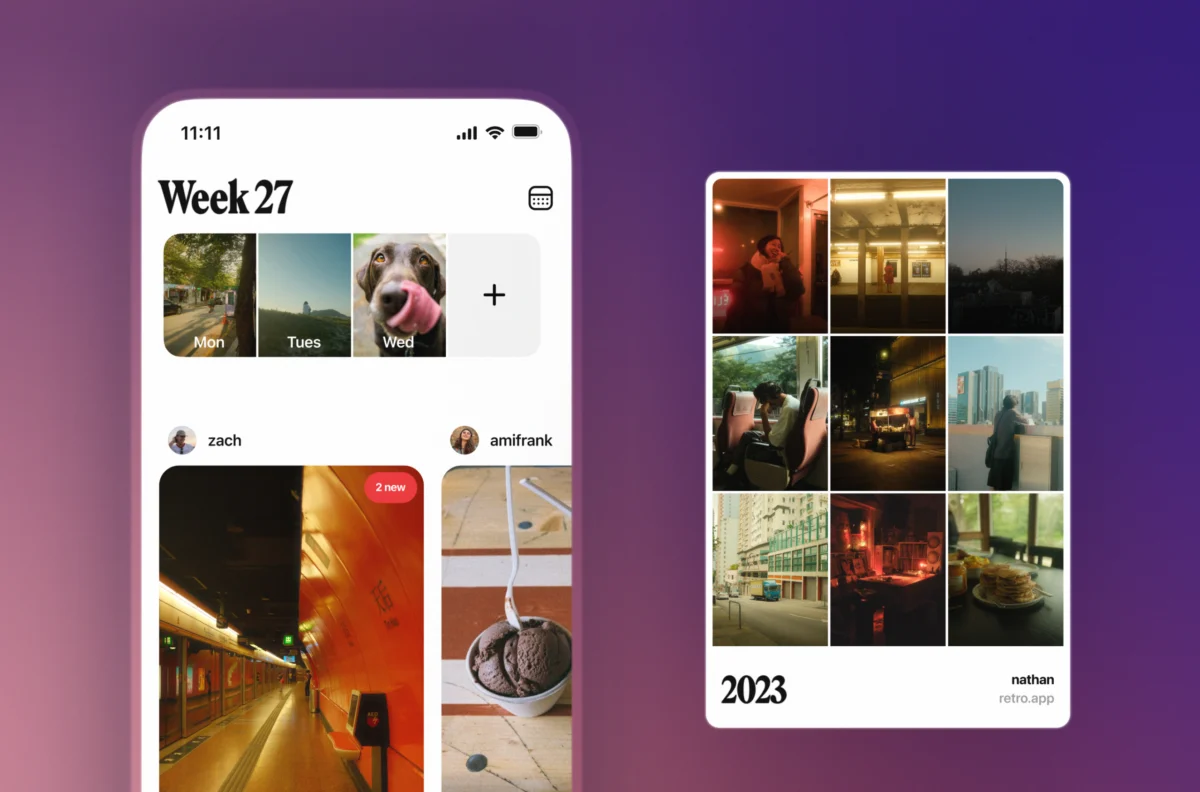
Retro, the innovative photo-sharing application championed for its friend-centric approach and built by former Instagram product engineers Nathan Sharp and Ryan Olson, has successfully closed a Series A funding round exceeding $21 million. The substantial investment, initially revealed through an SEC filing under the startup’s corporate entity Lone Palm Labs and subsequently confirmed by the company, underscores a growing investor confidence in social platforms that prioritize direct human connection over algorithm-driven feeds and increasingly prevalent AI-generated content. This capital injection propels Retro’s valuation past the $100 million mark, according to PitchBook estimates, signaling a potent challenge to the prevailing paradigms of mainstream social media.
The Funding Milestone and Strategic Investors
The Series A funding round, which officially closed in December but was publicly documented in an SEC filing dated August 19, represents a pivotal moment for Retro. The round was led by prominent venture capital firms Field Ventures, founded by Figma CEO Dylan Field, and Thrive Capital, a consistent early backer of disruptive technology companies. Further participation came from Positive Sum and a strategic cohort of both new and existing angel investors, indicating broad support for Retro’s vision.
This latest financial boost builds upon previous backing from a distinguished list of investors, including Thrive Capital, Dylan Field himself, Scribble Ventures, Box Group, Imaginary Ventures, Coalition, Conviction, and Copper, alongside various individual angels. The continued commitment from these high-profile investors suggests a collective belief in Retro’s potential to carve out a significant niche in the highly competitive social media market by offering a distinct, privacy-aware, and authentic user experience.
Nathan Sharp, co-founder of Retro, confirmed the funding after a brief period "off the grid," highlighting the intense focus often required in the startup world. His previous remarks to TechCrunch in December encapsulate the core philosophy driving Retro: "Something that has to be true and will be true is that people will still want to see more of their friends. The photos and videos you take will need to find a place where they can reach the intended audience." This statement serves as a foundational principle for Retro, contrasting sharply with the "For You"-style feeds that have come to dominate platforms like TikTok and Instagram, often prioritizing creator content, viral trends, and, more recently, AI-generated media over genuine peer-to-peer interactions.
A Return to Authentic Social Connection: The Anti-Algorithm Movement
Retro’s rise and significant funding round are not isolated events but rather indicative of a broader sentiment shift within the digital landscape. For years, social media users have been increasingly vocal about their fatigue with platforms that prioritize engagement metrics, advertiser interests, and algorithmic curation over authentic connections. The promise of early social media—to connect friends and family—has often been overshadowed by the pursuit of virality, influencer culture, and increasingly sophisticated, sometimes intrusive, data-driven algorithms.
The "For You" feeds, while effective at driving passive consumption, have inadvertently created a sense of alienation for many users. Friends’ content often gets lost in a deluge of posts from creators they don’t know, advertisements, and now, even AI-generated "slop," as described by some critics. This environment can lead to feelings of inadequacy, comparison, and a general disconnect from one’s actual social circle.
Retro positions itself as an antidote to this phenomenon. By explicitly focusing on a friend-centric model, it aims to recapture the intimacy and authenticity that many feel have been lost. The app is designed to be a digital space where users can genuinely share their lives with a select, trusted audience – their close friends – without the pressure of performance, the distraction of endless scrolling through irrelevant content, or the fear of algorithmic manipulation. This approach resonates with a growing segment of users seeking more meaningful online interactions and a respite from the often-overwhelming noise of mainstream platforms. The success of apps like BeReal, which similarly emphasized authenticity and friend connections, albeit with a different mechanic, paved the way for this "anti-algorithm" movement, demonstrating a clear market demand for such alternatives.
Retro’s Evolution and Core Feature Set
Launched in 2023, Retro initially emerged as a personal photo journaling application, emphasizing individual memory capture and reflection. This foundational focus on personal archiving laid the groundwork for its subsequent evolution into a more collaborative and interactive platform for close friends. The app’s development trajectory reflects a thoughtful response to user needs and market opportunities, moving from a private, introspective tool to a shared, community-oriented experience.
Over time, Retro has significantly expanded its feature set to enhance the friend-sharing experience. Key functionalities now include:
- Private Weekly Sharing: Users can privately share photos from their week with their designated friends, fostering a continuous, low-pressure way to stay updated on each other’s lives.
- Collaborative Journals/Shared Albums: The ability to create shared albums allows groups of friends to collectively document experiences, trips, or ongoing moments, building communal visual narratives.
- Recaps and "Rewind" Feature: Retro offers personalized recaps of memories, akin to digital scrapbooks. The innovative "rewind" function allows users to "time-travel back" through their camera roll and shared memories, bringing a nostalgic and reflective dimension to the photo-sharing experience. This feature leverages the rich personal data stored within the app to create engaging, personalized content for users without resorting to external algorithmic feeds.
- Focused Interaction: The app emphasizes direct communication around shared photos, facilitating genuine engagement among friends rather than broad, public commentary.
These features collectively aim to cultivate a sense of intimacy and shared experience, differentiating Retro from platforms that often encourage broadcasting to a wider, less personal audience. The user interface is designed to be clean and intuitive, prioritizing content and connection over complex navigation or distracting elements.

The Business Model: Beyond Advertising
One of Retro’s most distinguishing characteristics, and a significant factor in its appeal to both users and investors, is its innovative monetization strategy. In a stark departure from the advertising-driven models that underpin most major social media platforms, Retro operates on a subscription-based model. This strategic choice directly addresses a core concern for many users: the inherent conflict of interest between an ad-supported platform’s need to maximize engagement (often through addictive design and data exploitation) and a user’s desire for privacy and a healthy digital experience.
By offering in-app subscriptions, Retro aligns its business incentives directly with user satisfaction and value. Users who subscribe gain access to a suite of enhanced features, including:
- Video, GIF, and Sticker Comments: Enriching the interactive experience beyond static images.
- More Styles and Customization Options: Allowing for greater personalization of the app’s aesthetic and journal entries.
- Unlimited History: Providing unrestricted access to past memories and shared content, a crucial feature for a memory-focused app.
- Special App Icons: Offering an additional layer of personalization and exclusivity for subscribers.
This model not only fosters a more privacy-respecting environment—as user data is not being constantly mined for ad targeting—but also cultivates a more committed and engaged user base. The company’s thesis is that users willing to pay for a premium experience are highly valued customers who have deeply integrated Retro into their daily lives for genuine connection.
Data from app intelligence provider Appfigures strongly supports the viability of this non-ad-based approach. Since its launch, Retro has accumulated approximately 7 million downloads, a substantial figure for a niche social app. More strikingly, the app has witnessed an astounding jump of over 460% in in-app spending over the past 180 days. While the absolute number of subscribers remains a subset of its total user base, this exponential growth in revenue indicates a strong conversion rate among its most dedicated users. This trend validates the belief that a significant segment of the market is willing to pay for a higher-quality, ad-free, and privacy-conscious social experience, challenging the long-held assumption that social media must be "free" and ad-supported.
Leadership and Vision: A Foundation of Experience
The leadership team behind Retro brings invaluable experience from the heart of the social media giant, Instagram. Nathan Sharp and Ryan Olson, both former Instagram product engineers, possess an intimate understanding of the complexities, challenges, and opportunities within the social networking space. Their tenure at Instagram, a platform that began with a focus on simple photo sharing but evolved into a complex ecosystem driven by algorithms and advertising, likely provided them with firsthand insights into the pain points that Retro now seeks to address.
Their experience grants them a unique perspective on what makes social products engaging, sticky, and ultimately, successful, while also being acutely aware of the pitfalls of prioritizing growth at the expense of user well-being and genuine connection. This background is a significant asset, lending credibility and strategic foresight to Retro’s development and market positioning. They are not merely building another social app; they are attempting to re-engineer the fundamental experience based on lessons learned from the industry’s biggest players.
Sharp’s consistent articulation of the need for friends’ content to reach its "intended audience" is not just a marketing slogan; it’s a direct critique of the algorithmic interference that often disrupts this natural flow on other platforms. Their vision for Retro is to create a digital sanctuary for authentic relationships, a space where memories are shared and cherished among those who matter most, free from the noise and commercial pressures of the broader internet.
Industry Context and Future Outlook
Retro’s successful funding round and growing user base arrive at a critical juncture for the social media industry. After years of unchecked growth and platform dominance by a handful of tech giants, there is a palpable shift towards more specialized, niche, and privacy-focused social applications. Users are becoming more discerning, actively seeking platforms that align with their values regarding data privacy, mental well-being, and authentic interaction.
The implications of Retro’s success are multifaceted:
- Validation of the Niche Social Model: It reinforces the idea that there is ample room for social apps that cater to specific needs and communities, rather than attempting to be everything to everyone.
- Challenge to the Ad-Based Paradigm: Retro’s subscription model, with its impressive revenue growth, serves as a powerful testament to the viability of alternative monetization strategies in social media. This could inspire other startups to explore similar models, potentially leading to a healthier ecosystem less reliant on intrusive advertising.
- The "De-Platforming" Trend: Retro’s focus on intimate sharing aligns with a broader trend of users "de-platforming" from large, public social networks in favor of smaller, private groups and apps. This decentralization of social interaction could lead to a more fragmented but ultimately more personalized and satisfying online experience for many.
- Focus on Mental Well-being: By removing algorithmic pressures and advertiser influence, Retro inherently promotes a less addictive and more mindful approach to social media consumption, potentially contributing positively to user mental well-being.
However, challenges remain. Scaling a subscription-based social app to compete with "free" alternatives is a continuous uphill battle. Retro will need to consistently innovate and deliver exceptional value to justify its premium offering and retain its growing subscriber base. Furthermore, the competitive landscape is always evolving, with new apps constantly emerging and established giants potentially adapting their strategies to address the demand for more authentic connections.
Despite these challenges, Retro’s substantial Series A funding, its experienced leadership, and its clear differentiation in the market position it as a significant player to watch. It represents not just another photo-sharing app, but a potential bellwether for a new era of social media – one where connection, authenticity, and user well-being are paramount, rather than mere afterthoughts. The investment is a clear signal that the market is ready to back companies that prioritize people over pixels, and genuine friendships over endless feeds.

