
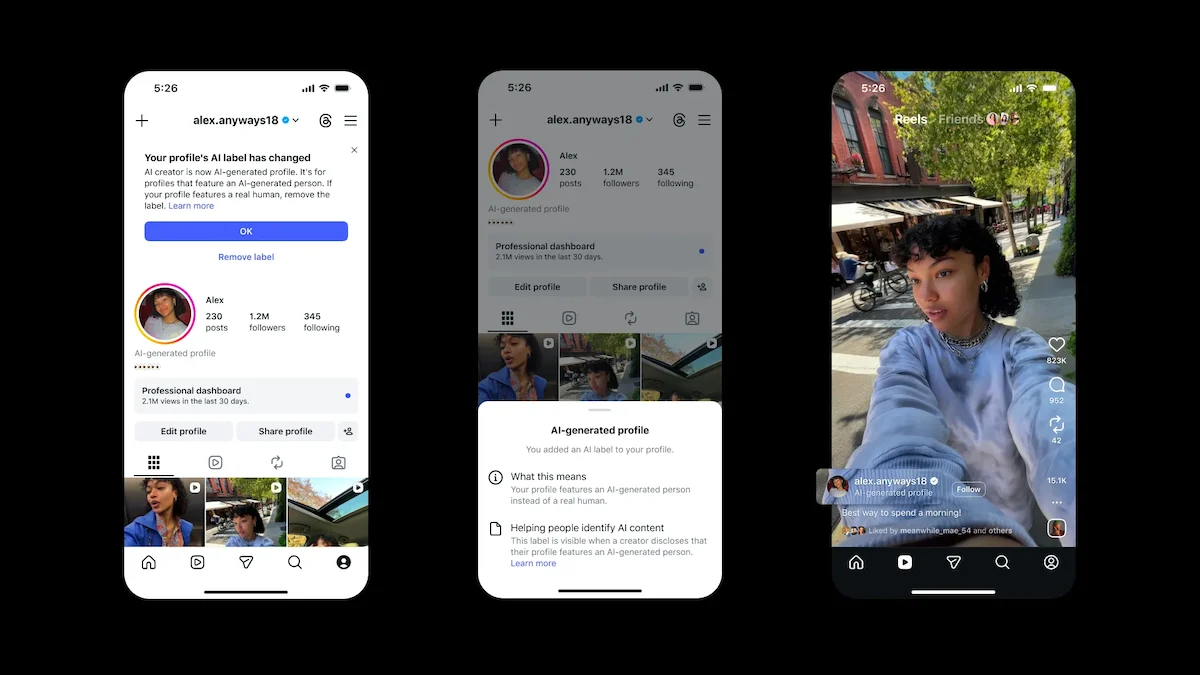
Meta-owned Instagram announced Monday a pivotal shift in its approach to artificial intelligence-generated content, specifically targeting profiles that feature AI-created individuals. The social media giant will rename its existing "AI creator" label to the more explicit "AI-generated profile" and, crucially, will begin to limit the reach of accounts that prominently display AI-generated people without proper disclosure. This move underscores a growing commitment to transparency and user trust in an increasingly complex digital landscape, where the line between human and synthetic content continues to blur.
The refined labeling system is designed to provide clearer communication to users, indicating unequivocally that the person depicted on a profile has been either entirely generated or substantially created using artificial intelligence technologies. Under the new policy, creators failing to accurately label such profiles risk seeing their content’s visibility significantly reduced across the platform. Conversely, accounts that comply with the new disclosure requirements will not face penalties simply for featuring an AI-generated person, signaling a policy aimed at fostering honest engagement rather than outright prohibition.
This policy adjustment is narrowly tailored, focusing exclusively on the depiction of human likenesses. Instagram clarifies that the "AI-generated profile" label is not intended for broader applications of AI, such as enhancing photos, refining captions, generating graphics, or implementing other creative modifications that do not involve the creation of a synthetic human identity. This distinction highlights Instagram’s specific concern with the potential for deception when users encounter what appears to be a real person, only to discover it is an AI construct.
The Driving Force: User Demand for Transparency
Instagram’s decision is largely a direct response to user feedback and growing discomfort. The platform explicitly stated, "As generative AI becomes a bigger part of how people create, we’ve heard that people don’t like seeing a profile that seems human, only to find out later that the person featured is AI-generated. They want to know when a profile features an AI-generated person." This sentiment reflects a broader societal concern about authenticity and trust in online interactions, particularly as AI models become increasingly sophisticated in generating photorealistic human images and videos. The ability of AI to mimic human appearance so closely has raised ethical questions about potential misuse, misinformation, and the erosion of trust in digital media. Users encountering synthetic profiles often report feeling deceived or manipulated, underscoring the necessity for clear disclosure mechanisms.
The timing of this announcement is highly pertinent, coinciding with a period of escalating public discussion and frustration surrounding AI-generated content across various social media platforms. The proliferation of AI influencers, virtual personalities, and synthetic media has brought both innovative opportunities and significant challenges, particularly concerning ethics, intellectual property, and consumer protection.
The Proliferation and Peril of AI-Generated Personalities
The landscape of social media has witnessed a rapid emergence of AI-generated influencers, some of whom command significant followings and endorsement deals. While some virtual influencers like Lil Miquela have long been established and openly celebrated as AI creations, a new wave of highly realistic, often indistinguishable AI-generated individuals poses a different set of challenges. These synthetic personas can be deployed to promote products, spread narratives, or even engage in deceptive practices, making transparency paramount.
One prominent example that underscored the urgency for platforms to act came earlier this year with the gay dating app Goose. A detailed investigation by Wired magazine revealed a troubling network of seemingly AI-generated male influencers actively promoting the app on Instagram. The investigation uncovered more than two dozen accounts featuring what appeared to be synthetic individuals, some of whom reportedly initiated direct messages with potential users to persuade them to sign up for the service. This case highlighted the potential for AI-generated profiles to be used in sophisticated, large-scale influence operations that blur the lines between genuine interaction and automated persuasion, particularly in sensitive personal contexts like dating. The implications extend beyond mere marketing, touching upon privacy, consent, and the authenticity of human connection.
Another deeply concerning application of AI-generated figures has been observed in the health and wellness sector. The New York Times reported in July on hundreds of AI-generated "doctors," "healers," and "wellness personalities" active on social media. These synthetic figures were found promoting various supplements, offering health advice, and making unsubstantiated medical claims to a vulnerable online audience. The potential for these AI-generated personas to spread misinformation, endorse unsafe products, or provide harmful health advice poses a significant public health risk. Unlike traditional advertisements, the perceived "humanity" of these AI figures can lend an unearned sense of authority and trustworthiness, making their deceptive content even more potent. The lack of accountability for AI-generated health advice further complicates efforts to combat health misinformation online.
Meta’s Evolving AI Strategy and Regulatory Landscape
This policy update from Instagram is not an isolated event but rather fits within Meta’s broader, evolving strategy concerning artificial intelligence. Meta has heavily invested in AI research and development, aiming to integrate generative AI capabilities across its family of applications, from personalized content recommendations to advanced AI assistants. The company has publicly championed its Llama series of large language models and has been actively rolling out various AI-powered features. However, this aggressive push into AI has not been without its challenges and public scrutiny.

In the immediate past, Instagram faced considerable backlash over an AI tool that allowed users to generate images using other people’s likenesses. This feature sparked widespread user objection, primarily because it utilized public Instagram content without requiring explicit opt-in consent from the individuals whose likenesses were being used. Users expressed strong concerns about privacy, control over their digital identity, and the potential for misuse of their images in AI-generated content. The outcry was significant enough that Meta swiftly removed the controversial feature, demonstrating the company’s sensitivity to public sentiment and the ethical complexities of AI deployment. This incident likely served as a crucial learning experience, reinforcing the need for clear guidelines and user-centric policies when introducing AI capabilities that interact with personal data or identity.
Beyond specific AI feature controversies, Meta has also been navigating a complex regulatory environment. Just last week, the company reached a landmark $18 billion settlement with 29 U.S. states. This settlement addressed serious allegations concerning the detrimental effects of Facebook and Instagram on the mental health and well-being of children and teenagers. As part of this comprehensive agreement, Meta committed to implementing sweeping changes aimed at restricting children’s access and protecting young users. These measures include introducing a default two-hour daily usage limit for teenagers across Facebook and Instagram, implementing a "Night Mode" block to discourage late-night use, and muting notifications during school hours, among other significant restrictions. While distinct from AI content policy, this settlement underscores the intense scrutiny Meta faces regarding user safety and well-being, influencing a broader platform-wide emphasis on responsible design and transparency.
Policy Specifics and Implementation Challenges
The distinction between an "AI-generated profile" and general AI-enhanced content is crucial. Instagram explicitly states that the label is not required for creators who use AI to edit photos (e.g., color correction, background removal, filter application), polish captions (e.g., grammar checks, style suggestions), create graphics, or make other creative tweaks that do not involve generating a human likeness. This precision aims to avoid over-labeling and to focus enforcement efforts on the core issue of synthetic identity.
The practical implementation of this policy presents several challenges for Instagram. Firstly, accurately identifying "substantially created with AI" human figures requires sophisticated detection mechanisms. As AI models evolve, differentiating between subtly enhanced real images and entirely synthetic ones becomes increasingly difficult. Instagram will likely employ a combination of AI detection tools, user reporting, and human moderation to enforce the policy. Secondly, the concept of "reduced reach" needs clear definition. How will this reduction manifest? Will it affect algorithmic distribution, hashtag visibility, or explore page placement? The platform will need to communicate these specifics clearly to creators to ensure compliance and avoid accusations of arbitrary censorship.
Furthermore, the policy relies heavily on creator self-disclosure. While penalties for non-compliance are in place, the sheer volume of content uploaded daily means that some undeclared AI-generated profiles may slip through the cracks. This necessitates a robust reporting system and continuous refinement of detection technologies.
Broader Implications for Creators, Users, and the Digital Ecosystem
This policy change carries significant implications for various stakeholders:
For Creators: The new policy introduces a fresh layer of responsibility for creators, particularly those experimenting with generative AI. While it provides a clear pathway for utilizing AI-generated personas transparently, it also imposes a compliance burden. Creators leveraging AI for human likenesses must now proactively consider the labeling requirements, potentially influencing their creative processes and content strategies. For AI influencer agencies or individuals who have built profiles around undeclared synthetic personalities, this could necessitate a pivot or a risk of reduced visibility. Conversely, transparent AI creators might find that disclosure builds trust with their audience, leading to more sustainable engagement.
For Users: The primary beneficiaries are Instagram’s users, who gain greater clarity and control over their online experience. Knowing whether a profile features a real person or an AI construct empowers users to make more informed decisions about who they follow, what content they consume, and whom they interact with. This transparency is vital for mitigating misinformation, preventing deceptive practices, and fostering a more authentic digital environment. It also contributes to enhanced digital literacy, as users become more accustomed to distinguishing between human and synthetic content.
For Instagram and Meta: This move is a strategic one for Meta, aimed at burnishing its reputation as a responsible technology company. By proactively addressing concerns around AI-generated content, Instagram positions itself as a leader in platform governance in the age of generative AI. This pre-emptive action could also help Meta navigate potential future regulatory frameworks, such as the European Union’s AI Act, which will likely mandate strict transparency for AI-generated content. However, the platform faces ongoing challenges in consistent enforcement and in adapting its policies as AI technology continues its rapid evolution. Maintaining user trust while fostering innovation will be a delicate balance.
For the Broader Industry: Instagram’s policy could set a precedent for other social media platforms. As AI-generated content becomes ubiquitous, similar transparency measures are likely to be adopted across the industry. This collective effort is essential for establishing common ethical standards and preventing a fragmented approach to content moderation, which could confuse users and enable bad actors to migrate to less regulated platforms. The debate around synthetic media, deepfakes, and content authenticity is far from over, and Instagram’s new policy represents a significant milestone in the ongoing effort to define the ethical boundaries of AI in public spaces.
In conclusion, Instagram’s pivot towards mandatory and explicit labeling for AI-generated profiles signifies a crucial evolution in how major social media platforms grapple with the ethical and practical implications of artificial intelligence. By prioritizing user transparency and actively enforcing disclosure, Instagram aims to build a more trustworthy digital ecosystem, protecting users from deception while allowing for the responsible innovation that generative AI promises. This policy is a clear indicator that the era of ambiguous AI-generated content is drawing to a close, ushering in a new standard for authenticity in the digital realm.

