
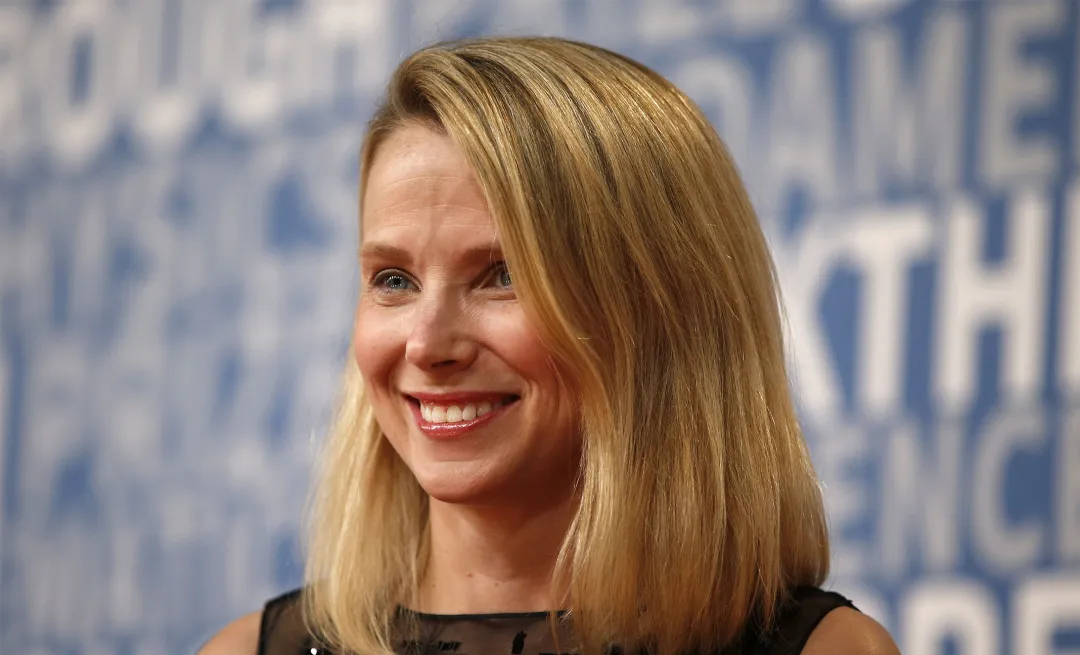
Former Yahoo CEO and early Google engineer Marissa Mayer has recently found herself at the center of a burgeoning public debate concerning the role of artificial intelligence in our most intimate personal lives. The controversy erupted following an interview where Mayer discussed her new application, Dazzle, an AI assistant designed to learn from a user’s camera roll. Her particular anecdote, intended as a demonstration of Dazzle’s impressive capabilities, involved the AI generating three bullet points about her 10-year-old daughter for a school birthday presentation, describing her as "empathetic, creative, and an animal lover." This seemingly innocuous detail, revealed in an interview published on October 25, 2026, quickly ignited a firestorm of criticism, highlighting a growing chasm between the technological ambitions of Silicon Valley and broader societal values regarding human connection.
Dazzle’s Premise and Mayer’s Vision
Marissa Mayer, a prominent figure in the tech world known for her foundational work at Google and her tenure as CEO of Yahoo, launched Dazzle with the premise that a user’s camera roll holds more comprehensive information about their life than their email inbox. Dazzle, therefore, leverages AI to process this visual data, aiming to provide personalized assistance. The app, which officially launched in late September 2026, promised to streamline various aspects of personal organization and memory recall. Mayer’s demonstration of Dazzle’s utility in crafting a description for her daughter was presented as an example of how the AI could alleviate the "mental load" often associated with parenting and household management. However, the chosen example—outsourcing the articulation of a child’s character—struck a nerve with many observers. The generated description, "empathetic, creative, and an animal lover," was widely perceived as generic and lacking the nuanced insight one would expect from a parent. Critics argued it resembled a boilerplate template, applicable to countless children, rather than a truly personal reflection.
Immediate Backlash and Societal Disconnect
The public reaction was swift and largely critical. Progressive activist Leah Greenberg notably expressed astonishment, remarking that "the fact that Marissa Mayer would voluntarily disclose this to a reporter is a pretty good demonstration of how deeply the culture of Silicon Valley has diverged from the rest of humanity." This sentiment resonated with many who felt that such reliance on AI for personal, emotionally significant tasks underscored a profound detachment within the tech elite. The incident tapped into a broader unease that has been brewing over recent years, fueled by instances where prominent tech leaders have suggested outsourcing fundamental aspects of human experience, particularly child-rearing, to artificial intelligence.
A Pattern of AI in Personal Life: Precedents from Silicon Valley
Mayer’s comments were not an isolated incident but rather echoed a recurring theme among some of the tech industry’s most influential figures. This pattern has primed the public for frustration and skepticism. Just last year, OpenAI CEO Sam Altman, a leading voice in the AI revolution, openly stated on national television to late-night host Jimmy Fallon, a known Bored Ape NFT owner, that he "cannot imagine… figuring out how to raise a newborn without ChatGPT." This statement, made in January 2025, drew significant negative feedback, yet Altman appeared unfazed. Months later, he continued to advocate for AI integration into family life, suggesting on X that a "cool use case" for ChatGPT Work would be creating a podcast that discusses children’s upcoming birthdays or soccer games and "explains your kids’ interests." This suggestion was met with brutal public "ratioing," with numerous comments questioning the premise, such as one widely shared retort: "What if you just talked to your children?"
These examples collectively paint a picture of a segment of the tech industry that views human relationships and responsibilities through the lens of efficiency and optimization, often overlooking or seemingly dismissing the inherent value of effort, emotional engagement, and organic human connection.
Mayer’s Defense and Deeper Concerns
Following the initial wave of criticism, Mayer took to X to defend herself in a lengthy post. She clarified that her intent was not to rely on Dazzle to understand her child but rather to test the prototype’s capabilities. She explained that Dazzle had resurfaced photos of "forgotten kindergarten projects," such as a "snake devenomer" or a "sandcat playground," which then illustrated her daughter’s creativity and care for animals, helping her recall specific, personal details. While this explanation offered some context, the original interview contained further remarks that continued to fuel public apprehension.
In the same interview, Mayer expanded on Dazzle’s potential, suggesting that people could use her AI to outsource the mental load of "figuring out the theme for your child’s birthday party." She recounted using her app to plan a playdate for her daughter, book family activities on vacation, and even decide on Halloween costumes. Perhaps most strikingly, she proposed a future where her AI assistant could coordinate plans directly with her husband’s AI assistant. When the reporter pressed her on whether this vision of a "frictionless future… planned by AI" felt depressing, Mayer’s response was telling: "I haven’t really thought that through." This admission underscored the perceived lack of foresight or consideration for the broader human implications of such widespread AI integration into personal life, further solidifying the public’s concerns about the direction of technological development.
Public Perception vs. Tech Vision: The Data Divide
The disconnect between Silicon Valley’s vision and public sentiment is not merely anecdotal. It is supported by significant research into public perception of artificial intelligence. A Pew Research Center study published in September 2025 revealed that a substantial 50% of U.S. adults believe that AI will actively reduce people’s ability to form meaningful relationships. In stark contrast, only a minuscule 5% of respondents thought AI would make it easier to build these connections. This data highlights a profound societal anxiety about AI’s intrusion into human social fabric, directly contradicting the optimistic, efficiency-driven narrative often espoused by tech leaders.
The study further indicated that concerns about job displacement, privacy, and algorithmic bias were prevalent, but the fear of eroded human connection stood out as a particularly potent apprehension, touching on the very essence of human existence and well-being. This widespread unease suggests that while the tech industry champions AI as a solution to various human "inefficiencies," a significant portion of the population perceives it as a potential threat to the quality and authenticity of their personal lives.
Mark Zuckerberg’s Vision: AI as a Solution to Loneliness
Adding another layer to this complex discussion, Meta CEO Mark Zuckerberg has articulated a vision where AI plays a crucial role in addressing societal loneliness. On a podcast last year, Zuckerberg cited statistics indicating that "the average American I think has, it’s fewer than three friends, three people they’d consider friends, and the average person has demand for meaningfully more, I think it’s like 15 friends." He concluded, "The average person wants more connectivity, connection than they have."
Zuckerberg then predicted that it would become increasingly socially acceptable to outsource emotional needs to AI therapists or even AI romantic partners. While acknowledging the superiority of "physical connections when you can have them," he contended, "But the reality is that people… feel more alone a lot of the time than they would like." This perspective suggests that if real human connections are scarce or difficult to forge, AI can step in as a surrogate, fulfilling a perceived deficit in social and emotional engagement. Meta, under Zuckerberg’s leadership, appears to be heavily invested in improving relationships with virtual-reality embodiments of AI avatars, focusing on making these approximations of humans more realistic, rather than prioritizing or facilitating genuine interaction between the billions of actual humans who use its platforms daily. This approach raises fundamental questions about the nature of connection and whether simulated relationships can truly satisfy deep human needs.
The "Efficiency" Ethos Versus the Messiness of Humanity
The underlying driver for many of these proposed AI applications seems to stem from a pervasive culture within the tech industry that prizes efficiency above all else. This ethos is evident in various aspects of Silicon Valley life, where individuals often engage in "biohacking" their own bodies—optimizing sleep schedules with health trackers, meticulously monitoring nutritional intake, or even injecting unregulated "peptide stacks" in a quest to maximize productivity and lifespan. If the human body can be optimized, the thinking seems to go, then surely human relationships, with all their inherent complexities and emotional demands, can also be made more efficient.
For industries focused on building electric vehicles, computer chips, or complex software, efficiency is undeniably a clear and critical objective. Minimizing waste, maximizing output, and streamlining processes are paramount for technological advancement and economic success. However, applying this same "efficiency-first" paradigm to human relationships presents a profound philosophical and ethical dilemma. Our connections with other people are not analogous to tech products that are challenged to be shipped with as little capital as possible. Human relationships are inherently messy, unpredictable, and often require significant effort, vulnerability, and patience. Yet, it is precisely this "messiness"—the shared struggles, the mutual growth, the imperfect interactions—that often gives our lives meaning, depth, and resilience.
When individuals or society at large delegate these interactions, this emotional labor, or the very act of understanding and articulating human qualities to computers, there is a risk of surrendering the difficult, yet ultimately fulfilling, experience of being truly human. The process of discovering a child’s unique traits, planning a meaningful celebration, or navigating the complexities of friendship and love are not merely tasks to be optimized; they are core components of personal growth, empathy development, and the fabric of community.
Broader Societal Implications and the Path Forward
The ongoing debate surrounding AI’s role in personal life extends beyond individual convenience. It touches upon fundamental questions about the future of human identity, the nature of emotional intelligence, and the very definition of a meaningful life. If AI increasingly manages our social interactions, our emotional support, and even our understanding of our loved ones, what skills do humans lose? What kind of society emerges when empathy is outsourced, and genuine connection is replaced by algorithmic approximation?
The implications are far-reaching. A society increasingly reliant on AI for emotional and social tasks might see a decline in critical interpersonal skills, an erosion of patience for complex human dynamics, and a potential deepening of isolation despite a veneer of "connectivity." While technology offers undeniable benefits in many spheres, the boundaries between convenience and essential human experience are proving to be fertile ground for ethical deliberation.
As AI continues its rapid advancement, the onus falls not just on tech developers but on policymakers, ethicists, and society as a whole to critically evaluate its integration into the most sacred aspects of human life. The discussions sparked by figures like Marissa Mayer, Sam Altman, and Mark Zuckerberg are not merely about product features; they are foundational dialogues about the kind of future humanity wishes to build—one where technology augments our human experience without diminishing its inherent value and authenticity. The challenge lies in harnessing AI’s power responsibly, ensuring it serves to enrich, rather than replace, the messy, beautiful, and profoundly human journey of connection.

