
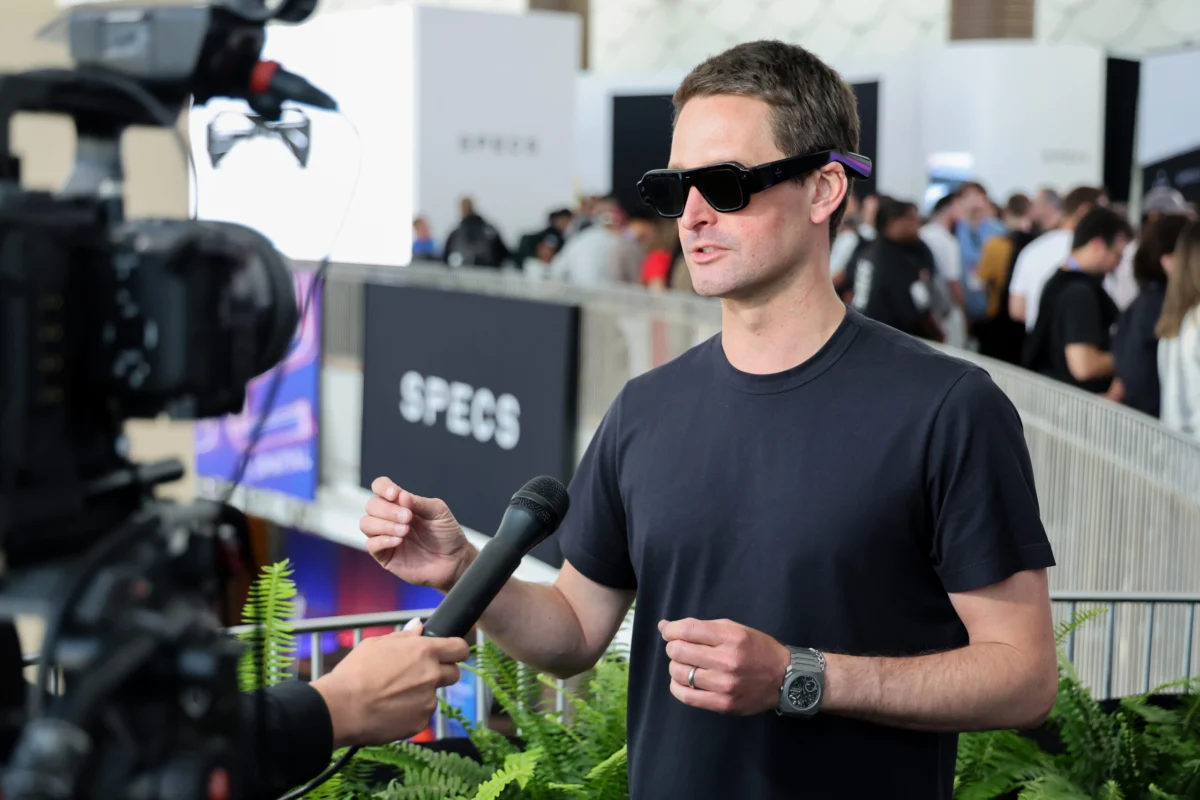
Snap Inc. CEO Evan Spiegel strategically sidestepped direct inquiries regarding preorder demand for the company’s highly anticipated Specs smart glasses during a recent Monday earnings call, just weeks before the device’s official September launch event. The evasiveness comes as the social media giant prepares to enter a fiercely competitive and technologically demanding augmented reality (AR) hardware market, positioning its $2,195 wearable as a crucial component of the "next computing platform."
The Unveiling and Market Positioning
The Specs smart glasses were first publicly unveiled in June, marking the culmination of over a decade of intensive research and development within Snap’s hardware division. This prolonged incubation period underscores the technical complexities involved in bringing advanced AR capabilities to a wearable form factor. Priced at $2,195, Specs occupies a distinct niche in the nascent smart eyewear market. It is significantly more expensive than mass-market options like Meta’s Ray-Ban smart glasses, which start at approximately $350 and primarily offer camera and audio functionalities without true AR displays. Conversely, Specs is positioned below the premium, mixed-reality headset segment dominated by Apple’s Vision Pro, which carries a starting price tag of $3,500 and offers a more immersive, though less portable, experience.
Spiegel’s comments during the earnings call focused on the necessity of direct user engagement, stating, “What we’re hearing from folks is really that they want to try Specs. It’s obviously a high consideration purchase at $2,195.” He acknowledged the device’s sophisticated nature, noting that “developers and folks who are familiar with the platform really understand it and understand the technical leaps we’ve made with this generation.” For the broader consumer market, however, Spiegel emphasized that the upcoming launch event would serve as a vital “starting point for that consumer-oriented journey,” allowing potential buyers to experience the technology firsthand before committing to the substantial investment. This strategy suggests Snap recognizes the challenge of selling a novel, high-cost device without a compelling in-person demonstration.
Spiegel’s Strategic Vision and Investor Scrutiny
Investors pressed Spiegel on several critical fronts, seeking clarification on the financial viability of Snap’s AR hardware strategy for a company of its size, the rationale behind pursuing this path independently rather than through partnerships, and the basis for his confidence in competing with tech behemoths like Apple, Meta, and Alphabet. These questions reflect a broader skepticism within the financial community regarding the profitability and scalability of hardware ventures for companies primarily known for software and advertising.
Spiegel, however, articulated a bold long-term vision, asserting that Snap believes the opportunity to develop the “next computing platform” is “enormous.” He drew a clear distinction between Snap’s journey in social media and its current foray into AR hardware. “I think what some folks maybe don’t understand yet, especially because Specs are so new and we’re really the first mover in this category, is how difficult the product is to execute from a technical perspective,” Spiegel explained. He contrasted this with Snap’s origins in the social space, where it entered as a “late entrant” against established players like Facebook, Instagram, and Twitter, necessitating constant innovation to grow. In the AR hardware realm, Spiegel believes Snap holds a “first mover” advantage, which he sees as playing directly to the company’s strengths as an innovator. This perspective frames Specs not merely as a product, but as a foundational step in shaping a future computing paradigm, where digital content seamlessly integrates with the physical world.
A Decade of Augmented Reality Ambition: Snap’s Hardware Journey
Snap’s journey into augmented reality hardware is not new; it began nearly a decade ago with the introduction of its Spectacles camera glasses. The first generation of Spectacles launched in 2016, offering users a simple way to record short video clips from a first-person perspective, directly integrated with the Snapchat app. While innovative, their limited functionality, quirky design, and distribution through pop-up "Snapbots" meant they remained a niche product, selling approximately 220,000 units and contributing to a significant write-down of unsold inventory.
Subsequent iterations, Spectacles 2 and 3, introduced improvements like water resistance, higher resolution cameras, and in the case of Spectacles 3, dual cameras for 3D photo and video capture. However, these too primarily served as accessories for content creation rather than true AR devices. The crucial distinction with Specs is its integration of transparent waveguide displays, allowing users to see digital overlays directly within their field of vision – a fundamental leap towards true augmented reality. This progression illustrates Snap’s persistent commitment to wearable technology, learning from each generation while steadily advancing towards more sophisticated AR capabilities. Beyond hardware, Snap has also heavily invested in its Lens Studio, an AR development platform that has empowered creators globally to build millions of AR filters (Lenses) for the Snapchat app, laying a critical foundation for a vibrant AR ecosystem. This long-standing commitment to AR software and content creation is what Spiegel refers to when he highlights the company’s advantage with "developers building on the Specs platform now for several years."
The Broader Augmented Reality Landscape
Snap’s ambitious push into advanced AR hardware unfolds within a rapidly evolving and increasingly competitive technological landscape. The market for augmented and virtual reality devices is projected to grow substantially over the next decade, with various industry reports forecasting multi-billion dollar valuations. However, it remains a nascent field, characterized by high R&D costs, significant technical hurdles, and an as-yet-unproven mass-market demand.
Apple’s entry with the Vision Pro has set a new benchmark for mixed reality, showcasing cutting-edge display technology, powerful processors, and a sophisticated user interface, albeit at a premium price and with a form factor more akin to a ski goggle. Meta, a long-time proponent of the metaverse, has focused heavily on virtual reality with its Quest line and has also explored augmented reality through its partnership with Ray-Ban, offering smart glasses with integrated cameras and audio. Other players, including Google with its past Google Glass project and ongoing AR efforts, and various startups, are also vying for a share of this future market.
The challenge for all these companies lies in miniaturizing powerful computing components, developing energy-efficient transparent displays, ensuring comfortable and stylish designs, and overcoming battery life limitations – all while keeping costs manageable. Specs’ $2,195 price point reflects these engineering feats, placing it squarely in the enthusiast and developer category, similar to how early VR headsets like the Oculus Rift or HTC Vive were initially targeted. This strategic positioning acknowledges the current limitations of the technology and the need for early adopters to help refine the product and build out the content ecosystem.
The Price Point and Path to Mass Adoption
Spiegel candidly acknowledged that mass-market consumer adoption for AR glasses, including Specs, is likely still several years away, projecting it closer to the "end of the decade." This realistic outlook underscores the significant barriers that remain before such technology becomes ubiquitous. He specifically cited "weight and cost" as primary factors that "are going to have to come down to see unit volumes really meaningfully pick up." Current AR glasses, while far more advanced than their predecessors, still contend with bulk, limited battery life, and high manufacturing expenses for their specialized optics and processors.
However, Spiegel reiterated Snap’s perceived advantage: its long-standing developer ecosystem. “But we do have, I think, a real advantage here in that developers have been building on the Specs platform now for several years,” he stated. This refers to the extensive community of creators who have utilized Lens Studio to develop AR experiences for Snapchat. This pre-existing pool of talent and content creation infrastructure could prove invaluable in populating Specs with compelling applications and experiences, a critical factor for any new computing platform. The success of any new hardware often hinges not just on the device itself, but on the richness of its software and content ecosystem.
Financial Implications and Analyst Perspectives
The decision to invest heavily in AR hardware represents a significant strategic pivot and financial gamble for Snap. While the company has diversified its revenue streams, its primary income still largely derives from digital advertising on the Snapchat platform. Developing cutting-edge hardware demands substantial capital expenditure, long R&D cycles, and carries the inherent risk of market rejection or intense competition from larger, more resource-rich technology companies.
Financial analysts have long viewed Snap’s hardware endeavors with a mix of cautious optimism and skepticism. While recognizing the potential for AR to be a transformative technology, many question Snap’s ability to achieve profitability or significant market share in hardware, given its historical challenges with consistent profitability and its relatively smaller scale compared to rivals like Apple and Meta, who boast vastly larger cash reserves and supply chain infrastructures. The high upfront cost of Specs, coupled with the projected long runway to mass adoption, suggests that this venture is a long-term strategic play rather than an immediate revenue driver. It’s a bet on the future of computing, where Snap aims to establish an early foothold and shape the user experience, potentially securing a dominant position if AR indeed becomes the "next big thing." This approach requires patience from investors and a sustained commitment from leadership, accepting that initial returns may be minimal or negative.
Challenges Beyond Technology
Beyond the technical and financial hurdles, Specs and the broader AR industry face a multitude of non-technical challenges. User comfort and design are paramount; for AR glasses to become a part of everyday life, they must be lightweight, aesthetically pleasing, and comfortable for extended wear. The integration of advanced optics and batteries into stylish frames remains a significant design challenge.
Privacy concerns also loom large. Devices capable of continuously recording and analyzing the environment raise questions about data collection, storage, and sharing, prompting regulatory scrutiny and public apprehension. Social acceptance is another critical factor; the sight of individuals wearing smart glasses has historically been met with curiosity, skepticism, and even resistance, as seen with Google Glass. Overcoming this "geek factor" and fostering a sense of normalcy around wearable AR will require a shift in cultural perceptions and compelling use cases that seamlessly integrate into daily routines without feeling intrusive or awkward. The content ecosystem also needs to mature, moving beyond novelty filters to truly useful and engaging applications that justify the device’s cost and utility.
Conclusion and Outlook
As Snap prepares for the September launch of its Specs smart glasses, the company stands at a pivotal juncture. Evan Spiegel’s steadfast belief in the “enormous” long-term opportunity of augmented reality as the next computing platform underscores a strategic vision that transcends immediate quarterly earnings. While investor questions about preorder demand and financial viability highlight the inherent risks of this ambitious venture, Snap is leveraging its "first mover" advantage in true AR hardware and its established developer ecosystem to carve out a unique position.
The September launch event will be a critical moment, transitioning Specs from a developer-focused prototype to a device available for a broader, albeit still niche, market. Its success will not be measured in immediate unit sales, but in its ability to captivate developers, inspire compelling AR experiences, and gradually nudge consumer perception towards a future where digital information seamlessly enhances our perception of reality. The path to mass adoption remains long, fraught with technical, financial, and societal challenges, but Snap’s decade-long commitment to AR suggests a determination to play a significant role in shaping this transformative technological frontier.

