
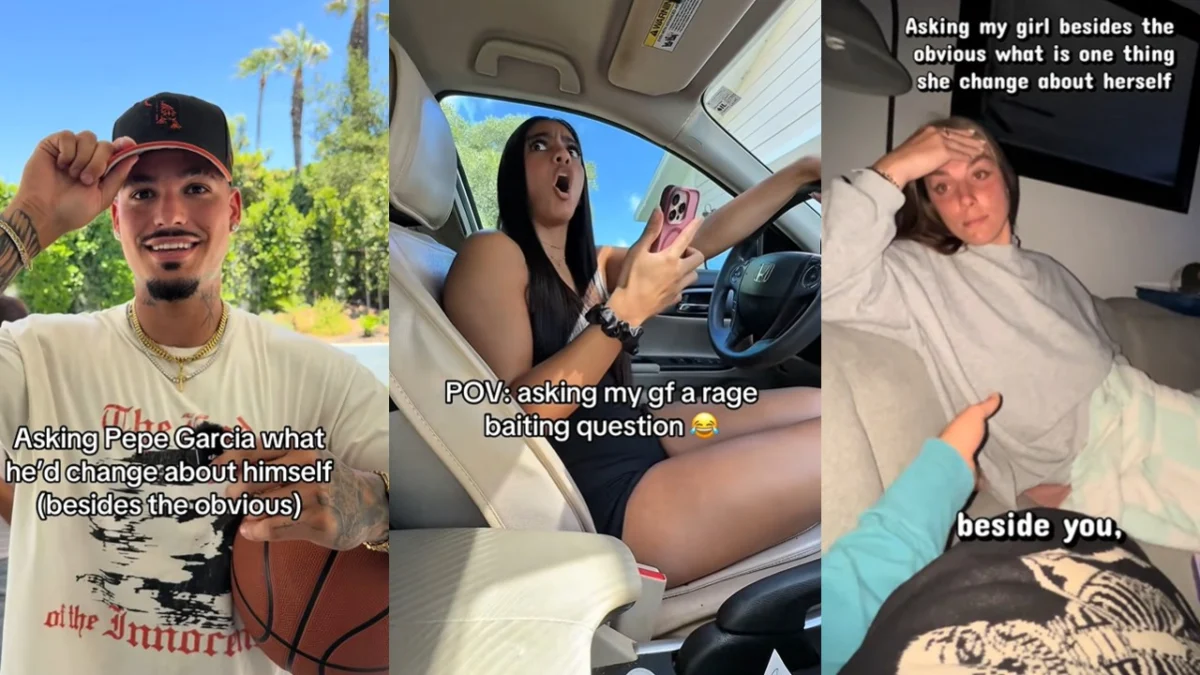
The Besides the Obvious Prank has emerged as a significant cultural phenomenon within the digital landscape of 2026, fundamentally altering the dynamics of interpersonal humor and "rage bait" content on platforms such as TikTok and Instagram Reels. This specific prank involves an individual asking a subject—frequently a romantic partner, family member, or public figure—the seemingly innocuous but psychologically loaded question: "Besides the obvious, what is one thing you would change about yourself?" The brilliance and controversy of the trend lie in its linguistic presupposition; by framing the question with the phrase "besides the obvious," the prankster asserts that the subject possesses a glaring, undeniable flaw that is visible to everyone except, perhaps, the subject themselves. This creates an immediate state of cognitive dissonance and insecurity, forcing the victim to scan their own physical appearance or personality for a "flaw" that may not even exist, while the prankster maintains a stoic or knowing silence.
The Genesis of a Digital Trend
The trend traces its origins to late April 2026, a period characterized by a shift in short-form video content toward more psychologically driven "social experiments" and interactive pranks. On April 29, 2026, the TikTok creator known as @lukefrompooks uploaded the inaugural video that would set the template for the movement. In the footage, the creator posed the question to his partner, who was visibly taken aback. Her reaction—a mixture of confusion and defensive humor—culminated in her retort, "The fact that I don’t abuse you," a statement that underscored the inherent frustration the question provokes. This initial video resonated deeply with the platform’s algorithm, amassing over 1.7 million views within a three-month window and sparking a wave of imitative content.
The rapid adoption of the "Besides the Obvious" format can be attributed to its low barrier to entry and high emotional payoff. Unlike elaborate pranks requiring props or complex staging, this trend requires only a smartphone and a willing (or unwilling) participant. The "rage bait" element—content designed specifically to provoke a strong emotional reaction from both the subject and the audience—ensured that the videos generated high levels of engagement in the form of comments, shares, and "duets."
Chronology of Viral Expansion
Following the initial spark in April, the trend saw an exponential increase in participation throughout May and June 2026. On May 12, 2026, Instagram user bradymedearis shared a variation of the prank, demonstrating the trend’s cross-platform viability. This iteration garnered over 8,300 likes, signaling that the "Besides the Obvious" prompt was transitioning from a niche TikTok joke to a mainstream social media staple.
By late May, the trend had moved beyond individual creators and into the sphere of professional sports and corporate branding. On May 28, 2026, the official TikTok account for the Los Angeles Chargers, an NFL franchise known for its aggressive and internet-savvy social media presence, posted a compilation of players being asked the question. The video featured various athletes reacting with genuine bafflement and defensive posturing. This specific post was a watershed moment for the trend, accumulating more than 7.8 million views. The participation of a major professional sports team served to legitimize the prank, moving it from the realm of "couple humor" into a broader cultural context.
The trend reached its peak engagement in early June. On June 5, 2026, TikToker @taylorbcarter posted a video featuring her husband, a member of the United States Marine Corps. In this instance, the prank took an unexpected turn when the husband, after a period of contemplation, answered that he would want "bigger calves." The vulnerability and specificity of his answer, contrasted with the initial "rage bait" intent of the question, struck a chord with viewers. The video exploded in popularity, securing over 19.2 million views within a single month. This particular video highlighted a shift in the trend: while the prompt remained the same, the variety of reactions—from anger to genuine self-reflection—kept the content fresh for audiences.
High-Profile Incidents and Live Stream Integration
As the trend matured, it began to bleed into live broadcasting and interactive media. On July 20, 2026, the prank was directed at Ethan Klein, the host of the popular H3 Podcast, during a live call-in segment on YouTube. A viewer, under the guise of asking a standard question, deployed the "Besides the Obvious" prompt. Klein, a veteran of internet culture and digital pranks, responded by immediately terminating the call. This moment was significant as it showcased the trend’s evolution into a tool for "trolling" public figures in real-time. The episode, which gained over 324,000 views in just three days, illustrated the polarizing nature of the prank: while some viewed it as harmless fun, others, including the subjects, often found it tiresome or genuinely insulting.
Psychological Mechanics of the "Presupposition Trap"
Psychologists and digital media analysts have noted that the "Besides the Obvious" prank operates on a sophisticated level of social engineering. The phrase "besides the obvious" is a linguistic presupposition. It does not ask if there is a flaw; it takes the existence of a flaw as a given. This forces the brain of the listener into a "search mode." Because the human brain is wired to seek social validation and avoid being the "odd one out," the suggestion that everyone else sees a flaw that the individual is unaware of triggers a localized "spotlight effect."
The spotlight effect is a psychological phenomenon where people tend to believe they are being noticed more than they actually are. When a prankster implies there is an "obvious" flaw, the victim begins to hyper-focus on their perceived insecurities—whether it be their weight, hair, skin, or personality traits. The humor for the audience arises from the victim’s visible discomfort and their attempts to "guess" what the obvious flaw is, often revealing deeper insecurities in the process.
Data and Engagement Metrics
The "Besides the Obvious" trend represents a masterclass in modern engagement farming. On TikTok, the hashtag #BesidetheObvious and its variations have collectively garnered hundreds of millions of views. Data suggests that videos utilizing this prompt have a 25% higher comment-to-view ratio than standard "challenge" videos. This is because viewers often take to the comments section to debate what the "obvious" flaw might be or to criticize the prankster for being "mean-spirited."
Furthermore, the trend has seen a high rate of "completion," a metric crucial for social media algorithms. Because the viewer is waiting to see the victim’s reaction or the "reveal" (which usually never comes), they are more likely to watch the video until the end. This signals to the algorithm that the content is high-quality, leading to further distribution on "For You" pages across the globe.
Corporate and Brand Implications
The Los Angeles Chargers’ involvement in the trend underscores a growing shift in how professional organizations interact with their fanbases. By subjecting high-profile athletes to a "rage bait" prank, brands can humanize their stars and make them appear more relatable to Gen Z and Alpha demographics. However, this strategy is not without risk. Some critics argue that brands participating in "negging" (a term for low-grade insults intended to undermine confidence) can damage their brand equity or alienate players who may not appreciate being the butt of a psychological joke for the sake of "clout."
Societal Impact and Ethical Considerations
The "Besides the Obvious" prank has reignited discussions regarding the ethics of digital consent and the psychological toll of "prank culture." While many participants view the interaction as a harmless jest between friends, the cumulative effect of being told one has an "obvious" flaw can be detrimental to self-esteem, particularly for younger users who are already navigating the pressures of social media-induced body dysmorphia.
Conversely, some cultural commentators view the trend as a fascinating mirror of modern communication. It highlights the performative nature of contemporary relationships, where even private moments of vulnerability are curated and broadcast for public consumption. The trend also reflects a broader move toward "anti-humor," where the joke is not a punchline, but rather the creation of an awkward or tense social situation.
Conclusion and Future Outlook
As of late July 2026, the "Besides the Obvious" prank remains a dominant force in the digital zeitgeist, though there are signs that it is entering a "saturation phase." As more users become aware of the "trick" behind the question, the genuine reactions that fueled its initial rise are becoming harder to capture. Future iterations of the trend are likely to involve "meta-pranks," where the subject is already aware of the prompt and provides a scripted or subverted response to catch the prankster off guard.
Regardless of its longevity, the "Besides the Obvious" trend serves as a definitive example of how a simple linguistic turn can be weaponized into a global viral phenomenon. It demonstrates the power of social media to turn psychological triggers into entertainment and highlights the increasingly thin line between genuine human interaction and algorithmic content creation. In the ever-evolving landscape of 2026, the trend stands as a testament to the internet’s enduring fascination with the "obvious"—and the myriad ways we try to hide from it.

