
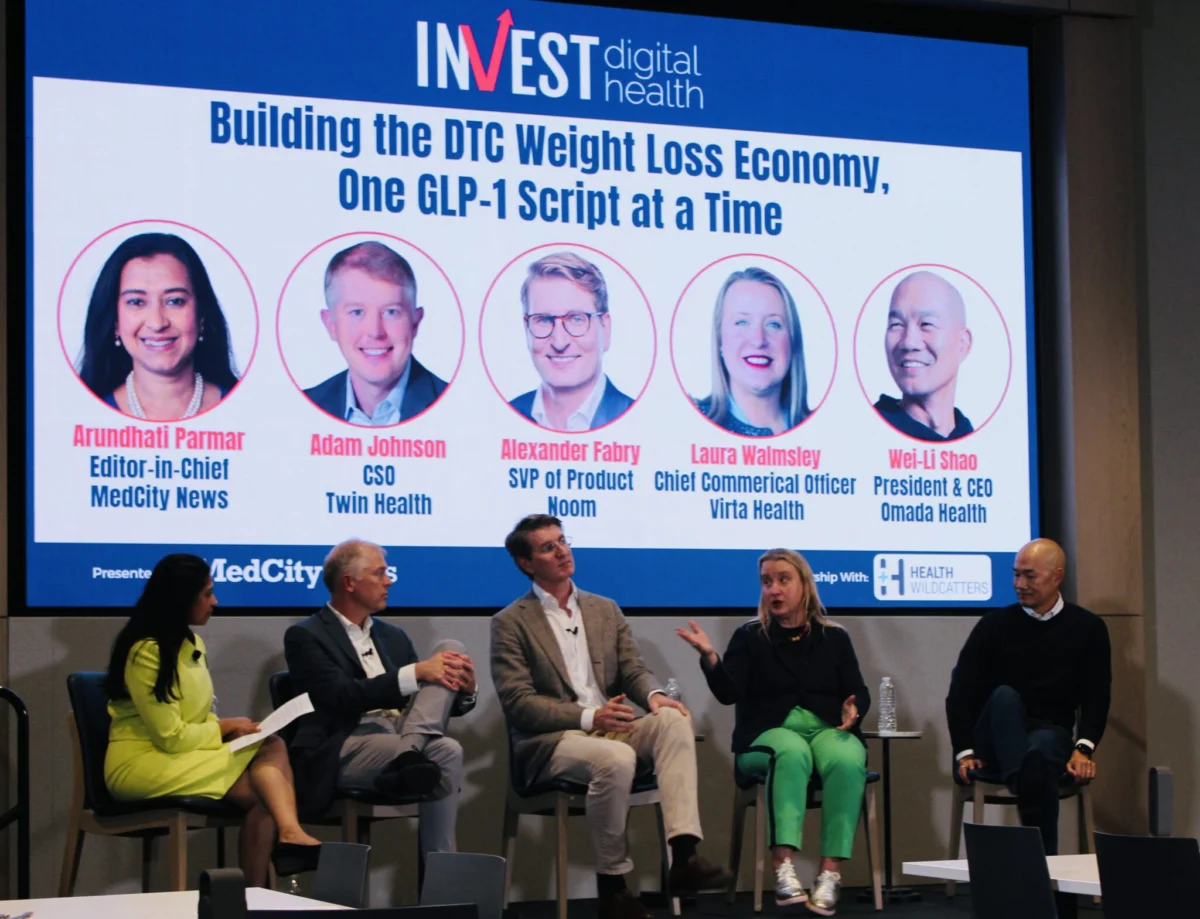
The rapid ascent of glucagon-like peptide-1 (GLP-1) receptor agonists has fundamentally altered the landscape of medical weight loss, yet the initial "gold rush" for these medications is now being met with a sobering reality regarding cost and long-term efficacy. As pharmaceutical giants like Novo Nordisk and Eli Lilly struggle to keep pace with demand for drugs such as Wegovy and Zepbound, the healthcare ecosystem is grappling with a dual crisis: a lack of medication adherence and a prohibitive price tag that is forcing employers to reconsider coverage. At the INVEST Digital Health conference held in late October, a panel of prominent healthtech executives converged to outline a new paradigm for obesity care—one that transitions from the mere provision of a "miracle pill" to a comprehensive, multi-condition management strategy.
The consensus among leaders from Noom, Virta Health, Omada Health, and Twin Health is that the medication alone is insufficient to solve the chronic obesity epidemic. Instead, these companies are positioning themselves as essential "companions" to the pharmacotherapy, arguing that without intensive lifestyle intervention and cardiometabolic monitoring, the clinical gains of GLP-1s may be fleeting and the financial investment by payers largely wasted.
The Adherence Gap and the Necessity of Companion Care
The primary challenge facing the widespread adoption of GLP-1s is not their clinical efficacy, which has been well-documented in trials showing weight loss of up to 20%, but rather the difficulty of maintaining patients on the regimen. Data suggests that GLP-1 adherence "in the wild"—without structured support—is remarkably low. During the conference, Laura Walmsley, Chief Commercial Officer at Virta Health, noted that only about 35% of patients remain on GLP-1 medications after one year when they lack a dedicated support system.
This attrition rate is attributed to a variety of factors, including gastrointestinal side effects, the high out-of-pocket costs for many consumers, and the psychological toll of managing a chronic condition without professional guidance. Walmsley highlighted the disparity between unsupported and supported care, stating that Virta Health sees adherence rates exceeding 80% for those who engage with their lifestyle support programs.
Alexander Fabry, Vice President of Healthcare Product at Noom, echoed this sentiment, framing the drug as a tool rather than a final solution. "You didn’t come for a drug, you came for health," Fabry told the audience. Noom, which built its reputation as a direct-to-consumer psychology-based weight loss app, has pivoted to include clinical services, providing access to prescribing physicians who integrate the medication with coaching and habit-tracking tools. The goal is to move the conversation away from the scale and toward total cardiometabolic health.
The Employer Perspective: ROI and the 2027 Cost Projection
The shift toward holistic management is driven as much by economic necessity as by clinical outcomes. Employers, who serve as the primary plan sponsors for a significant portion of the American workforce, are increasingly wary of the long-term financial implications of GLP-1 coverage. With monthly costs ranging from $900 to over $1,300 per patient, the fiscal impact on corporate balance sheets is substantial.
Wei-Li Shao, President and incoming CEO of Omada Health, pointed to a looming financial crisis in the enterprise market. Current projections suggest that by 2027, healthcare costs in the United States could reach their highest levels relative to the economy since 2003. For employers, the only way to justify the expense of GLP-1s is through a clear Return on Investment (ROI).
Omada Health’s strategy centers on a "multi-condition approach." Shao argued that obesity rarely exists in a vacuum; it is almost always intertwined with other chronic conditions such as Type 2 diabetes, hypertension, and musculoskeletal issues. By using GLP-1s as a lever to improve overall cardiometabolic health, digital health platforms can deliver "compounded results." When a patient loses weight, their blood pressure often drops and their glucose levels stabilize, potentially reducing the need for other expensive medications and interventions. This integrated care model is designed to provide the ROI that risk-averse employers are now demanding.
Deprescribing and the "Digital Twin" Model
While some healthtech firms focus on maintaining patients on medication, others are exploring the possibility of "deprescribing"—helping patients become healthy enough to stop taking GLP-1s altogether without regaining the weight. This is a particularly attractive proposition for employers who fear a "forever cost" associated with these drugs.
Adam Johnson, Chief Strategy Officer at Twin Health, explained that his company utilizes a "digital twin" model to personalize care. By leveraging data from wearable sensors and smart devices, Twin Health creates a digital representation of a patient’s metabolism. This allows for highly tailored recommendations regarding nutrition, sleep, and physical activity.
The ultimate objective of the Twin Health model is to remove the fear often associated with GLP-1 therapy: the worry that once the drug is stopped, the weight will inevitably return. "We’re here to help you try to get enough impact that you get healthy enough that you no longer need it," Johnson said. This focus on metabolic restoration suggests a future where GLP-1s serve as a "jumpstart" to a permanent lifestyle change rather than a lifelong dependency.
A Chronology of the Digital Health Pivot
The current strategies employed by these four companies represent a significant evolution in the digital health sector over the last decade:
- 2010–2018: The Era of Pure Behavioral Change. Companies like Omada and Noom focused on digital versions of the National Diabetes Prevention Program (DPP), emphasizing calorie counting and step tracking.
- 2019–2021: The Virtual Clinic Expansion. Digital health firms began adding "wraparound" clinical services, including remote patient monitoring for hypertension and diabetes.
- 2022–2023: The GLP-1 Explosion. The viral success of Ozempic and Wegovy created a massive surge in consumer demand, leading many platforms to quickly integrate telehealth prescribing capabilities.
- 2024–Present: The Integrated Cardiometabolic Era. Facing employer pushback and adherence issues, the industry is now consolidating these services into comprehensive platforms that manage the "whole person," prioritizing long-term health outcomes over short-term weight loss.
Market Consolidation: Survival of the Platforms
The proliferation of GLP-1 "vending machines"—startups that provide quick prescriptions with little to no follow-up care—has led to a crowded and fragmented market. During a candid exchange at the conference, the panelists discussed the likelihood of industry consolidation.
Wei-Li Shao of Omada Health expressed skepticism that all current players would survive the next 36 months. He described a spectrum in the market: on one end are the "vending machines" that provide easy access to drugs, and on the other are platforms that focus on restricting drug use to save costs. Shao predicted that these "polars" will contract, leaving behind only the comprehensive platforms that can balance access with rigorous clinical management.
Laura Walmsley of Virta Health agreed, noting that the sheer volume of new entrants over the last five years is unsustainable. "No market can have as many entrants as this market has had… and not see consolidation," she remarked. The survivors will likely be those that can demonstrate hard clinical data and a seamless integration into the existing healthcare delivery system.
Broader Implications for the U.S. Healthcare System
The move toward holistic GLP-1 management has profound implications for the broader U.S. healthcare system. If digital health companies can successfully improve adherence and facilitate weight maintenance through lifestyle support, the long-term savings from reduced rates of heart disease, stroke, and diabetes could be astronomical.
However, the challenge remains one of integration and funding. As Alexander Fabry noted, the industry must find ways to "fund that companion" and ensure it is not just a luxury for those who can afford it, but a standard part of the care delivery system. This will require continued collaboration between pharmaceutical companies, digital health providers, insurers, and employers.
Furthermore, the focus on cardiometabolic health highlights a shift in how obesity is treated—moving away from a "willpower" narrative toward a biological and metabolic understanding of the disease. By treating the interrelated conditions of the metabolic syndrome as a single, complex challenge, these healthtech companies are attempting to build a more sustainable and effective model for chronic disease management in the 21st century.
As the market matures, the distinction between "weight loss apps" and "medical platforms" will continue to blur. The winners in this space will be those who can prove that they are not just facilitating the use of a drug, but are actively engineering a healthier, more resilient population that is less dependent on the pharmaceutical intervention in the long run. For now, the industry remains in a period of intense transformation, driven by the dual pressures of unprecedented patient demand and the hard reality of healthcare economics.

