
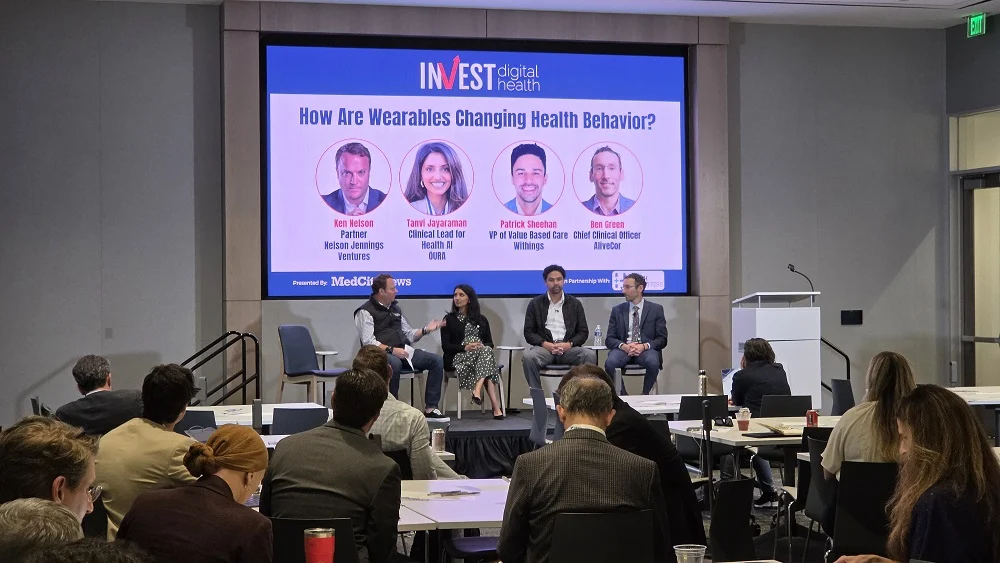
The landscape of modern healthcare is undergoing a seismic shift as wearable technology moves beyond basic fitness tracking into the realm of sophisticated clinical diagnostics. At the recent MedCity News INVEST Digital Health event in Dallas, industry leaders gathered to discuss the transformative power of personal health data and the evolving relationship between patients, their devices, and their healthcare providers. The panel, moderated by Ken Nelson, partner at Nelson Ventures, featured Ben Green, Chief Clinical Officer at AliveCor; Tanvi Jayaraman, Clinical Lead for Health AI at Oura; and Patrick Sheehan, Vice President of Value-Based Care at Withings. Together, they outlined a future where continuous monitoring and predictive analytics do more than just record history—they actively prevent medical crises.
The Genesis of Remote Monitoring: From Pulse Oximeters to AI-Driven ECGs
The journey toward widespread wearable adoption did not happen overnight. Ben Green, now a key executive at AliveCor, recalled a pivotal moment from 2009 that predated the current boom in digital health. At the time, Green was practicing as a family physician and managing a patient suffering from recurring symptoms of atrial fibrillation (AFib). Despite frequent, costly trips to the emergency room, hospital clinicians often found her heart rate to be normal upon arrival, leading to a cycle of frustration and lack of diagnosis.
In a move that foreshadowed the remote patient monitoring (RPM) movement, Green provided the patient with a handheld pulse oximeter for use at home. By monitoring her own heart rate and reporting the data back to Green, the patient gained a sense of agency and "peace of mind" that significantly reduced her emergency room utilization. This "aha moment," as Green described it, demonstrated that providing patients with data in concert with their clinicians could fundamentally alter the trajectory of care.
Since those early days of manual reporting, the technology has scaled exponentially. Today, AliveCor’s medical devices capture approximately one million electrocardiograms (ECGs) every week from users across the globe. This massive influx of data represents a paradigm shift from episodic care—where a patient is only seen during a crisis—to continuous, longitudinal health surveillance.
Strategies for Sustained User Engagement and Retention
One of the most significant hurdles in the wearable sector is "the drawer effect," where users abandon their devices after the initial novelty wears off. To combat this, companies like Oura are focusing on deep integration and a non-intrusive user experience. Tanvi Jayaraman explained that Oura’s strategy revolves around providing a holistic view of health, spanning sleep, cardiovascular health, and metabolic wellness.
A cornerstone of Oura’s retention strategy is its strategic partnership with Dexcom, specifically integrating with the Stelo continuous glucose monitor (CGM). This integration allows users to see their glucose levels directly within the Oura app, mapped against other biometric data. By allowing users to take photos of their meals and see nutrition data overlaid on their glucose curves, Oura creates a tangible link between daily behavior and physiological response.
Jayaraman emphasized that the design of the device itself—a screenless ring—is intentional. By avoiding "blaring" notifications and constant haptic feedback, Oura allows users to engage with their data on their own terms. This philosophy of "ownership over data" is central to keeping users invested in their long-term health journey without feeling overwhelmed by digital noise.
Building a Clinical Ecosystem: The Withings Approach
While Oura focuses on the consumer lifestyle experience, Withings has positioned itself as a bridge between consumer-grade hardware and clinical-grade diagnostic tools. Patrick Sheehan highlighted that Withings’ portfolio—which includes smart scales and watches with FDA clearances—is designed to act as an entry point into a broader health ecosystem.
For a patient diagnosed with hypertension, a Withings scale might be the first step, followed by the addition of a blood pressure monitor that feeds into the same digital environment. However, Sheehan noted that the "consumer" is only half of the engagement equation. The other half is the clinician.
To ensure that the data generated by these devices is actually used to improve outcomes, Withings focuses heavily on integration with Electronic Medical Records (EMRs). By bringing wearable data directly into the clinician’s existing workflow, the company helps doctors titrate medications and adjust treatment plans in real-time. This dual-sided engagement ensures that the data is not just collected, but also interpreted and acted upon by medical professionals.
Bridging the Gap: Data Literacy and Clinical Support
Despite the abundance of data, a significant gap remains in how that data is utilized in a traditional clinical setting. Many physicians are not "digital natives" and may feel overwhelmed by the sheer volume of information coming from their patients’ wearables. Furthermore, there is a liability concern regarding who is responsible for monitoring data 24/7.
To address this, AliveCor has developed a cardiologist network that provides asynchronous reviews of ECGs. This model allows for professional oversight without requiring the patient’s primary physician to be on call at all times. Green noted that while AI and automated guidance are essential, providing clinicians with educational materials and context for both clinical and wellness data is vital for building trust in the technology.
The panelists agreed that the rise of "digital-native" physicians—those who have grown up with technology and understand its nuances—is key to the broader adoption of wearable data. Withings has gone so far as to collaborate with medical groups comprised of these tech-forward doctors to model how device data can be best utilized in patient management.
Supporting Data: The Economic and Clinical Impact
The shift toward wearables is supported by a growing body of clinical evidence and economic data. According to industry reports, the global wearable healthcare devices market was valued at approximately $25 billion in 2022 and is projected to grow at a compound annual growth rate (CAGR) of over 10% through 2030.
The clinical stakes are equally high. Atrial fibrillation, the condition Green’s patient suffered from in 2009, affects millions of Americans and significantly increases the risk of stroke. Traditional diagnostic methods, such as Holter monitors, are often uncomfortable and only record data for short periods (24 to 48 hours). In contrast, wearables like those from AliveCor and Withings allow for months of continuous monitoring, drastically increasing the likelihood of capturing intermittent arrhythmias.
Furthermore, the integration of CGMs with wearables addresses the growing diabetes epidemic. According to the CDC, over 38 million Americans have diabetes, and 97 million have prediabetes. Tools that allow for real-time visualization of metabolic health, such as the Oura-Dexcom integration, provide a scalable way to implement lifestyle interventions that can prevent the progression of chronic disease.
The Future of Prediction: Health Risk as a Credit Score
Looking ahead, the consensus among the panelists was that the industry is moving from "monitoring" to "prediction." Tanvi Jayaraman noted that Oura’s physician team is focused heavily on prevention—identifying individuals at risk of developing conditions years before clinical symptoms manifest.
Ben Green shared a bold vision for the next five years, suggesting that cardiovascular risk will soon be as quantifiable and accessible as a credit score. AliveCor is already developing ECG models capable of predicting mortality and heart disease, effectively moving the company into the "prediction business."
"I think in five years, everyone is going to know a quantifiable risk of themselves for cardiovascular disease and what they can do about it," Green stated. This shift toward a "health score" model could revolutionize how individuals approach their own wellness, turning abstract medical risks into actionable data points.
Broader Implications for the Healthcare System
The implications of this technological evolution are profound. For the insurance industry, the ability to accurately predict and prevent high-cost events like strokes and heart attacks offers a clear path toward reducing overall healthcare spending. For patients, it offers a level of autonomy and personalized care that was previously impossible.
However, several challenges remain. Data privacy and security are paramount, as the sensitivity of biometric data requires robust protections against breaches. Additionally, there is the risk of a "digital divide," where only those who can afford high-end wearables and subscription services benefit from these advancements.
As the industry moves forward, the success of wearable technology will likely depend on three factors: the continued accuracy and clinical validation of the hardware, the seamless integration of data into clinical workflows, and the ability of AI to turn raw numbers into meaningful, personalized health narratives. The INVEST Digital Health panel made it clear that while the "aha moment" may have happened in 2009, the real revolution in data-driven healthcare is only just beginning.

