
The landscape of search engine optimization (SEO) is in constant flux, and a prime example of this evolution can be observed in the way search engines, particularly Google, handle meta descriptions. Once a cornerstone for organic search snippets, meta descriptions are now often superseded by AI-driven content analysis, prompting a re-evaluation of their necessity and strategic value. This shift, accelerated by the rise of generative artificial intelligence (AI) in search, presents both challenges and opportunities for website owners and SEO professionals seeking to maximize their online visibility.
A Historical Shift in Snippet Generation
For years, the meta description tag was a direct tool for webmasters to influence how their pages appeared in search engine results pages (SERPs). A well-crafted meta description, typically between 150 and 160 characters, served as a concise advertisement for a web page, aiming to capture the attention of potential searchers and encourage clicks. The optimization of these descriptions involved strategic keyword placement and compelling copywriting to entice users to select a particular link from a list of search results. This manual approach allowed for a degree of control over the initial impression a website made on a user even before they visited the page.
However, the advent of more sophisticated search algorithms has fundamentally altered this dynamic. Google, in particular, has increasingly moved towards dynamically generating snippets based on the user’s specific search query and the content present on the page itself. This means that even if a meta description is meticulously written, Google’s algorithms may choose to extract a more relevant passage directly from the page’s body text if it is deemed a better fit for the searcher’s intent. This phenomenon is particularly evident when a user searches for highly specific or long-tail keywords, where the algorithm prioritizes direct relevance over a pre-written summary. The underlying principle is that the most accurate and helpful snippet should be derived from the actual content that addresses the user’s query most directly.
Google’s Official Stance: A Continued, Albeit Modified, Role
Despite the observed shift towards dynamic snippet generation, Google has maintained that meta descriptions are not entirely obsolete. In its Search Central blog, Google has clarified its position, stating that while page content is the primary driver for snippet creation, meta descriptions can still be utilized when they "describe the page better than other parts of the content." This nuanced approach suggests that a well-written and relevant meta description retains its potential to influence snippet generation, especially when it accurately encapsulates the essence of the page in a way that the algorithm might struggle to replicate automatically.
The Search Central guidance further recommends creating descriptions for critical URLs, such as home pages and popular pages. This advice underscores the idea that for pages containing vital information or representing a brand’s core offering, a deliberate and well-considered meta description can still be a valuable asset. The implication is that while AI can analyze and extract information, human oversight and strategic writing remain important for key web assets.
Adding to this perspective, John Mueller, a prominent Search Advocate at Google, reiterated the potential usefulness of meta descriptions in a recent online discussion. He suggested that the process of writing a meta description can, in itself, help website owners clarify the core focus of a page. While acknowledging that meta descriptions are "definitely not a requirement," Mueller advised that they remain "worthwhile to do so for individual pages that you care about." This perspective highlights a dual benefit: the potential impact on search snippets and the internal SEO benefits of conceptualizing a page’s primary purpose.
The Enduring Value of Meta Descriptions: A Practical Approach
From a practical standpoint, there appears to be no significant downside to including meta descriptions on web pages. For many SEO professionals and website owners, the consensus is to continue implementing them, particularly for pages where a precise and compelling summary is crucial. This includes high-intent pages such as product detail pages, category pages, and key landing pages. These pages often contain rich, complex information—detailed product specifications, service descriptions, customer testimonials, and pricing structures—which can be challenging for automated systems to condense effectively into a single, accurate snippet.
In such cases, a carefully crafted meta description can act as a crucial bridge, providing search engines and, increasingly, generative AI crawlers with a clear, concise summary that accurately reflects the page’s content and value proposition. For instance, consider a complex product page for an e-commerce site. The page might feature multiple variants, technical specifications, user reviews, and shipping information. A meta description can distill this into a compelling invitation, such as: "Explore detailed specifications, customer reviews, and pricing for the [Product Name] – find the perfect solution for your needs." This direct summary can be more effective than an algorithm randomly selecting a sentence from a lengthy technical specification.

The Rise of Generative AI and Snippet Generation
The integration of generative AI into search has further complicated the role of meta descriptions. Platforms like ChatGPT and Claude, along with various AI-powered applications, are now capable of generating sophisticated answers and summaries that go beyond traditional search snippets. These AI models often draw upon vast datasets, including the content of web pages, to provide comprehensive responses. In this context, a well-written meta description can serve as an authoritative signal, guiding AI models towards the most salient information on a page.
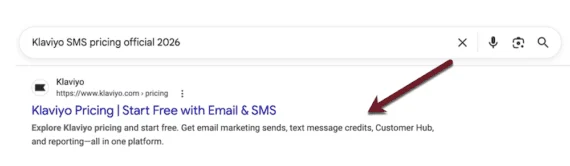
An illustrative example can be seen with Klaviyo’s SMS pricing page. The meta description for this page reads: "Explore Klaviyo pricing and start free. Get email marketing sends, text message credits, Customer Hub, and reporting – all in one platform." When a user searches for "Klaviyo SMS pricing official 2026," both Google’s organic search results and AI-powered conversational search interfaces have been observed to utilize this meta description. This demonstrates that even in the era of advanced AI, a clear, informative, and keyword-rich meta description can still be instrumental in shaping how information is presented to users across different search experiences. The image provided shows a Google search result snippet for this query, with an arrow explicitly pointing to the meta description text as the source for the displayed snippet, reinforcing its ongoing relevance.
Best Practices for Writing Effective Meta Descriptions
In the pre-AI era, SEO professionals heavily emphasized keyword density within meta descriptions. While keywords remain important for relevance, the focus has shifted towards creating descriptions that are both informative and enticing, reflecting the current search environment. For high-intent pages, such as product detail pages, category pages, and critical landing pages, the following best practices are recommended:
- Clarity and Conciseness: Aim for descriptions that are easy to understand and directly address the likely search intent. Keep them within the optimal character limit to avoid truncation in SERPs.
- Keyword Relevance: Naturally incorporate primary keywords that users are likely to search for, but avoid keyword stuffing, which can harm readability and user experience.
- Compelling Value Proposition: Highlight what makes the page unique or valuable to the user. What problem does it solve? What benefit does it offer?
- Call to Action (Implicit or Explicit): Encourage users to click by suggesting what they will find or do on the page. Phrases like "Learn more," "Discover," or "Explore" can be effective.
- Uniqueness: Ensure each meta description is unique to the page it represents. Duplicate descriptions can confuse search engines and dilute SEO efforts.
- Accuracy: The meta description must accurately reflect the content of the page. Misleading descriptions lead to high bounce rates and negatively impact user trust.
Addressing Large-Scale Content and Programmatic Generation
For large websites with extensive product catalogs, such as e-commerce sites with thousands of products, manually writing unique meta descriptions for every page is often an unfeasible task. In such scenarios, Google recommends generating meta descriptions programmatically. This can be achieved through various methods:
- Custom Scripting: Developing in-house scripts that pull key product attributes (name, brand, key features) and assemble them into a standardized meta description format.
- Content Management System (CMS) Tools: Many modern CMS platforms offer features or plugins that facilitate the bulk generation of meta descriptions based on predefined templates.
- Generative AI Platforms: Leveraging AI tools like ChatGPT, Claude, or specialized AI writing assistants can automate the creation of meta descriptions. These platforms can be prompted with specific product details and desired tone to generate a high volume of unique descriptions. However, it is crucial to employ careful prompting techniques and ensure the AI understands the nuances of effective meta description writing.
Regardless of the method used for programmatic generation, a critical step is manual review and refinement. For pages that are particularly important to the business—those with high traffic, significant conversion rates, or representing flagship products—human oversight is indispensable. This ensures that the generated descriptions are not only grammatically correct and relevant but also strategically aligned with marketing goals and accurately convey the intended message. A human reviewer can identify subtle inaccuracies, enhance persuasive language, and ensure brand consistency, which automated systems might overlook.
The Broader Implications for SEO and Content Strategy
The evolving role of meta descriptions signals a broader shift in how search engines interpret and present information. The emphasis is increasingly on providing users with the most relevant and helpful content, regardless of whether it originates from a pre-written meta description or dynamically extracted text. This trend has several key implications:
- Content is King, but Context is Queen: While high-quality, relevant content remains paramount, the context in which that content is presented – including its structure, headings, and summary elements like meta descriptions – plays a vital role in how effectively search engines can understand and utilize it.
- The Rise of Featured Snippets and AI Answers: The move towards dynamic snippet generation is closely linked to the proliferation of featured snippets and AI-powered answers. These elements often pull directly from page content, making on-page optimization and clear information hierarchy even more critical.
- Strategic Importance of Key Pages: While broad coverage is important, the strategic value of meticulously optimizing meta descriptions for critical pages cannot be overstated. These are the pages that often drive conversions and brand perception, and a well-crafted meta description can significantly influence their performance in SERPs.
- Adaptability in SEO: SEO professionals must remain adaptable, continuously monitoring how search engines evolve and adjusting their strategies accordingly. The ability to leverage both traditional SEO techniques and emerging AI-driven approaches will be crucial for success.
In conclusion, while the era of meta descriptions solely dictating search snippets may be waning, they have not become obsolete. Instead, their role has evolved. They remain a valuable tool for influencing how search engines and AI models understand and present a page’s content, particularly for critical web assets. By understanding this evolution and applying best practices, website owners can continue to leverage meta descriptions effectively to enhance their visibility and attract more qualified traffic in the dynamic world of online search. The ongoing interplay between human-authored content, algorithmic interpretation, and generative AI ensures that the art and science of search engine optimization will continue to be a fascinating and ever-changing field.

