
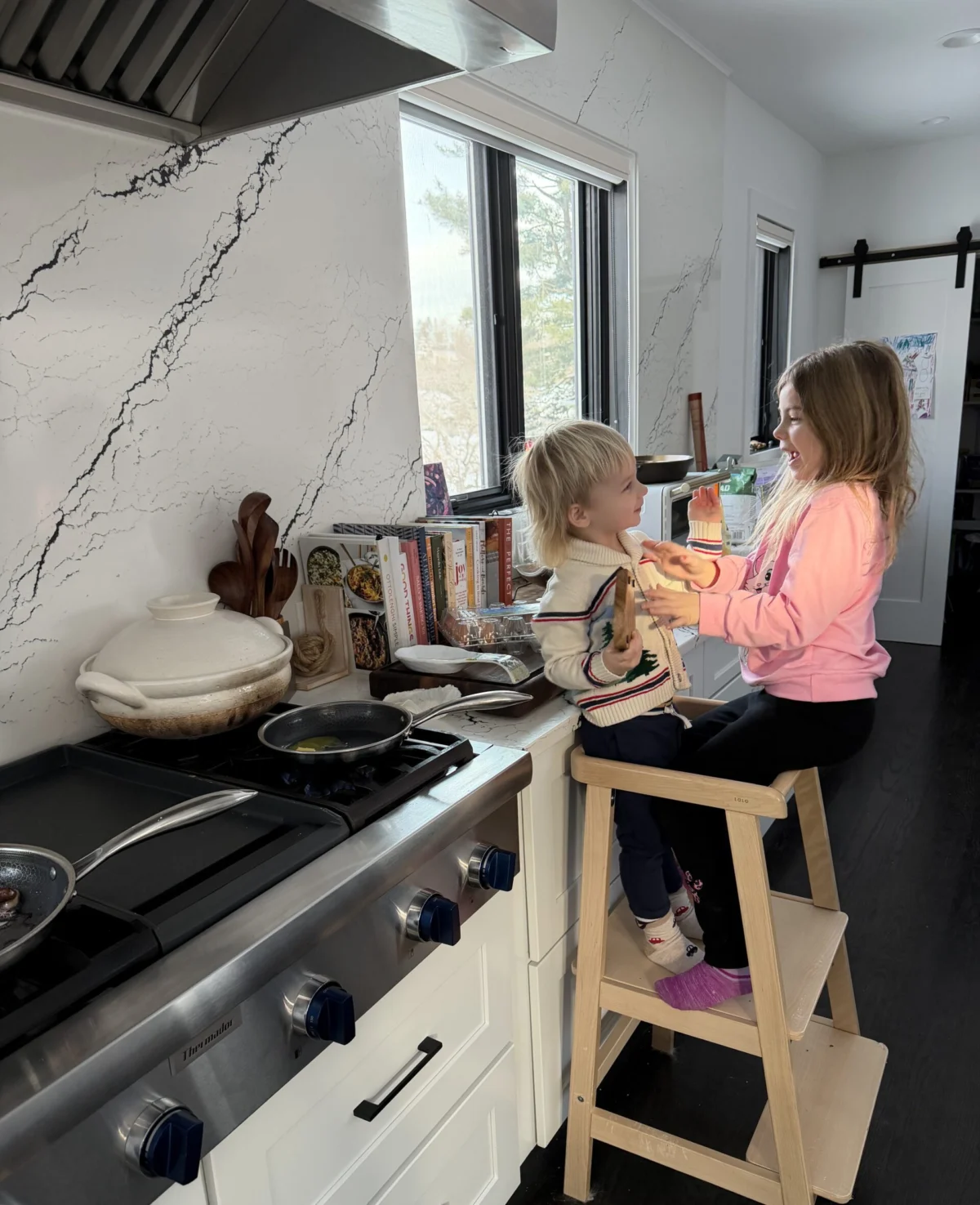
The kitchen, traditionally the heart of the home, is gaining renewed recognition not merely as a place for sustenance but as a dynamic laboratory for child development, a sanctuary for family bonding, and a classroom for essential life skills. While modern life often pulls families in disparate directions, the shared act of preparing a meal offers a potent antidote, transforming mundane tasks into meaningful interactions. Observations from public figures, such as sports broadcaster Laura Rutledge, underscore a growing consensus among parents and child development specialists about the profound, multifaceted benefits derived from involving children in the culinary process from their earliest years. These benefits extend beyond the immediate satisfaction of a homemade meal, influencing cognitive development, emotional intelligence, and long-term health habits.
The Kitchen as a Crucible for Early Development
From infancy, the kitchen environment presents a rich sensory landscape for children, an aspect often overlooked in formal educational settings. For infants, being held close while a parent stirs a pot offers exposure to varied aromas, the rhythmic sounds of cooking, and the tactile experience of warmth and movement. This early, almost incidental engagement lays foundational neural pathways. As children grow into toddlers and preschoolers, their involvement becomes more active, directly stimulating fine motor skills, hand-eye coordination, and sensory processing. Tasks such as stirring, pouring, kneading, and measuring, even if initially clumsy, are crucial for developing dexterity and proprioception.
Child development experts frequently highlight the importance of play-based learning, and the kitchen provides an ideal setting for this. For instance, scooping flour or pouring water into a bowl engages spatial reasoning and introduces concepts of volume and weight in a tangible, intuitive manner. The seemingly simple act of cracking an egg, as observed by parents like Rutledge, requires a delicate balance of force and gentleness, refining motor control over time. Dr. Sarah Jenkins, a pediatric occupational therapist, notes, "The kitchen offers a unique multi-sensory environment that supports foundational skill development. From the tactile exploration of ingredients to the visual tracking of a stirring spoon, children are constantly engaging multiple senses, which is vital for brain development in early childhood." This hands-on, experiential learning far surpasses the effectiveness of abstract instruction, embedding knowledge through direct engagement.
Nurturing Healthy Eating Habits and Overcoming Picky Eaters
One of the most immediate and tangible benefits reported by parents who involve their children in cooking is a marked increase in willingness to try and enjoy new foods. This phenomenon, often referred to as the "ownership effect," is well-documented in child psychology and nutrition research. When children actively participate in selecting, preparing, and cooking ingredients, they develop a sense of investment and pride in the finished product. This psychological ownership can significantly mitigate food neophobia, the reluctance to eat or try new foods, which is a common challenge for parents of young children.
A study published in the Journal of Nutrition Education and Behavior found that children who frequently participated in meal preparation consumed more fruits and vegetables than those who did not. The act of touching, smelling, and preparing ingredients demystifies them, making them less intimidating. For a child who previously "swore they didn’t like vegetables," helping to chop peppers or sprinkle cheese on a casserole can transform their perception. Nutritionists like Dr. Emily Carter advocate for giving children age-appropriate tasks, no matter how small. "Allowing a child to stir the soup, wash vegetables, or carefully pour pasta into a pot provides a sense of agency," Dr. Carter explains. "This empowerment translates directly into a greater likelihood of accepting and even enjoying the meal they’ve helped create, fostering a positive relationship with food that can last a lifetime." This approach contrasts sharply with coercive methods often employed to encourage healthy eating, which can inadvertently create negative associations with food.
Cultivating Essential Life Skills and Academic Foundations
Beyond motor skills and nutritional habits, the kitchen serves as an invaluable informal classroom for a wide array of cognitive and academic skills. Following a recipe, for example, is a complex task that requires sequential thinking, problem-solving, and attention to detail—skills directly transferable to academic success. Children learn to read and interpret instructions, understand measurements, and grasp the concept of cause and effect. "If we add too much salt, it will be too salty." "If we don’t mix thoroughly, the ingredients won’t combine properly."
Mathematics comes alive through measuring ingredients, understanding fractions (half a cup, a quarter teaspoon), and even simple arithmetic (doubling a recipe). Science concepts are explored through observations of physical and chemical changes: dough rising, eggs solidifying when cooked, sugar dissolving. The progression of skills is chronological and developmental:
- Toddlers (1-3 years): Focus on sensory exploration (touching textures, smelling aromas), simple pouring/stirring with assistance, washing produce.
- Preschoolers (3-5 years): Begin to follow 1-2 step instructions, measure with pre-measured cups, sprinkle ingredients, tear lettuce, use kid-safe knives for soft items. This stage also sees the emergence of early literacy as they recognize numbers on measuring cups and ingredient names.
- Early School Age (6-8 years): Can follow multi-step recipes, read simple instructions, crack eggs with less mess, use more complex tools under supervision, understand basic cooking temperatures and times. They start to grasp the concept of proportions and scaling recipes.
- Pre-teens (9-12 years): Capable of preparing simple meals largely independently, understanding food safety principles, and experimenting with flavors. This period often sees a significant boost in confidence as they master more advanced techniques.
Educators like Ms. Rebecca Chen, a primary school teacher, emphasize the practical application of abstract concepts. "Many of the concepts we teach in math and science—fractions, volume, states of matter—become tangible and relevant in the kitchen," she states. "When children measure ingredients, they’re not just practicing math; they’re understanding its real-world utility, which deepens their comprehension and retention." Furthermore, the collaborative nature of cooking fosters communication skills, patience, and the ability to work as part of a team.
Fostering Unstructured Connection and Emotional Well-being
In an era dominated by screens and structured activities, the kitchen offers a rare space for unstructured, organic interaction. The absence of pressure, combined with a shared goal, creates an ideal environment for genuine conversation and connection. Parents often find that children open up more readily about their day, their thoughts, and their feelings when engaged in a parallel activity like cooking, rather than during a direct interrogation. This side-by-side activity, as Rutledge notes, allows conversations to "just happen," fostering a sense of ease and intimacy.
The act of cooking together also provides a valuable opportunity for parents to model patience and adaptability. The fast-paced demands of professional life, as described by Rutledge’s experience at ESPN, often contrast sharply with the slow, deliberate pace required when cooking with children. This forced slowdown can be profoundly beneficial for parental well-being, shifting focus from external pressures to the present moment. Celebrating "tiny wins"—a child remembering to stir slowly, or trying a new food—reinforces positive behavior and builds a shared history of joyful moments. Dr. David Miller, a family therapist, highlights this aspect: "Shared activities, especially those that are hands-on and creative like cooking, are fundamental for building strong family bonds. They create a ‘safe space’ for interaction, reducing performance anxiety and encouraging authentic communication, which is crucial for emotional development and resilience." The laughter, the occasional song and dance, and the inevitable mess all contribute to a tapestry of cherished family memories that strengthen emotional connections.
Building Confidence and Contributing to the Family Unit
Perhaps one of the most powerful outcomes of involving children in cooking is the profound boost in self-esteem and the development of a sense of responsibility. When children are given real tasks, not just pretend play, they experience the satisfaction of genuine contribution. Slicing fruit, squeezing tomatoes for a sauce, or even making "slightly overcooked scrambled eggs" with pride instills a deep sense of capability. This tangible contribution helps children understand their value within the family unit.
Developmental psychologists emphasize that a child’s sense of self-worth is greatly enhanced when they feel they are making a meaningful contribution. This goes beyond simple chores; it’s about being an integral part of a process that directly benefits the entire family. Giving children ownership over their tasks, even if the outcome isn’t "restaurant-quality," communicates trust and validates their efforts. This trust, in turn, empowers them to take on more complex challenges in other areas of their lives. Furthermore, mastering a new skill in the kitchen—whether it’s cracking an egg or kneading dough—builds resilience and a growth mindset. They learn that practice leads to improvement and that mistakes are part of the learning process.
Practical Considerations and Tools for Success
To maximize the benefits and ensure safety, investing in appropriate tools is a practical step for parents. Kid-safe knives, sturdy mixing bowls with handles, and reliable step stools make the kitchen accessible and manageable for young helpers. These tools reduce parental anxiety about sharp edges and hot surfaces, allowing for a more relaxed and positive cooking experience. Simple adaptations, such as preparing ingredients in advance or breaking down complex recipes into smaller, manageable steps, can also make the process more enjoyable for both children and adults. The focus shifts from culinary perfection to the joy of shared experience and learning.
Broader Societal Implications
The cumulative effect of widespread kitchen engagement among children extends beyond individual families. A generation of children growing up with practical cooking skills is more likely to develop healthier eating habits, fostering better public health outcomes. They are also more likely to be self-sufficient, resourceful, and capable problem-solvers, contributing positively to society. In an increasingly complex world, fostering such foundational life skills from an early age equips individuals with the confidence and practical knowledge necessary to navigate challenges and thrive. The kitchen, therefore, is not just a place for preparing meals; it is a vital training ground for life itself.
In conclusion, the decision to involve children in cooking, while sometimes messy and time-consuming, yields an extraordinary return on investment. From nurturing early cognitive and motor skills to fostering healthy eating habits, building academic foundations, strengthening family bonds, and instilling a profound sense of confidence and contribution, the benefits are expansive and enduring. The kitchen, once viewed primarily through the lens of domesticity, is now increasingly recognized by parents, educators, and developmental specialists as an indispensable environment for holistic child development and a cornerstone of resilient family life.

