
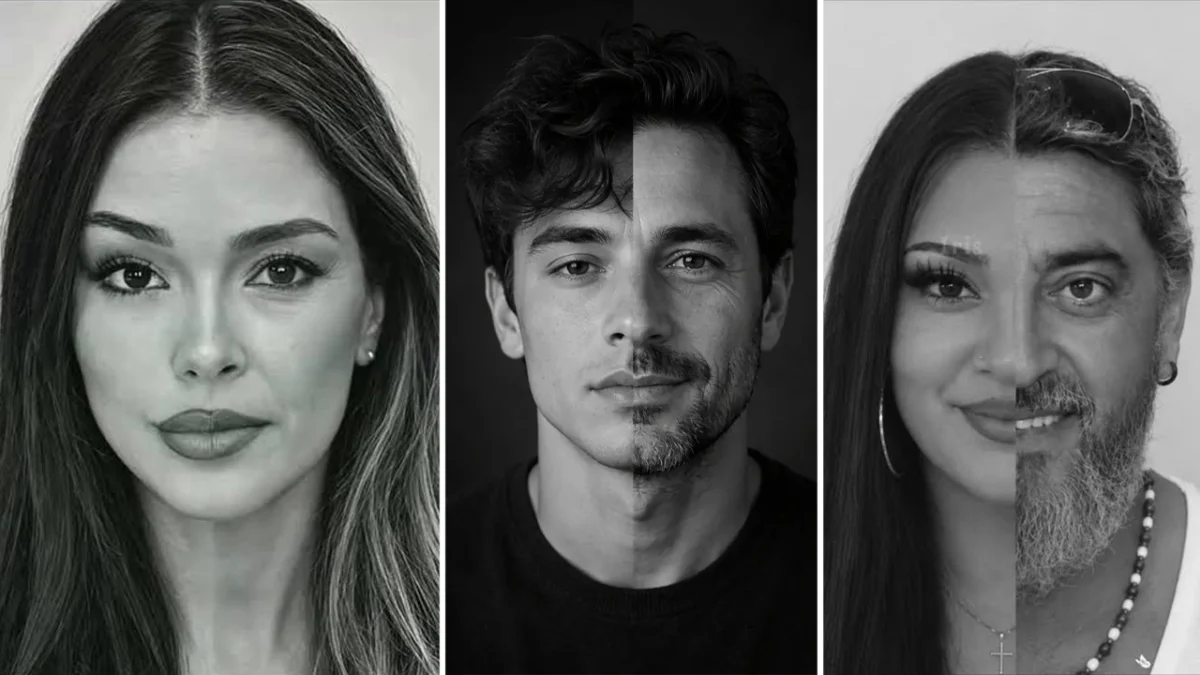
The Parent Split-Face Trend, a viral digital phenomenon also widely recognized as the Family Resemblance Trend, the Mom Effect, or the Dad Effect, has emerged as a dominant cultural fixture across TikTok, Instagram, and other major social media platforms during the third quarter of 2026. This trend involves users utilizing advanced artificial intelligence tools and video editing templates to merge a portrait of their own face with that of a parent, creating a seamless, often uncanny, split-image comparison. By bisecting two distinct photographs—typically one of a child in their current age and one of a parent at a similar life stage—users are able to demonstrate striking genetic similarities that might otherwise remain subtle. While the trend primarily utilizes high-contrast black-and-white aesthetics to emphasize bone structure and facial features, it has evolved to encompass a wide range of familial and interpersonal comparisons, signaling a new era of AI-assisted self-exploration in the digital age.
The Technological Architecture of the Resemblance Trend
The rapid proliferation of the Parent Split-Face Trend is fundamentally linked to the democratization of generative artificial intelligence and sophisticated mobile editing software. Unlike previous "look-alike" challenges that relied on manual side-by-side collages, the 2026 iteration leverages tools such as Meta AI and ChatGPT’s integrated image processing capabilities. These tools allow users to upload two separate images and receive a perfectly aligned, blended portrait.
The aesthetic hallmark of the trend—the use of black-and-white filters—serves a dual purpose. From a technical standpoint, removing color data helps the AI and the viewer focus on structural symmetry, such as the alignment of the jawline, the bridge of the nose, and the shape of the orbital sockets. From a stylistic perspective, it evokes a sense of timelessness and nostalgia, bridging the generational gap between the two subjects.
Furthermore, the role of CapCut, the video editing suite owned by ByteDance, cannot be overstated. By providing "pioneer templates," CapCut allowed the trend to scale exponentially. These templates automate the transition between the individual photos and the final split-face reveal, synchronized to specific trending audio tracks. This automation lowered the barrier to entry, allowing users without professional editing skills to participate in a high-fidelity visual trend.
Chronological Development and Viral Trajectory
The lineage of the Parent Split-Face Trend can be traced to early August 2026, though its exact point of origin remains a subject of digital archaeology. On August 7, 2026, one of the earliest documented instances appeared on Instagram when user samanthaslider03152023 posted a full-color comparison using Meta’s AI tools. While this specific post did not achieve immediate viral status, it established the procedural framework for what was to follow.
The trend shifted toward TikTok in mid-August, where it adopted the specific black-and-white aesthetic and tutorial-driven format that would define its peak. On August 19, 2026, TikTok user ngomai729 published a comprehensive tutorial in Russian, demonstrating how to utilize CapCut templates to achieve the split-face effect. This tutorial acted as a catalyst for international audiences, providing a blueprint for the "look-alike" prompt.
By early September 2026, the trend reached a critical mass. On September 8, the user clzl3vnad2 released a refined tutorial that garnered nearly 100,000 likes within ten days, indicating a massive surge in public interest. This period saw the trend move beyond simple parent-child comparisons. Users began applying the split-face logic to siblings, as seen in the posts by b.boggs on September 13, and even to romantic partners to test the "do couples look alike" theory. The metadata associated with these posts frequently included hashtags like #FamilyResemblance, #MomEffect, and #CapCutPioneer, creating a self-sustaining feedback loop within the platform’s discovery algorithms.
Sociological and Psychological Drivers
The Parent Split-Face Trend resonates with users on a level that transcends simple entertainment. Psychologists suggest that the trend taps into a fundamental human desire for belonging and identity. By visually proving a biological link to their ancestors, users find a sense of continuity and "genetic validation." The common captions accompanying these videos—"You look just like your mom" or "I see my father in them"—reflect a deep-seated interest in heritage.
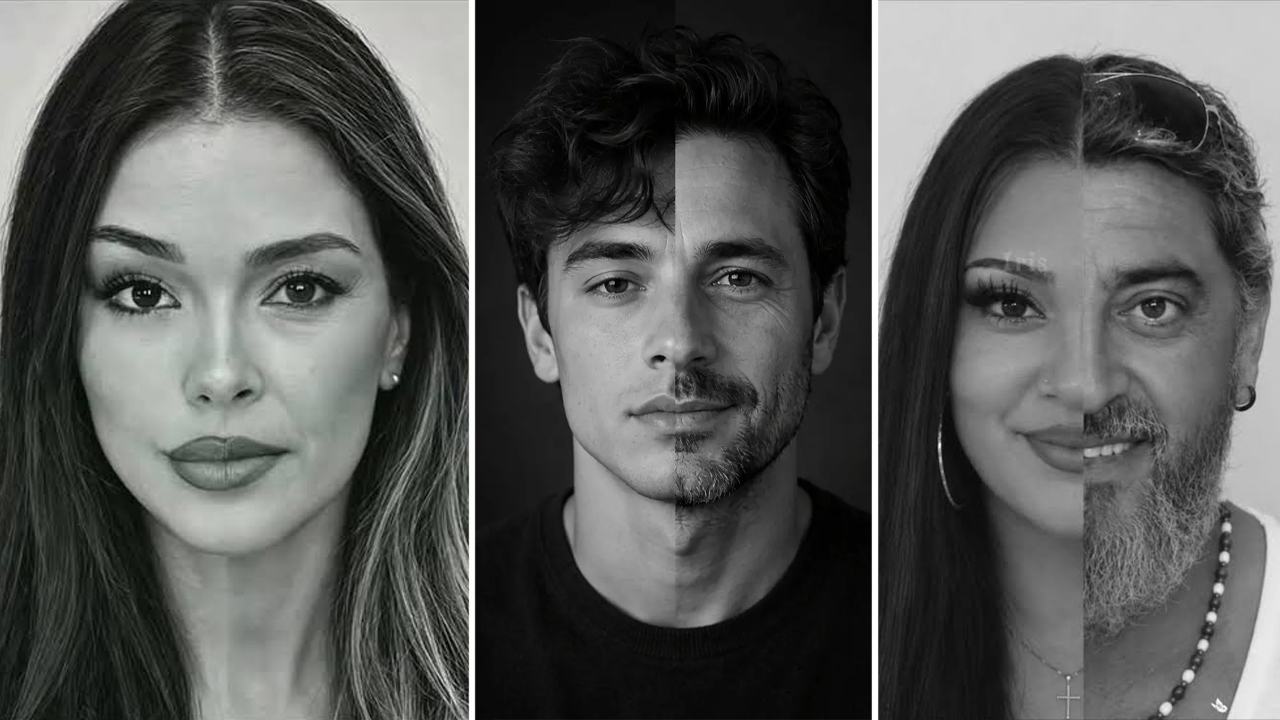
In an increasingly digitized world where identity can feel fragmented, the Split-Face Trend offers a tangible connection to physical reality and biological history. It also serves as a form of digital tribute. Many users have utilized the trend to honor deceased parents or to bridge distances in families separated by geography. The emotional weight of these "reveals" often drives high engagement, as viewers react to the startling clarity of the resemblances.
Industry Impact and Platform Dynamics
From a market perspective, the trend highlights the ongoing competition between Meta and ByteDance for dominance in the AI-integrated social space. Meta’s early involvement via its AI tools provided the creative engine, but TikTok’s template-driven ecosystem provided the distribution network.
Data analysts have noted that trends like the Parent Split-Face comparison significantly increase "dwell time" on platforms. Because the final split-image is often only shown for a few seconds at the end of a video, users frequently rewatch the content or pause the video to examine the details, which signals high-quality engagement to the platforms’ algorithms. This, in turn, pushes the content to wider audiences on the "For You" pages (FYP).
The trend has also provided a boost to the "creator economy" for template makers. CapCut "pioneers"—users who create and share editing templates—have seen their follower counts swell as millions of users look for the easiest way to replicate the high-quality split-face effect.
Privacy and Ethical Considerations in AI Analysis
As with any trend involving the mass upload of personal and familial imagery to AI servers, the Parent Split-Face Trend has raised questions regarding data privacy. To generate these images, users must grant AI models access to high-resolution photographs of themselves and their family members.
Privacy advocates have pointed out that these images are often used to further train facial recognition algorithms and generative models. While the average user participates for the sake of a 15-second video, the long-term storage and use of this biometric data by tech conglomerates remain a point of contention. Furthermore, the "uncanny" nature of some AI-generated splits has sparked discussions about the "uncanny valley," where a digital recreation is almost—but not quite—human, occasionally leading to a sense of unease among viewers.
Broader Cultural Implications and Future Outlook
The Parent Split-Face Trend of 2026 is likely a precursor to more sophisticated forms of digital genealogy. As AI tools become more adept at aging or de-aging subjects, we can expect future trends to involve "time-traveling" comparisons, where a user compares their current face to an AI-reconstructed image of a grandparent at the same age.
The trend also marks a shift in how social media users interact with AI. It is no longer seen merely as a tool for productivity or a novelty for generating surreal art; it is being integrated into the way humans perceive their own biology and family history. By merging the old (family photo albums) with the new (generative AI), the Parent Split-Face Trend has created a new medium for storytelling.
In conclusion, the Parent Split-Face Trend represents a significant intersection of technology, psychology, and social media culture. It has transformed the way millions of people view their own faces, turning the act of looking in the mirror into a collaborative experience with the past. As the trend continues to evolve and branch out into different familial and social categories, it stands as a testament to the power of AI to create meaningful, albeit fleeting, moments of human connection in the digital landscape. Through the simple act of splitting a face, users are finding a way to see themselves and their heritage in a completely new light.

