
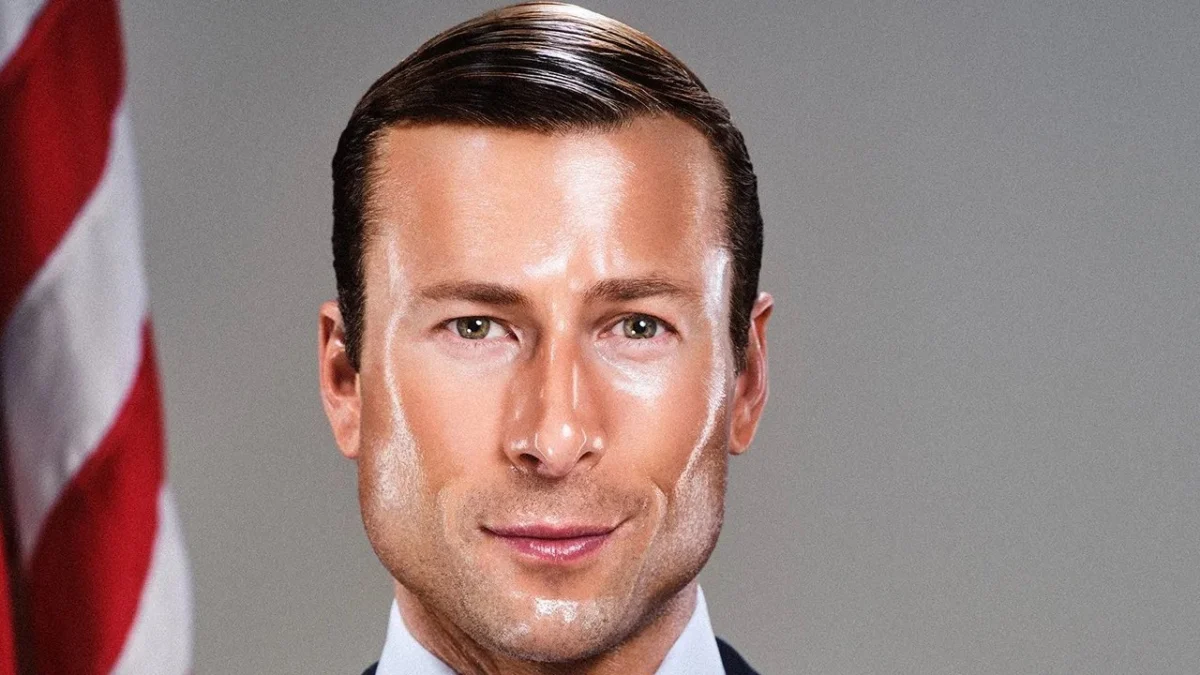
The intersection of celebrity culture, high-fashion satire, and the unpredictable mechanics of internet virality reached a new zenith in the summer of 2026 with the emergence of the John Politics meme. Centered on a 2025 photograph of actor Glen Powell, the meme—alternatively known as President Glen Powell or Paul E. Tician—has transcended simple image-sharing to become a cultural shorthand for the hyper-stylized, often hollow nature of modern political branding. What began as a satirical commentary on male archetypes in a GQ editorial has evolved into a multifaceted digital movement, driven by TikTok edits, linguistic wordplay, and a fascination with the "uncanny valley" of political charisma.
The Genesis: The 2025 GQ Editorial and the Satire of Aspiration
The origin of the phenomenon dates back to September 9, 2025, when GQ published an extensive profile and photoshoot featuring Glen Powell. At the time, Powell was cementing his status as a leading man following the massive commercial success of Top Gun: Maverick, Anyone But You, and Twisters. The editorial, titled for its exploration of modern masculinity, featured Powell inhabiting various "male fantasies." These included a vaping cowboy, an exaggeratedly vascular bodybuilder, a rugged spelunker, and most significantly, a generic American political candidate.
The specific image that would later ignite the internet featured Powell in a meticulously tailored navy suit and a monochromatic tie, his hair slicked back to a high-gloss sheen. Standing before a slightly blurred American flag, Powell is captured in a mid-gesture pose, his hand extended as if addressing a crowd or sealing a legislative deal. The lighting is intentionally dramatic, creating a "glossy" effect that highlights the actor’s sharp features. According to the GQ creative team, the shoot was intended to lampoon the manufactured nature of public personas, presenting a version of a leader that felt more like a video game character than a living statesman.
Initial reactions in late 2025 were positive but contained within the film and fashion communities. One notable early critique came from X user @Konijn370576, who remarked that Powell looked like a "fake political candidate in GTA [Grand Theft Auto]." This observation, which garnered over 415,000 likes, identified the core appeal of the image: its "uncanny" perfection, which mirrored the satirical, over-the-top political advertisements found in the Rockstar Games universe.
The 2026 Viral Resurgence: Chronology of a Digital Takeover
While the image circulated sporadically for nearly a year, it was not until July and August of 2026 that it achieved "meme" status. This resurgence was fueled by a convergence of social media trends, specifically the "looksmaxxing" and "mogging" subcultures on TikTok and Instagram. These communities, which focus on physical attractiveness and dominance through appearance, found the hyper-groomed, "presidential" version of Powell to be the perfect vessel for their content.
On July 30, 2026, TikToker @pauletics0 posted a meme using the image with a surrealist caption regarding "crackable cartoon characters," marking one of the first instances of the photo being used in a non-sequitur comedic context. This was followed on August 1 by @kalza.cc, who produced a high-energy "jugg style" video edit. These edits typically involve rapid transitions, bass-heavy phonk music, and visual filters that enhance the saturation and "gloss" of the original photo.
The linguistic identity of the meme solidified on August 2, 2026. X user @arthurklover_ shared the photo with a caption that would define the movement: "I’m laughing so hard at this photo… who is this and why is he so glossy… is he john politics…???" The name "John Politics" immediately resonated with the public, offering a generic, placeholder-style name that perfectly complemented the generic, placeholder-style politician depicted in the photo. Within 48 hours, the post had accumulated over 251,000 likes and 14,000 reposts, effectively rebranding Glen Powell’s likeness in the digital consciousness.
Decoding the Visual Language: Gloss, Mogging, and the Paul E. Tician Pun
The "John Politics" meme relies on several distinct visual and linguistic tropes that highlight the current state of internet humor. Central to these is the concept of "glossiness." Users frequently comment on the reflective quality of Powell’s skin and hair in the GQ photo, interpreting it as a metaphor for the "slippery" or "polished" nature of professional politicians. This has led to secondary memes, such as the "Oil doesn’t matter" trend popularized by TikToker @zyra._edit, which humorously suggests that Powell’s "oily" or glossy look is a form of aesthetic dominance.
Another layer of the meme involves the term "mogging"—a slang term used to describe when one person’s physical appearance completely overshadows another’s. In the "President Glen Powell" universe, fans create compilations where Powell’s "John Politics" persona is edited alongside real historical figures or contemporary world leaders. The joke suggests that Powell’s sheer "presidential energy" and "good hair" allow him to "mog" actual heads of state, further blurring the line between satirical fiction and political reality.
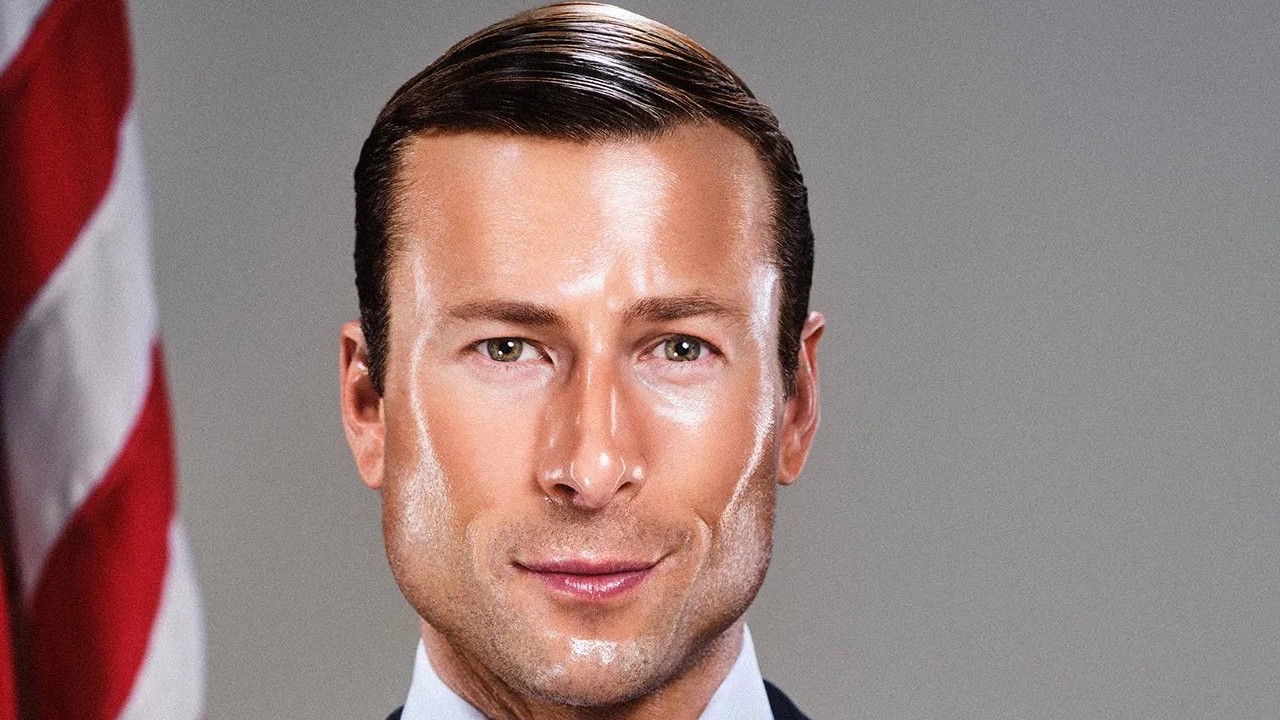
Furthermore, the name "Paul E. Tician"—a phonetic pun on the word "politician"—emerged as a secondary title for the character. This evolution demonstrates the collaborative nature of internet memes, where various platforms (X, TikTok, and Reddit) contribute different elements to a singular cultural artifact.
Supporting Data and Media Response
The impact of the meme has been quantified through significant spikes in search engine interest and social media engagement. According to data from early August 2026, search queries for "Glen Powell GQ," "John Politics," and "Paul E. Tician" saw a 400% increase over a 72-hour period. The virality was so pronounced that mainstream media outlets began to take notice. On August 4, 2026, Newsweek published a feature analyzing the "John Politics" post, investigating why a year-old photoshoot had suddenly captured the collective imagination.
Industry analysts suggest that the meme’s success is a testament to Glen Powell’s current "it-factor" in Hollywood. By leaning into the absurdity of his own movie-star looks, Powell (and the GQ creative team) inadvertently created a blank slate upon which the internet could project its cynicism toward the political establishment.
While Powell himself has not issued a formal "policy statement" as John Politics, his social media activity—including "liking" several of the more popular edits—indicates a self-aware engagement with the trend. This "meta" approach to celebrity branding has historically proven successful for actors like Ryan Gosling and Nicolas Cage, who have similarly embraced their status as "memeable" icons.
Broader Impact and Sociopolitical Implications
Beyond the immediate humor, the John Politics phenomenon offers a window into the public’s perception of leadership in the mid-2020s. The comparison to Grand Theft Auto is particularly telling; it suggests that the visual language of politics has become so standardized and performative that it is indistinguishable from a parody. Powell’s "John Politics" represents the "every-leader"—a figure who possesses all the aesthetic markers of authority (the suit, the flag, the hair, the gesture) but lacks any specific platform or ideology.
In an era of deepfakes and AI-generated content, the fact that a real photograph can be mistaken for a "fake" or "digital" candidate highlights a growing skepticism toward visual information. The "glossiness" that users find so funny is also a critique of the "filter culture" that permeates not just social media, but professional political campaigning.
As the meme continues to evolve, it has begun to intersect with real-world political discourse. During the August 2026 news cycle, commentators began using the term "John Politics" to describe actual candidates who they perceived as being overly manufactured or lacking in substance. In this way, Glen Powell’s satirical photoshoot has provided the public with a new vocabulary for political criticism.
Conclusion: The Enduring Legacy of the Glossy President
The "John Politics" meme serves as a definitive example of how internet culture can repurpose professional media to create entirely new narratives. What was once a high-fashion exploration of male fantasy is now a permanent fixture of the digital landscape, a symbol of the uncanny intersection between Hollywood glamour and political artifice.
As long as the "John Politics" edits continue to garner millions of views, Glen Powell remains the "elected leader" of a digital nation that finds more truth in a satirical photo than in the polished veneers of traditional authority. Whether the meme remains a lighthearted joke or continues to serve as a tool for political satire, one fact remains clear: in the world of 2026, "good hair" and a "glossy" finish are the primary credentials for the office of John Politics.

